Vercel AI Gateway: A Unified Gateway Connecting 300+ Models and Coding Agents with One Command
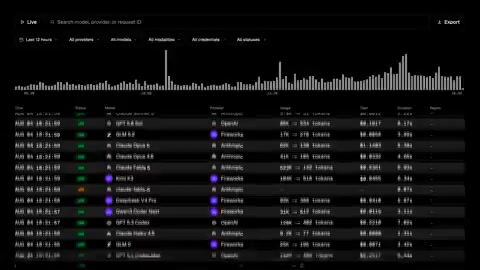
Vercel AI Gateway unifies 300+ models and 8 coding agents with one command, zero markup, and full compliance.
Vercel AI Gateway solves coding agent fragmentation by providing one-command setup for 8 mainstream tools, zero-markup access to 300+ models from 30+ providers, and enterprise-grade features like zero data retention and US-based inference. It acts as a unified router for AI models, eliminating configuration complexity.
The Fragmentation Pain Points in Coding Agent Integration
With the explosive growth of AI coding assistants, developers face an increasingly thorny problem: how to establish stable and economical connections between numerous coding agent tools and different large model providers.
Coding Agent Technical Background: Coding agents are AI systems that can understand natural language instructions and automatically generate and modify code. These tools are typically based on large language models (LLMs) and can complete tasks such as code completion, bug fixes, and refactoring optimization. Representative examples include GitHub Copilot, Cursor, and Cody. These agents work by converting user programming intent into prompts, sending them to underlying large models for inference, and returning the generated code results to developers. Since different agents are optimized for different programming scenarios (such as terminal interaction, IDE integration, code review, etc.), developers often need to use multiple tools simultaneously, which brings complexity to configuration management.
Each coding tool (harness) often has its own independent configuration method, and each model provider has its own API keys, billing systems, and access protocols. Harness Concept Explanation: In the AI coding domain, harness specifically refers to framework systems that provide runtime environments and toolchain support for coding agents. It manages infrastructure such as model connections, context windows, code execution sandboxes, and version control integration. Different harnesses have their own configuration file formats and API calling methods—for example, some use YAML configuration while others use JSON or environment variables. This lack of standards means that when switching tools, developers need to relearn configuration syntax and find it difficult to achieve unified access control and billing management.
This fragmented status quo means that when developers want to integrate a new model or switch tools, they often need to configure repeatedly and debug multiple times, resulting in extremely low efficiency.
Vercel's recently launched AI Gateway feature targets precisely this pain point. Model Gateway Architecture Principles: A model gateway is a middleware layer between the application layer and model providers, working in reverse proxy mode. It receives API requests in a unified format, forwards requests to the appropriate model provider (such as OpenAI, Anthropic, Google, etc.) according to routing rules, and then returns standardized responses. The core value of the gateway layer lies in: 1) Protocol adaptation—abstracting the API differences of different providers into a unified interface; 2) Traffic management—implementing load balancing, rate limiting, retry strategies, etc.; 3) Observability—centrally collecting call logs, performance metrics, and cost data; 4) Security control—implementing authentication, authorization, and data desensitization at a single point.
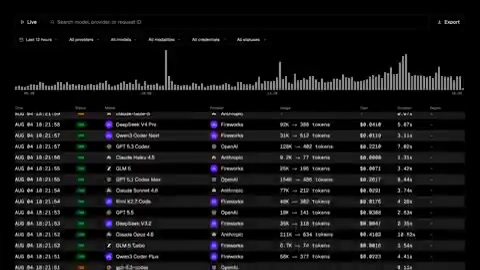
Vercel unifies mainstream coding agents into a single model gateway through one command, thereby shielding the complexity of underlying providers. According to information released by Vercel officially, the entire configuration process can be completed by simply running vercel ai-gateway coding-agents setup.
Core Capabilities of Vercel AI Gateway
One-Click Auto-Configuration for 8 Mainstream Coding Tools
AI Gateway supports automatic configuration of 8 mainstream coding harnesses (coding assistant runtime environments). Developers don't need to manually fill in model endpoints, API keys, and other information in each tool's configuration file—the gateway automatically completes the integration.
For teams using multiple coding agents simultaneously, the value of this unified entry point is particularly evident:
- Reduces initial configuration costs, eliminating the tedious operation of manually filling in keys for each tool
- Makes subsequent model switching lightweight, without needing to reconfigure each coding assistant
- Team members share unified model access policies, making management more centralized
300+ Models, 30+ Providers, Zero Markup Access
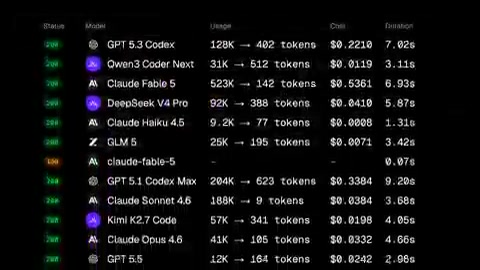
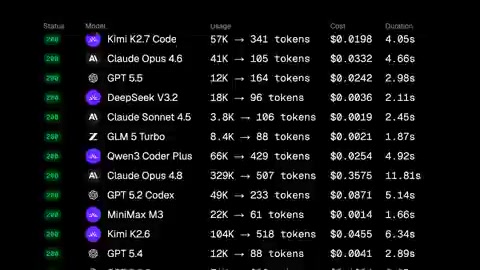
The most eye-catching aspect of AI Gateway is that it aggregates over 300 models from more than 30 providers and explicitly promises no markup.
This is uncommon in the current model aggregation service market—many middleware gateways profit by adding premiums on top of original prices. Vercel's zero markup strategy means developers can call models at provider original prices, with the gateway itself acting more as a unified access layer rather than a profit channel.
The business logic behind this model is that Vercel values keeping developers within its platform ecosystem, monetizing through deployment, hosting, and other peripheral services rather than taking a cut on model calls. For developers, this is undoubtedly a friendly signal.
Data Privacy and Enterprise Compliance Solutions
For enterprise-level users, data security in model calls has always been a core concern. Vercel provides two key compliance features in AI Gateway:
-
ZDR (Zero Data Retention): Request data is not retained by providers for training or other purposes. ZDR Compliance Mechanism Explained: Zero Data Retention is an important compliance commitment in the AI services domain, meaning that model providers will not store, record, or use user request data for model training or other purposes. In traditional AI API services, providers typically retain user-submitted prompts and generated content for model improvement, security audits, or business analysis. However, for enterprises handling sensitive code, trade secrets, or personal privacy, such data retention poses leakage risks. ZDR mode uses technical means (such as immediate processing, in-memory computing, log disabling) and legal agreements to ensure that data only exists briefly in memory during inference and is immediately destroyed after processing. This is crucial for development teams handling sensitive codebases and internal business logic, especially in AI application deployments in strictly regulated industries like finance, healthcare, and government.
-
US inference: Responds to some enterprises' demands for data sovereignty and industry regulatory compliance, ensuring inference computation is completed in designated regions
Additionally, AI Gateway specifically emphasizes support for open-weight models. Open-Weight Model Characteristics: Open-weight models are AI models whose parameters (weight files) are publicly downloadable, slightly different from fully open-source models—the latter also includes training code, datasets, etc. Typical representatives include Meta's Llama series and Mistral AI's models. The core advantages of such models are: 1) Auditability—enterprises can inspect model internal structures and assess security risks; 2) Deployability—can be deployed privately on enterprise intranets, avoiding data export; 3) Customizability—allows fine-tuning on specific datasets; 4) Cost control—avoids per-token billing, suitable for high-frequency call scenarios. Vercel's support for these models means enterprises can call self-hosted open models through the gateway while enjoying autonomous control while maintaining a unified interface, giving enterprises greater flexibility and transparency in model selection.
These features indicate that Vercel not only wants to serve individual developers but is also actively competing for enterprise customers with strict compliance requirements.
Profound Significance for the Developer Ecosystem
From a more macro perspective, the launch of AI Gateway reflects that the AI infrastructure layer is moving toward standardization and integration. AI Infrastructure Standardization Trend: The standardization of AI infrastructure is undergoing an evolution similar to the early days of cloud computing. In the early 2010s, API differences between cloud vendors were huge until standards like Kubernetes emerged to achieve application-layer abstraction. The AI field currently faces similar challenges: OpenAI's interface format has de facto become an industry reference, but each company still has differences in details like parameter naming, streaming responses, and error codes. Standardization work is mainly reflected in three layers: 1) API interface layer—unifying calling methods through OpenAI-compatible interface specifications; 2) Observability layer—monitoring standards like Prometheus metrics and OpenTelemetry tracing; 3) Deployment layer—runtime standards like containerization and service mesh.
Over the past two years, coding agents have experienced explosive development, but the lack of unified connection standards between tools and models has created obvious integration friction.
Through the gateway approach, Vercel is actually playing the role of "unified router for AI models". Developers no longer need to manage keys and bills separately for each model provider, nor do they need to repeatedly configure different coding tools. The emergence of this abstraction layer is expected to significantly lower the barrier to multi-model experimentation—developers can more freely compare horizontally across 300+ models, selecting the most suitable model for specific tasks without being locked into a single provider.
Potential Risks to Consider
Of course, concentrating model calls into a single gateway also brings some issues to consider:
- Platform dependency: After deep integration with the Vercel gateway, future migration costs may increase
- Stability requirements: As a middleware layer, the gateway's availability and latency performance directly affect all downstream applications, placing higher demands on Vercel's infrastructure capabilities
However, considering the zero markup pricing strategy and emphasis on privacy compliance, AI Gateway is still worth serious evaluation and trial for developers hoping to simplify AI coding workflows.
Summary: AI Coding Infrastructure Moving Toward Standardization
The core value of Vercel AI Gateway can be summarized as: using one command to connect coding agents with 300+ models. It provides a relatively complete solution across four dimensions: configuration convenience, model richness, cost transparency, and data compliance.
For developers troubled by fragmentation across multiple tools and models, the maturation of such unified access layers marks that AI coding infrastructure is gradually moving toward a more practical and standardized stage. Vercel AI Gateway represents a practical path for application-layer standardization, reducing developers' adaptation costs through middleware abstraction and accelerating innovation and iteration of multi-model applications.
Related articles
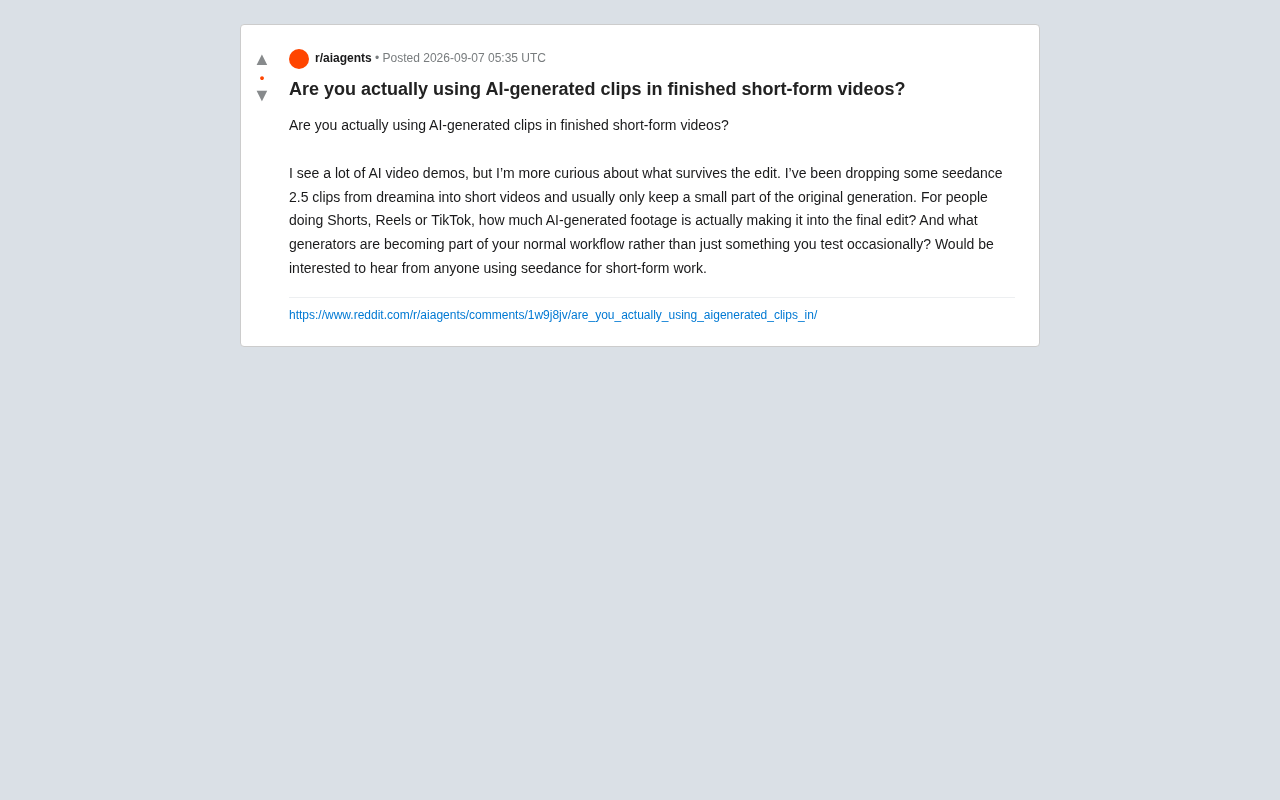
How Short-Form Video Creators Are Using AI Video Generation Tools
Exploring the real-world application of AI video generation tools in short-form video creation. From Seedance to Runway, how do creators integrate AI assets? Revealing the gap between demos and production use.

Home Data Center Setup Guide: A Complete Self-Hosted Private Cloud Implementation
Deep dive into building a home data center: hardware selection, software architecture, cost analysis, and operational challenges. From data sovereignty to technical implementation, build your private cloud infrastructure and control your digital assets.
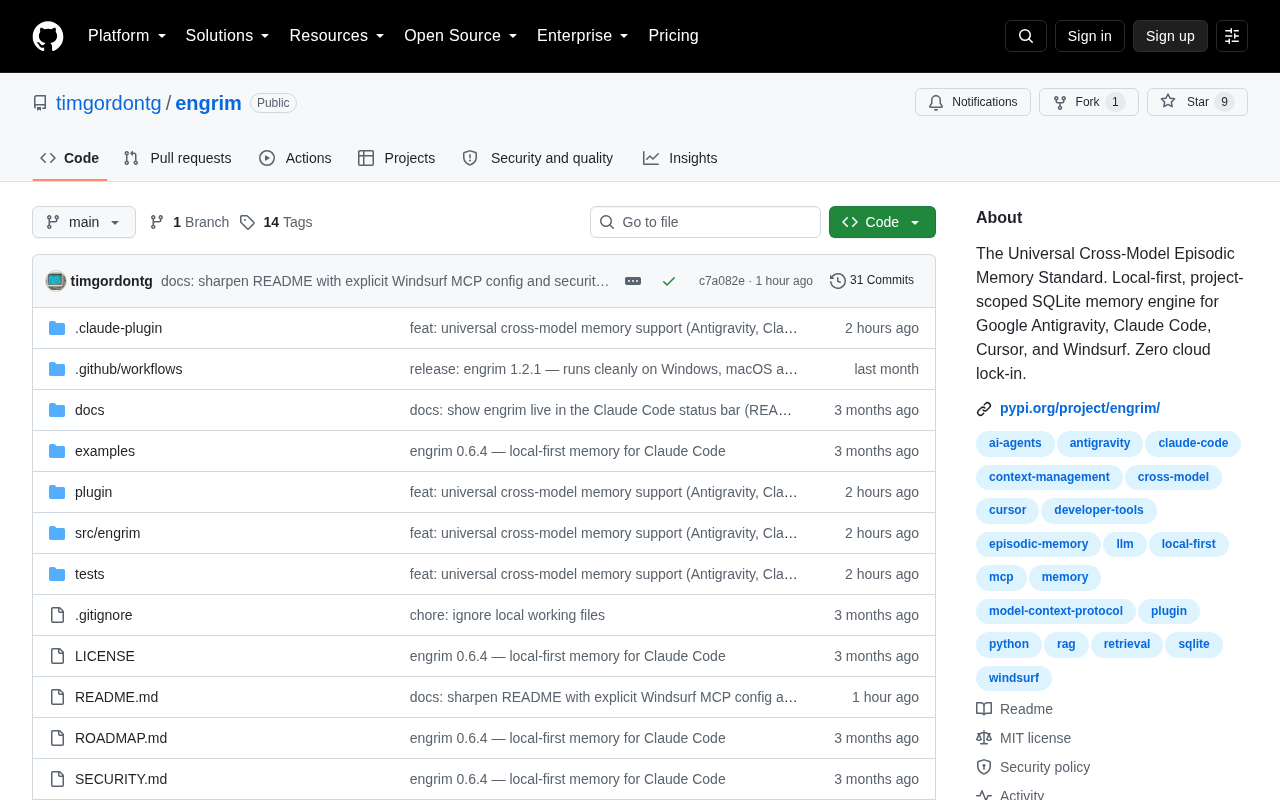
Engrim: A Local Memory Engine Solution for AI CLI Tools
Engrim is an open-source, local-first SQLite memory engine built for AI CLI tools like Claude Code and Aider, solving context loss while keeping data private.