Vercel AI SDK Releases @ai-sdk/rsc@3.0.101 Patch Update
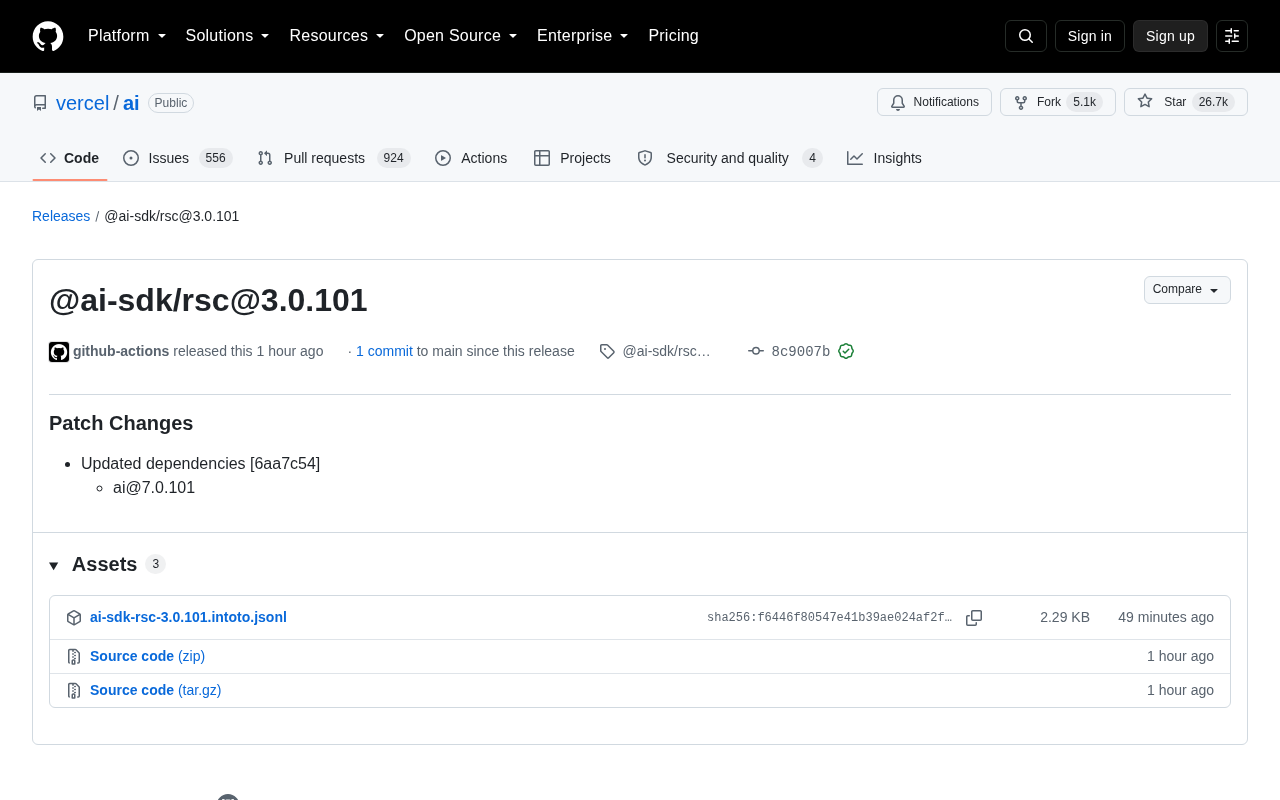
Vercel AI SDK releases @ai-sdk/rsc@3.0.101, a routine patch that syncs the internal ai core package to v7.0.101.
`@ai-sdk/rsc@3.0.101` is a routine patch update in the Vercel AI SDK ecosystem, containing no new APIs or behavioral changes — its sole purpose is aligning the internal `ai` dependency to `7.0.101`. The `@ai-sdk/rsc` package is designed for React Server Components, enabling developers to stream LLM outputs as React components on the server. This release follows standard monorepo version-alignment practices, published automatically via GitHub Actions with trusted signing verification. The upgrade is low-risk and primarily ensures version consistency across the dependency chain.
Vercel's AI SDK project has published @ai-sdk/rsc@3.0.101 on GitHub. This is a patch-level update focused on dependency synchronization. While it introduces no new features, updates like this are essential for maintaining a healthy dependency chain and ensuring compatibility for developers building AI applications on top of the SDK.
Update Overview
According to the official release notes, @ai-sdk/rsc@3.0.101 falls under Patch Changes. The core change is a dependency update: the internal ai package has been bumped to 7.0.101 (corresponding to commit hash 6aa7c54).
In other words, this release contains no new developer-facing APIs or behavioral changes — it's purely a version alignment following an upstream update to the ai core package. This kind of "follow-along" patch release is common in open-source projects with a monorepo structure: when the core package is updated, dependent sub-packages increment their version numbers accordingly to ensure dependency consistency.
The release was published via an automated GitHub Actions workflow and passed GitHub's trusted signing verification (GPG key ID: B5690EEEBB952194), reflecting Vercel AI's commitment to automated and secure release practices.
What is a Monorepo? A monorepo (monolithic repository) is a code organization strategy where multiple related packages or projects are managed together in a single Git repository. The Vercel AI SDK uses this structure —
ai(core package),@ai-sdk/rsc,@ai-sdk/openai, and other sub-packages all coexist in the same repository, with build and release workflows managed by tools like Turborepo. Under this architecture, when the coreaipackage is updated, all dependent sub-packages typically need to bump their version numbers and republish, so that users installing via npm receive a semantically consistent set of dependencies. This is why@ai-sdk/rsc@3.0.101warrants its own release even without any substantive changes.
What Is @ai-sdk/rsc?
@ai-sdk/rsc is a sub-package in the Vercel AI SDK ecosystem. The rsc stands for React Server Components. It provides developers with the tools needed to integrate generative AI capabilities within server component environments — such as streaming UI, and passing serializable AI-generated content between server and client.
These capabilities are particularly valuable for building modern AI-powered web applications. With RSC, developers can have LLM outputs stream directly into rendered UI components rather than returning plain text, enabling richer interactive experiences like dynamically generated charts, cards, or forms.
What Are React Server Components (RSC)? React Server Components is a new component paradigm introduced in React 18, allowing components to execute and render on the server without shipping their logic to the client-side JavaScript bundle. Unlike traditional server-side rendering (SSR), RSC can be mixed with client components, enabling fine-grained control over rendering boundaries. In AI application scenarios, RSC offers a distinct advantage: LLM API calls can be made entirely on the server, keeping API keys out of the browser, while streaming responses map naturally to incremental server-side rendering, reducing time-to-first-meaningful-content.
@ai-sdk/rscis designed specifically as a bridge layer for this runtime environment, providing APIs likestreamUIandcreateAIthat let developers declaratively transform model outputs into streamable React component trees.
What Patch Updates Mean for Developers
The Vercel AI project currently has approximately 26,700 stars and 5.1k forks on GitHub, making it one of the most popular toolkits for building generative AI applications. The project follows a rapid, incremental release cadence — with version numbers already reaching 3.0.101 — signaling a high-frequency maintenance rhythm.
For teams actively using this SDK, here are the recommended actions:
- Keep dependencies in sync: Since this version solely updates
ai@7.0.101, if your project already uses theaicore package, upgrading@ai-sdk/rschelps prevent potential compatibility issues caused by version mismatches. - Review the changelog: Patch versions are generally low-risk, but you should still check the full change log to confirm whether the upstream
aipackage changes in7.0.101affect your specific use case. - Trust the release source: This release has been verified via GitHub's trusted signing mechanism, making it safe to install via npm.
Summary
@ai-sdk/rsc@3.0.101 is a routine patch release centered on dependency synchronization. It contains no significant feature changes — its primary value lies in maintaining alignment with the ai@7.0.101 core package. For developers actively using the Vercel AI SDK, this is a low-risk, routine upgrade that primarily serves to keep your project's dependency chain healthy and compatible.
Related articles
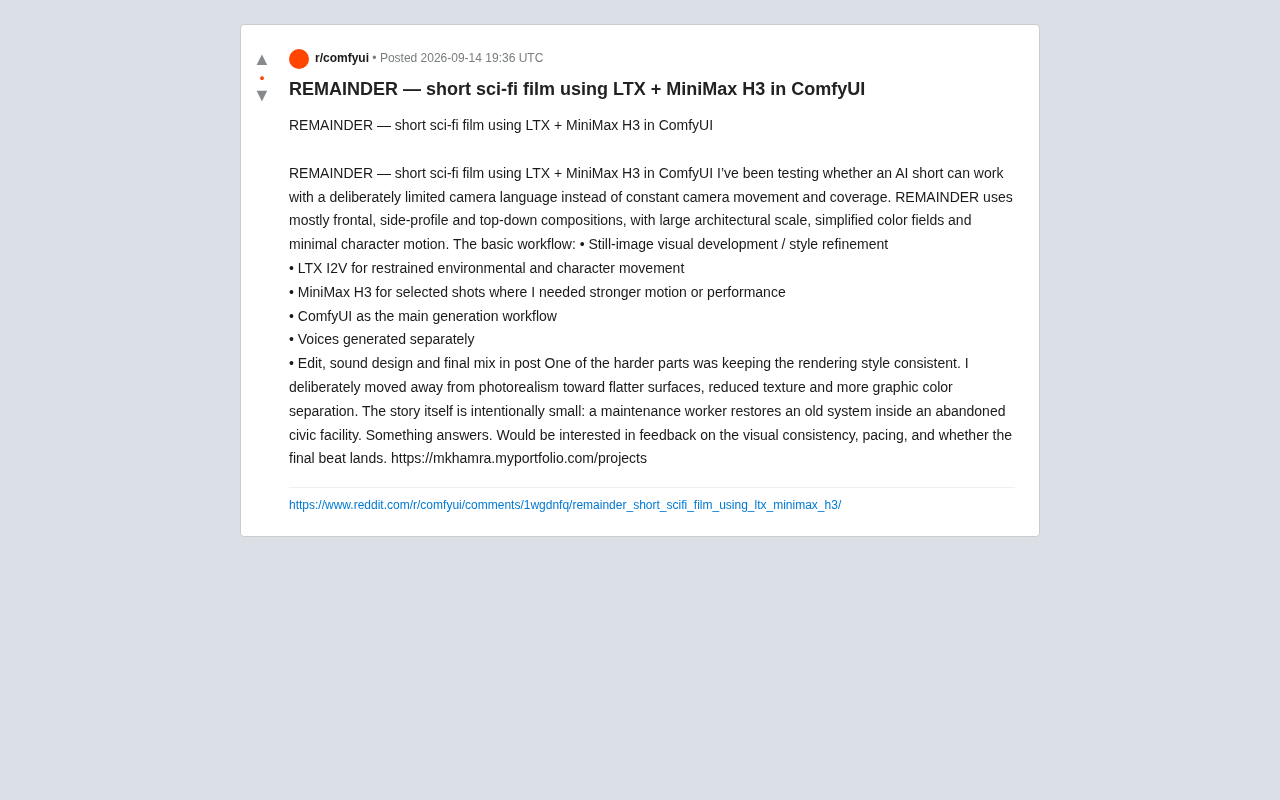
Building an AI Sci-Fi Short with LTX + MiniMax H3: Restrained Cinematography in ComfyUI
Sci-fi short REMAINDER uses LTX, MiniMax H3, and ComfyUI with restrained cinematography and flat aesthetics to solve visual consistency in AI filmmaking.
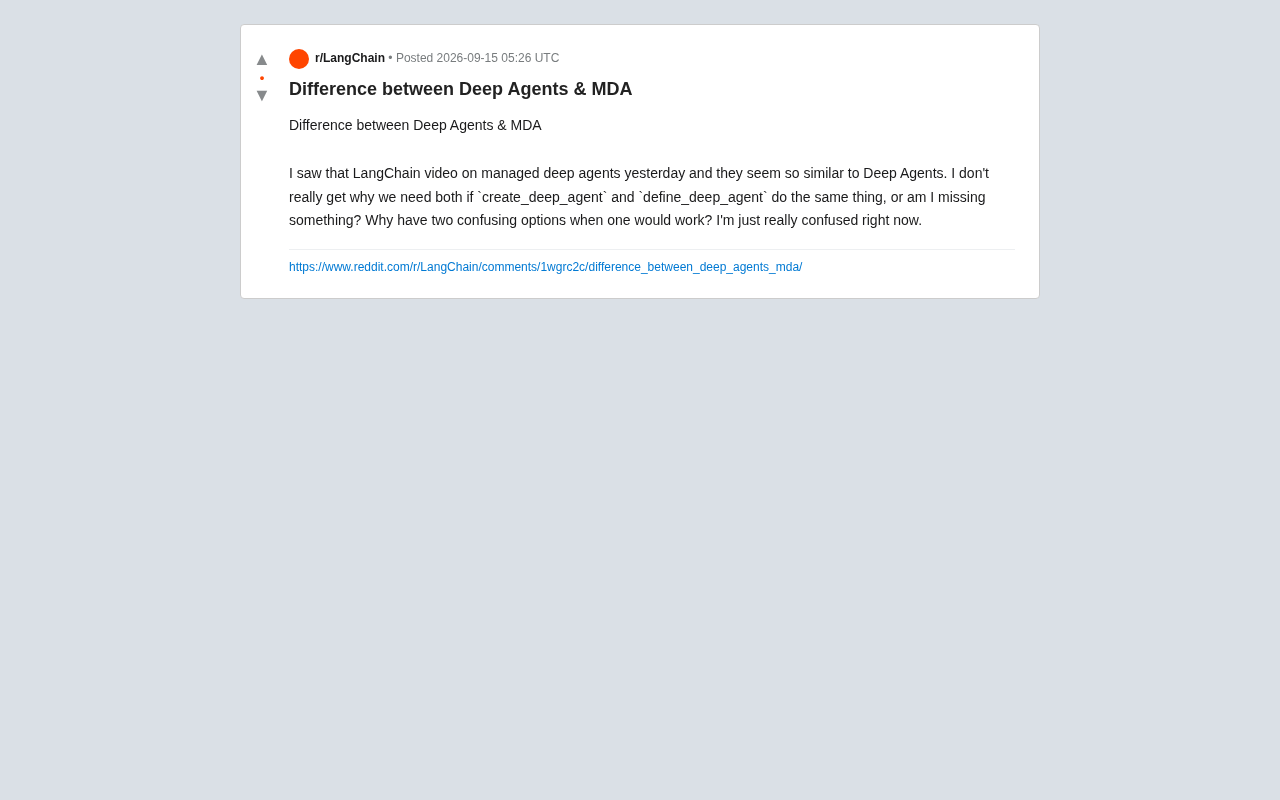
LangChain Deep Agents vs. MDA: Clearing Up the Confusion for Developers
What's the difference between LangChain's Deep Agents and MDA (Managed Deep Agents)? We break down create_deep_agent vs. define_deep_agent and help developers choose.
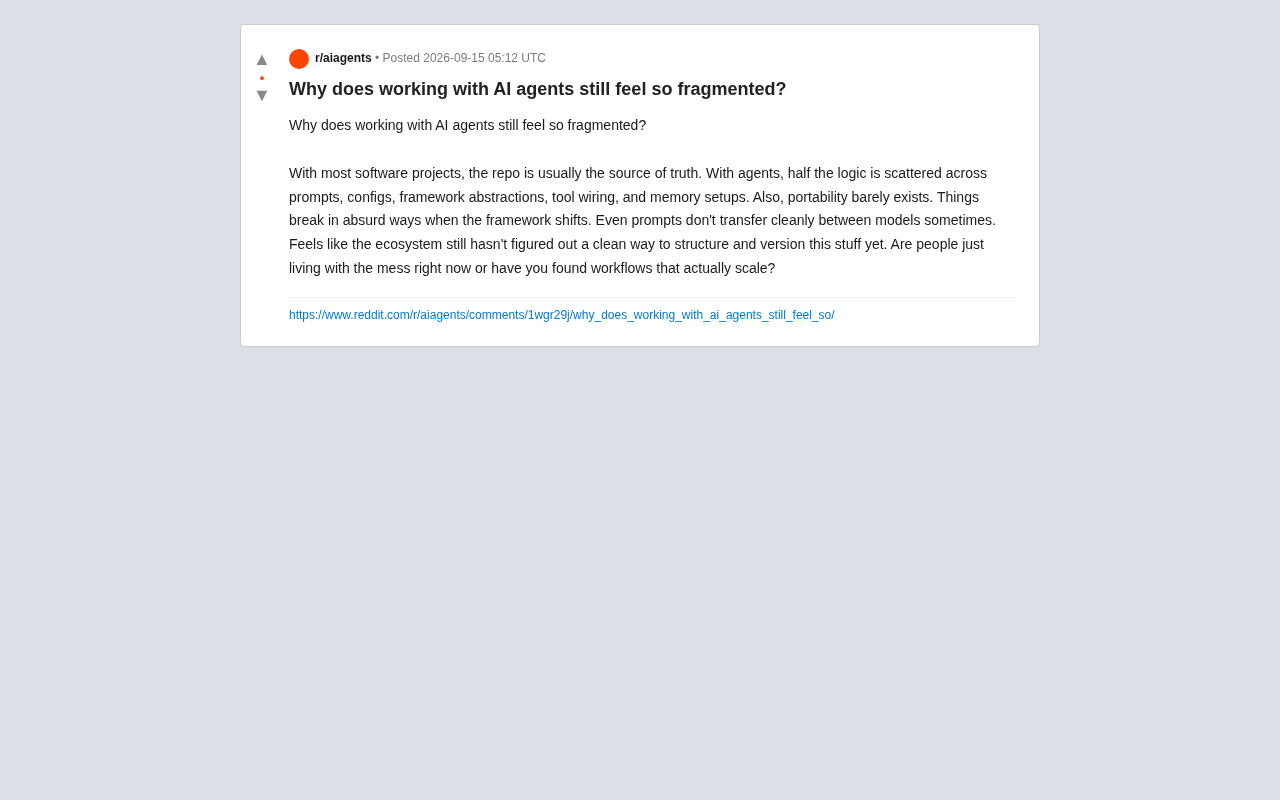
Why Is AI Agent Development So Fragmented? The Real Causes and How to Work Around Them
Why does AI Agent development feel so fragmented? Logic scattered across prompts, configs, and frameworks makes portability nearly impossible. Here's why — and how to cope.