Vercel AI SDK Vue 4.0.103 Released: Dependency Update Breakdown
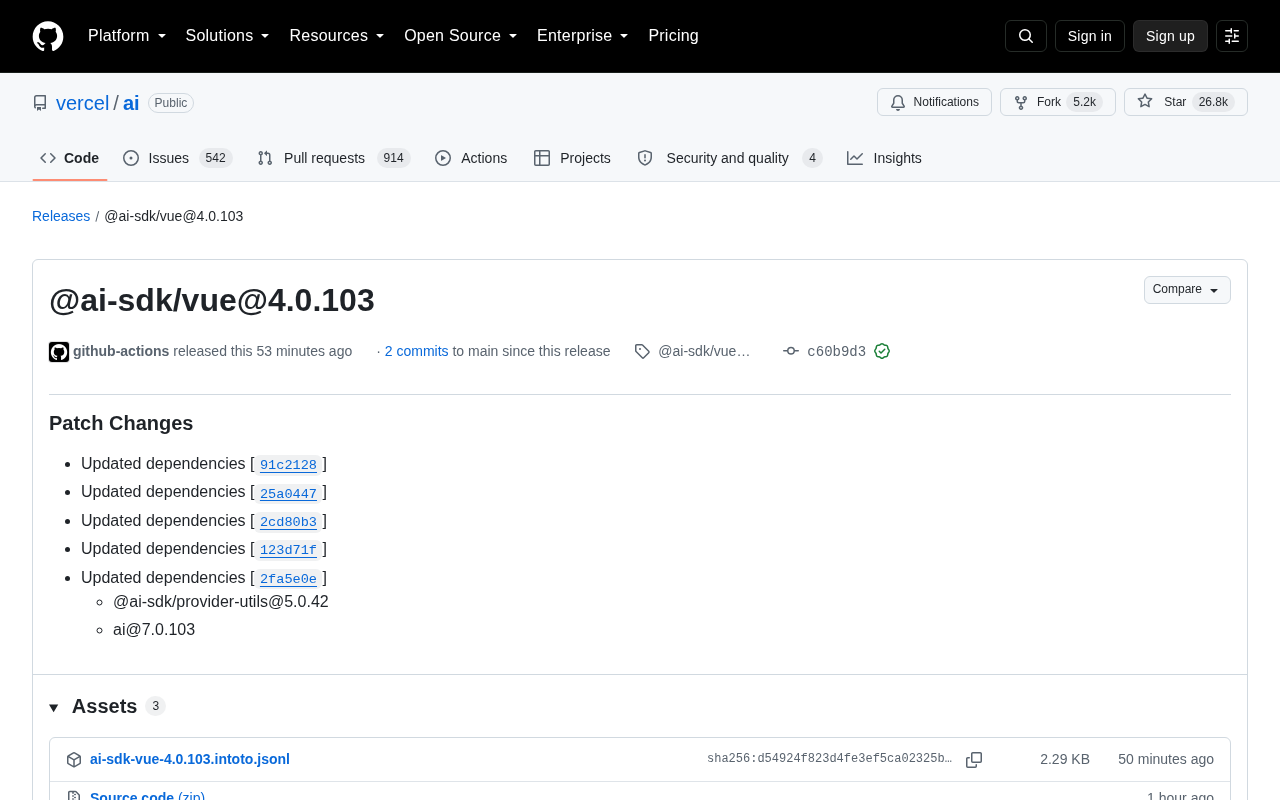
Vercel AI SDK Vue adapter ships patch 4.0.103, syncing core ai and provider-utils dependencies.
@ai-sdk/vue@4.0.103 is a routine maintenance patch with no new features or breaking changes. Its primary purpose is to synchronize ai@7.0.103 and @ai-sdk/provider-utils@5.0.42 to keep the entire AI SDK toolchain version-consistent. Built and published via GitHub Actions with a verified signature, the release is trustworthy. Notably, adapter packages and the core package follow independent versioning cadences — @ai-sdk/vue remains at 4.0.x while the underlying ai package is already at 7.0.x. Developers should not judge compatibility by numeric alignment. As a SemVer-compliant patch, it is safe to upgrade directly, and running npm ls ai afterward is recommended to confirm the resolved dependency tree.
Vercel's open-source AI SDK project recently shipped @ai-sdk/vue@4.0.103. This is a patch-level release focused primarily on dependency updates. While the changes are minimal, developers building AI applications within the Vue ecosystem should still pay attention to version synchronization.
Release Overview
This @ai-sdk/vue@4.0.103 release is a patch update, with its main content being synchronized dependency upgrades. According to the GitHub Release page, this version was built and published through a GitHub Actions automated workflow. The commit carries GitHub's verified signature, ensuring the integrity and trustworthiness of the published artifact.
Looking at the overall repository stats, Vercel's AI project has accumulated over 26.8k stars and 5.2k forks, making it one of the most popular AI development toolkits in the JavaScript/TypeScript ecosystem. @ai-sdk/vue, as the Vue framework adapter package, allows Vue developers to integrate large model capabilities in a familiar way.
Patch Changes in Detail
The core of this release is a series of dependency updates, involving multiple internal commit hashes including 91c2128, 25a0447, 2cd80b3, 123d71f, and 2fa5e0e. These updates ultimately manifest as version upgrades to two key dependencies:
@ai-sdk/provider-utils@5.0.42ai@7.0.103
This versioning structure reveals the layered architecture of AI SDK: the ai core package provides framework-agnostic foundational capabilities, @ai-sdk/provider-utils handles the adapter logic for various model providers, and @ai-sdk/vue wraps these into a reactive, Vue-friendly interface. The purpose of a patch release is to keep all three in sync, preventing type mismatches or runtime errors caused by version misalignment.
Semantic Versioning (SemVer) defines version numbers as a three-part
MAJOR.MINOR.PATCHstructure. A patch version increment is reserved solely for backward-compatible bug fixes or dependency synchronization — it introduces no new features or breaking API changes. A minor increment signals new backward-compatible functionality, while a major increment indicates incompatible API changes. The fact that AI SDK sub-packages evolve with independent version numbers is a deliberate use of SemVer's flexibility: the coreaipackage can ship a major version bump (e.g., from 6.x to 7.x), while the framework adapter@ai-sdk/vuecan continue tracking dependency updates within the 4.x series via patch releases — as long as its own interface hasn't introduced breaking changes. The two packages don't need to have numerically aligned version numbers.
Practical Impact for Developers
For projects already using the AI SDK Vue integration, patch updates like this are generally safe and recommended to adopt promptly. Since they adhere to Semantic Versioning (SemVer), patch-level changes introduce no breaking changes, meaning developers can upgrade directly without modifying any business logic.
One thing worth noting is the version number relationship: @ai-sdk/vue sits at 4.0.x, while the underlying ai package is already at 7.0.x. This indicates that adapter packages and the core package follow independent versioning cadences. When pinning dependencies, developers should consult the official documentation for the compatibility matrix rather than assuming version numbers need to align numerically.
@ai-sdk/provider-utilsserves as the model provider adapter layer across the entire AI SDK ecosystem. It handles the differences between various large model APIs in a unified way — including request format conversion, streaming response parsing, error normalization, and other shared logic. Higher-level framework adapters (such as@ai-sdk/vueand@ai-sdk/react) and vendor plugin packages (such as@ai-sdk/openaiand@ai-sdk/anthropic) all depend on the utility functions it provides. This layered design means that when a bug in a low-level parsing routine is fixed, only a singleprovider-utilspatch needs to be published — all upstream packages receive the fix simply by syncing their dependency version, without each needing to re-implement the fix independently. For this reason,provider-utilsversion upgrades are typically among the most important dependencies to keep current in the AI SDK ecosystem.
How to Upgrade
The upgrade is straightforward — just run the appropriate package manager command:
npm install @ai-sdk/vue@4.0.103
# or
pnpm add @ai-sdk/vue@4.0.103
After upgrading, it's recommended to run your existing test suite and confirm that ai and @ai-sdk/provider-utils in the dependency tree are also resolved to the corresponding versions. For projects using a lockfile, you can run npm ls ai to verify that the final resolved version matches expectations.
Summary
@ai-sdk/vue@4.0.103 is a typical maintenance release — no new features, but it ensures stable collaboration across the entire AI SDK toolchain through synchronized dependencies. For Vue ecosystem AI application developers, keeping up with these frequent patch updates is a low-effort way to maintain project health. The consistently high iteration frequency of Vercel AI SDK also reflects the project's active maintenance status within the open-source community.
Related articles
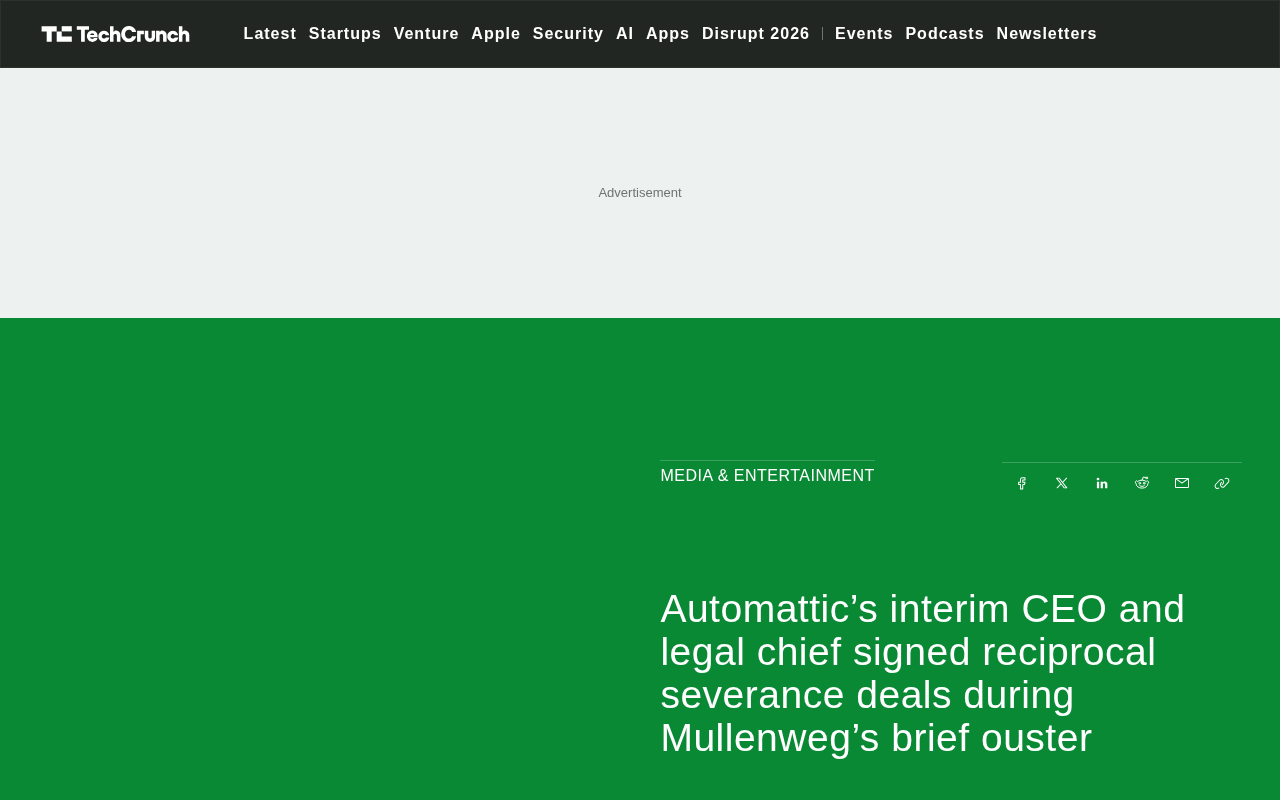
Automattic Executives Signed Reciprocal Severance Agreements During Mullenweg's Brief Ouster
Automattic's CFO and General Counsel signed reciprocal severance agreements during Matt Mullenweg's brief ouster, covering one year's salary and accelerated equity vesting, raising corporate governance concerns.
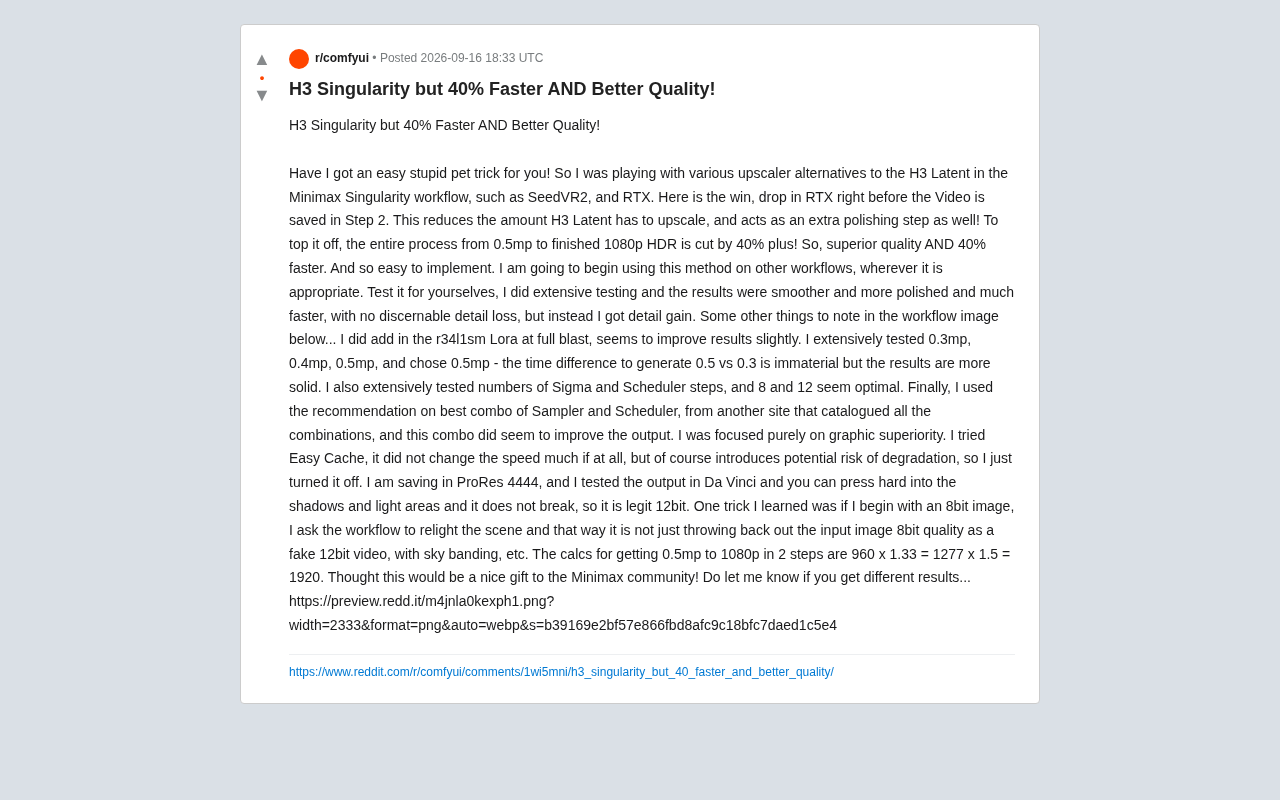
H3 Singularity Optimization: 40% Speed Boost With Better Image Quality
A Reddit user's Minimax Singularity workflow tip: insert an RTX upsampler before H3 Latent for 40%+ speed gains and better quality. Covers parameters, 12-bit output, and more.
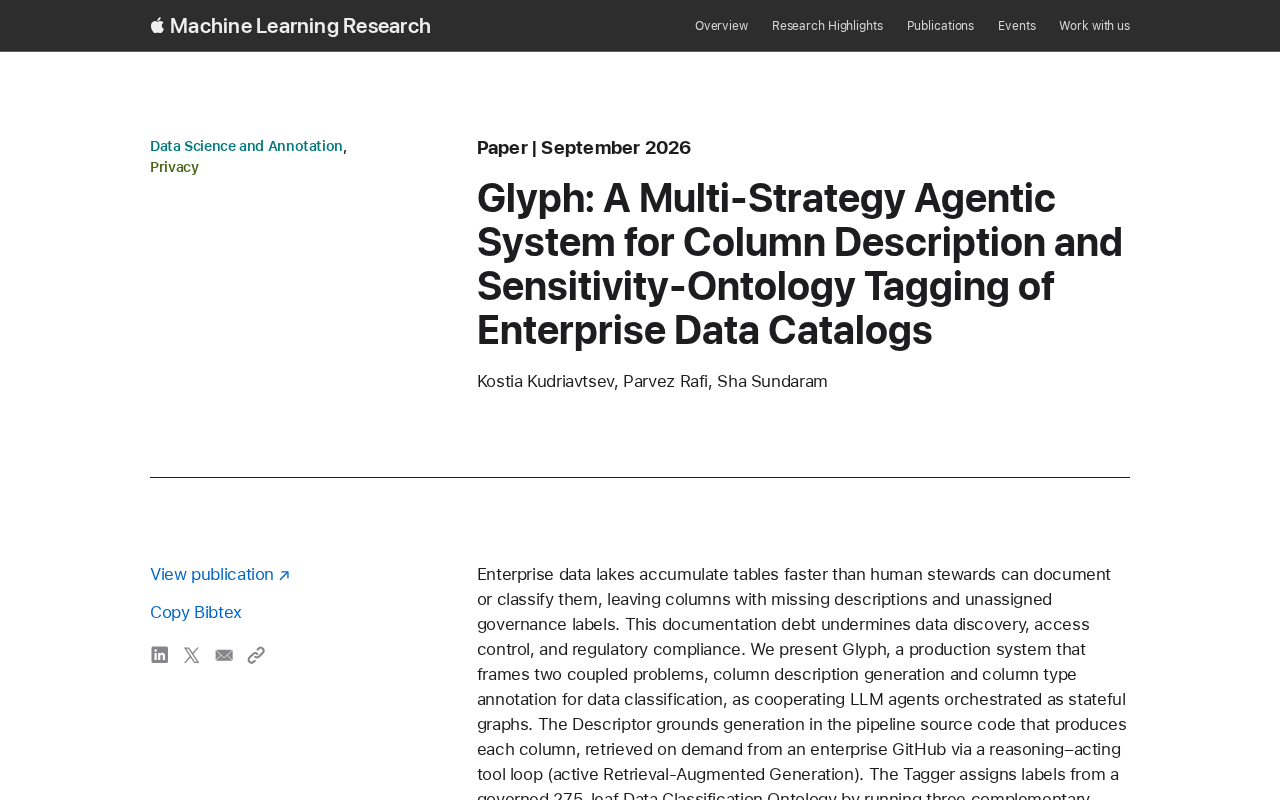
Glyph: A Multi-Strategy Agent System for Automated Enterprise Data Catalog Annotation
Glyph is a multi-strategy LLM agent system for enterprise data catalogs that automates column description generation and sensitivity ontology tagging, grounding outputs in pipeline source code to improve accuracy.