Vercel AI SDK Vue Package Releases 4.0.100 Patch Update
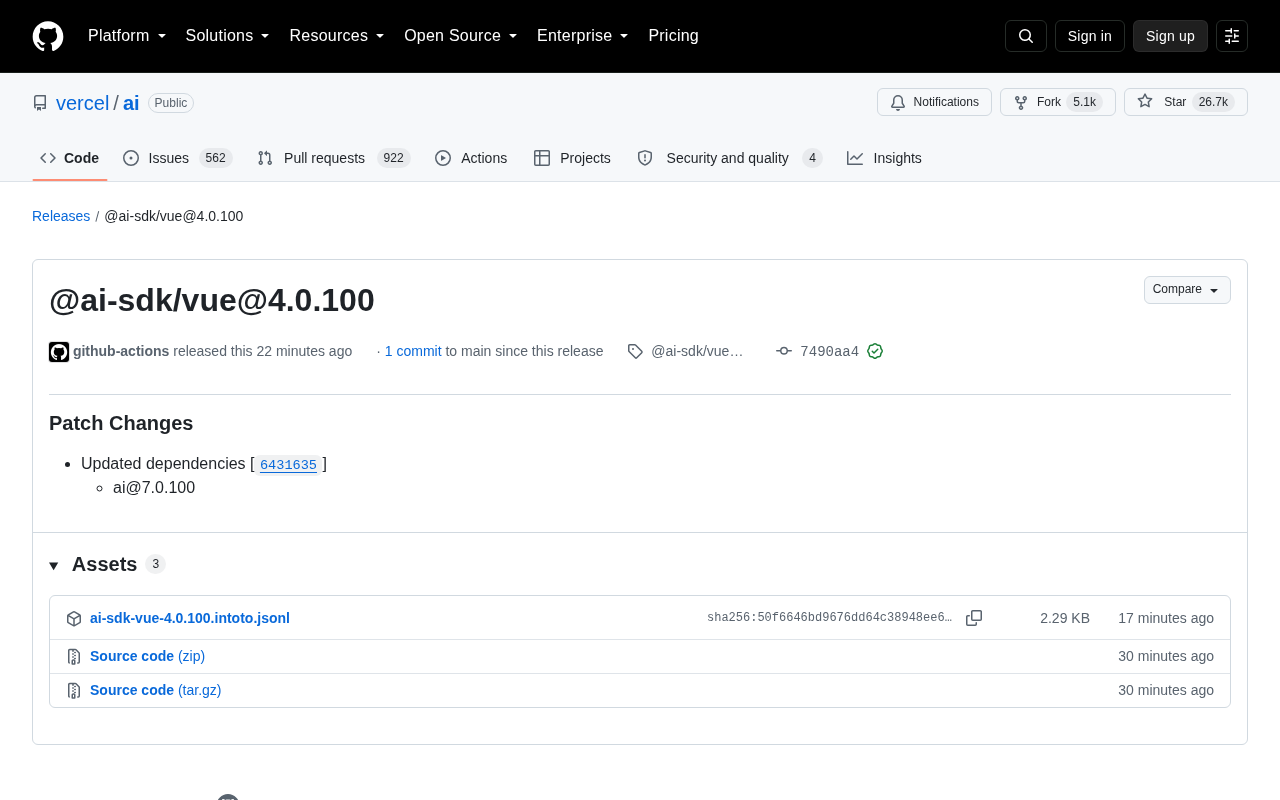
Vercel AI SDK Vue binding releases patch 4.0.100, syncing core dependency with no breaking changes.
`@ai-sdk/vue@4.0.100` is a routine maintenance patch that syncs the upstream dependency to `ai@7.0.100`, with no new features or breaking changes in the Vue binding layer itself. Vercel AI SDK uses a monorepo architecture to manage adapters for React, Vue, Svelte, and other frameworks, each following independent semantic versioning. The version number gap does not indicate incompatibility. For current users, this is a low-risk upgrade — it's recommended to update the core `ai` package to 7.0.100 simultaneously. Consult the core package changelog for details on underlying changes.
A Routine Dependency Sync Update
Vercel's AI SDK has released @ai-sdk/vue@4.0.100 as a patch version update. Categorized as a Patch Change, the core of this release is syncing the upstream dependency to ai@7.0.100 — a typical maintenance release.
According to the release notes, this version was automatically built and published via GitHub Actions with a Verified signature from GitHub, consistent with the Vercel AI project's standard automated release workflow. The repository currently has over 26.7k stars and 5.1k forks, making it one of the most active open-source projects in the AI application development space.
What This Update Means
For developers building AI applications with the Vue framework, @ai-sdk/vue serves as the key bridge for integrating large language model capabilities. It provides Vue developers with feature parity to the React version, including encapsulated utilities for streaming response handling, chat state management, tool calling, and more.
The changes in 4.0.100 are straightforward: this is purely a dependency upgrade to follow the core ai@7.0.100 package. This means no new features or breaking changes have been introduced in the Vue binding layer itself — developers can upgrade with confidence without worrying about code compatibility. The value of these patch releases lies in maintaining version consistency across the entire SDK ecosystem. When the core library fixes issues or optimizes internal logic, the framework binding packages need to follow suit promptly to avoid potential conflicts caused by version mismatches.
Semantic Versioning (SemVer) defines the version format as MAJOR.MINOR.PATCH, corresponding to breaking changes, new features, and bug fixes/maintenance updates respectively. A Patch-level bump (incrementing the third digit) indicates that no new APIs are introduced, no existing interfaces are broken — only internal fixes or dependency syncs are made. The upgrade of @ai-sdk/vue from 4.0.99 to 4.0.100 is a textbook Patch release: the binding layer code itself is unchanged, and only the declared dependency on the ai core package has been updated to 7.0.100. This ensures that users installing the package will pull in the latest patch of the core package, preventing stale bugs from lingering due to loose version ranges.
About the Vercel AI SDK Ecosystem
Vercel AI SDK uses a monorepo approach to manage multiple framework adapter packages. In addition to Vue, it covers major frontend frameworks including React, Svelte, and Solid. This unified-repository, split-package publishing strategy allows developers to select the binding library that matches their tech stack while sharing the same underlying abstractions.
The version numbers are worth noting: the Vue binding package sits at 4.x, while the core ai package is already at 7.x. This reflects the fact that each sub-package follows an independent semantic versioning strategy — the binding layer API is relatively stable and is primarily maintained incrementally alongside core capabilities. For development teams, this design reduces the cognitive overhead of managing upgrades.
A monorepo (monolithic repository) is an engineering strategy where multiple related packages or projects are managed together in a single Git repository. In the Vercel AI SDK context, the core ai package and all framework binding packages (@ai-sdk/react, @ai-sdk/vue, etc.) coexist in one repository, enabling atomic commits across packages, a unified CI pipeline, and shared toolchain configuration. Turborepo and pnpm workspaces are common companion tools for monorepo setups — and Vercel itself is the maintainer of Turborepo. The trade-off of this architecture is that sub-packages can independently track their own semantic versions, which explains why ai@7.x and @ai-sdk/vue@4.x have such different version numbers within the same repository. For newcomers, this can be confusing — but it does not mean the two are incompatible. Each version number simply records that package's own API evolution history.
What Developers Should Do
If your project is using @ai-sdk/vue, you can upgrade directly to 4.0.100 through your package manager. Since this version only involves a dependency update, it is a low-risk change. It's recommended to simultaneously upgrade the core ai package to 7.0.100 to maintain version consistency.
For developers who want to stay up to date with AI SDK releases, watching the official GitHub Releases page is the most straightforward approach. The frequent patch releases reflect the Vercel team's ongoing commitment to project maintenance, and are a healthy signal of this open-source project's activity.
It's worth noting that this release contains limited information — it's simply a dependency sync patch with no detailed feature descriptions or migration guides. If you want to understand the actual underlying changes, you should consult the changelog for the corresponding ai@7.0.100 core package.
Related articles

RTX 5090 Stock Crisis: Why Third-Party Sellers Are Charging $9,500
NVIDIA's RTX 5090 has vanished from U.S. online retail, with third-party sellers asking up to $9,500. Here's how AI compute demand is driving GPU prices to extremes.
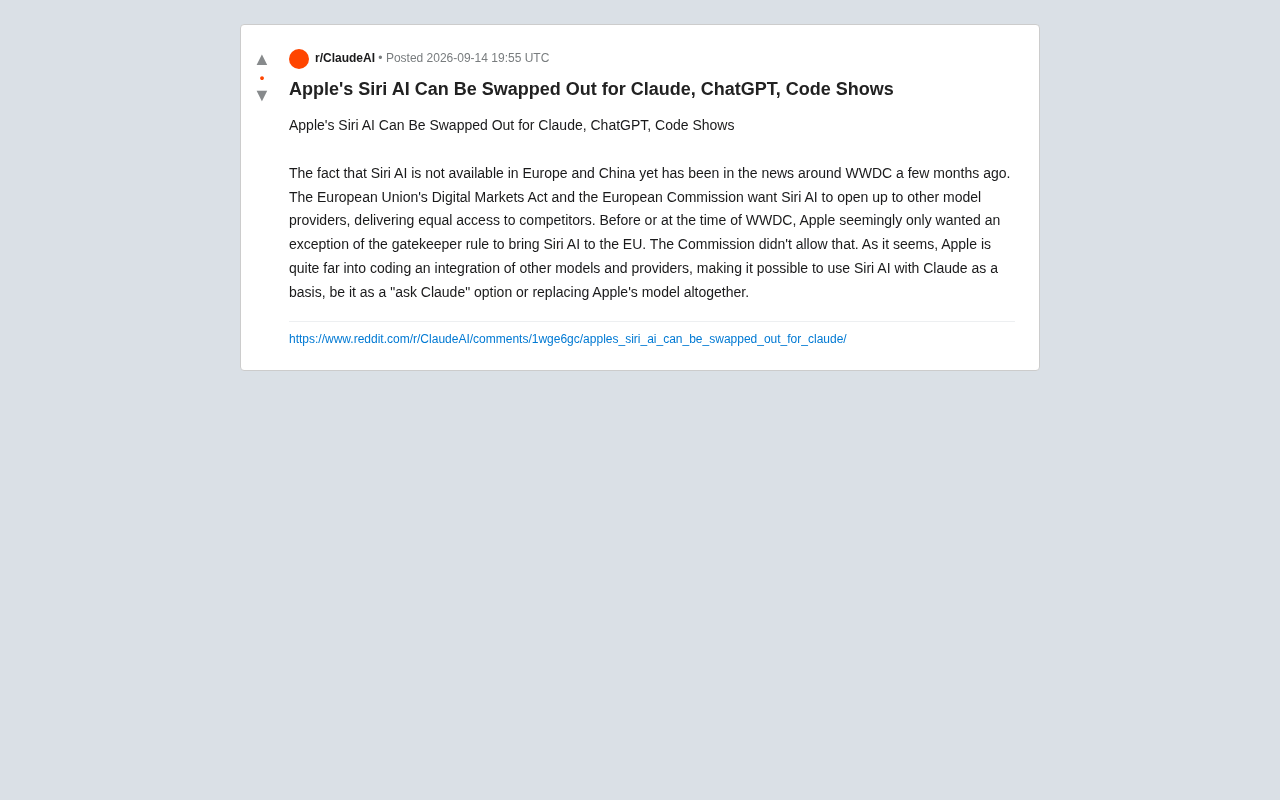
Apple Siri May Support Swapping in Claude and ChatGPT — Code Already Shows Signs
Leaked code shows Apple is developing third-party AI model integration for Siri, potentially allowing users to swap in Claude or ChatGPT under EU DMA pressure.
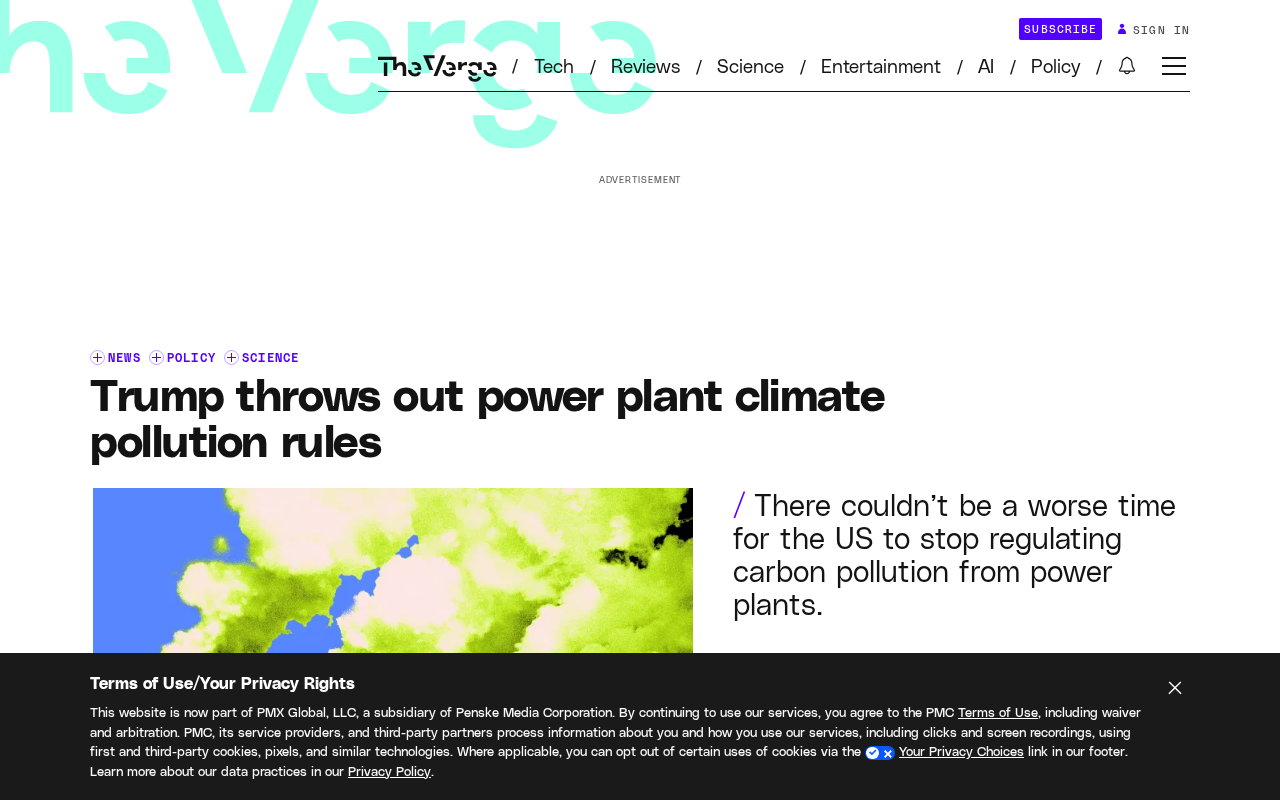
EPA Moves to Scrap Power Plant Greenhouse Gas Emission Standards Amid Surging AI Energy Demand
The EPA plans to eliminate all power plant greenhouse gas emission standards, just as AI, EVs, and manufacturing drive electricity demand higher — making U.S. power potentially far dirtier.