Vercel AI SDK Vue Package Releases Patch Update, Dependency Synced to Version 6.0.331
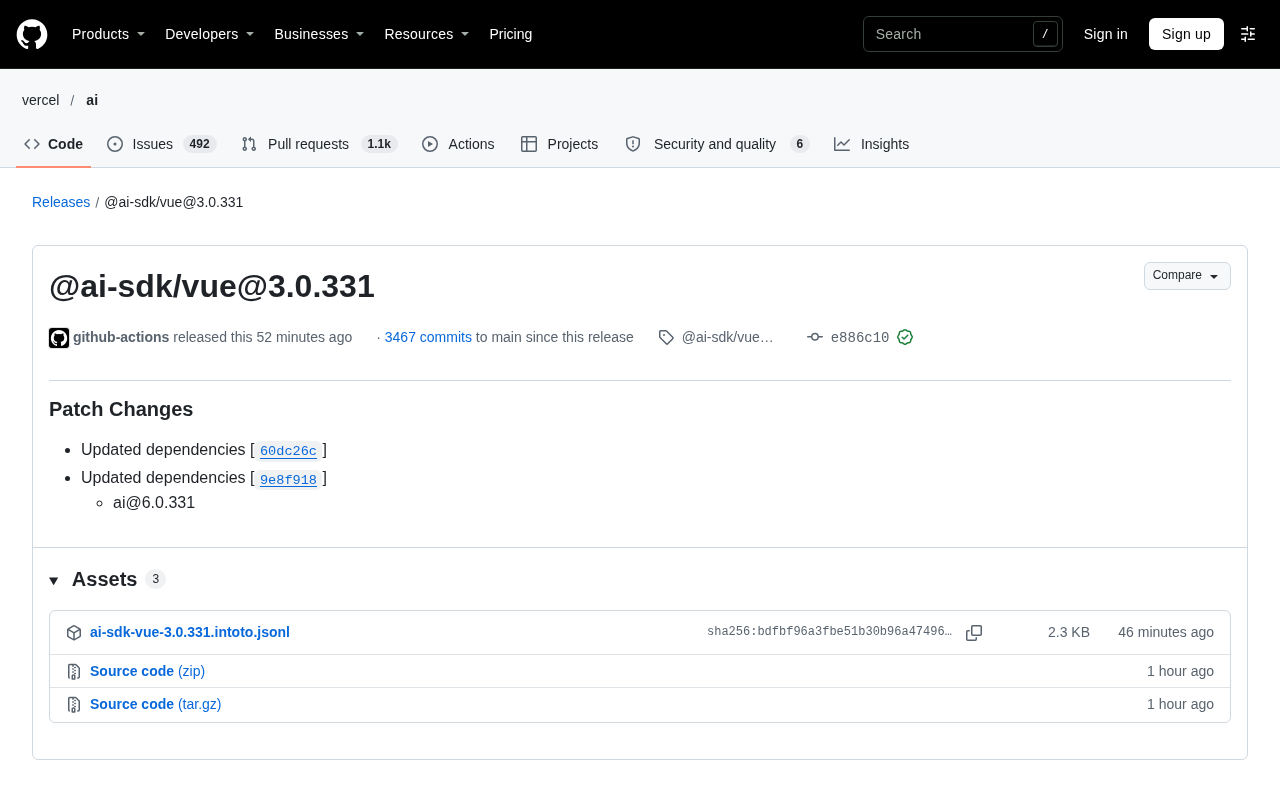
@ai-sdk/vue releases patch 3.0.331, syncing the core ai package dependency.
The Vercel AI SDK project released @ai-sdk/vue@3.0.331, a routine maintenance update whose only core change is dependency syncing—upgrading the underlying ai package to 6.0.331 to ensure the Vue adapter layer remains consistent with the core SDK's API behavior. The version was auto-published by the GitHub Actions bot with verified commit signatures, reflecting a mature CI/CD pipeline. As a patch version with no breaking changes, it is a low-risk upgrade; developers are advised to verify in a test environment and then lock the dependency to this version. The article notes that such high-frequency small releases reflect Vercel's ongoing investment in the AI application toolchain, and keeping the Vue adapter in sync with the core package helps lower the barrier for Vue developers to integrate AI capabilities.
A Low-Key Patch Update That Reflects the Ongoing Refinement of the AI SDK Ecosystem
The Vercel AI SDK project recently released the @ai-sdk/vue@3.0.331 patch version. As the version numbering suggests, this is a routine maintenance update primarily involving synchronized dependency upgrades. Although the changes appear simple, for developers building Vue applications with the AI SDK, keeping the dependency chain clean and consistent is often key to stable project operation.
According to the GitHub release page, this version was automatically published by the github-actions bot and includes two dependency update commits (commit hashes 60dc26c and 9e8f918 respectively), syncing the core package ai to version 6.0.331. At the time of release, the main branch was already 3467 commits ahead, indicating that the project is in a state of high-frequency iteration.
Details of the Patch Update
Dependency Sync: ai Package Upgraded to 6.0.331
This update to @ai-sdk/vue essentially follows the version cadence of the core ai package. ai@6.0.331 is upgraded as an underlying dependency, ensuring that the Vue adapter layer remains consistent with the API behavior of the core SDK. For developers using @ai-sdk/vue, this means they can seamlessly benefit from any fixes and optimizations that may be included in the core package at this version without manually adjusting dependency versions.
This "patch-following" strategy is very common in monorepo-managed SDK projects. Vercel uses automation tools to uniformly manage the versions of framework adapter packages, reducing compatibility issues caused by version mismatches.
Monorepo is a project organization approach that manages multiple interrelated software packages within a single code repository. In projects like the AI SDK, the core package ai and various framework adapter packages (such as @ai-sdk/vue and @ai-sdk/react) reside in the same repository, sharing build scripts, test suites, and release workflows. The advantage of Vercel adopting a monorepo model is that when the core package changes, dependency upgrades and releases for all adapter packages can be triggered at once, avoiding version lag caused by cross-repository coordination. The challenge lies in the large repository size and long build times, which require tools like Turborepo and Changesets for incremental builds and version management—this is also why version numbers need to be strictly aligned.
Maturity of the Automated Release Process
Another noteworthy detail in the release record is that the github-actions bot performed the release, and the commits carry GitHub verified signatures. This indicates that the AI SDK project has established a relatively mature CI/CD pipeline—from code merging to version release, many steps are automated. For open-source projects, this not only improves release efficiency but also reduces the risk of human error.
Semantic Versioning (SemVer) specifies that version numbers consist of three segments: major.minor.patch, corresponding respectively to incompatible API changes, backward-compatible feature additions, and backward-compatible bug fixes. The 3.0.331 in this article is a version with a patch number as high as 331, indicating that the project adopts a "small steps, fast pace" release cadence—publishing a patch each time a small number of changes are merged, rather than accumulating a large number of changes for a batch release. This strategy is common in front-end toolchains; its advantages are easy fault localization and fine-grained rollback, while its drawback is rapid version number inflation, requiring developers to rely on lock files (such as pnpm-lock.yaml) or exact version numbers to avoid unintended upgrades.
Practical Impact on Developers
For developers currently using @ai-sdk/vue, this update is a low-risk upgrade. Since it is a patch version and the main changes are concentrated on dependency syncing, it typically does not introduce breaking changes. It is recommended to verify in a test environment and then lock the dependency to this version to maintain consistency with the core SDK.
From a broader perspective, the frequent small version iterations of the AI SDK ecosystem reflect Vercel's continued investment in the AI application development toolchain. As one of the mainstream front-end frameworks, Vue's adapter package maintains a release cadence synchronized with the core package, which helps lower the barrier for Vue developers to integrate AI capabilities.
Summary
@ai-sdk/vue@3.0.331 is a typical dependency-sync patch release. It does not introduce new features but ensures through automated processes that the Vue adapter layer is aligned with the core ai package version. For developers following the AI SDK ecosystem, such updates are worth incorporating into routine dependency maintenance workflows to ensure long-term project stability.
Related articles

AI Assistant Misleads Tenant Into Eviction: Where Does Liability Lie for a Landlord's AI?
A landlord's AI assistant told a tenant they could delay rent—then she was evicted. This case reveals a liability vacuum for AI output involving contracts and legal obligations, and the responsibility deployers bear.

Best Black Friday Buys Under $100: 60+精选科技好物推荐
Black Friday on a budget? Here are 60+精选 tech deals under $100, covering accessories and practical gadgets to help you spend smart and avoid impulse buys.
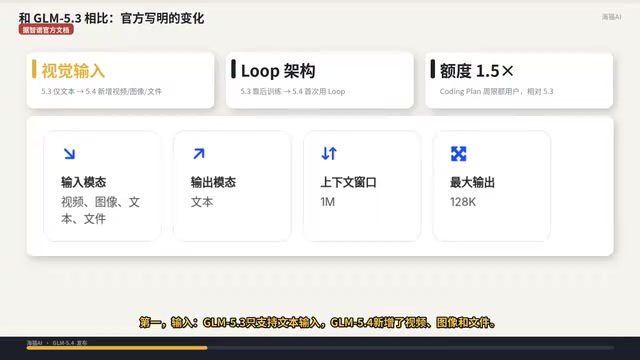
Zhipu GLM-5.4 Released: Loop Transformer Runs 28 Layers Twice
Zhipu releases GLM-5.4, the first Loop Transformer flagship: 28 layers run twice for 2-3T-equivalent intelligence, plus video and image input. API and open weights not yet released.