Vercel Fluid Compute: A New Paradigm for Unified Computing Infrastructure

Vercel's Fluid Compute unifies four computing forms into one on-demand system built for AI-era workloads.
Vercel's Fluid Compute proposes that sandboxes, functions, builds, and servers are simply different expressions of the same underlying infrastructure. By dynamically generating machines on demand, it aims to eliminate the fragmentation, cognitive overhead, and cold start issues of traditional cloud architectures. With sandboxes as first-class citizens, Fluid Compute is strategically positioned for AI Agent workloads that demand dynamic, isolated, and highly concurrent computing.
One System, Four Forms
Vercel recently put forward a thought-provoking idea: sandboxes, functions, builds, and servers — four seemingly distinct computing forms — are actually just different expressions of the same underlying computing infrastructure.
Background on Vercel: Vercel is a cloud platform company focused on frontend developer experience, originally known for the commercial deployment of the Next.js framework. Its core product provides a complete workflow from code push to global deployment, emphasizing zero configuration and peak performance. Vercel's tech stack is deeply tied to edge computing networks, deploying content and functions across dozens of global nodes to handle dynamic requests with minimal latency. As a major advocate of serverless architecture, Vercel has long explored how to free developers entirely from server operations — and Fluid Compute represents the latest evolution of this philosophy at the infrastructure level.
Behind this assertion is Vercel's Fluid Compute system. In the company's own words, Fluid Compute is "a system that creates the machines your workloads need, on demand." In other words, developers no longer need to choose, configure, and manage different runtime environments for different types of tasks. Instead, a unified engine handles dynamic scheduling behind the scenes.
The value of this vision lies in its attempt to dissolve a long-standing pain point in modern cloud computing: fragmentation.
Why Fragmentation Is a Problem
Multiple Systems Under Traditional Architecture
In traditional cloud development workflows, a single application often depends on multiple types of computing resources:
- Serverless Functions: Handle short-lived, event-driven requests
- Long-running Servers: Host services that need to stay online continuously
- Builds: Compile and bundle code during the deployment phase
- Sandboxes: Execute untrusted code in isolation, such as AI-generated code or user-submitted scripts
Deep Dive into Serverless Functions: Serverless functions don't literally mean there are no servers — rather, server management is entirely offloaded to the cloud platform. Developers only need to write business logic, while the platform handles auto-scaling, load balancing, and failure recovery. This model was born with AWS Lambda (2014) and fundamentally changed backend development paradigms. Its core characteristics include pay-per-execution billing (typically down to 100ms granularity), event-driven triggers (HTTP requests, database changes, scheduled tasks, etc.), and automatic elastic scaling. But it also has notable limitations: maximum execution time per invocation (typically 5–15 minutes), cold start latency (first calls may take hundreds of milliseconds to several seconds), and statelessness (no memory state is retained between invocations). These constraints have shaped the unique architectural patterns of serverless applications.
Deep Dive into Sandbox Technology: A sandbox is a restricted execution environment used to isolate the execution of untrusted code. Its core principle involves using OS-level or virtualization technologies to limit a process's access to resources — including the file system, network, and system calls. Common sandbox technologies in cloud computing include containers (Docker/containerd), microVMs (Firecracker/gVisor), and WebAssembly runtimes. The demand for sandboxes has surged in the AI era: when large models generate code that needs immediate execution, or when agents invoke external tools, it's critical to ensure that malicious code cannot steal data or attack the host system. Modern sandboxes aim for millisecond-level startup speeds and extremely low resource overhead, making them ideal for on-demand creation and destruction as carriers of dynamic workloads.
Each type of resource typically comes with its own scheduling logic, billing model, and operational cognitive load. Developers must constantly weigh trade-offs between cold start latency, resource utilization, and cost control — and these trade-offs often exist simply because different systems are running underneath.
The Possibilities Unlocked by Unification
Fluid Compute's core proposition is that these differences are superficial. Whether it's a function invocation, a build task, or a persistent service, the essence is always the same: "at a given moment, a certain specification of computing resources is needed to execute a workload." If the underlying layer can generate these machines on demand in a unified way, then the differences in form above become merely variations in configuration and lifecycle — not architectural rifts.
The Technical Significance of Fluid Compute
From "Pre-allocation" to "On-Demand Generation"
Fluid Compute emphasizes creating machines for workloads "on demand." This means resources aren't statically pre-allocated; instead, they're dynamically instantiated based on actual requests. The direct benefits of this model include:
- Higher resource utilization: No resources are consumed when idle, avoiding long-term costs for peak capacity
- Smoother scaling: Transitions from zero to massive concurrency become more natural
- Reduced cold start costs: A unified runtime can mitigate traditional serverless cold start pain points through techniques like instance reuse
Deep Dive into the Cold Start Problem: Cold starts are the most criticized performance bottleneck of serverless architecture. When a function hasn't been called for a while, the cloud platform reclaims its running instance to save resources. When the next request arrives, the platform must re-allocate a container or VM, load the runtime environment, and initialize application code and dependencies — a process that can take hundreds of milliseconds to several seconds. For latency-sensitive applications (such as API services or real-time interactions), this is unacceptable. Industry optimization approaches include: Provisioned Concurrency (keeping some containers warm), lightweight runtimes (like Deno/Bun) to reduce initialization time, and instance reuse with snapshot restoration. Fluid Compute's claim to mitigate cold starts likely relies on unified runtime pooling and intelligent pre-warming mechanisms.
Supplementary Note on Edge Computing: Edge computing refers to deploying computing resources at network edge nodes close to users, rather than in centralized data centers. This architecture significantly reduces network latency — for example, from 200ms cross-continent to under 10ms within the same city. Vercel's global edge network spans dozens of cities, where both functions and static resources can be executed and distributed at edge nodes. However, edge computing also introduces new challenges: difficulty synchronizing state between nodes, increased database access latency (requiring connections back to central regions), and greater complexity in debugging and monitoring. Fluid Compute's unified abstraction may simplify workload scheduling between edge and central nodes — the system automatically decides at which tier to create compute instances based on request origin and resource requirements.
Paving the Way for AI-Era Workloads
A notable detail: sandboxes are explicitly treated as first-class citizens in Fluid Compute. In the current explosion of AI applications, running code generated by large models, executing agent tool calls, and isolating user-submitted scripts all create strong demand for secure, isolated, on-demand computing environments.
Characteristics of AI Agent Workloads: AI Agents represent a new generation of application architecture: driven by large language models, capable of autonomously planning tasks, invoking tools, and iterating on execution. Their workload characteristics differ fundamentally from traditional applications: highly dynamic (execution paths are unpredictable for each conversation), tool-intensive (may need to invoke dozens of tools including search, code execution, APIs, etc.), and highly bursty (activated only when a user asks a question, potentially triggering a dozen function calls within seconds). This demands infrastructure with extremely fast cold starts, fine-grained resource isolation (to prevent maliciously generated code from attacking the system), and flexible billing models (charged by actual token consumption and tool invocations). Vercel's elevation of sandboxes to first-class citizenship reflects its recognition of the explosive potential of these workloads.
A system that can rapidly spin up isolated sandboxes and reclaim them after execution fits perfectly with the "dynamic, short-lived, highly concurrent" computing characteristics of the AI Agent era. This is perhaps the deeper motivation behind Vercel placing sandboxes alongside functions and servers — they're targeting the infrastructure foundation for next-generation AI-native applications.
An Industry Trend Taking Shape
Convergence of Computing Primitives
Vercel's framing reflects a broader trend in cloud infrastructure: the convergence of computing primitives. Over the past decade, cloud providers have continuously introduced new product forms (containers, functions, edge computing, build services, etc.), and developers' cognitive burden has grown accordingly. Now, leading platforms are beginning to think in reverse — can a single unified abstraction cover all these forms?
The Container vs. VM Trade-off: Containers and virtual machines are the two primary isolation technologies in cloud computing. VMs emulate complete hardware environments through a hypervisor, with each VM running an independent OS kernel — providing the strongest isolation but slower startup (typically tens of seconds) and higher resource overhead. Containers share the host machine's kernel and achieve process-level isolation through namespaces and cgroups — fast to start (seconds) and lightweight, but with slightly weaker security. MicroVMs (such as AWS Firecracker), which have emerged in recent years, attempt to combine the advantages of both: using KVM for VM-level isolation while minimizing the guest OS to achieve 100–200ms startup times. Fluid Compute likely employs a hybrid strategy — lightweight containers for functions, microVMs for sandboxes, traditional VMs for long-running servers — but shields developers from these differences through a unified scheduling layer.
For developers, the ideal state is "just describe what I want to do, without caring about what kind of machine it runs on." Fluid Compute is one step toward that direction.
Platform Moat Logic
From a business perspective, such a unified system also strengthens platform stickiness. When sandboxes, functions, builds, and servers are all driven by the same engine, migration costs, cross-form collaboration fluidity, and overall cost model transparency all become key differentiators. Whoever hides the underlying complexity best wins developer mindshare.
Questions Worth Watching
Of course, this vision still awaits more detailed validation. While a unified system brings convenience, it may also introduce abstraction leakage — when the performance characteristics of different workloads vary dramatically, can the promise of "one system to rule them all" truly be delivered?
The Engineering Reality of Abstraction Leakage: Abstraction leakage is a classic problem in software engineering, articulated by Joel Spolsky: all non-trivial abstractions are, to some degree, leaky. When the complexity of the underlying implementation penetrates the abstraction layer and is exposed to users, leakage occurs. Typical examples in cloud computing include: serverless functions claim you don't need to worry about servers, but developers still need to understand cold starts, execution time limits, and concurrency models to optimize performance; container orchestration platforms abstract resource scheduling, but during network partitions or node failures, you still need to understand pod restart policies. Fluid Compute's "one system to rule them all" promise faces the same risk — when CPU-intensive build tasks and millisecond-response functions share the same underlying infrastructure, how is performance isolation guaranteed? Could the unified abstraction mask critical performance characteristic differences?
Additionally, the actual latency of on-demand machine generation, cost predictability, and support for complex long-running tasks are all areas developers need to carefully evaluate before adopting.
Regardless, the "unified computing abstraction" approach that Fluid Compute represents points to a clear direction in cloud infrastructure evolution. For developers riding the wave of AI applications, understanding this shift in underlying paradigms may hold more long-term value than chasing individual product features.
Key Takeaways
Related articles
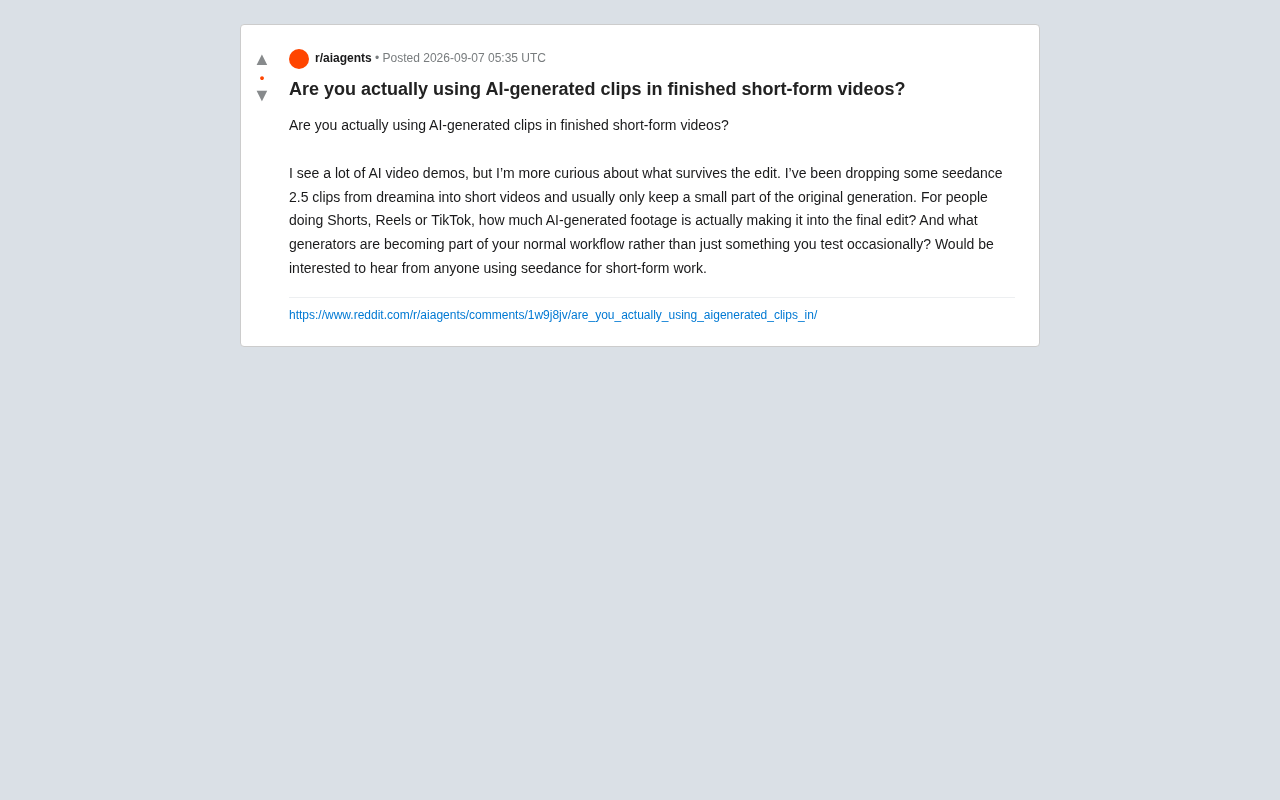
How Short-Form Video Creators Are Using AI Video Generation Tools
Exploring the real-world application of AI video generation tools in short-form video creation. From Seedance to Runway, how do creators integrate AI assets? Revealing the gap between demos and production use.

Home Data Center Setup Guide: A Complete Self-Hosted Private Cloud Implementation
Deep dive into building a home data center: hardware selection, software architecture, cost analysis, and operational challenges. From data sovereignty to technical implementation, build your private cloud infrastructure and control your digital assets.
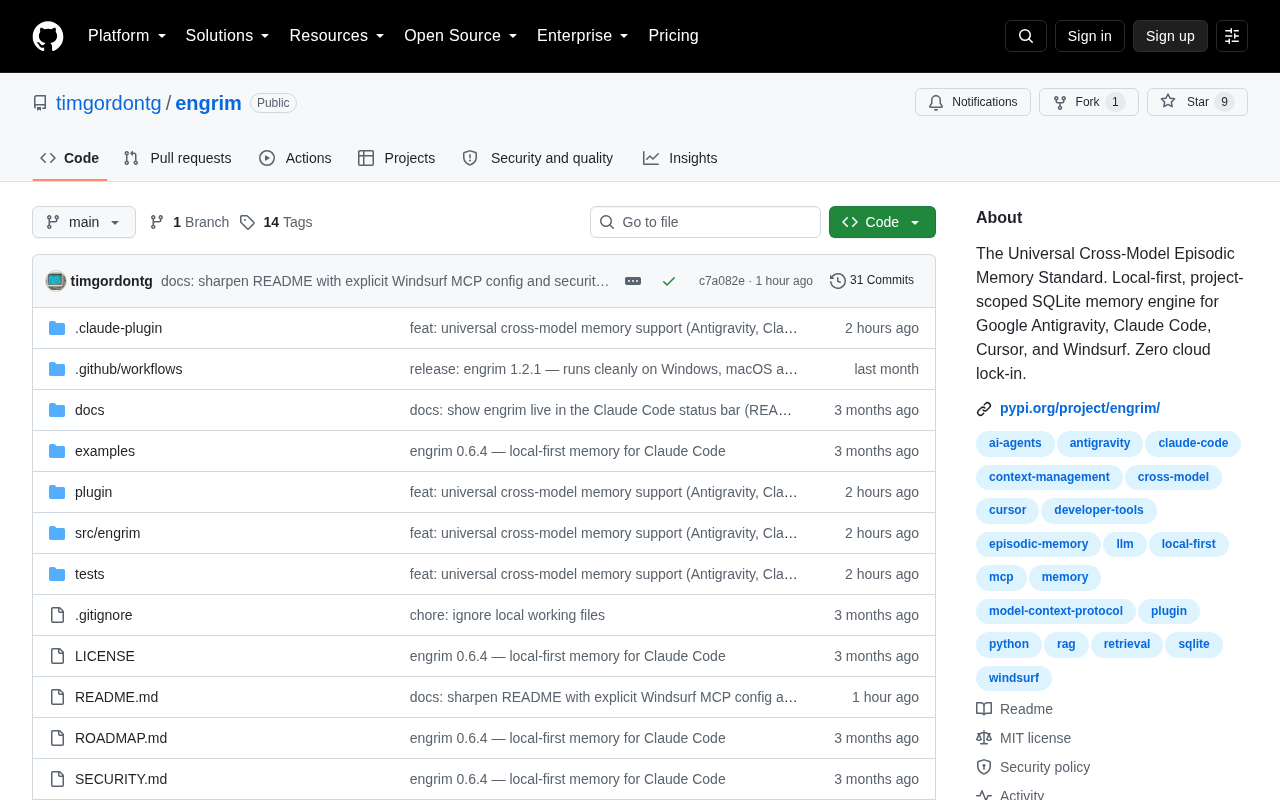
Engrim: A Local Memory Engine Solution for AI CLI Tools
Engrim is an open-source, local-first SQLite memory engine built for AI CLI tools like Claude Code and Aider, solving context loss while keeping data private.