Vercel Ship SF Preview: Shopify, Anthropic and Other Giants Discuss AI Engineering

Vercel Ship SF guest lineup shows AI programming shifting from tool capabilities to enterprise-grade engineering systems.
Vercel's annual flagship event Ship SF opens, with guest list covering Anthropic, Meta AI, Shopify, typesafeai, and Vercel itself, spanning the model layer, platform layer, and security tool layer. The analysis suggests this composition sends a clear signal: the focus of AI programming discussions has shifted from "can models write code" to "how to reliably embed AI into engineering workflows." The core topics are expected to center on three aspects: the safety and controllability of AI-generated code, large-scale AI adoption experience in e-commerce scenarios, and the collaborative infrastructure between deployment platforms and AI models. For developers, the model usage patterns, cost control, and failure reviews from frontline engineering leads are more valuable references than model parameters, while typesafeai's appearance indicates that the AI code security layer is becoming an independent startup track.
Vercel's annual flagship event Ship SF opens today, and the official guest list reveals an important signal: AI programming is evolving from an experimental tool for individual developers into a core topic of enterprise-grade engineering systems.
The Industry Trends Revealed by the Guest Lineup
According to Vercel's official tweet, the speakers at this Ship SF include: Vercel CEO and founder Guillermo Rauch, Shopify CEO Tobias Lütke, typesafeai CEO Diogo Almeida, Anthropic engineering lead Katelyn Lesse, and Meta AI VP of Engineering Prashant Ratanchandani.
The composition of this list is worth pondering. Of the five guests, two come from the AI model layer (Anthropic, Meta AI), one from the e-commerce platform giant (Shopify), one from an AI safety tool startup (typesafeai), while Rauch himself represents the development tools and deployment platform. This cross-industry combination shows that the focus of AI programming discussions is no longer limited to "can the model write code," but has shifted to "how to reliably embed AI into engineering workflows."
Katelyn Lesse's attendance is particularly noteworthy. As the developer of the Claude series of models, Anthropic's engineering lead appearing at a Vercel event suggests that the two companies may have deep collaboration on AI-assisted development workflows. Prashant Ratanchandani's participation represents Meta AI's continued investment in the developer ecosystem.
From Tools to Systems: Three Signals of AI Engineering
Based on the guests' backgrounds, we can anticipate the core topics of this conference from three dimensions.
First, the safety and controllability of AI programming. Diogo Almeida's typesafeai focuses on AI code safety, while Anthropic has continuously emphasized research on the controllability of AI systems in recent years. Their shared stage likely points to the same question: when AI-generated code enters production environments, how do we ensure its type safety, predictable behavior, and that it doesn't introduce hidden vulnerabilities?
Second, the large-scale adoption of AI in e-commerce scenarios. Shopify, led by Tobias Lütke, is one of the pioneers in AI application deployment, having accumulated extensive engineering experience in product recommendations, merchant tools, customer service automation, and other scenarios. Shopify's case is valuable for understanding "how AI applications can run stably in high-concurrency, strongly consistent commercial systems."
Third, the synergy between deployment platforms and AI models. Guillermo Rauch has always been a radical innovator in front-end and deployment tools, and Vercel has been making continuous efforts in AI SDK, edge computing, and other directions in recent years. This conference is expected to showcase Vercel platform's latest capabilities in AI application deployment, including engineering infrastructure such as streaming responses, model routing, and edge inference.
Type Safety refers to the enforced validation of data types for variables, function parameters, and return values by a programming language at compile time or before runtime, thereby catching type mismatch errors before code execution. In traditional engineering, languages such as TypeScript, Rust, and Haskell use static type systems to significantly reduce the probability of runtime crashes. When AI generates code, type safety faces new challenges: models may generate code that appears reasonable but is not type-rigorous, or introduce implicit type conversions in dynamic language environments. Companies like typesafeai combine static analysis, type inference, and AI code generation workflows to complete type-level verification before code enters the repository, reducing the burden of manual review. This is part of the broader problem of "AI code verifiability," which together with formal verification and runtime protection forms the safety guardrails for production environments.
Edge Inference refers to deploying the inference process of machine learning models on edge nodes close to users or data sources (such as CDN edge servers, base stations, local devices) rather than centrally in cloud data centers. Its core advantages are reducing network round-trip latency, lowering bandwidth costs, and meeting data localization compliance requirements. Vercel's edge computing network is naturally suited to hosting lightweight AI inference tasks such as content moderation, personalized recommendations, and real-time translation. However, edge inference also brings engineering constraints such as model size, cold start, and hardware heterogeneity, typically requiring model quantization, distillation, or specialized inference runtimes. For AI application developers, the routing strategy between edge inference and cloud-based large model calls is becoming a key decision point in deployment architecture design.
Practical Implications for Developers
The value of such conferences lies not only in product announcements but also in conveying first-hand engineering experience. For developers integrating AI capabilities into products, the model usage patterns, cost control strategies, and failure case reviews shared by the engineering leads from Anthropic and Meta AI are often more valuable references than the parameter scale of the models themselves.
Shopify's participation provides an observation window: how a platform company handling massive transaction data weighs AI latency, accuracy, and cost in real business scenarios. Such frontline experience is often simplified in public technical blogs but more easily detailed in live presentations.
typesafeai's appearance reminds us that the security layer of the AI programming toolchain is becoming an independent startup track. As the volume of AI-generated code grows rapidly, traditional engineering methods such as static analysis, type checking, and runtime protection need to be redesigned for AI scenarios.
Static Analysis refers to detecting potential defects, security vulnerabilities, or specification violations by parsing the syntax tree, control flow, and data flow of source code without actually running the program. Traditional static analysis tools (such as ESLint, SonarQube, Semgrep) face new problems in AI programming scenarios: the volume of AI-generated code far exceeds human writing speed, and styles and patterns are highly diverse, making rule-based checks prone to omissions. Therefore, static analysis for AI scenarios needs to incorporate semantic understanding and probabilistic judgment, for example, identifying unsafe API call patterns preferred by models and detecting hidden logic errors in generated code. Runtime Protection, on the other hand, limits the damage radius of AI-generated code during program execution through sandboxing, least privilege, and abnormal behavior monitoring. Together with type checking, the two form a three-layer defense system of "pre-generation, post-generation, and runtime," which is also a necessary condition for the AI programming toolchain to move toward enterprise-grade deployment.
Key Time Points to Watch
Ship SF starts at 10 AM Pacific Time. For developers unable to attend, Vercel typically provides live streaming and post-event replays. Considering the guest lineup covers the model layer, platform layer, and application layer, this conference has a broad range of topics. It is recommended to focus on the engineering details of each talk rather than just product announcements.
From a broader perspective, the composition of the guests at this conference is itself an industry map: AI programming discussions are shifting from "tool capabilities" to "engineering systems," and on stage are model companies selling shovels, platform companies using shovels to mine gold, and service providers specifically checking whether the shovels are safe. This division of labor may illustrate the maturity of AI engineering better than any single product announcement.
One-line Summary
Vercel Ship SF guest lineup shows AI programming is shifting from tool capabilities to enterprise-grade engineering systems.
Paragraph Summary
Vercel's annual flagship event Ship SF opens, with guest list covering Anthropic, Meta AI, Shopify, typesafeai, and Vercel itself, spanning the model layer, platform layer, and security tool layer. The analysis suggests this composition sends a clear signal: the focus of AI programming discussions has shifted from "can models write code" to "how to reliably embed AI into engineering workflows." The core topics are expected to center on three aspects: the safety and controllability of AI-generated code, large-scale AI adoption experience in e-commerce scenarios, and the collaborative infrastructure between deployment platforms and AI models. For developers, the model usage patterns, cost control, and failure reviews from frontline engineering leads are more valuable references than model parameters, while typesafeai's appearance indicates that the AI code security layer is becoming an independent startup track.
Related articles
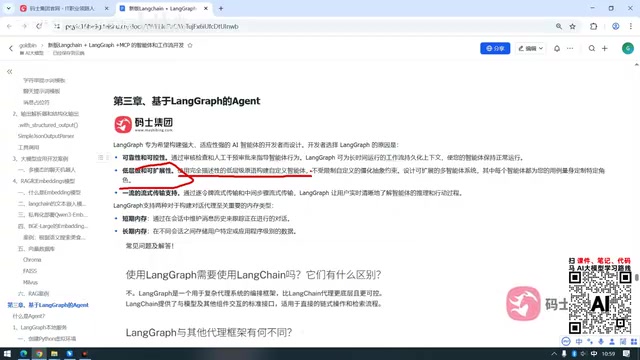
LangGraph Crash Course: Building Enterprise-Grade AI Agents and Workflows from Scratch
LangGraph crash course: learn its independence from LangChain, MIT license, FastAPI high-concurrency deployment, human approval, and memory storage for enterprise AI agents.
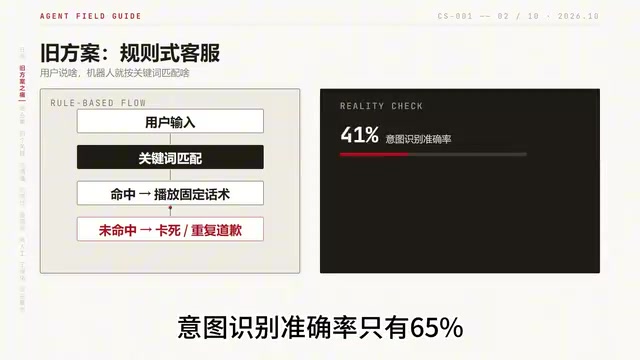
Building an AI Customer Service Agent from Scratch: A 92% Intent Recognition Case Study
A Bilibili case study: building an AI customer service agent from scratch with BERT intent recognition, dialogue state tracking, hybrid vector retrieval, and a weighted handoff model—raising intent accuracy from 65% to 92%, 78% conversation completion, handling 100K conversations daily.
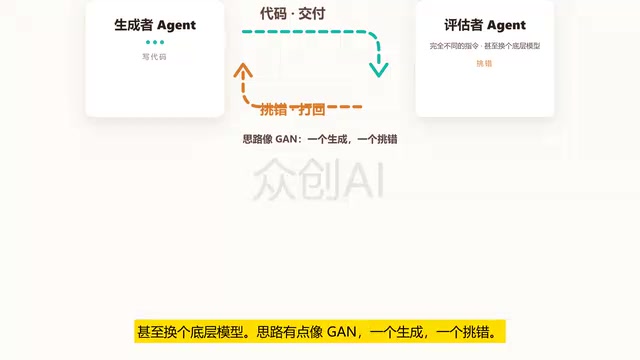
Loop Engineering: An Engineering Paradigm for AI That Writes Code and Merges PRs Autonomously
Loop Engineering is transforming AI development pipelines: Stripe's Minions system merges over 1,300 machine-generated PRs weekly. This article breaks down Loop Engineering's five core actions, six components, five failure modes, and three safety disciplines, explaining why independent evaluators, state files, and budget caps matter more than full automation.