Vibe Coding: An Essential Hands-On Skills Guide for Product Managers

A three-layer framework for product managers to master Vibe Coding and ship MVPs with AI.
This guide breaks down the three essential layers of Vibe Coding competency for product managers: precise requirements clarification, standards-driven engineering execution, and foundational technical judgment. Rather than turning PMs into programmers, Vibe Coding amplifies their ability to independently ship demonstrable MVPs through AI collaboration, providing a replicable methodology that stands out in interviews.
What Truly Valuable Vibe Coding Ability Looks Like
More and more AI product managers are listing "proficient in Vibe Coding" on their resumes, but when it comes to real interview scenarios, they often fumble when pressed for details. The root cause is that many people misunderstand the essence of Vibe Coding.
Vibe Coding is a concept introduced in early 2025 by prominent AI figure Andrej Karpathy. Its core idea is that developers describe their intent to AI using natural language, and large language models (such as GPT-4, Claude, etc.) automatically generate the code—developers only need to review and adjust the results. The popularity of this concept is closely tied to the maturation of AI coding tools like Cursor, Windsurf, Bolt, and Replit Agent. It fundamentally represents a paradigm shift from "writing code by hand" to "directing AI to write code," lowering the technical barrier to software development and enabling professionals without engineering backgrounds to participate in building product prototypes.
The Vibe Coding ability that truly gives you a competitive edge in job hunting isn't about turning product managers into programmers—it's about amplifying a product owner's ability to ship. It frees product managers from being confined to writing documents and drawing wireframes, enabling them to independently turn an idea into a demonstrable, testable, and verifiable demo, thereby expanding their execution boundaries—note: expanding boundaries, not replacing developers.
In other words, AI is like an engineer with exceptional execution ability but lacking industry and business domain knowledge. It can efficiently produce code but cannot independently define business value. This is what determines the product manager's true role in Vibe Coding collaboration.
Layer 1: Precise Requirements Clarification
Requirements clarification is the core prerequisite of the entire Vibe Coding framework. When requirements are vague, AI will "improvise," producing code that looks polished but can't actually be put into practice. This is directly related to how large language models work—LLMs are fundamentally probability-based text generation systems. When input instructions aren't specific enough, the model tends to fill in the blanks with "seemingly reasonable" generic solutions rather than asking about business details. Therefore, several key elements must be clarified before getting started.
Define the Product Positioning
First, you need to distinguish whether you're building a conceptual demo, an internal tool, or a market-facing commercial MVP. MVP (Minimum Viable Product) is a core concept in lean startup methodology, systematically articulated by Eric Ries in The Lean Startup. Its core idea is to use minimal resources to build a product version that can validate core hypotheses, using real user feedback to guide subsequent iteration direction. An MVP is not a rough half-finished product—it's a usable product precisely focused on the core value proposition. Different positioning corresponds to entirely different levels of completeness and technology choices—a conceptual demo might only need static front-end pages, an internal tool requires considerations for data persistence and permission management, while a commercial MVP involves security, performance, user experience, and other multi-dimensional requirements. Without clear positioning, subsequent development easily goes off track.
Map Out Users and Workflows
Next, clearly segment your target users and map out the complete core workflow along with exception handling logic. AI excels at code generation and implementing business loops, but defining business value can only be controlled by the product manager. If requirements aren't thoroughly mapped out, all subsequent development is likely wasted effort. It's worth emphasizing that in the Vibe Coding paradigm, the granularity of requirements mapping directly impacts the quality of AI output—the more specific your user stories, the clearer your workflows, and the more explicit your boundary conditions, the better the AI-generated code will match actual needs. This is essentially the practice of Prompt Engineering.
Layer 2: Standards-Driven Engineering Mindset for Execution
The second layer of ability is about abandoning the "casual chatroom-style development" approach. Haphazard coding without standards produces code that's difficult to maintain and easily exposes weaknesses in interviews. The proper approach follows a standardized engineering workflow.
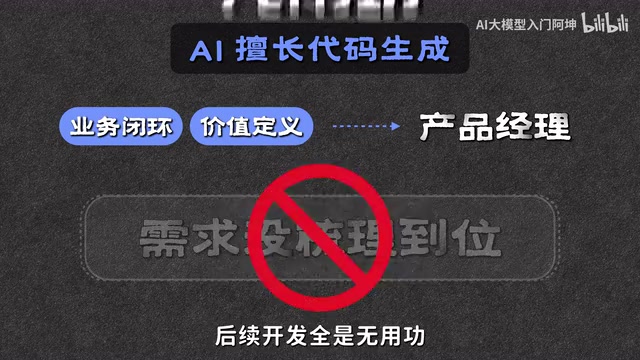
Specifically, you should first produce a concise PRD and prototype to lock down requirements, clearly mapping out pages, modules, and navigation logic. A PRD (Product Requirements Document) plays a dual role in the Vibe Coding paradigm—it's not just a traditional communication contract between people, but also becomes the foundation of Prompt Engineering between humans and AI. A structured PRD (containing user roles, feature lists, page flows, data models, acceptance criteria, etc.) can be directly converted into high-quality AI prompts, significantly improving the accuracy of code generation. In other words, the quality of the PRD directly determines the quality of AI output, making "writing good requirements documents"—a traditional skill—even more critical in the AI era.
Then adopt a front-end/back-end separation architecture to build the project, demonstrating comprehensive product thinking. Front-end/back-end separation is the mainstream architecture pattern in modern web development: the front end handles the user interface and interaction logic (typically using frameworks like React, Vue, etc.), while the back end handles business logic, data processing, and API services (typically using Node.js, Python Flask/Django, etc.), with the two communicating through RESTful APIs or GraphQL interfaces. The advantage of this architecture lies in clear separation of responsibilities, independent deployment and iteration, and easier team collaboration. For product managers using Vibe Coding, understanding this separation pattern means being able to give more precise task instructions to AI—for example, describing front-end page interaction requirements and back-end data logic separately, rather than conflating them.
In terms of development sequence, complete the entire loop following the pipeline of "front end first, then back end, automated testing, and deployment." The benefit of starting with the front end is that you can quickly get visual feedback, verify whether the interaction logic makes sense, then fill in real data with back-end APIs, and finally ensure functionality stability through automated testing and deploy for a complete product experience.
With this approach, your resume can read: Independently built a full-stack project using Vibe Coding tools, completing the entire process from concept to MVP delivery. This is verifiable proof of hard skills, not an empty list of buzzwords.
Layer 3: Foundational Technical Judgment
Product managers don't need to write code themselves, but they must be able to distinguish good code from bad. This layer can be broken down into three specific dimensions.

First, understand the division of responsibilities between front end and back end. Only by understanding the boundary of responsibilities between front and back end can you precisely assign development tasks to AI and avoid rework caused by ambiguous task descriptions. For example: Should form validation be handled on the front end or back end? Which layer should user authentication logic be processed in? Should data processing and aggregation be done on the front end or back end? The answers to these questions directly affect the precision of your instructions to AI. If sensitive logic that should be handled by the back end is assigned to the front end, it not only poses security risks but also exposes cognitive gaps during technical reviews.
Second, develop component-based thinking. Component-based Architecture is the foundational paradigm in modern front-end development, widely applied in frameworks like React and Vue. Its core idea is to break the interface into independent, reusable functional units—for example, navigation bars, forms, modals, and card lists can all be encapsulated as independent components and reused across different pages. Being able to distinguish between general reusable components and one-off pages ensures product iterability, rather than starting from scratch every time. Having this mindset means product managers can identify which UI elements and interaction patterns will appear in multiple places during product planning, thereby guiding AI to generate reusable code structures at the requirements description stage, avoiding the maintenance nightmare caused by massive code duplication.
Third, basic debugging and issue localization ability. When code breaks, being able to precisely describe where the problem lies, rather than vaguely tossing out "fix it for me." Debugging here doesn't require product managers to understand every line of code, but at minimum they should be able to: identify error messages in the browser console, distinguish between front-end and back-end errors (such as the meaning of HTTP status codes like 404 and 500), and determine whether the issue lies in page rendering or API requests. Clear problem descriptions significantly improve human-AI collaboration efficiency—telling AI "after clicking the submit button, the console shows TypeError: Cannot read property 'map' of undefined" is far more effective than "the page is broken."
How to Effectively Showcase Vibe Coding Ability in Interviews
Many people only say "I used AI to build a website" in interviews, which has virtually no persuasive power. The right approach is to highlight the product owner's perspective.

What interviewers really want to assess isn't whether you can operate a specific AI tool, but whether you can systematically drive a product from 0 to 1. This means what you need to demonstrate is a complete methodology, not a single-point skill. It's recommended to organize your narrative using the STAR method (Situation-Task-Action-Result): set up the project background and objectives, explain your task and role, detail your specific workflow (requirements definition → PRD writing → AI-assisted development → testing and verification → deployment), and close with quantifiable results.
A more compelling statement would be: Leveraging a standardized development workflow, I completed the full-cycle pipeline through AI collaboration—from requirements mapping, PRD finalization, front-end and back-end development, to testing and deployment—independently producing code and an MVP, thereby shortening the product validation cycle. If you can include a link to a live project demo or showcase the project's code repository structure, the persuasiveness increases dramatically.
Incorporating such a complete working methodology into your project experience is what truly demonstrates your comprehensive understanding of business execution and technical collaboration, and what sets you clearly apart from other candidates.
Conclusion
The value of Vibe Coding has never been about product managers taking over developers' jobs—it's about giving product owners the ability to "rapidly turn ideas into reality." From precise requirements clarification, to standardized engineering execution, to foundational technical judgment, these three layers build progressively upon each other, forming a truly valuable practical framework. Mastering it means you can not only define a product but also personally push it to its first verifiable step.
In an era where AI tools are evolving at breakneck speed, this hybrid "product + technology" capability is becoming the core competitive advantage of the next generation of product managers. What matters isn't which AI tool you use, but whether you've established a replicable, explainable, and verifiable product delivery methodology. Tools will iterate, but methodology and product thinking will continue to accumulate, becoming your true career moat.
Related articles
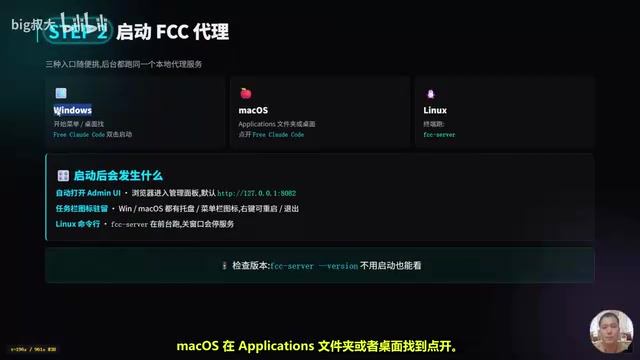
Free Claude Code: One Proxy Connecting 50 Providers and 9 Coding Assistants
Free Claude Code (FCC) is an MIT open-source local proxy integrating 50 Providers and 9 Coding Agents with auto-Failover, domestic model fallbacks, and local GGUF support.
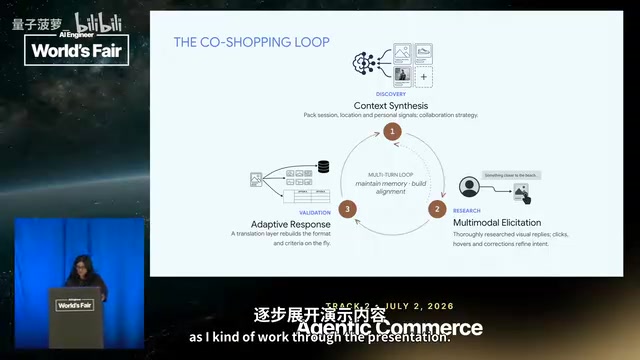
Multimodal Collaborative Agents: A Complete Methodology from Vague Intent to Precise Recommendations
Deep dive into Google DeepMind's multimodal collaborative agent methodology: three-stage framework (Discovery, Research, Response) solving user articulation gaps, with design principles and evaluation systems.
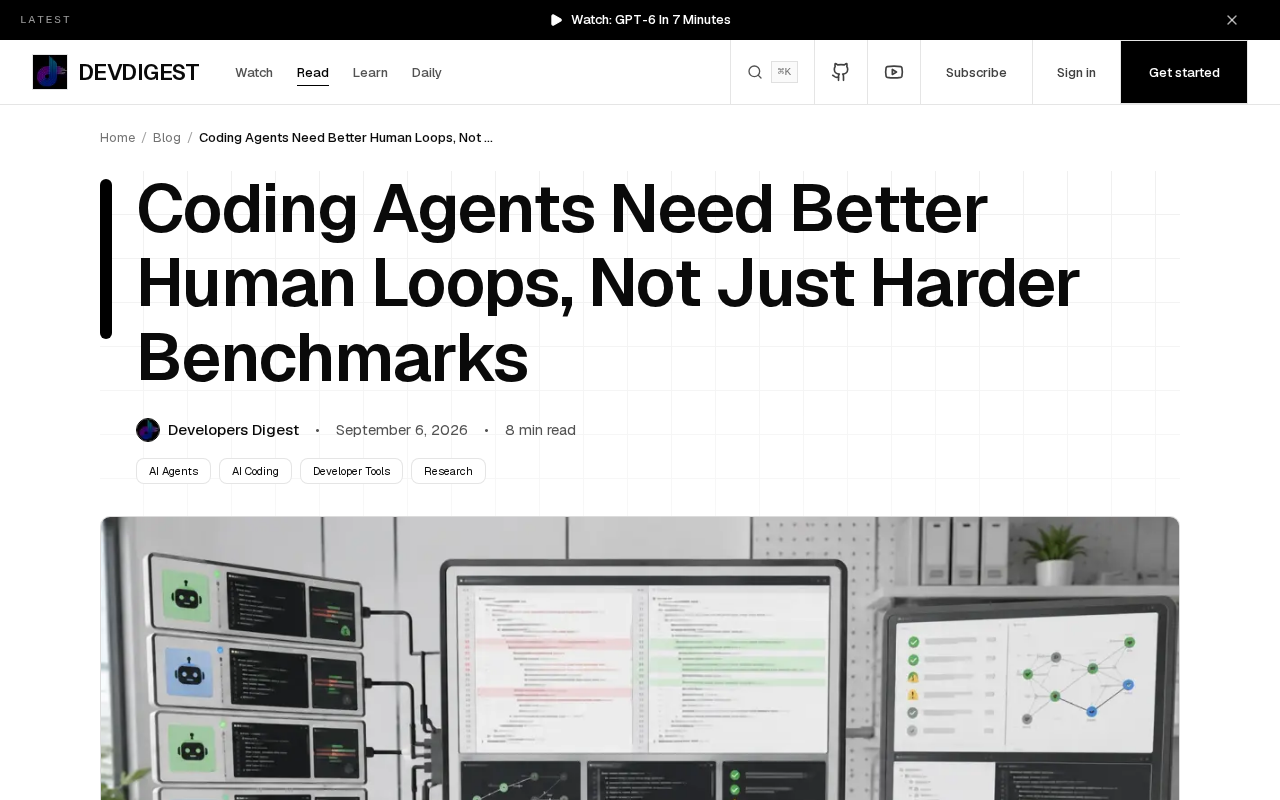
The Real Bottleneck for Coding Agents: Human-AI Collaboration, Not Benchmark Scores
AI coding agents over-pursue benchmark scores while ignoring human-AI collaboration—the real bottleneck. This article explores steering, verification, and adaptation challenges, and why Human-in-the-loop matters more than SWE-bench rankings.