Vibe Coding for Beginners: Build Your First Project with AI from Scratch

Vibe Coding lets anyone build real software using AI — no coding background required.
Vibe Coding, a term coined by OpenAI co-founder Andrej Karpathy, is a new programming paradigm where you describe what you want in natural language and let AI handle the code. Using tools like Claude Code and Cursor, anyone can go from idea to working product without traditional programming expertise — making it one of the most important skills to develop in the AI era.
What Is Vibe Coding
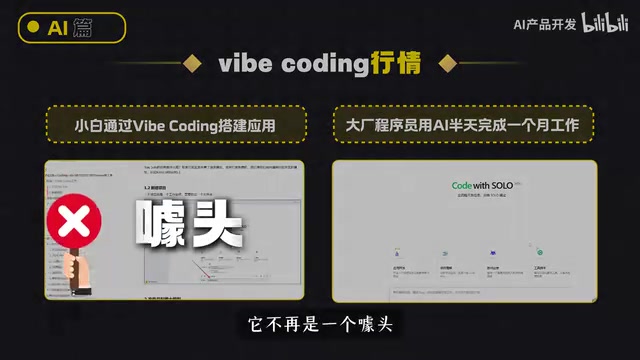
In the past couple of years, AI has evolved far beyond a chatbot you talk to for fun. Open any video platform and you'll find stories like this: a complete beginner uses Vibe Coding to build a working app in half a day; a senior engineer at a major tech company finishes a month's worth of work in an afternoon with AI assistance. This isn't marketing hype — it's a genuine productivity revolution.

The term "Vibe Coding" itself has a certain flair to it, and its origin is worth noting. The concept was formally introduced in early 2025 by Andrej Karpathy, co-founder of OpenAI. Karpathy is not only an OpenAI co-founder but also served as Senior Director of AI and Autopilot Vision at Tesla — one of the most influential evangelists in the deep learning world. His Stanford course CS231n is considered a classic entry point by millions of developers worldwide. Because he combines top-tier academic credentials with large-scale engineering experience, his take on "the future of programming" carries enormous weight in the industry. In a social media post, he described a brand-new way of coding — "I just have to see it, vibe with it" — where developers fully immerse themselves in an AI-collaborative "vibe," no longer reviewing code line by line, but instead expressing intent through natural language and letting AI handle the actual code generation and debugging. This description immediately resonated across the developer community because it perfectly captured the new human-AI collaboration model enabled by the leap in large language model capabilities.
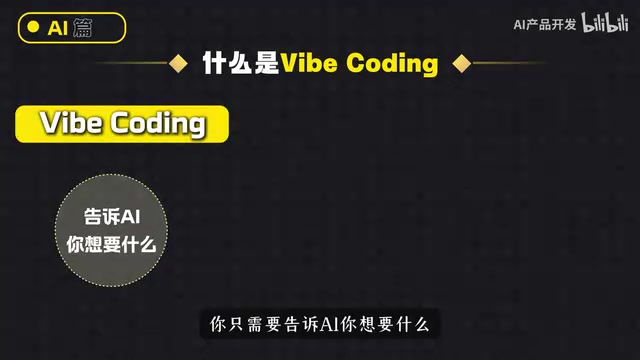
"Vibe" refers to atmosphere — you simply tell the AI what you want, and it writes and runs code while you sit back and nod yes or shake your head no. The core isn't "writing code" — it's "expressing your intent."
The significance of this shift is that it lowers the barrier to building software to practically zero. The technical foundation behind this is the profound evolution of large language models (LLMs) in the domain of code generation. LLM code capabilities didn't emerge overnight — they're built on three layers of technical progress: first, large-scale pretraining on billions of lines of open-source code from GitHub, Stack Overflow, and similar sources, teaching the model syntax structures and programming patterns; second, instruction fine-tuning for programming tasks, enabling the model to understand natural language requirements and map them to code implementations; and third, Reinforcement Learning from Human Feedback (RLHF), continuously optimizing outputs using developer ratings of code quality. Notably, code data plays a role in LLM training that far exceeds its proportional share — research has found that training on code not only improves programming ability but also significantly enhances logical reasoning and structured thinking, which explains why models trained on code corpora also perform well on general tasks like mathematical reasoning and instruction following. From GitHub Copilot's launch based on GPT-3 in 2021, to the successive releases of GPT-4, Claude 3 series, and Gemini Ultra, models now approach or even surpass junior engineer performance in areas like code completion, cross-file context understanding, and automatic bug fixing.
One of the most authoritative benchmarks for measuring this progress is HumanEval — designed by OpenAI, it consists of 164 Python programming problems covering string manipulation, algorithm implementation, mathematical derivation, and other scenarios, each accompanied by a complete unit test suite. Its core metric, pass@1, measures the probability of a model passing all tests on the first attempt, and is widely recognized as an important reference for code capability. Top models now score above 90% on pass@1, meaning they can solve over nine out of ten standard programming problems on the first try. That said, HumanEval's 164 problems are relatively short and self-contained, making it difficult to reflect the complexity of real-world engineering. In response, the research community has developed more rigorous evaluation frameworks: SWE-bench requires models to directly fix real GitHub Issues, resolving actual bugs involving cross-file modifications; the SWE-bench Verified version, which gained prominence in 2024, has become the new gold standard for measuring AI Agent programming ability, with top Agent systems achieving resolution rates above 50% — meaning AI can autonomously fix more than half of real-world software defects. Where you once needed to master an entire technical stack including syntax, debugging, and deployment, you now only need to describe your requirements clearly. This is a fundamental shift in the programming paradigm.
Why You Absolutely Should Learn Vibe Coding
The answer is actually simple: AI large language models have delivered real productivity gains, and Vibe Coding is the powerful tool that harnesses this new productivity — and it represents the primary way programming will be done in the future.
Think of it like this: just as the social media era turned everyone into a potential content creator, Vibe Coding gives everyone the ability to build software. You no longer need a computer science degree or years of accumulated programming experience. As long as you can clearly describe what you want, AI can turn your ideas into a working product.
Capturing the Productivity Dividend of the AI Era
Mastering Vibe Coding is essentially about seizing a time-window advantage. Historically, every wave of productivity tool adoption has created a group of early beneficiaries. As the barrier to writing code drops dramatically, creativity and execution become the new core competencies.
For those starting from zero, this is actually good news — you don't need to spend years climbing over the traditional programming wall. You can start directly from "building things" and learn the logic of AI collaboration through hands-on practice.
Tool Selection and Getting Started
A complete Vibe Coding workflow typically involves the following mainstream tools and frameworks:
-
Claude Code: Anthropic's command-line AI programming tool. Its core strengths lie in an ultra-long context window (supporting 200K tokens) and the ability to structurally understand an entire codebase. Unlike traditional code completion tools, Claude Code can read the project file tree, understand inter-module dependencies, execute terminal commands, and autonomously adjust code based on runtime results — achieving true "end-to-end" task completion. It's especially suited for refactoring tasks requiring cross-file modifications or building new projects from scratch;
-
Cursor: A code editor with built-in AI capabilities that makes "writing and asking" a natural workflow. It's a deep reimagining of the VS Code open-source core (Monaco Editor + LSP language server protocol), embedding an AI reasoning layer at every level of the editor. Its technical highlight is the "Shadow Workspace" mechanism — maintaining a virtual code environment synchronized with the main editor in the background, continuously running TypeScript/Python type checkers (like tsc and mypy), and injecting structured information such as type inference results, function signatures, and variable scopes into the AI's context window in real time. This design makes the AI "understand" code more like an IDE than plain text, fundamentally reducing common errors like hallucinated variable names and ensuring the AI "sees" exactly what the developer sees. Copilot++ provides intelligent inline completion, Cmd+K supports natural language modification commands on selected code blocks, and the "Chat with Codebase" feature allows developers to ask questions about the entire project's logic in conversational form. On the competitive landscape: GitHub Copilot leverages deep integration with the Microsoft and Azure OpenAI ecosystem; Windsurf (formerly Codeium) focuses on enterprise-grade code security and private deployment; and JetBrains AI Assistant specializes in backend languages like Java and Kotlin — each with its own focus;
-
Codex: The classic code generation and completion capability, helping quickly translate intent into runnable code;
-
LangChain: An open-source framework for building complex AI applications — the critical bridge from "toy projects" to "real products." Its core value lies in providing two abstractions: "Chain" and "Agent." Chains allow multiple LLM calls and tool uses to be linked into a fixed workflow; Agents are implemented based on the ReAct (Reasoning + Acting) paradigm, which originated in the 2022 paper ReAct: Synergizing Reasoning and Acting in Language Models by Princeton and Google. The key insight is to alternate between "reasoning traces" and "action execution" — more robust than pure reasoning or pure action alone. Concretely, the model outputs a "Thought" at each step, decides which "Action" to invoke (such as a search API or code executor), then observes the returned "Observation," iterating in a loop until the task is complete. In practice, Agents are typically equipped with code execution sandboxes, web search APIs, database query interfaces, and other tools to autonomously decide when to call which tool. It's worth noting that beyond LangChain, Microsoft's AutoGen framework introduces a "multi-agent conversation" paradigm, allowing multiple AI Agents to collaborate and review each other's work; and Anthropic's Computer Use extends Agent capabilities to directly controlling GUI interfaces, further broadening the application boundaries of Vibe Coding;
-
Agent Development: Giving AI the ability to autonomously plan and execute tasks — currently the most cutting-edge and imagination-rich direction.

Learning Advice: Get It Running First, Then Go Deep
For beginners, the worst thing you can do is dive straight into underlying principles. The essence of Vibe Coding is precisely "build it first." The recommended path is: start by getting a minimum viable project running with Cursor or Claude Code to feel the rhythm of AI collaboration; then gradually explore LangChain and Agent development to understand how to upgrade simple conversational programming into a complete application system.
Through this process, you'll gradually develop a critical skill — how to express your intent to AI with precision. In academic and industry contexts, this is formally known as "Prompt Engineering," and it has evolved into a systematic discipline. Its core methodologies include: zero-shot prompting (directly describing the task), few-shot prompting (providing input-output examples), and Chain-of-Thought (CoT) prompting — the latter formally introduced by the Google Brain team in the 2022 paper Chain-of-Thought Prompting Elicits Reasoning in Large Language Models, which significantly improves output quality on complex programming tasks by guiding the model to show its reasoning process step by step rather than jumping directly to an answer.
The prompt engineering field has since seen more important advances: Tree-of-Thoughts (ToT) allows models to simultaneously explore multiple reasoning paths and self-evaluate, outperforming linear CoT on complex planning tasks; Self-Consistency improves reliability by sampling multiple reasoning paths and taking the majority answer. In code generation scenarios, a three-part structure of "role definition + constraints + example-driven" has proven most effective in practice: first, define the AI's role (e.g., "You are a senior engineer specializing in React performance optimization"); next, list technical constraints (versions, prohibited APIs, performance requirements); and finally, provide one or two input-output examples. High-quality code generation prompts typically also include a clear task objective, tech stack and version constraints, expected output format, and edge cases with negative examples. Research shows that structured prompting can improve code generation quality by more than 30% compared to vague descriptions. The ability to break down "I want to build a XX feature" into "using React + TypeScript, implement a component that supports XXX interactions and satisfies XXX edge conditions" directly determines the usability of what AI produces. Whoever can describe requirements more clearly and structurally will get higher-quality output from AI — and that's the most essential soft skill in the Vibe Coding era.
Final Thoughts
The rise of Vibe Coding signals that software development is evolving from a "professional skill" into a "mass capability." It's lowering not just the technical barrier — it's redefining the answer to the question of who can create software.
For anyone who wants to catch this AI wave, right now is the best time to get started. You don't need to wait until everything is perfectly in place. Building your first project is the most direct way to understand the era we're living in.
Key Takeaways
Related articles
Claude Code Adds Agent View: A Research Preview for Unified Session Management
Claude Code's new Agent View feature (research preview) consolidates all coding sessions into a unified list, advancing AI tools toward multi-agent orchestration.
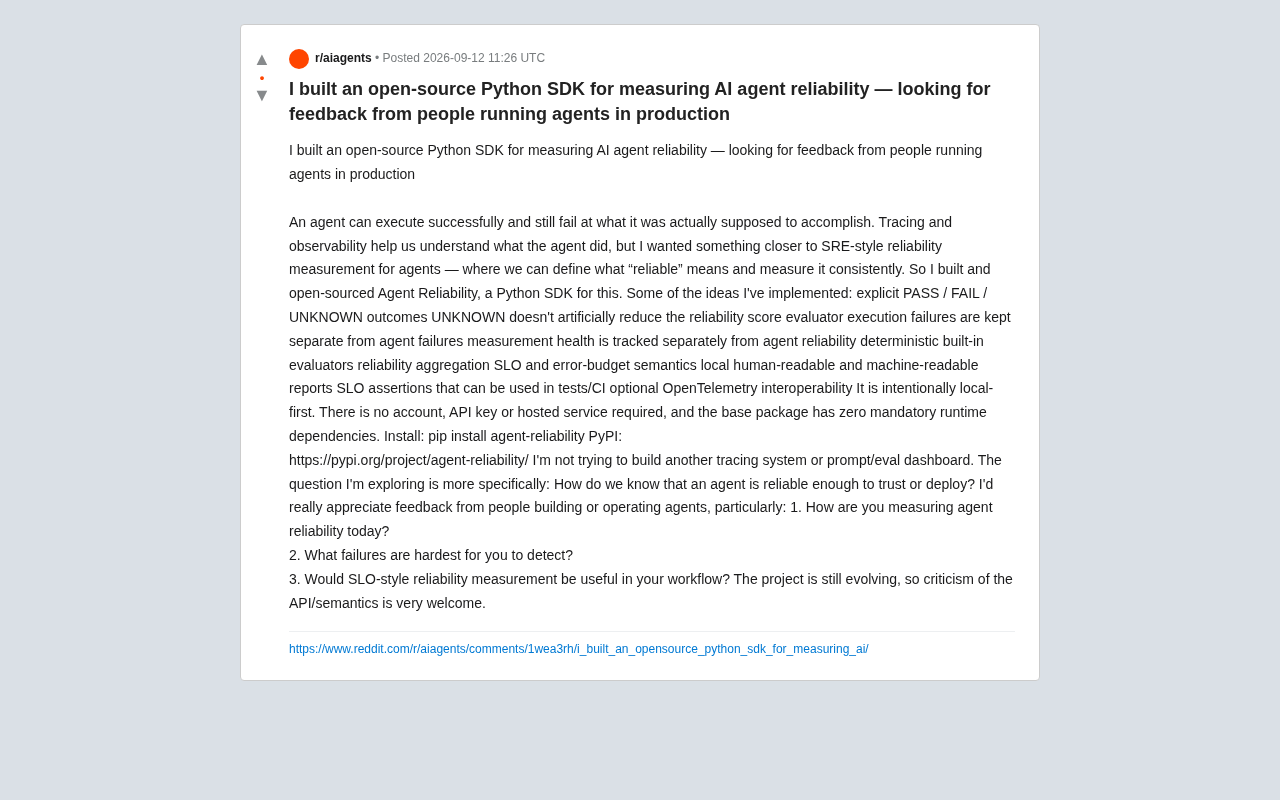
Open-Source Python SDK: Measuring AI Agent Reliability with SRE Principles
Agent Reliability is an open-source Python SDK that applies SRE's SLO and error budget concepts to AI Agent evaluation, with PASS/FAIL/UNKNOWN states, CI assertions, and zero forced dependencies.
MiniMax RefMod: A Complete Guide to Training-Free Reusable Identity Workflows
MiniMax RefMod offers training-free reusable identity workflows for image, video, and audio generation. Includes Runpod template and tutorial for quick setup.