Vibe Coding Tool Comparison: Base44 vs. Replit vs. Bolt vs. Lovable — Which One Wins?

72-hour hands-on test of four vibe coding tools reveals only one can truly build anything.
A creator spent 72 hours systematically testing four vibe coding platforms — Base44, Replit, Bolt, and Lovable — using single-shot prompting rules and scoring across speed, error management, functionality, and creativity. Results show Lovable is fast but lacks core functionality (44/100), Bolt is stable but visually mediocre and prone to misunderstanding requirements (53/100), with each platform's performance directly tied to its underlying technical architecture choices.
Introduction: How to Choose a Vibe Coding Tool?
Vibe Coding is becoming one of the hottest development approaches of 2026 — using natural language prompts to have AI automatically generate complete applications. The concept was originally coined by OpenAI co-founder Andrej Karpathy in early 2025, referring to developers describing their intent in natural language and relying entirely on large language models (LLMs) to generate code rather than writing it manually. Unlike traditional AI-assisted coding (such as GitHub Copilot's line-by-line completions), vibe coding aims for "zero-code-intervention" complete application delivery, essentially shifting the cognitive burden of software development from "how to implement" to "what I want." The rise of this paradigm is driven by the leaps in code generation capabilities of models like GPT-4 and Claude — trained on billions of lines of open-source code, these models can understand complete development intent from UI layouts to backend logic.
But with so many tools on the market, how should developers choose?
One creator spent 72 hours conducting a systematic head-to-head test of four mainstream vibe coding platforms — Base44, Replit, Bolt, and Lovable. Each platform was tasked with completing 8 different build challenges (websites, games, web apps, platform clones) across simple and complex difficulty levels, scored on four dimensions: speed, error management, functionality, and creativity.
The results were surprising: only one tool can truly "build anything."
Test Methodology: A Fair Single-Shot Build
To ensure a fair comparison, the test followed strict "single-shot prompting" rules. Single-shot prompting is a classic methodology for evaluating LLM capabilities, originating from academic research on zero-shot reasoning. In real-world engineering scenarios, developers typically iterate and optimize outputs through multi-turn conversations, which differs from this testing approach. However, the value of single-shot testing lies in revealing a platform's "baseline capability floor" — how much work the tool can independently complete without human intervention. This is particularly critical for evaluating whether a tool is suitable for non-technical users who often lack the ability to fix errors through follow-up prompts.
Specific rules were as follows:
- Identical prompts: Each platform received exactly the same build request
- No manual fixes: If output failed, no additional prompts were used to remedy it
- Four-dimension scoring system: Speed (generation time), error management (automatic detection and fix capability), functionality (whether core features work), and creativity (design quality and visual polish)
This methodology simulates real user scenarios — you give the tool a requirement and see what it delivers on the first attempt. The phenomenon of Bolt "misunderstanding requirements" in the test results technically reflects differences in how models handle semantic ambiguity in prompts rather than pure capability deficiency, which also validates the unique value of single-shot testing in revealing the true capability boundaries of platforms.
Technical Architecture Background of the Four Tools
Before diving into each platform's evaluation, it's important to understand their significant differences in underlying tech stacks, which directly impacted test results. Replit is one of the earliest cloud IDEs, with its AI features (Replit Agent) built on a full Linux container environment supporting any language and framework — this explains its powerful functionality but slower speed, as full environment initialization and dependency installation inherently take time. Bolt is based on StackBlitz's WebContainers technology, running a Node.js environment within the browser, achieving extremely fast startup speeds but sacrificing some system-level capabilities. Lovable focuses on React/TypeScript frontend generation with deep Supabase integration, though backend configuration requires additional setup. The architectural choices behind these platforms represent different product positions: a spectrum from "complete development environment" to "rapid prototyping tool," determining each platform's trade-offs between feature completeness and ease of use.
Lovable Review: Fast but Feature-Incomplete — Total Score 44/100
Decent Generation Speed
Lovable performed well in terms of speed, with most builds completing in 3-5 minutes. The generation process was typically smooth, rarely reporting errors.
Fatal Weakness: Core Features Don't Work
However, Lovable's biggest problem lies in functionality. The SEO analyzer's core features were completely non-functional, and the kanban app couldn't even finish generating. In game tests, the FPS game's bullets didn't display and lighting was extremely dim. Platform clones looked visually close to the originals, but all content was static placeholders with no backend logic.
This result aligns perfectly with Lovable's technical positioning — its core strength is rapid React component rendering, not complete full-stack application delivery. In short, Lovable is suitable for quickly creating frontend prototypes or visual mockups, but falls seriously short in scenarios requiring real functionality.
Bolt Review: Stable but Mediocre Design — Total Score 53/100
Zero-Error Build Stability
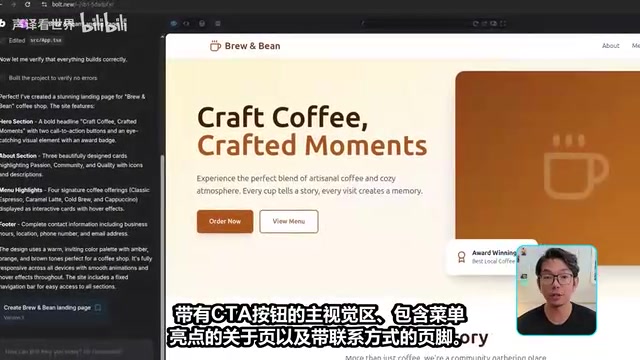
Bolt produced no generation errors across all 8 builds, making it the most stable platform during the build process. The kanban app and FPS game both ran correctly, proving it can handle structured logic. This stability benefits from WebContainers' sandboxed isolation, reliably executing Node.js code in a browser environment without external interference.
Shortcomings: Visually Rough and Prone to Misunderstanding Requirements
Bolt's creativity was the weakest among all platforms. Outputs lacked placeholder images and visual details, with landing pages looking more like wireframes. More critically, in the platform clone test, Bolt "misunderstood
Related articles
 Product Reviews
The Programmer's Desk Setup Guide: Building a Workspace That Feels Like Home
Discover how programmers build productive, comfortable workspaces. From multi-monitor setups to ergonomic design, explore the desk philosophy that drives focus and flow.
 Product Reviews
Qoder vs Cursor Real-World Comparison: Which $20/Month AI IDE Is Better?
Hands-on comparison of Qoder vs Cursor AI IDEs: Agent autonomy, human interaction count, and architecture decisions. Qoder needed only 2 interactions vs Cursor's 8.
 Product Reviews
Cursor Cloud Agent Demo: Eliminating Bottlenecks Across the Entire Software Development Lifecycle
Deep analysis of Cursor's Cloud Agent demo showing how cloud VMs, automated test artifacts, and a full-chain control plane systematically eliminate human bottlenecks across the software development lifecycle.