Video Multilingual Dubbing API in Practice: A Selection and Cost Guide for Localization at Scale

A practical guide to choosing and costing multilingual video dubbing APIs for scalable localization.
This article breaks down the core technologies behind AI video dubbing APIs — speech recognition, voice cloning, audio track separation, and lip sync — and compares leading solutions like ElevenLabs, HeyGen, and Rask AI. It provides cost analysis for scaling multilingual dubbing and offers actionable selection criteria for content teams going global.
The Scalability Bottleneck of Video Localization
As global content distribution becomes the norm, more and more teams face a common challenge: how to efficiently translate and dub a finished video into multiple languages. According to reports from Slator, Grand View Research, and other industry analysts, the global language services market has exceeded $60 billion, with localization demand in the media and entertainment sector growing the fastest. The global expansion of platforms like Netflix, YouTube, and TikTok has pushed video localization beyond its traditional home in film and TV into corporate training, e-commerce product showcases, online education, social media marketing, and far beyond. A conventional video localization workflow typically requires coordination among translation agencies, voice actors, recording studios, and post-production teams — dubbing a 10-minute video into 5 languages can easily take 2–4 weeks and cost thousands of dollars.
A Reddit user working on cross-market video content production recently posted for help, voicing what many content teams feel — manually handling dubbing for each video asset one by one has become a "nightmare-level" burden.
Their core requirements were very specific: they needed a solution that could take a finished video, replace the dubbing in 4 to 5 languages, and preserve the underlying background sound effects. The real pain point was scalability — when you have hundreds or thousands of video assets, processing them one by one manually simply isn't feasible. They wanted a dubbing API that could seamlessly plug into their existing production pipeline without having to rebuild the entire workflow from scratch.
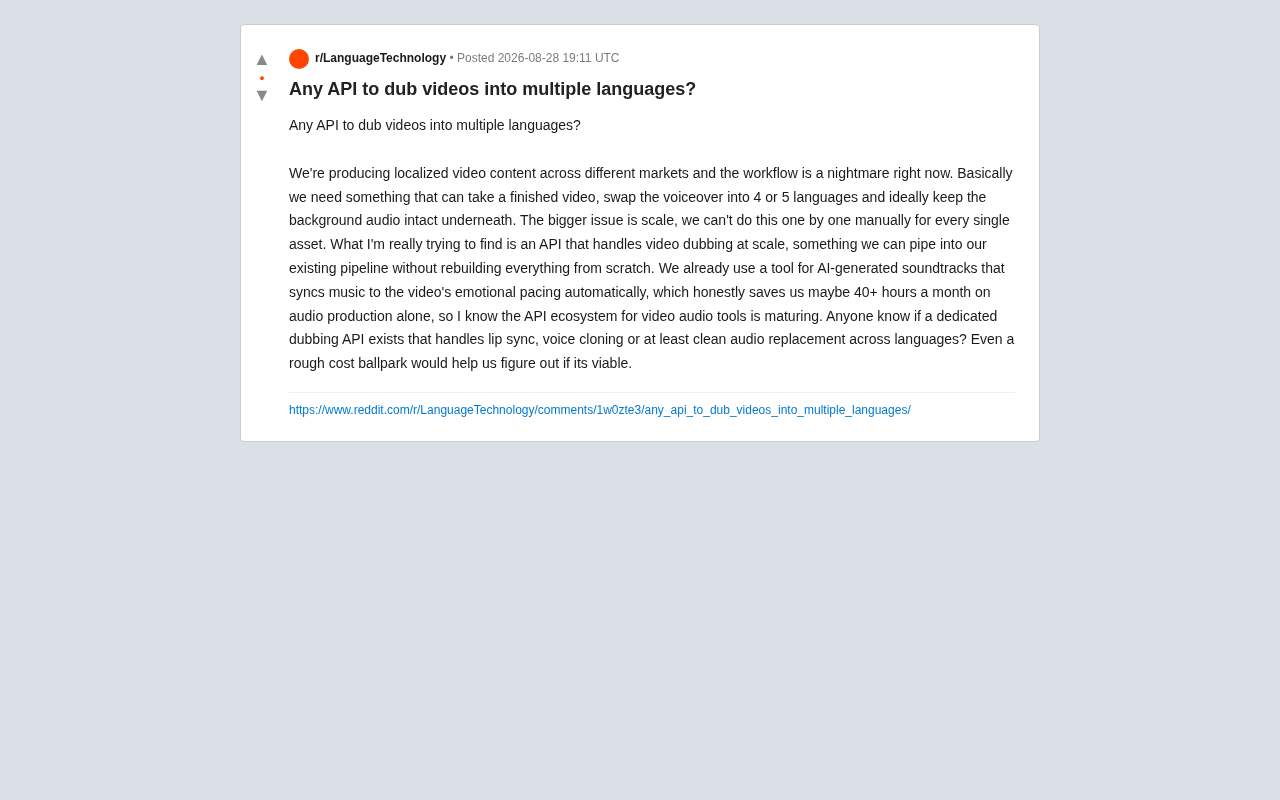
Interestingly, the user mentioned they were already using an AI music scoring tool that automatically matches music to the mood and tempo of a video, saving the team over 40 hours per month on audio production alone. This detail underscores a broader trend: the API ecosystem for video audio processing is maturing rapidly, and the automation of multilingual dubbing is ready for real-world deployment.
Core Technical Components of AI Video Dubbing APIs
To achieve multilingual video dubbing at scale, a mature API typically needs to cover several core technical stages. Understanding these components helps teams accurately assess whether a tool truly meets their needs during the evaluation process.
Speech Recognition and Machine Translation
The first step in dubbing is accurately extracting the spoken content from the original video (ASR — Automatic Speech Recognition), followed by machine translation. ASR technology has evolved from traditional Hidden Markov Models to deep learning end-to-end models. Current mainstream ASR engines like OpenAI's Whisper use a large-scale multilingual pre-trained Transformer architecture, achieving near-human-level transcription accuracy across dozens of languages. On the machine translation front, neural machine translation models such as Google's Neural Machine Translation and Meta's NLLB (No Language Left Behind) can now handle translation tasks across more than 200 language pairs.
The quality at this stage directly determines the accuracy of the subsequent dubbing. Excellent dubbing APIs optimize for domain-specific terminology and colloquial expressions rather than relying on simple literal translation. Notably, in video dubbing scenarios, translation demands not just semantic accuracy but also "isochrony" — the spoken duration of the translated text needs to roughly match the original to maintain consistent video pacing. This constraint makes translation for video dubbing far more complex than ordinary text translation, often requiring trade-offs between fidelity and duration control.
Voice Cloning and AI Speech Synthesis
This is the critical stage that determines how "natural" the dubbing sounds. Traditional machine dubbing often sounds robotic and emotionless. Voice cloning-based approaches, however, can preserve the original speaker's vocal characteristics across multiple languages, making different language versions sound like the same person is speaking. This is essential for brand consistency and audience experience.
Breakthroughs in voice cloning technology are largely driven by advances in deep generative models. Early TTS systems like WaveNet (introduced by DeepMind in 2016) pioneered the paradigm of using neural networks to directly generate audio waveforms. Since then, zero-shot voice cloning techniques based on architectures like Tacotron and VITS have matured, requiring only a few seconds to a few minutes of reference audio to replicate a speaker's timbre, intonation, and speaking style. Starting in 2023, Microsoft's VALL-E, OpenAI's voice models, and others have pushed cloning quality to the point where it's nearly indistinguishable from the real thing. In cross-lingual scenarios, the core challenge is "cross-lingual timbre preservation" — making a cloned voice of an English-only speaker still sound like the same person when speaking Japanese. This requires models to effectively decouple timbre characteristics from linguistic features.
Audio Track Separation and Background Sound Preservation
The original poster specifically emphasized the need to "preserve the underlying background sound effects." This requires the API to have audio track separation capabilities — isolating vocals from background music and ambient sounds, replacing the vocals, and then mixing them back with the original background audio. Without this, the dubbed video loses its atmosphere and feels jarring.
Landmarks in the field of audio track separation (also known as source separation) include Meta Research's open-source Demucs model and Spleeter developed by Deezer. These models, based on U-Net or Transformer architectures and trained on large-scale mixed audio datasets, can separate audio into multiple tracks: vocals, drums, bass, other instruments, and more. In video dubbing scenarios, the precision of track separation directly impacts the final result — if separation isn't clean, you may get "ghost vocals" (residual original voice) or degraded background audio after replacement. Current state-of-the-art models have reached commercial-grade performance on Signal-to-Distortion Ratio (SDR) metrics, but challenges remain for complex scenarios such as when vocal and background audio frequencies heavily overlap.
Lip Sync
For videos featuring on-screen speakers, lip sync aligns the person's mouth movements with the new language's dubbing — an advanced capability in premium dubbing solutions. The core approach involves regenerating the lower-face movements based on the new audio content, aligning lip shapes with phonemes. Representative technologies include Wav2Lip (published in 2020), SadTalker, and the more recent VideoReTalking. These methods typically combine facial landmark detection with GANs (Generative Adversarial Networks) or diffusion models to achieve realistic mouth animation synthesis.
The technical challenge lies in the vast differences between phoneme systems across languages — for example, Chinese initial-final combinations and English consonant-vowel combinations produce completely different mouth shapes. At the same time, the rest of the face (expressions, head pose) must remain naturally consistent to avoid the "uncanny valley effect." Processing one minute of lip-synced video can require tens of times more GPU compute than pure voice replacement. However, given its high computational and technical demands, lip sync isn't necessary for every scenario — voiceover-style videos can typically skip this step entirely.
Comparing Major Video Dubbing API Solutions
For multilingual video dubbing needs, several mature commercial APIs are available on the market today, each with different strengths.
ElevenLabs offers a dedicated Dubbing API supporting dubbing in 29 languages, with voice cloning capabilities that preserve the original speaker's voice characteristics and automatic background audio separation and preservation. Its API design is developer-friendly, making it well-suited for integration into automated pipelines. ElevenLabs' technical advantage lies in its speech synthesis model, which leads the industry in naturalness and expressiveness — particularly excelling at preserving emotional nuance and prosodic variation, resulting in dubbing that doesn't sound flat and mechanical like traditional TTS.
HeyGen and Rask AI stand out in lip sync capabilities, making them particularly suitable for localizing videos with on-screen speakers, though processing costs are correspondingly higher. HeyGen also offers digital avatar video generation for virtual presenter scenarios, while Rask AI is known for its end-to-end video translation workflow and support for longer videos.
Google Cloud and Azure speech services aren't end-to-end "dubbing" solutions, but they provide foundational components — ASR, translation, and TTS (Text-to-Speech) — that teams can assemble into their own dubbing pipeline. This offers greater flexibility but requires significantly more engineering effort. The advantage of this modular approach is fine-grained control over each step — for instance, inserting human review at the translation stage or using custom voice models — but the trade-off is having to handle service orchestration, error handling, and audio-video synchronization logic yourself.
For the original poster's use case — "already has a pipeline, just wants to plug in one more step" — an end-to-end Dubbing API (like ElevenLabs) is typically the more cost-effective choice, as it eliminates the complexity of stitching together multiple services.
Cost Considerations for Dubbing at Scale
The original poster mentioned wanting a "rough cost estimate" to assess feasibility — the most practical question in any scalability decision.
Most mainstream dubbing APIs charge based on processing duration. Taking ElevenLabs as an example, its dubbing service typically charges per minute or deducts credits per character, with specific pricing depending on the subscription plan and usage volume. As a rough estimate, professional-grade AI dubbing costs range from a few cents to about one dollar per minute of video, varying with the number of languages and whether advanced features like lip sync are enabled.
The key is comparison: human dubbing of a video into multiple languages requires hours of translation, recording, and post-production, potentially costing hundreds of dollars per video. API solutions can compress per-unit costs by an order of magnitude at scale. To illustrate with a concrete scenario: suppose a team needs to process 100 videos averaging 5 minutes each month, translated into 5 languages. A traditional manual workflow might require a dedicated translation and dubbing team plus a monthly budget of tens of thousands of dollars. With API-based automation, even at a relatively high rate of $1 per minute, the monthly cost would be only around $2,500 — and delivery timelines shrink from weeks to hours. Just as the original poster was already saving over 40 hours per month with an AI music scoring tool, automating the dubbing stage can yield equally impressive efficiency gains and cost savings.
Recommendations for Choosing a Video Dubbing API
For teams currently evaluating video dubbing APIs, here are the key dimensions to guide your decision:
- Clarify your core requirements: Do you need lip sync? If your videos are primarily voiceover rather than on-screen presenters, you can skip this expensive feature and significantly reduce costs. Note that lip sync not only increases per-unit costs but also substantially extends processing time — for teams prioritizing fast turnaround, you'll need to weigh quality against speed.
- Test multilingual voice quality: Synthesis quality varies dramatically across languages. Always run small-scale tests with real assets, paying particular attention to performance in your target markets' primary languages. For example, many AI speech synthesis systems perform excellently in English and Spanish but may exhibit unnatural pronunciation or tonal issues in Korean, Arabic, and other languages. Involve native speakers in quality reviews.
- Verify pipeline compatibility: Confirm that the API supports batch processing, webhook callbacks, and other automation features to avoid the trap of "has an API on paper but can't scale in practice." An ideal dubbing API should support asynchronous processing — submit a job and receive a callback notification when it's complete, rather than forcing the client to wait synchronously. This is critical for scenarios involving batch processing of hundreds of videos.
- Do the cost math: Based on your monthly video volume and number of target languages, estimate monthly costs and compare against manual dubbing to ensure a reasonable ROI. Also look into the provider's tiered pricing and enterprise plans — high-volume usage often qualifies for significant discounts.
Video localization is shifting from labor-intensive to automated, and the maturation of AI dubbing APIs is making the ideal of "produce once, distribute in multiple languages" increasingly achievable. For teams focused on international content distribution, now is the perfect time to reassess your workflow and integrate multilingual dubbing into your automated pipeline.
Related articles
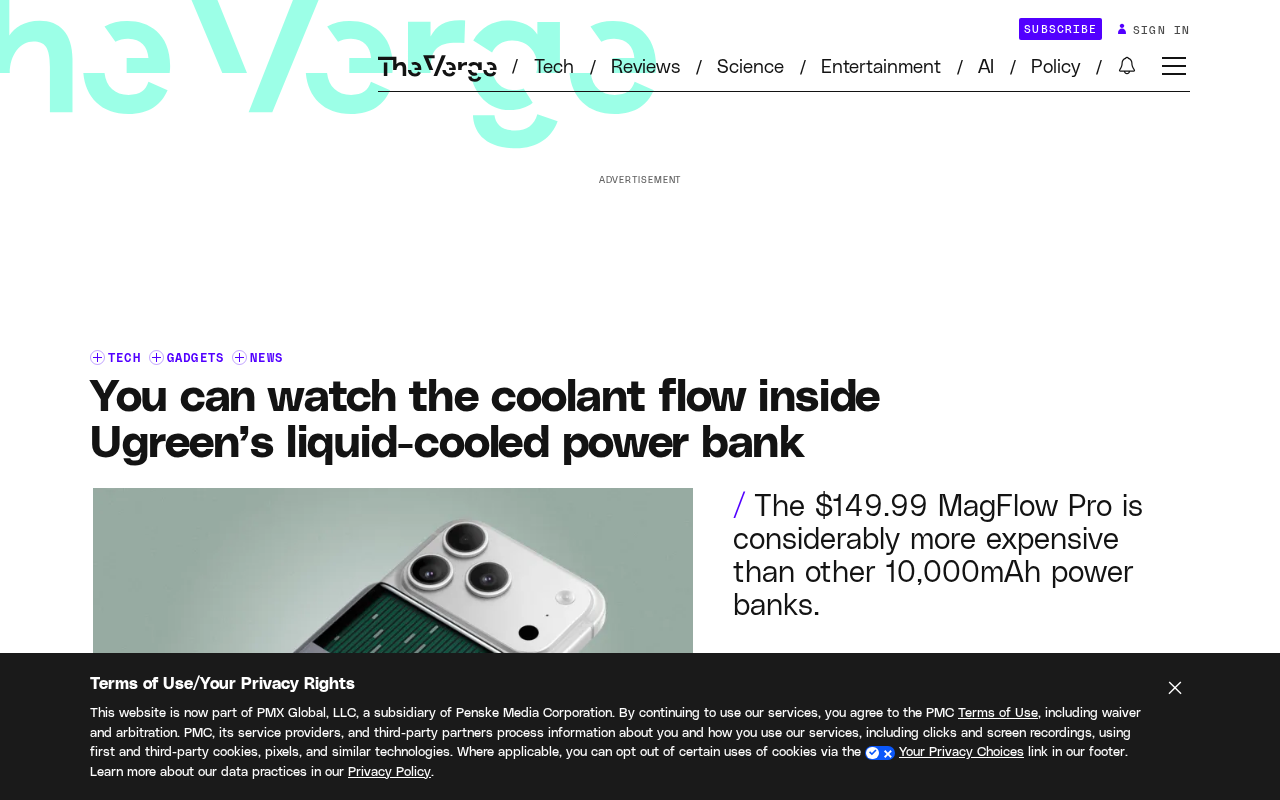
UGREEN MagFlow Pro Liquid-Cooled Power Bank Review: Is the Visible Coolant Design Worth $149?
UGREEN's MagFlow Pro liquid-cooled MagSafe power bank features CryoPulse cooling and a transparent Cyber Window. At $149.99 for 10,000mAh, we analyze its real-world value and market positioning.
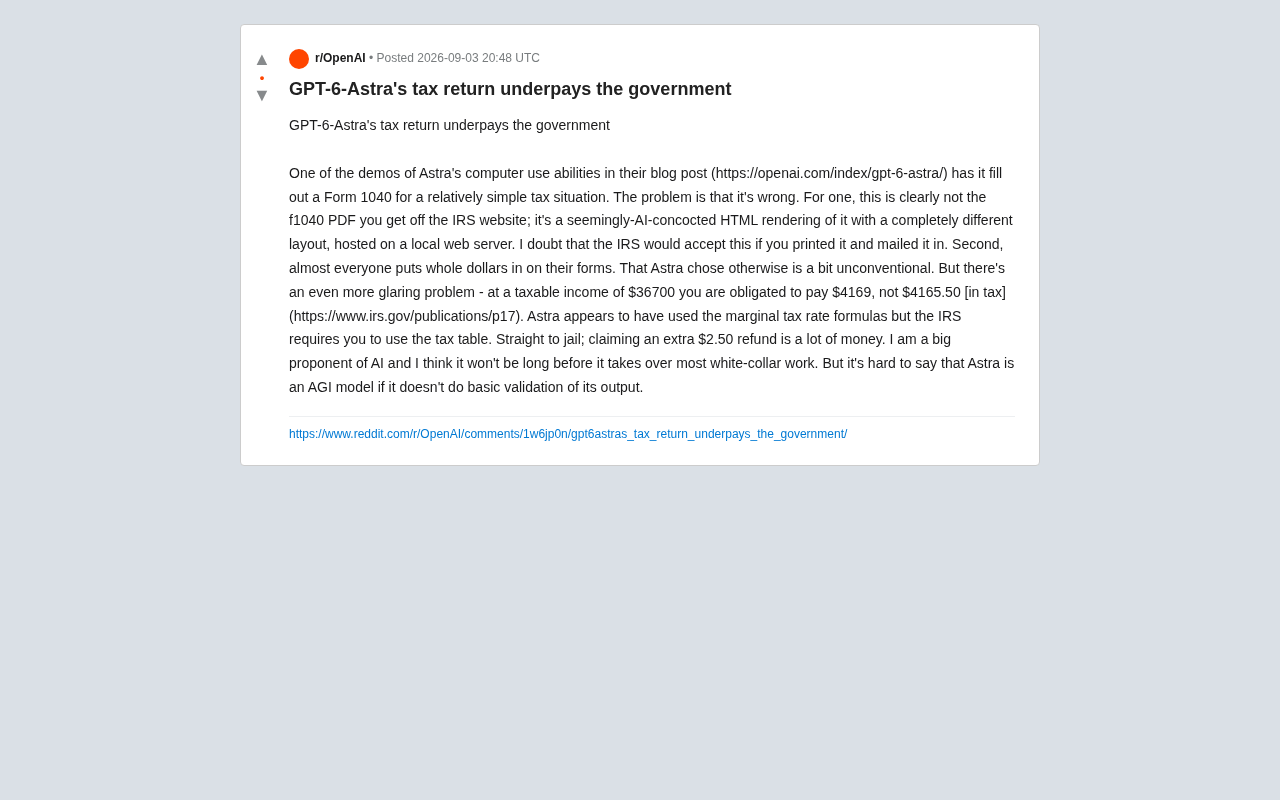
GPT-6 Astra's Tax Return Fail: A $2.50 Discrepancy Exposes AGI's Fatal Blind Spot
OpenAI's GPT-6 Astra made three errors in a tax filing demo: wrong form, wrong method, and $2.50 underpayment — exposing the gap between AI reasoning and domain compliance on the road to AGI.
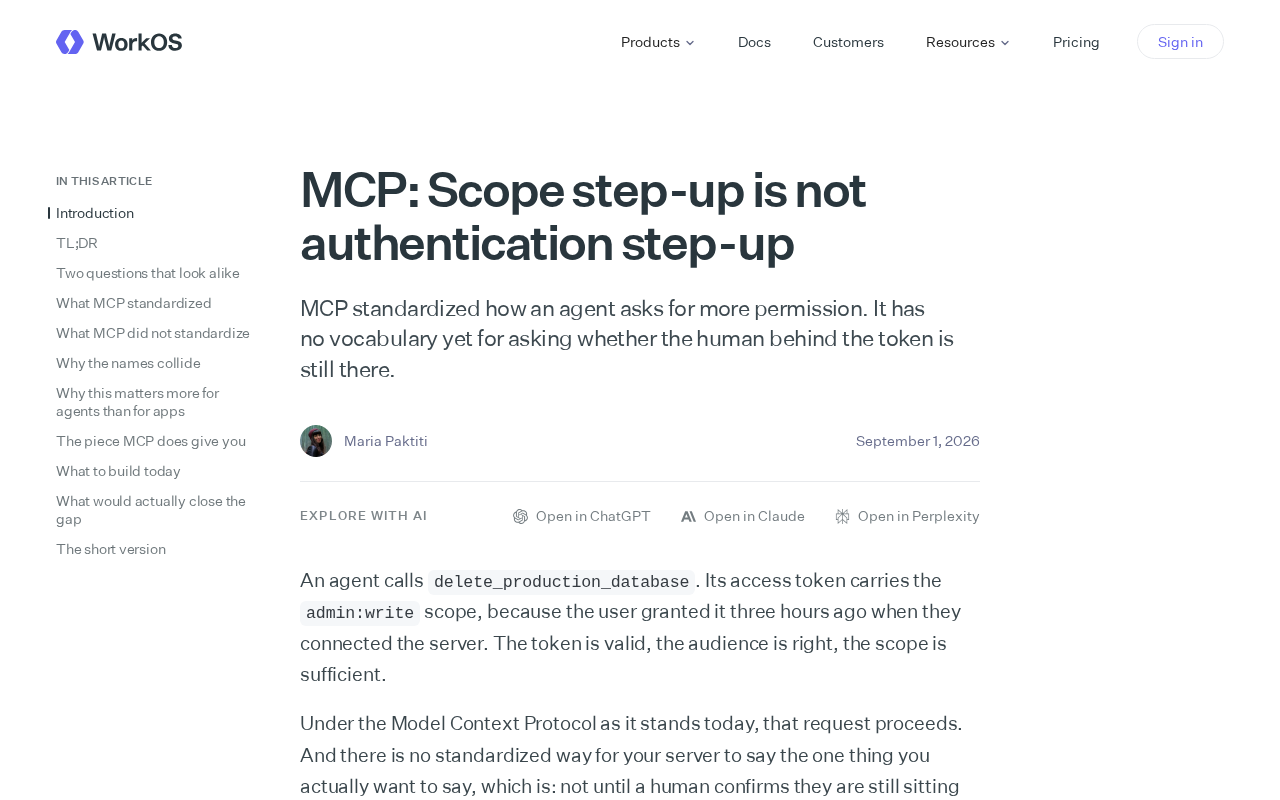
The MCP Privilege Escalation Blind Spot: Authorization Is Not Authentication
Analyzing the critical gap between scope step-up and authentication step-up in MCP, revealing how AI Agent security architectures lack human presence verification.