vLLM vs Ollama for Local LLM Deployment: A Practical Guide from Script to Production
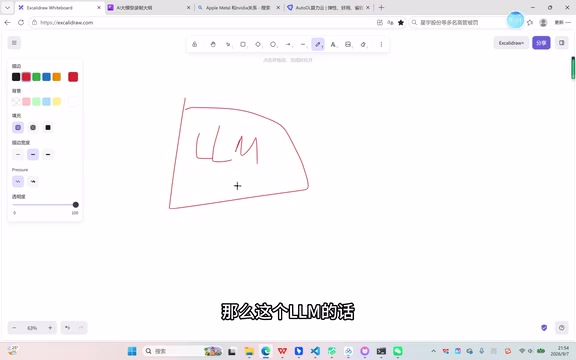
A practical comparison of vLLM and Ollama for deploying local LLMs from script to production.
This guide explains why single-machine scripts fall short for production LLM use and outlines three core deployment goals: VRAM cost-effectiveness, deployment simplicity, and high-concurrency capacity. It compares vLLM — a high-performance inference engine with PagedAttention and Continuous Batching — against Ollama, a zero-barrier tool built on llama.cpp for quick local setup, helping developers choose the right path from prototype to production.
Why Single-Machine Scripts Can't Meet Production Demands
When getting started with large language models, many people's first step is to download an open-source model (like Qwen), load the tokenizer and model using ModelScope or Transformers, instantiate the tokenizer and model objects, and then call model.generate() to produce text.
model.generate() is a text generation method provided by the Hugging Face Transformers library. Under the hood, it implements the autoregressive decoding process: the model predicts the next token based on the existing token sequence, appends the new token to the end, and repeats this cycle until a stopping condition is met. This process supports multiple decoding strategies, including Greedy Search, Beam Search, Top-k sampling, and Top-p (Nucleus) sampling. While the interface is clean and simple, it operates in a single-threaded, synchronous blocking manner without request queuing, batching, or asynchronous response capabilities — making it unsuitable for production scenarios with concurrent users.
This workflow does get the job done, but it has a fundamental limitation: it can only be operated on the server where the model was downloaded.
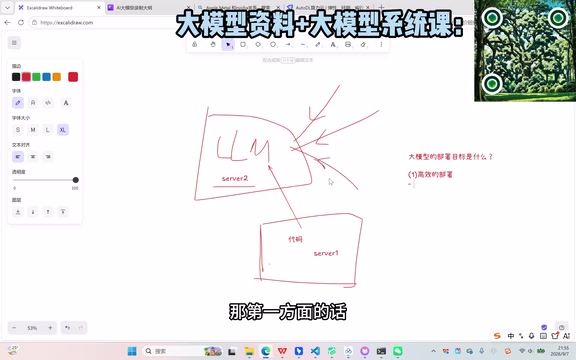
In other words, this approach is essentially just loading weight files for a demo-level generation showcase — far removed from a real production environment. In actual business scenarios, an LLM needs to handle requests from a wide variety of users, potentially coming from multiple different servers. Your application code and model deployment may not even be on the same machine — code on server1, model on server2. This kind of cross-machine deployment is extremely common.
To solve these problems, you need to deploy the model locally — transforming it from an isolated script into a service that can be widely accessed.
Three Core Objectives of LLM Deployment
Before choosing specific tools like vLLM or Ollama, you first need to understand what local LLM deployment is actually trying to solve. It boils down to two main directions: efficient deployment and accessibility.
Balancing VRAM and Performance: Pursuing Optimal Cost-Effectiveness
Efficient deployment is first reflected in VRAM cost-effectiveness. The key is not to minimize VRAM usage, nor to blindly stack the highest-end hardware, but to find the most cost-effective solution. The core challenge is balancing "VRAM usage and inference speed" against "model performance."
If you load all model weight parameters into VRAM for inference, you get the best results, but VRAM consumption is also at its highest. Take a 7B parameter model as an example: under FP16 (half-precision floating point), each parameter occupies 2 bytes, so model weights alone require approximately 14GB of VRAM. Adding KV Cache (key-value cache for attention layers), activation values, and framework overhead, the actual requirement typically exceeds 16-20GB. Conversely, if you offload all weights to CPU to save VRAM, while GPU memory is spared, inference speed becomes painfully slow — practically unusable.
To reduce VRAM pressure, the industry widely adopts Quantization techniques such as GPTQ, AWQ, GGUF, and other formats, compressing weights from FP16 down to INT8 or even INT4. This can reduce VRAM usage to 1/2 or even 1/4 of the original, at the cost of some degree of model accuracy loss. Finding the optimal balance between quantization precision and model performance is the core challenge of "VRAM cost-effectiveness." Therefore, how to deploy the most efficient model with reasonable VRAM is a critical cost consideration for production-ready local LLMs, and the deployment solution is a key variable in this equation.
Deployment Simplicity: Get It Done in One or Two Commands
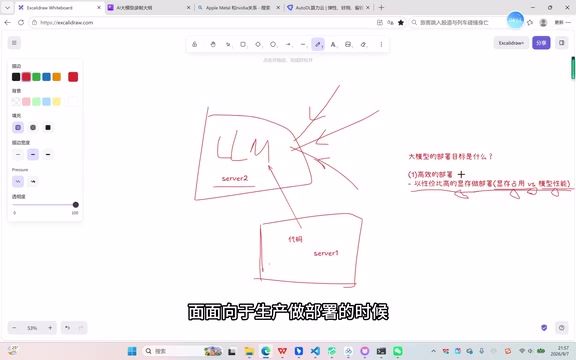
The second dimension is ease of deployment. The ideal deployment approach should require "just one or two commands," rather than writing mountains of code and debugging repeatedly. We want unified, robust API interfaces that can accommodate the deployment needs of various models.
The industry has converged on the OpenAI API format as the de facto interface standard, primarily consisting of two endpoints: /v1/chat/completions (chat completion) and /v1/completions (text completion), with both requests and responses using JSON format. Both vLLM and Ollama support this compatible format, meaning client code originally written for OpenAI only needs to change the base_url to point to the local service address to seamlessly switch to a local model — no changes to business logic required. This standardization dramatically reduces the engineering cost of model migration and multi-model switching.
A unified and stable deployment interface can significantly lower the barrier to entry and long-term maintenance costs.
High-Concurrency Capacity
The third dimension is concurrency capacity. In production-grade applications, many users may be requesting the model service simultaneously — from a handful to dozens or even hundreds of concurrent requests. A deployment solution that can handle higher concurrency is clearly more competitive.
One of the key technologies for high-concurrency processing is Continuous Batching. Traditional Static Batching requires all sequences in a batch to finish generating before the next batch can be processed, causing short-sequence requests to be held up by long sequences and leaving GPU compute resources largely idle. Continuous Batching allows new requests to be dynamically added and completed requests to be removed at each decoding step, keeping the GPU at high utilization at all times. Combined with efficient VRAM management, this mechanism can serve tens or even hundreds of concurrent requests on a single GPU, improving throughput by an order of magnitude compared to sequential inference.
Model Serving: Making Deployed Models Accessible from Outside
The other core objective of deployment is making the model "accessible to everyone." This requires deploying not just a local script, but a proper Model Server.
In engineering practice, once a service is started, it exposes a port (such as 8000, 9000, etc.). Once the port is exposed, any user from any location can access the service as long as there is network connectivity. Whether the request comes from a phone, client server1, or client server2, the server doesn't need to care about the specific source — as long as both sides follow common protocols like HTTPS, they can call the model.
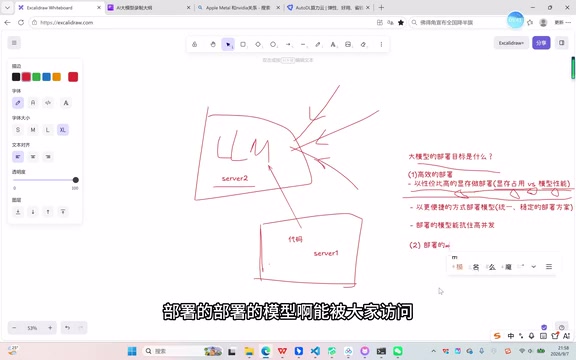
This service-oriented design is the fundamental approach to solving problems like "cross-machine deployment" and "multi-user concurrent requests." Once a model is served as a service, you typically also need to consider operational capabilities such as load balancing, health checks, and automatic restarts to ensure service stability and availability in production environments.
vLLM vs Ollama: Two Mainstream Local Deployment Approaches
Based on the objectives outlined above, the industry has developed several mature solutions for local LLM deployment. vLLM and Ollama are the two most representative tools, each targeting different use cases.
vLLM: A High-Performance Inference Engine for Production
vLLM is an LLM inference framework focused on high throughput and high concurrency. It leverages core technologies like PagedAttention to significantly improve VRAM utilization and inference speed, making it ideal for high-concurrency request scenarios in production environments.
PagedAttention is the core innovation proposed by the vLLM team in 2023, inspired by the virtual memory paging mechanism in operating systems. In traditional Transformer inference, the KV Cache for each request requires a contiguous block of VRAM to be pre-allocated. Since sequence lengths are unpredictable, the system often pre-allocates based on maximum length, leading to significant memory fragmentation and waste — actual utilization sometimes falls below 50%. PagedAttention splits the KV Cache into fixed-size "pages" (blocks) that are dynamically allocated on demand. Pages from different requests can be stored non-contiguously in physical VRAM, with page tables providing logical continuity through mapping. This mechanism boosts VRAM utilization to nearly 100%, directly delivering 2-4x throughput improvements — the key reason vLLM far outperforms naive implementations in high-concurrency scenarios.
vLLM also natively implements Continuous Batching, which combined with PagedAttention enables serving a large number of concurrent requests on a single GPU. When you need to serve many users simultaneously and pursue the optimal balance between inference performance and VRAM cost-effectiveness, vLLM is often the go-to solution.
Ollama: Zero-Barrier Local LLM Deployment Tool
Ollama is positioned more toward "out-of-the-box" usability. It wraps model downloading, loading, and service startup into an extremely streamlined process, truly achieving a local model service with just a few commands while exposing a standard API.
Ollama is built on top of llama.cpp, a pure C/C++ LLM inference framework that supports efficient execution on various hardware including CPU, Apple Silicon, and CUDA GPUs. Ollama uses GGUF (GPT-Generated Unified Format) as its default model format — a binary format defined by the llama.cpp ecosystem that packages model weights, tokenizer, and metadata into a single file, supporting multiple quantization levels (such as Q4_K_M, Q5_K_S, Q8_0, etc.). This all-in-one design means Ollama requires no additional Python environment or deep learning framework installation — truly download and run.
However, since llama.cpp is primarily optimized for single-user or low-concurrency scenarios, Ollama generally cannot match vLLM in high-concurrency throughput. For developers looking to quickly validate ideas, prioritize data privacy, or experiment with LLMs locally, Ollama is the ideal entry-level tool.
Summary
Going from a single-machine script to a service-oriented deployment is the critical step that takes an LLM from "toy" to "production." Understanding the three core deployment objectives (VRAM cost-effectiveness, simplicity, high concurrency) and the fundamental approach to serving (exposing ports, following common protocols) will help you make more informed choices when evaluating tools like vLLM and Ollama.
By combining excellent open-source models like Qwen, using Ollama for quick-start validation, leveraging vLLM to handle production-grade high concurrency, and taking advantage of the data privacy benefits that come with fully local deployment, even individual developers can build LLM applications that are both powerful and reliable.
Related articles
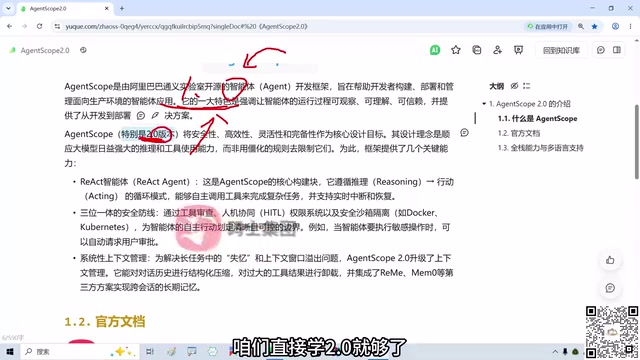
AgentScope 2.0 Deep Dive: A Complete Guide to the Multi-Agent Development Framework
Deep dive into Alibaba's AgentScope 2.0 multi-agent framework: ReAct agent design, three-layer security defense, context management, and a complete guide from beginner to production.
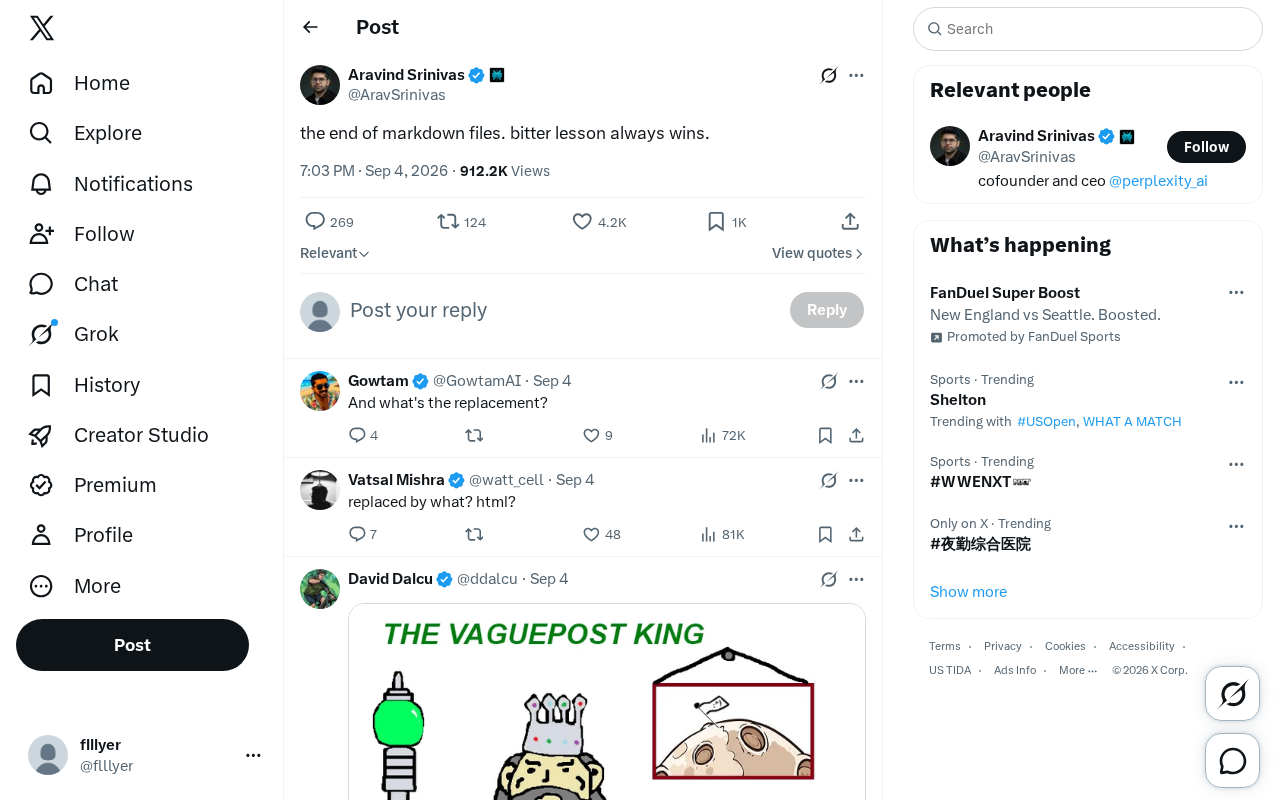
Are Markdown Config Files Going Extinct? How the Bitter Lesson Is Reshaping AI-Assisted Programming
Will CLAUDE.md and .cursorrules be replaced by AI? Analyzing the tension between hand-crafted rules and model autonomy through Sutton's Bitter Lesson.

Magnitude: One Service to Handle Local LLM Inference and Agent Integration
Magnitude is an open-source local LLM inference server that auto-optimizes for your hardware and integrates seamlessly with Codex, Claude Code, and other AI Agents.