Volkswagen's Ultra-Efficient Electric Concept Car: The Secret Behind Nearly Double the Efficiency of a Lucid Air
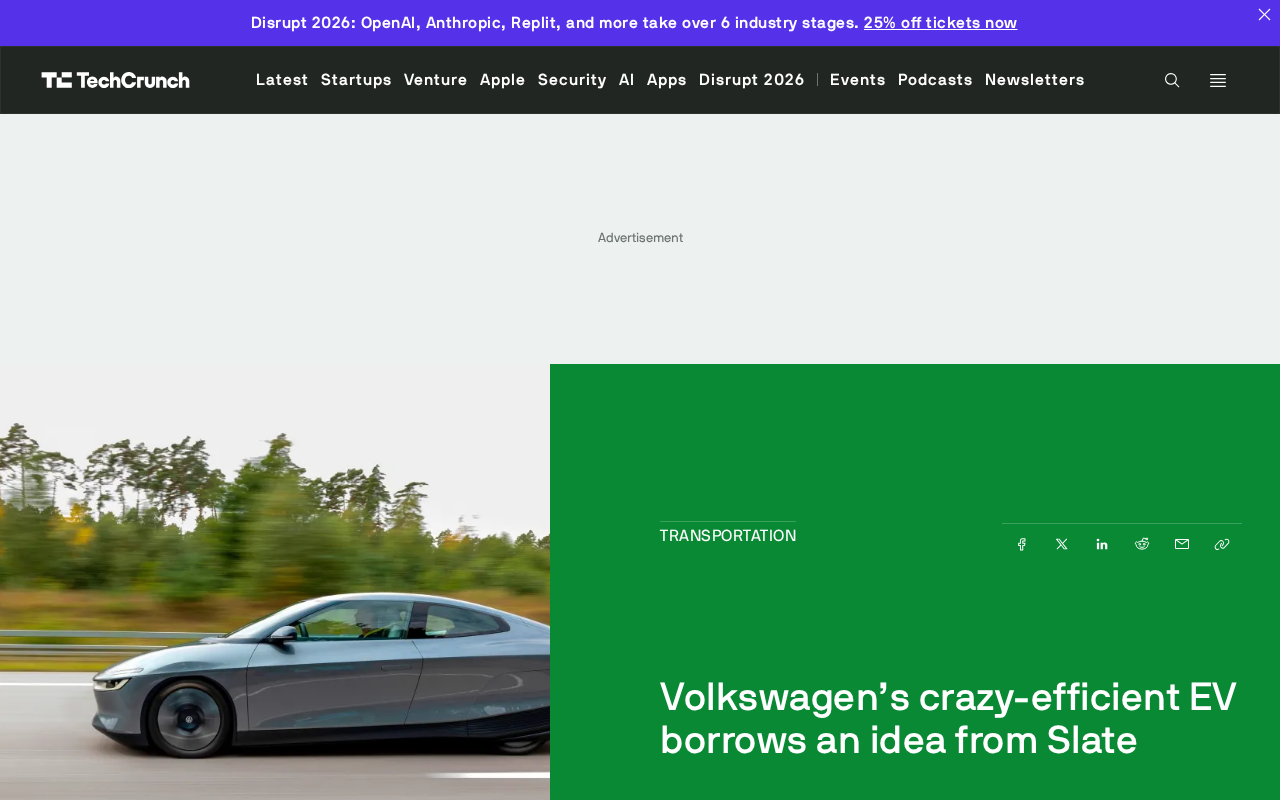
Volkswagen's new EV concept claims nearly twice the efficiency of the Lucid Air, potentially reshaping how automakers compete.
Volkswagen has unveiled a halo concept car built around extreme energy efficiency, claiming performance approaching twice that of the Lucid Air — the current production EV efficiency benchmark. The piece argues that the industry's long reliance on range as a marketing metric has hit diminishing returns, and that efficiency gains offer a smarter path: more range without larger batteries, lower costs, and less charging dependence. The concept reportedly draws on the minimalist "subtraction" philosophy of EV startup Slate. While the gap between concept data and production reality remains a real concern, the vehicle's message is clear: efficiency is set to become the defining battleground in the next era of electric vehicle competition.
Volkswagen's Efficiency Halo Car
Volkswagen has unveiled a concept vehicle centered entirely on energy efficiency, claiming performance that nearly doubles the efficiency of the Lucid Air — currently the reigning benchmark among production EVs. If accurate, that figure would fundamentally redefine our understanding of what's possible in electric vehicle energy consumption.
A "halo car" is, at its core, a flagship or concept product that automakers use to showcase their engineering capabilities and brand identity. It doesn't need to be a high-volume seller — its purpose is to communicate a company's technical vision. Volkswagen's decision to make extreme efficiency the defining feature of this concept signals a broader shift in how the industry competes: away from raw range numbers and acceleration figures, toward the more fundamental question of how well a vehicle actually uses its energy.
Why Efficiency Matters More Than Range
For the past several years, EV marketing has been almost entirely dominated by range. Automakers kept stacking larger battery packs, using big mileage numbers to win over consumers. But this approach has clear diminishing returns: bigger batteries mean heavier vehicles, higher costs, and longer charging times.
Efficiency measures how far a vehicle can travel on a given unit of energy — typically expressed as miles per kilowatt-hour or kilowatt-hours per 100 kilometers. When a car doubles its efficiency, it can achieve the same range with half the battery capacity, or twice the range from the same pack. That doesn't just cut manufacturing costs and reduce vehicle weight — it fundamentally reduces dependence on charging infrastructure.
The Lucid Air has long been the gold standard for production EV efficiency, widely praised for its aerodynamic design and highly optimized electric drivetrain. For Volkswagen to approach twice that level of efficiency would require systematic breakthroughs across multiple dimensions: significant weight reduction, extreme low-drag body design, and highly efficient motors and power electronics working in concert.
A Borrowed Idea from Slate
The original reporting notes that this Volkswagen concept draws on an idea from Slate. While the publicly available materials don't elaborate on the specific technical details, the reference itself is worth examining. Slate, a recently prominent EV startup, has generated considerable discussion with its "subtraction" philosophy of vehicle design — stripping away complexity and trimming configurations to control both cost and weight.
Applying that reductive mindset to efficiency is logically coherent: a lighter vehicle, a lower energy burden, and more focused engineering trade-offs consistently yield meaningful efficiency gains. The fact that a legacy giant like Volkswagen is willing to draw inspiration from an upstart brand also suggests that innovation in the industry is increasingly flowing in both directions.
What This Means for the Industry
If this concept car's efficiency figures can eventually translate into a production vehicle, the implications would be significant. For consumers, extreme efficiency means lower running costs and less range anxiety. For automakers, it represents a differentiated path forward at a time when battery raw material costs remain high — an alternative to the ongoing "capacity arms race."
A note of caution is warranted: there is often a meaningful gap between a concept car's controlled-condition figures and real-world road performance, and the path to production involves serious hurdles around cost, regulation, and practicality. Whether Volkswagen can bring this level of "insane efficiency" from the show floor to the street remains to be seen. But the signal this concept sends is already unmistakable: in the next phase of EV competition, efficiency will be the central battleground.
Related articles

Deep Dive into Agent Eval Harnesses: Build vs. Buy?
A deep dive into the four core components of an agent eval harness — Cases, Runner, Capture, and Graders — with practical guidance on when to build vs. adopt existing frameworks.

Getting Started with Krea 2 Image Generation: A Beginner's Guide to LoRA and Checkpoints
A beginner's guide to Krea 2 image generation: how to start with free open-source workflows, understand LoRA vs Checkpoint on Civitai, and achieve consistent realistic image generation.

Nintendo 'Customer Appreciation' Sale: Switch Games and Accessories Price Cuts Roundup
Nintendo's Customer Appreciation sale discounts Switch games and accessories at Amazon, Best Buy, Walmart, and its digital store — funded by tariff refunds. Ends Sept 26.