Volvo XC60 and XC90 PHEV Upgrades Push Electric Range Close to Full EV Levels
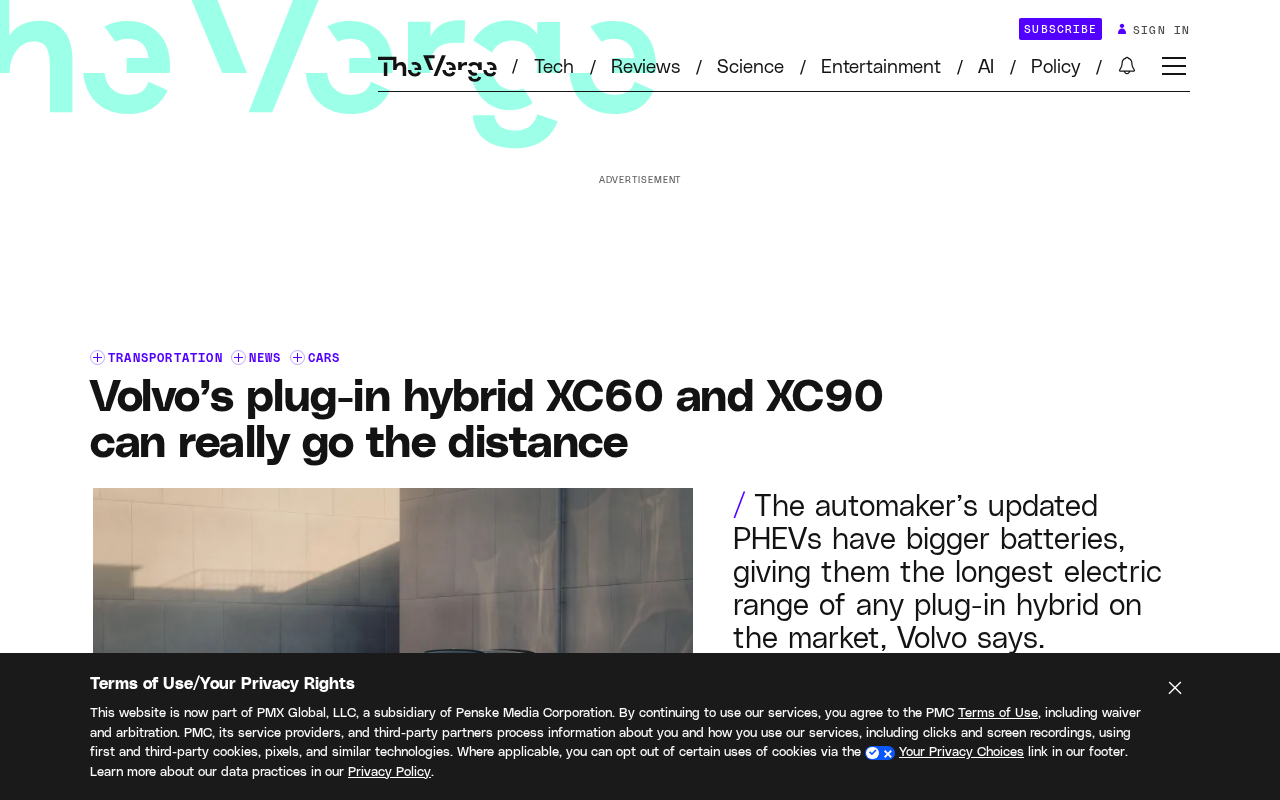
Volvo upgrades XC60 and XC90 PHEVs to blow past the industry's 30–50 mile electric range ceiling.
Volvo has announced upgrades to the plug-in hybrid versions of its XC60 and XC90 SUVs, with a significant boost in all-electric range as the centerpiece. While most PHEVs on the market top out at 30–50 miles of electric-only driving, Volvo aims to push well beyond that benchmark. Greater EV range means more zero-emission daily commuting, lower running costs, and a more compelling case for plug-in hybrids as a practical bridge to full electrification. The move reflects Volvo's clear-eyed read on the market: consumers aren't yet ready to go fully electric, but demand for cleaner powertrains is real. By building a range advantage in the competitive hybrid segment, Volvo hopes to solidify its sales foundation through the transition period.
Volvo Takes Aim at the PHEV Range Ceiling
Most plug-in hybrid vehicles on the market today offer somewhere between 30 and 50 miles of electric-only range — functional, but hardly impressive. With hybrid models currently driving a significant share of sales, Volvo is out to prove that PHEVs are capable of much more. The Swedish automaker has unveiled upgraded plug-in hybrid versions of its popular XC60 and XC90 SUVs, with a dramatically improved all-electric range as the headline feature.
For many families, range anxiety is one of the key factors in deciding whether to embrace a plug-in hybrid. If a PHEV can handle everyday commuting almost entirely on electricity — only calling on the combustion engine for longer trips — it effectively delivers the efficiency of an EV with the convenience of a traditional car. That's precisely the gap Volvo is targeting with this update.
What a Longer Electric Range Actually Means
Pushing EV range well beyond the industry average of 30–50 miles isn't just about having a better number on a spec sheet. More electric miles mean more everyday driving completed with zero fuel consumption, which translates to lower running costs, reduced emissions, and a vehicle that genuinely serves as an ideal bridge solution before full electrification becomes mainstream.
For mid-to-large SUVs like the XC60 and XC90 — designed for families and business users — the cabin space and structural flexibility make it more feasible to accommodate a larger battery pack. Volvo is leveraging this inherent advantage to push plug-in hybrid range to a new level, aiming to carve out a clear point of differentiation in an increasingly crowded hybrid market.
A Market Strategy Built on the Hybrid Transition Window
With full electrification still on the horizon, hybrid vehicles have become a sales cornerstone for many legacy automakers. Volvo's decision to double down on its plug-in hybrid lineup at this moment reflects a clear read on market timing: consumers aren't yet fully ready to go all-electric, but there's genuine demand for cleaner, more fuel-efficient powertrains.
By leading with a "goes further on electricity" message, Volvo wants to shift the narrative around PHEVs — positioning them not as a compromise on the way to an EV, but as the most pragmatic choice available right now. If this strategy lands well, it could help Volvo hold its sales footing during the critical middle phase of the broader electrification shift.
Takeaway
Volvo's updates to the XC60 and XC90 plug-in hybrids are fundamentally about breaking through the current ceiling on PHEV electric range. While specific range figures, pricing, and availability details are still to be confirmed, the move sends a clear signal about Volvo's product direction during the hybrid transition era. For buyers who care about sustainable driving but still have range concerns, a plug-in hybrid SUV that goes significantly farther on electricity alone is well worth keeping an eye on.
Related articles
Building a Privacy-First TV Box: Escape Smart TV Data Surveillance
Smart TVs are a hidden privacy risk. Compare Apple TV, Raspberry Pi LineageOS, LibreELEC, and flashed Android boxes to build a privacy-first TV setup for Jellyfin and YouTube.
Building an AI Sci-Fi Short with LTX + MiniMax H3: Restrained Cinematography in ComfyUI
Sci-fi short REMAINDER uses LTX, MiniMax H3, and ComfyUI with restrained cinematography and flat aesthetics to solve visual consistency in AI filmmaking.

LangChain Deep Agents vs. MDA: Clearing Up the Confusion for Developers
What's the difference between LangChain's Deep Agents and MDA (Managed Deep Agents)? We break down create_deep_agent vs. define_deep_agent and help developers choose.