Voxtral TTS Released: A New Frontier in Open-Weight Speech Synthesis
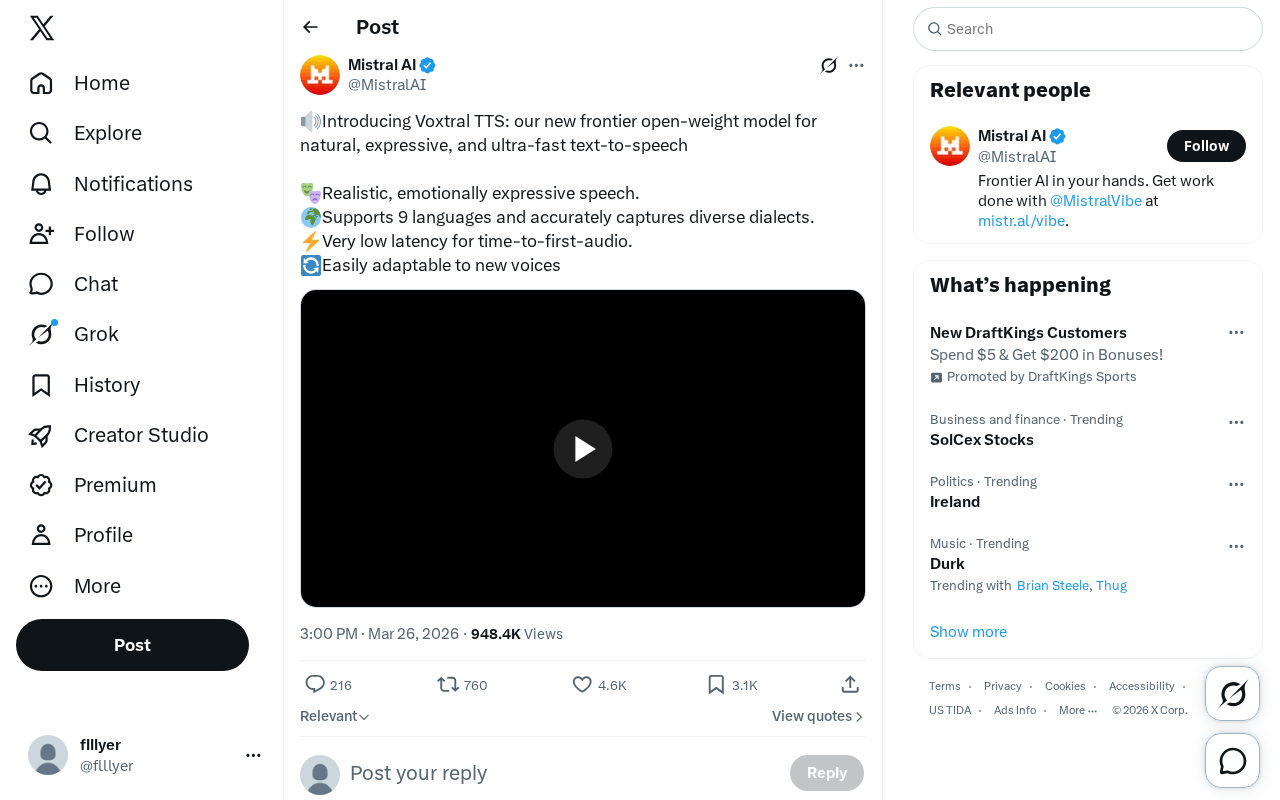
Mistral launches Voxtral TTS, an open-weight TTS model with emotional expression, multilingual support, and low latency.
Mistral has introduced Voxtral TTS, positioning it as a "frontier open-weight" entry into the speech synthesis market — a direct alternative to mainstream closed-source commercial APIs. The model highlights three key capabilities: realistic and emotionally expressive speech, coverage of 9 languages and multiple dialects, and ultra-low time-to-first-audio latency suited for real-time interaction. It also supports easy voice adaptation, enabling local voice cloning and customization with strong privacy benefits. The open-weight approach offers cost-sensitive teams and data-conscious enterprises a high-quality, controllable TTS option. However, current public information is largely from official channels, and independent benchmarks, model size details, and licensing specifics are still lacking — actual performance awaits community validation.
Voxtral TTS: A Breakthrough in Open-Source Speech Synthesis
Mistral has recently launched Voxtral TTS, a text-to-speech model positioned as a "frontier open-weight" solution. Unlike the many closed-source, pay-per-call commercial voice APIs on the market, Voxtral TTS is released with open weights — meaning developers can directly access model parameters, deploy locally, and build on top of the model. This approach continues Mistral's long-standing commitment to the open-source ecosystem, and gives it a meaningful point of differentiation in the highly competitive TTS space.
According to official information, Voxtral TTS emphasizes three core capabilities: natural and emotionally expressive speech, multilingual support, and extremely low synthesis latency. These three areas address the most common pain points in real-world voice application development.
Emotional Expressiveness and Natural Sound
Despite years of progress in speech synthesis, that mechanical, "obviously a robot" quality has remained stubbornly difficult to eliminate. Voxtral TTS highlights its output as "realistic, emotionally expressive speech," meaning the model doesn't just read text aloud — it attempts to reproduce the natural cadence, tonal shifts, and emotional variation of human speech.
For use cases like audiobooks, virtual assistants, game NPC voiceovers, and accessibility tools, emotional expressiveness often defines the ceiling of the user experience. A model that can adapt its tone to context is far more practically useful than one that simply aims for phonetic accuracy. That said, Mistral has not yet released specific benchmark data or head-to-head comparisons with other models, so real-world performance will need to be validated by the community.
Most modern high-fidelity TTS systems are built on neural vocoder architectures — prominent examples include WaveNet and HiFi-GAN. These models generate waveforms directly from acoustic features such as mel spectrograms, producing far more natural-sounding audio than earlier concatenative or parametric synthesis approaches. Emotional expression is typically achieved through one of two methods: either training on diverse, emotionally annotated speech data so the model implicitly learns tonal variation, or introducing explicit emotion/style control vectors that allow emotion type or intensity to be specified at inference time. The standard metric for evaluating speech naturalness is the Mean Opinion Score (MOS), where human listeners rate samples on a 1–5 scale; automated alternatives like UTMOS are also commonly used as proxies for human evaluation. Because all of these metrics rely on subjective perception, results across different test sets and listening environments are not directly comparable — which is precisely why independent third-party evaluations are so important for assessing a model's true capabilities.
Multilingual and Dialect Coverage
Voxtral TTS supports 9 languages and claims to "accurately capture diverse dialects." Multilingual capability is the baseline requirement for any TTS model targeting global deployment, while fine-grained dialect modeling represents a significantly higher bar — it requires the model to go beyond standard pronunciation and capture the subtle phonetic nuances of regional accents.
This feature is particularly valuable for products serving multi-regional markets. Customer service voice systems for multinational companies, multilingual content platforms, and educational applications all stand to benefit. However, the specific list of supported languages and the breadth of dialect coverage within each language remain limited in current public documentation, so developers should evaluate further based on their target language requirements.
Low Latency and Voice Customization
In real-time interactive applications, time-to-first-audio is a critical metric. Voxtral TTS emphasizes "very low latency," which is essential for voice chatbots, real-time translation, and voice assistants — scenarios where users are far less tolerant of response delays than they are with text-based interfaces.
The model also supports being "easily adaptable to new voices," enabling straightforward fine-tuning to new speaker profiles. Voice cloning and voice customization are becoming increasingly important directions in TTS — whether to create a branded proprietary voice or generate unique personas for personalized applications, this capability significantly expands deployment possibilities. Combined with open weights, developers can perform voice fine-tuning entirely on-premises without uploading any data to third-party services, offering stronger privacy and compliance guarantees.
Time-to-First-Audio (TTFA) is the core metric for measuring the responsiveness of a streaming TTS system — it refers to the elapsed time from text input to the first playable audio output. Unlike batch offline synthesis, streaming TTS typically uses a chunked inference strategy: rather than waiting for the full text to be processed, the model generates and outputs audio segments on the fly, compressing TTFA to the order of hundreds of milliseconds. Conversational AI applications generally require TTFA below 300ms; anything beyond that and users will perceive a noticeable pause. Voice cloning and speaker customization typically rely on speaker embedding techniques — the model extracts a voiceprint feature vector from a small amount of target audio and injects it into the decoding process at inference time, enabling transfer to a new voice without retraining the model. Open weights allow developers to execute this process locally, avoiding the need to upload voiceprint data to the cloud — a critical consideration for privacy-sensitive domains such as finance and healthcare.
The Significance of the Open-Weight Approach
Positioning "frontier" and "open-weight" side by side is the most noteworthy aspect of Voxtral TTS's identity. Historically, the most capable speech synthesis models have been held by a handful of commercial companies and offered exclusively through closed APIs. If Voxtral TTS can match — or approach — closed-source solutions in naturalness, multilingual performance, and low latency while remaining open, it would give the entire developer ecosystem a high-quality, freely controllable alternative.
For cost-sensitive small and mid-sized teams, enterprises that prioritize data sovereignty, and researchers seeking deep customization on top of a foundation model, open weights mean lower barriers to entry and far greater flexibility.
One important caveat: the information currently available is largely from official announcements, and key details are still missing — including third-party evaluations, specific model parameter counts, and licensing terms. Voxtral TTS's real competitive standing will only become clear once the community has had a chance to deploy and test it in practice. Interested developers can keep an eye on the weight release and documentation to get hands-on experience as soon as possible.
Related articles
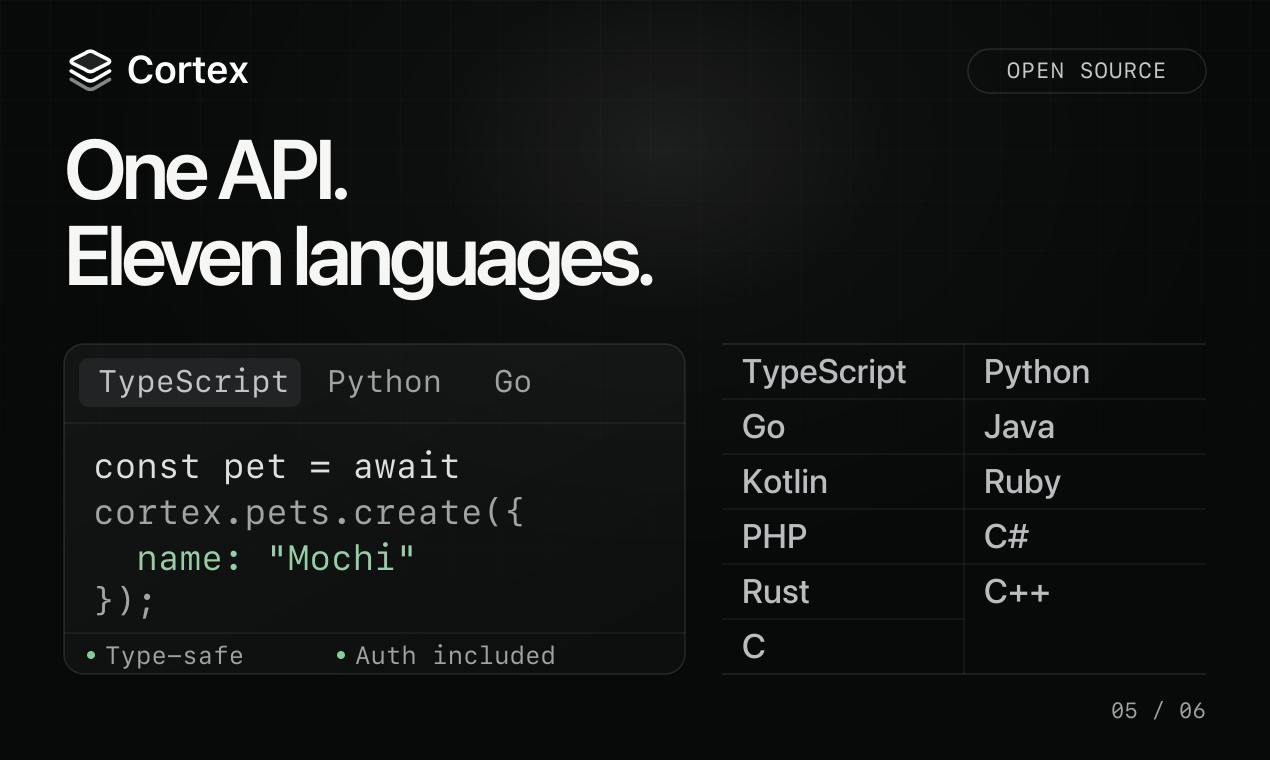
Cortex: Convert API Specs into Docs, SDKs, and MCP Servers in One Click
Cortex is an open-source tool that converts OpenAPI, GraphQL, gRPC and more into interactive docs, typed SDKs in 11 languages, and MCP servers for AI agents.
ABrush: An AI Studio Built for Digital Artists
ABrush is an AI studio for digital artists, ranked #4 on Product Hunt. It embeds leading AI models into existing workflows to remove repetitive tasks, speed up iteration, and keep artists in control.
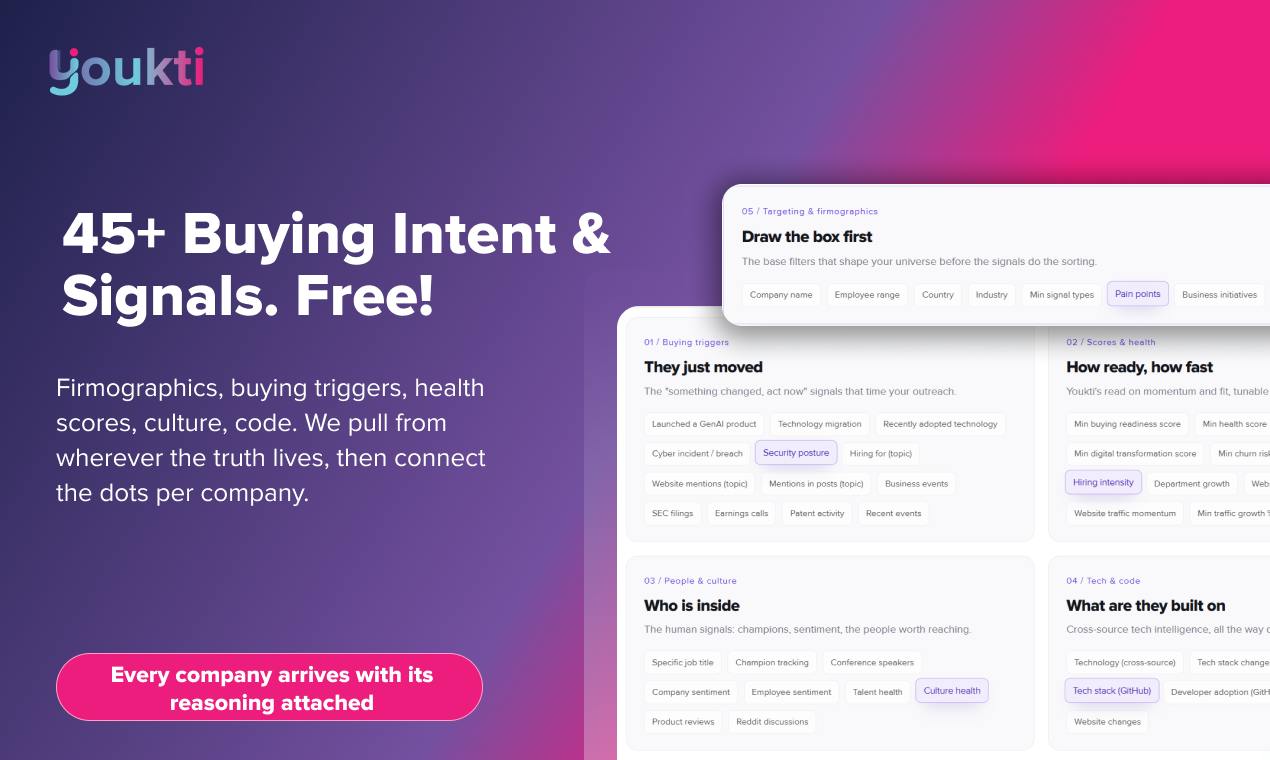
Youkti: An AI That Remembers Every Deal and Tells Your Sales Team What to Do Next
Youkti is an AI sales assistant that hit #2 on Product Hunt. It remembers every account, conversation, and deal — then tells your team exactly what to do next. Contact data, buying signals, and intent data are all free.