Walmart Teams Up with Meta: Black Friday Deals Land in AI Agent Muse

Walmart integrates Black Friday deals into Meta's AI agent Muse, enabling direct purchases within conversations.
Walmart and Meta have partnered to embed Walmart's Black Friday catalog into Meta's AI agent Muse, letting users browse and order during conversations. Rather than ordinary advertising, it embeds product supply into the AI agent's interaction chain: Meta provides the agent and interface, Walmart provides products, pricing, and fulfillment. The article sees conversational commerce shifting from search boxes to intent-driven entry points, with Black Friday as a natural testing ground, though coverage, fulfillment details, recommendation transparency, and data flows remain undisclosed.
Walmart Teams Up with Meta: Black Friday Deals Land in AI Agent Muse
According to an RSS source report, Walmart has reached a partnership with Meta, and consumers can now purchase Walmart's Black Friday promotional items directly through Meta's AI agent Muse. This move pushes the integration of retail giants and conversational commerce on social platforms into a deeper stage.
The Core of the Partnership
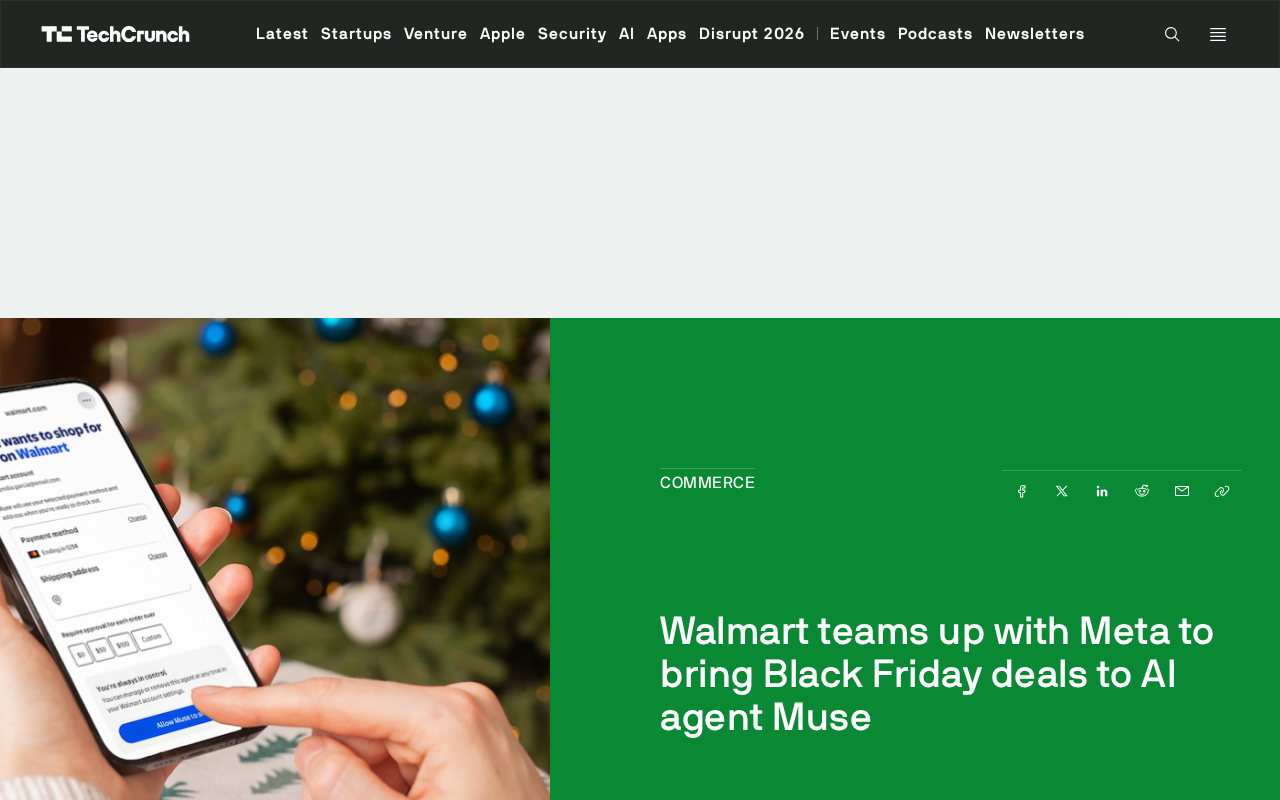
The main thread of this collaboration is clear: Walmart is integrating its Black Friday promotional catalog into Meta's AI agent Muse, allowing users to browse and purchase during their conversation with Muse. As Meta's AI agent, Muse takes on the dual role of "shopping guide + checkout entry point."
Based on public information, this is not a simple ad placement but rather an embedding of Walmart's product supply directly into the AI agent's interaction chain. For Walmart, it adds a conversational channel for reaching users; for Meta, Muse takes a step forward from a general-purpose assistant toward a shopping agent with actual transaction capabilities.
Why It's Worth Watching
Conversational Commerce Is Becoming a New Entry Point
The traditional traffic entry point for e-commerce is the search box and recommendation feed, while AI agents bring an "intent-driven" shopping approach — users state their needs, and the agent understands and directly presents purchasable results. By putting Black Friday deals into Muse, Walmart is essentially testing the conversion efficiency of this new chain.
Conversational Commerce was first proposed by venture capitalist Chris Messina in 2015, referring to the entire process of discovery, consultation, and purchase completed through a chat interface rather than a traditional search box or product listing. Its core difference is that interaction shifts from "people finding products" to "intent-driven," with the agent needing to understand fuzzy needs in natural language and then map them to specific SKUs and inventory. Compared to search boxes, conversational commerce has the advantage of lowering decision costs and supporting multi-turn clarification, but it also raises the question of product ranking power shifting from retailers to agents — who decides which item to show first in a conversation will directly affect conversion and merchant competition dynamics.
Redefining Roles Between Platforms and Retailers
In this partnership, Meta provides the AI agent and user interface, while Walmart provides products, pricing, and fulfillment. Each party holds onto its core assets while connecting the transaction link. If this division-of-labor model works, it could be replicated by more retailers.
Meta's AI agent Muse is Meta's product positioning in the generative AI assistant direction, positioned as a general-purpose agent that can provide conversational services across Meta's apps (such as Messenger, WhatsApp, and Instagram). For Meta, advertising and business messaging have always been its core monetization methods. Expanding Muse from a Q&A assistant to a shopping agent capable of completing transactions means its commercialization is extending from display advertising into the transaction chain. This also explains why Meta chose to partner with large retailers like Walmart that have mature product catalogs and fulfillment capabilities, rather than building its own supply chain.
Promotional Scenarios Are a Natural Testing Ground
Black Friday promotions are characterized by strong timeliness, short decision chains, and high price sensitivity, making them very suitable for validating AI agents' shopping guidance capabilities. Walmart's choice to integrate with Muse at this point suggests it hopes to quickly test the actual effectiveness of conversational commerce using a high-traffic scenario.
Black Friday originated from offline retail promotions on the day after Thanksgiving in the United States, and has now evolved into a global discount event covering the entire year-end shopping season, characterized by concentrated discounts, short time windows, and intensive consumer price comparison behavior. For AI agent shopping, such scenarios can quickly accumulate high-intent conversation samples and are also more likely to expose engineering issues such as price synchronization, real-time inventory, and discount eligibility verification. Therefore, Walmart's choice of Black Friday as the first scenario for Muse integration is essentially using a high-traffic, time-sensitive stress test to verify the stability of conversational transactions.
Potential Industry Impact
This partnership sends a signal: AI agents are no longer just information Q&A tools but are evolving toward "executable transactions." When users can complete the entire process from product discovery to checkout within an AI conversation, retailers' channel strategies and platforms' monetization paths will both need to be reassessed.
From a competitive landscape perspective, this type of alliance between social platforms and retail giants may drive more "AI agent + retail supply" combinations to emerge. Whoever controls the entry point to user intent will hold a more advantageous position in conversational commerce.
Questions Still to Be Observed
Currently, public information is limited, and the partnership's coverage, product categories, settlement, and fulfillment details have not been disclosed. The transparency and ranking logic of AI agent product recommendations, as well as how user data flows between platforms and retailers, are also aspects that need ongoing attention. What is certain is that Walmart and Meta have already made Black Friday promotions the first testing ground for AI agent shopping.
One-line Summary
Walmart is integrating Black Friday promotions into Meta's AI agent Muse, allowing users to complete purchases directly within conversations.
Paragraph Summary
Walmart has partnered with Meta to integrate its Black Friday promotional catalog into Meta's AI agent Muse, enabling users to browse and place orders during conversations with Muse. This is not ordinary ad placement but an embedding of product supply into the AI agent's interaction chain: Meta provides the agent and interface, while Walmart provides products, pricing, and fulfillment. The article argues that conversational commerce is shifting from search boxes to a new intent-driven entry point, and that time-sensitive, short-decision-chain scenarios like Black Friday are a natural testing ground for validating AI agents' shopping guidance capabilities. The signal sent by the partnership is that AI agents are evolving from information Q&A toward executable transactions, but coverage, settlement and fulfillment details, recommendation transparency, and data flow methods remain to be disclosed.
Related articles

Michael Nielsen Takes Down His Classic Neural Network Textbook, Sparking Community Discussion
Michael Nielsen's classic free textbook Neural Networks and Deep Learning has been taken offline, sparking discussion on Hacker News about the reasons and impact.

Inside the AI Training Data Market: The Trade-off Between Exclusivity and Discounts
G2i founder Gabe Greenberg reveals the dual-track pricing of the AI training data market: labs pay a premium for exclusive data or accept discounts that allow others to buy it.

SessionGraph: Unifying All Coding Agent Sessions in One Interactive Graph
SessionGraph aggregates coding agent sessions into an interactive graph, helping developers review, debug, and manage AI coding workflows across sessions. This article examines its positioning, value, and open questions.