Watch-Controlled Drone: Anti-Gravity A1 Follow Me Kit Hands-On

Anti-Gravity A1 watch-controlled drone kit delivers auto-follow and obstacle avoidance for $800, but lacks intelligence in complex environments.
Anti-Gravity launches the A1 Follow Me Kit, using a watch instead of a traditional remote or headset to control a drone. The GPS-enabled watch lets users set follow distance; the drone auto-follows and captures 360-degree footage, with automatic obstacle avoidance and lead mode. It performs reliably in open settings, steering around trees and fences and squeezing through narrow gaps, but still collides or loses signal with thin branches and dense vegetation, occasionally straying into private areas. The $800 full kit is half the price of last year's wand-and-goggles package, lowering the barrier to use. It suits hands-busy activities like hiking and cycling, though environmental perception and path planning still need software optimization.
Watch-Controlled Flight: Taking Off from Your Wrist
As drone tracking technology matures, manufacturers are exploring ways to make devices follow users more naturally while lowering the barrier to operation. Anti-Gravity's A1 Follow Me Kit offers a new approach: a wristwatch that controls the drone, replacing the traditional remote controller or headset. According to a hands-on video from the YouTube channel The Verge, this kit lets users simply wear a watch to make the drone automatically follow and capture 360-degree footage—freeing up both hands and opening up new use cases.
The core of the A1 Follow Me Kit is a GPS-enabled watch. Users unfold the drone, power it on, select a tracking mode via the watch, and set the distance between the drone and themselves. The drone then follows automatically, avoiding obstacles like trees and fences along the way. In the video, the host climbs a slope with the drone; the watch displays the drone's position in real time and can even report the crash site after a flyaway.
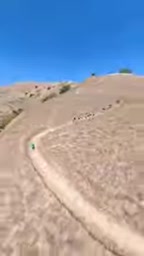
This control method eliminates the hassle of carrying a remote, making it especially suited to activities that require both hands, such as hiking and cycling. The watch's GPS provides the basis for positioning, but signals can still be lost behind dense vegetation—the video's creator notes it "needs more intelligence."
How GPS Positioning Works in Drone Tracking—and Its Limits
Automatic drone following relies on absolute position information from GPS. The watch's built-in GPS module continuously sends its latitude, longitude, altitude, and speed to the drone over a wireless link; the drone then combines this with its own GPS to calculate relative position, maintaining the set follow distance and direction. However, GPS signals weaken or are lost in dense vegetation, canyons, or built-up areas because satellite signals require a direct line of sight to the sky. Once the watch's GPS loses lock, the drone cannot accurately determine the user's position and may hover, drift, or lose track. To compensate, some systems fuse inertial measurement units (IMUs) and visual sensors for short-term dead reckoning, but accuracy and duration are limited. The video creator's mention of "needing more intelligence" refers precisely to the system's lack of sufficient redundant sensing when GPS is unreliable.
Tracking Capability: Automatic Obstacle Avoidance and Lead Mode
The A1 offers multiple tracking modes, and users can adjust the follow distance. In street scenarios, the drone automatically steers around trees and fences, but it still collides with thin branches. In the video, after the drone hits a twig, the watch immediately reports the crash location; the airframe sustains little damage, demonstrating a degree of durability.

More impressive is the lead mode: the drone can fly ahead of the user and adjust its route as the user changes direction, provided it maintains a bird's-eye view. At one narrow gap, the drone didn't fall behind but chose to squeeze through the opening, showing strong spatial judgment. However, the creator also notes that the drone occasionally strays into a neighbor's yard or even hits plants, exposing shortcomings in path planning in complex environments.

Obstacle Avoidance: Sensor Configuration and Decision Logic
Automatic obstacle avoidance typically relies on visual cameras on the front, back, and bottom of the airframe, along with infrared sensors or ultrasonic modules, to detect obstacles. During following, the drone builds a local environment map in real time and plans a path around obstacles. For large objects like tree trunks and walls, vision algorithms easily identify and circumnavigate them in advance; but thin branches, power lines, and other low-texture or slender obstacles occupy few pixels in the image, causing large depth-estimation errors and easy misses. Moreover, path-planning algorithms in tight spaces are constrained by sensor field of view and computing resources, sometimes choosing to "squeeze through" rather than safely detour, leading to collisions. Lead mode requires the drone to maintain a bird's-eye view ahead of the user while predicting the user's direction of travel, placing higher demands on real-time mapping and trajectory prediction.
Reframing Without a Headset
Last year Anti-Gravity released a kit requiring a wand and goggles, at a higher price. This year's Follow Me Kit drops the headset—users wear ordinary sunglasses—and controls the drone via the watch to perform reframing and other techniques. The video notes the full kit costs $800, half the price of last year's wand-and-goggles package.
The lower price and simplified wearing method bring the device closer to everyday use. But the creator also cautions that the drone can still lose track or collide while following, and its intelligence needs improvement.
FPV Headsets vs. Watch Control
Last year's "wand" was a handheld motion controller, and the "goggles" were an FPV (first-person view) headset. Users watched the drone's real-time feed through the headset and used the motion controller to adjust flight attitude and framing—highly immersive but cumbersome to carry and expensive. With the headset removed in the new scheme, users observe the drone with their own eyes and use the watch screen and buttons to reframe—that is, adjust the drone's position and camera angle to change the composition. The watch's advantages are portability and at-a-glance access, but without real-time video transmission, users cannot precisely preview the shot and rely more on the drone's automatic framing algorithms. This trade-off lowers cost and the operating barrier but also limits fine creative control.
Hands-On Verdict: Innovation and Limitations Coexist
The Anti-Gravity A1 Follow Me Kit offers a lightweight way to control a drone; the watch replaces the remote and headset, reducing carrying burden, and automatic tracking and lead mode perform reliably in open settings. The $800 full-kit price is more attractive than the previous generation. However, GPS loss under dense vegetation, obstacle-avoidance failures with small obstacles, and occasional intrusions into private areas show that environmental perception and path planning still have room for improvement. For users seeking portability and automation, this kit is worth watching—but for confident use in complex environments, further software optimization is needed.
Related articles

Chain of Thought Isn't Just for AI: How Humans Can Use CoT to Improve Thinking Quality
Chain of Thought isn't just a prompt trick for large models. Starting from a Hacker News discussion, this article analyzes why CoT works for human thinking too, breaks down actionable ways to transfer it, and highlights the key differences between human CoT and machine CoT.
Cloudflare Teams Up with OpenAI: Closi…
Cloudflare Teams Up with OpenAI: Closing the Loop from Vulnerability Discovery to Defense with AI
Cloudflare uses OpenAI Daybreak to investigate security vulnerabilities and generate reviewable remediation plans, while developers use Codex to boost coding efficiency and quality.

Orca Multi-Agent Orchestration in Practice: A Guide to Parallel Collaboration with Claude and Codex
Orca is Stable AI's free open-source agent workbench supporting 34 agents like Claude Code and Codex in parallel. Learn its Git worktree isolation, multi-model orchestration, and mobile management.