Waymo AI Team to Host AMA: Focusing on Foundation Models and Autonomous Driving Simulation
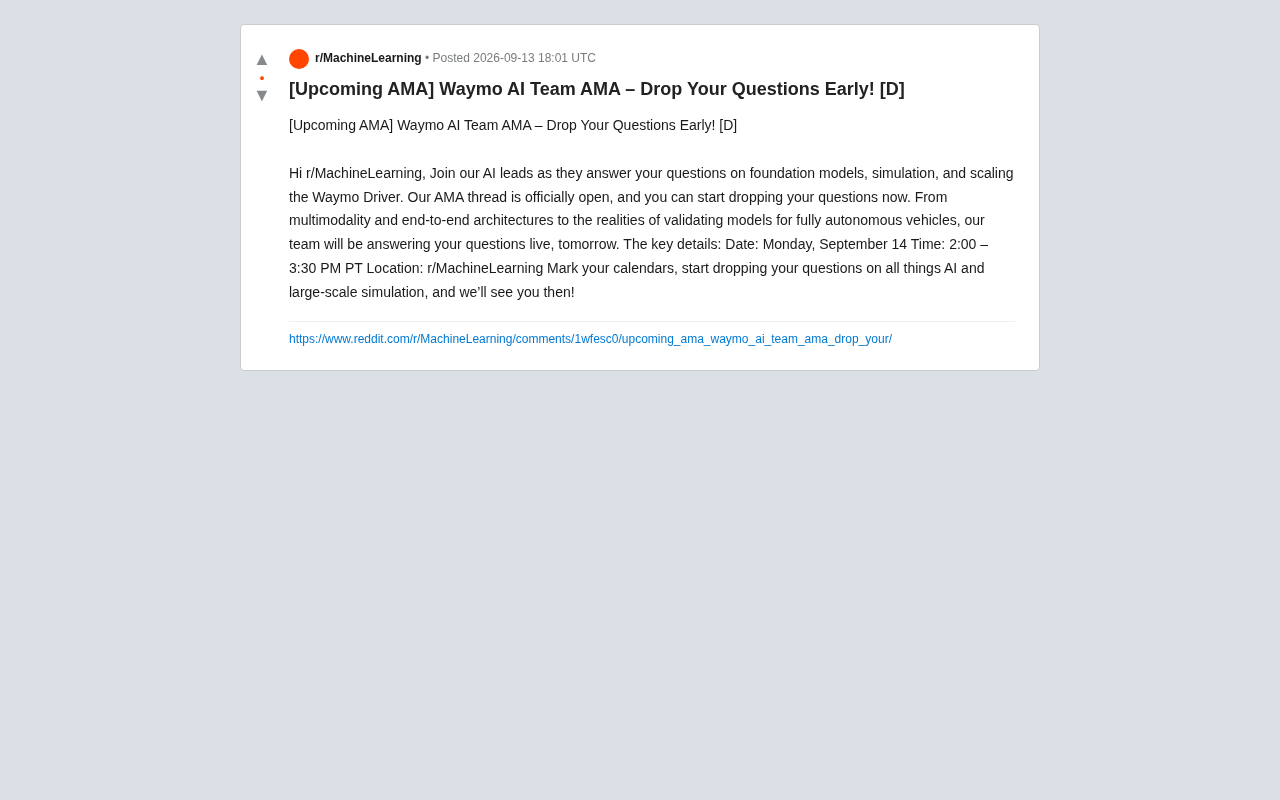
Waymo AI leads host a Reddit AMA on foundation models, simulation, and end-to-end autonomous driving.
Waymo is hosting a live AMA on Reddit's r/MachineLearning with its AI technical leads, scheduled for Monday 2:00–3:30 PM PT. Topics include multimodal perception, end-to-end learnable architectures, foundation model applications, and model validation challenges for fully autonomous vehicles. It's a rare opportunity to ask L4 AV industry leaders directly about large-scale simulation, the sim-to-real gap, and how LLMs and multimodal foundation models are being integrated into autonomous driving systems.
Waymo AI Team Is Coming to Reddit for an AMA
Waymo's AI technical leads are hosting a public Ask Me Anything (AMA) session on Reddit's r/MachineLearning community. The event focuses on some of the most critical technical topics in autonomous driving today — foundation models, large-scale simulation, and scaling the Waymo Driver system.
According to the official announcement, the AMA thread is already open for early questions. Waymo's team will respond in real time during the event, scheduled for Monday from 2:00–3:30 PM Pacific Time on r/MachineLearning.
Topics Include Multimodality and End-to-End Architectures
The AMA's announced discussion topics are clearly defined, covering several of the most closely watched directions in autonomous driving AI research:
- Multimodality: Modeling approaches that fuse data from multiple sensor types — cameras, LiDAR, radar — which sits at the core of modern autonomous perception systems.
- End-to-end architectures: The industry shift from traditional modular pipelines (perception → prediction → planning → control) toward fully end-to-end learnable systems has been a major trend in recent years.
- Real-world challenges in model validation: For fully autonomous vehicles, verifying model reliability and safety is a critical hurdle that must be cleared before any system can move from the lab to public roads.
The choice of these topics signals that Waymo wants to engage directly with the machine learning research community on cutting-edge technology — not just deliver a product pitch.
Foundation models refer to large neural networks pretrained on massive datasets that can be fine-tuned for a wide range of downstream tasks — GPT series models and CLIP are canonical examples. In autonomous driving, the value of foundation models lies in their ability to learn generalizable environmental understanding and driving intuition from vast amounts of driving data, which can then be fine-tuned for specific tasks (e.g., obstacle detection, trajectory prediction), significantly reducing the data requirements and development costs for each subtask. Compared to traditional modular autonomous driving systems, foundation model-based architectures have shown stronger generalization on out-of-distribution scenarios — which is crucial for handling the long-tail events encountered on real roads.
Why This AMA Is Worth Your Attention
For researchers and practitioners, it's rare to have direct access to technical leads at a top-tier autonomous driving company. As a leading L4 autonomous driving player, Waymo's hands-on experience with foundation models and simulation carries real reference value for the entire industry.
Large-scale simulation is especially worth digging into. Real-world data collection is expensive, and long-tail scenarios are scarce — simulation environments have become a critical tool for training and validating autonomous driving models. How Waymo builds high-fidelity simulations and how they bridge the sim-to-real gap are exactly the kinds of questions the community is eager to hear answered.
Beyond that, as large language models and multimodal foundation models have exploded in capability, the autonomous driving field has been exploring how to borrow from these paradigms. The combination of end-to-end architectures with foundation models may represent the most important direction for next-generation autonomous driving systems — and this AMA may offer a glimpse into how Waymo is thinking about it.
The sim-to-real gap is one of the most fundamental challenges in simulation-based autonomous driving training. No matter how detailed a simulation environment is, it will always differ from the real world in areas like lighting variation, sensor noise, physical collision modeling, and the interactive behavior of pedestrians and vehicles — causing models that perform well in simulation to degrade when deployed on actual vehicles. The industry typically addresses this through domain randomization (randomizing various simulation parameters to cover a broader distribution), neural rendering-based scene reconstruction from real data (e.g., NeRF/Gaussian Splatting reconstruction), and adversarial scenario generation. Waymo has extensive real-world experience in this space — its internal simulation platform Carcraft reportedly runs billions of virtual miles of testing per year — making its methodology a highly valuable reference for the broader industry.
How to Participate
Interested readers can head to r/MachineLearning and submit questions early in the AMA thread. Waymo's AI leads will respond in real time on the day of the event. Whether you have deep questions about technical architecture or practical questions about engineering deployment and safety validation, this is your chance to ask a frontline team directly.
For anyone tracking the trajectory of autonomous driving technology, events like this are a rare window into the state of the art — and into how the industry's leading teams are making their technical bets.
Related articles
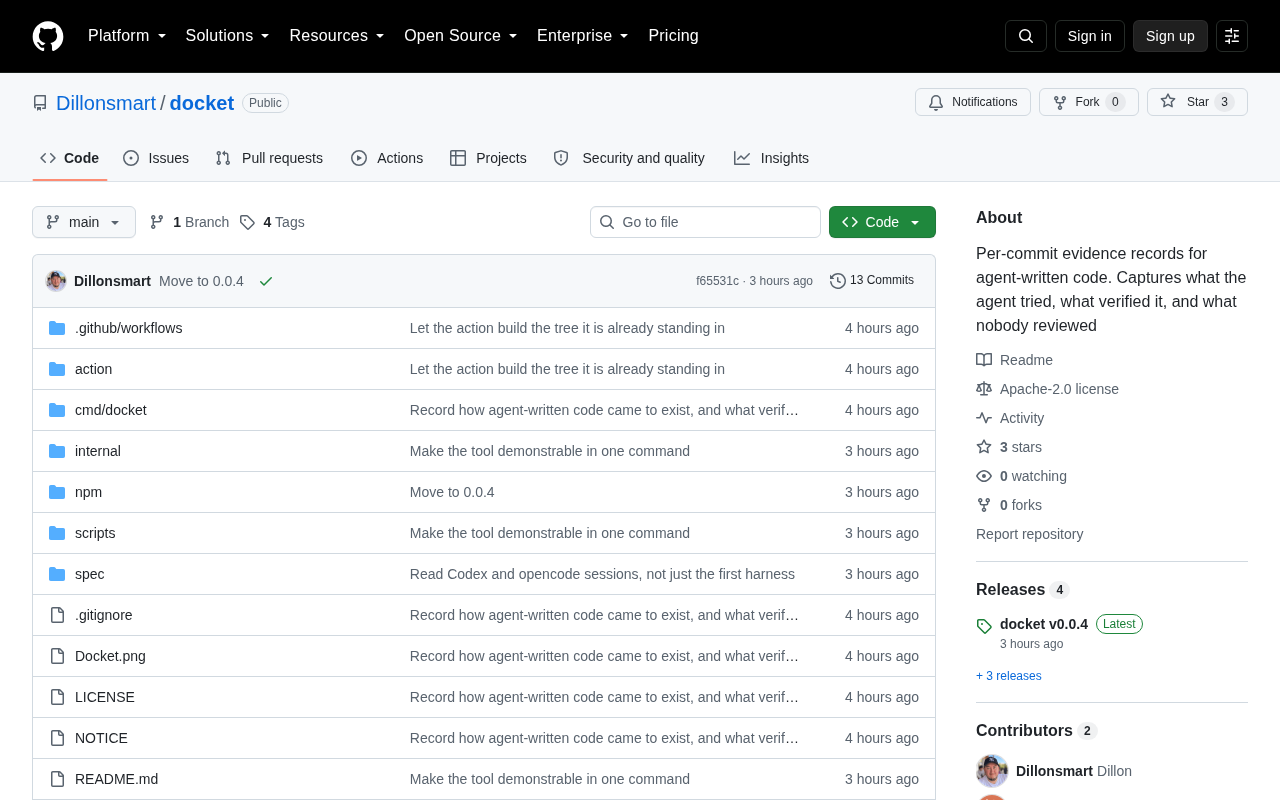
Docket: Building Per-Commit Evidence Trails for AI Agent-Generated Code
Docket builds per-commit evidence trails for AI agent-generated code, making every AI commit traceable, auditable, and verifiable — a pragmatic step in AI coding governance.
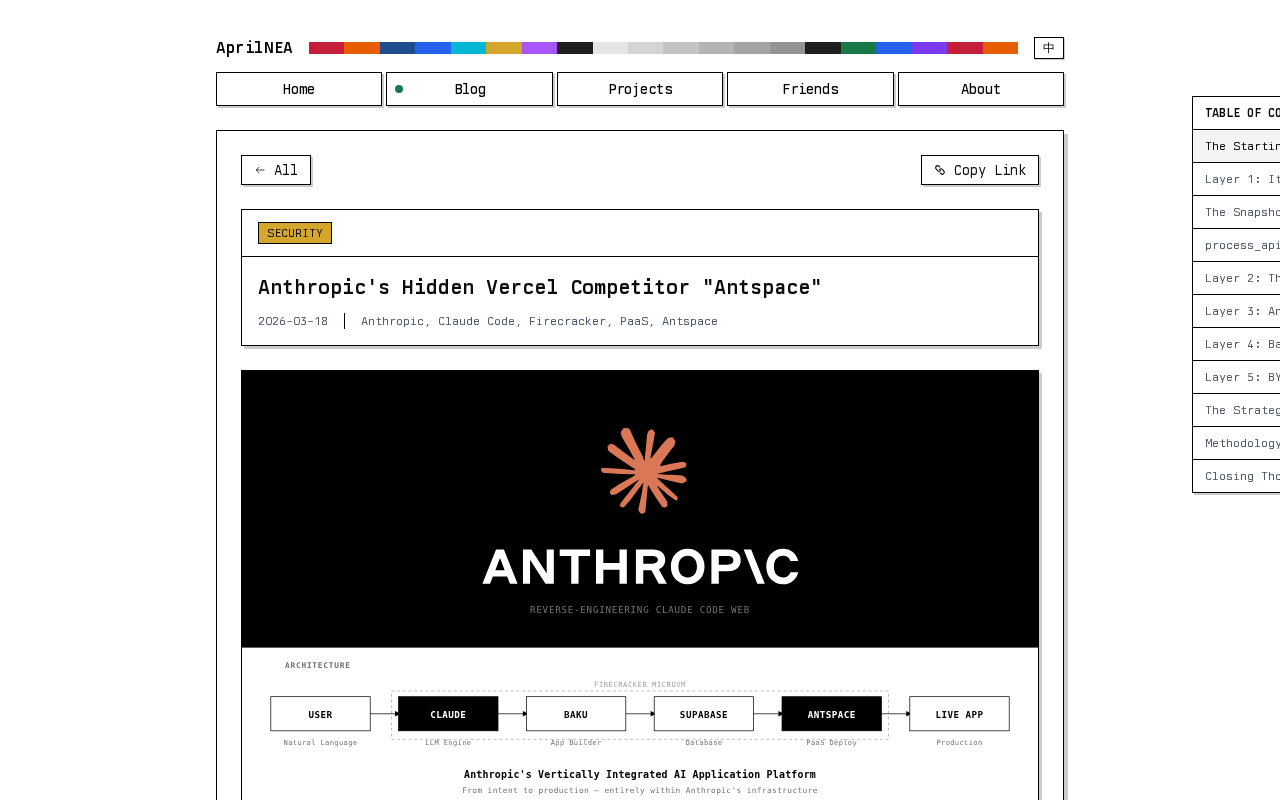
Reverse-Engineering Claude Web's Sandbox: Uncovering Anthropic's Hidden MicroVM
A reverse-engineering analysis of Claude Web's code sandbox reveals Anthropic's likely MicroVM architecture and internal "Antspace" environment, with insights for AI product security.
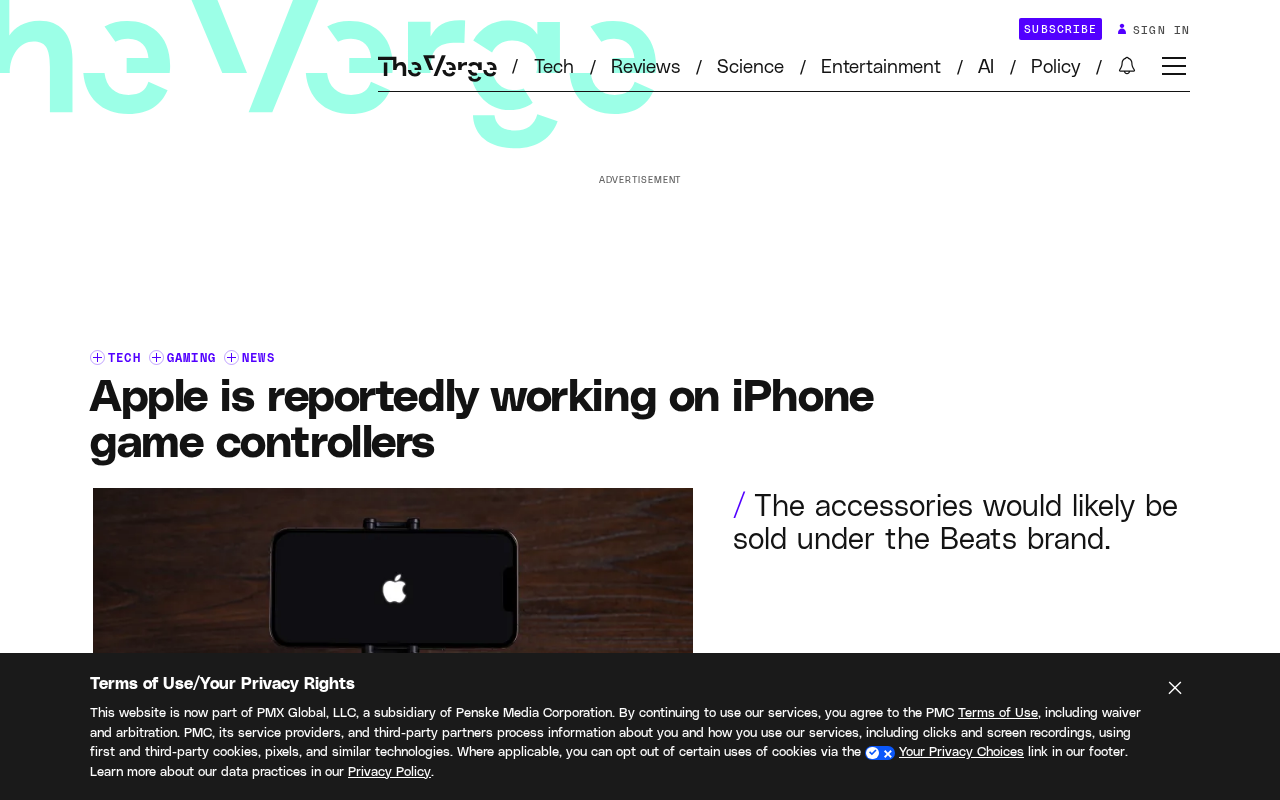
Apple Reportedly Working on Two iPhone Game Controllers Under the Beats Brand
Bloomberg's Mark Gurman reports Apple is developing two iPhone game controllers under the Beats brand. MacRumors found first-party device references in macOS 26.7 code.