Waymo Restarts San Antonio Operations: Back on the Road Five Months After Flood Incident
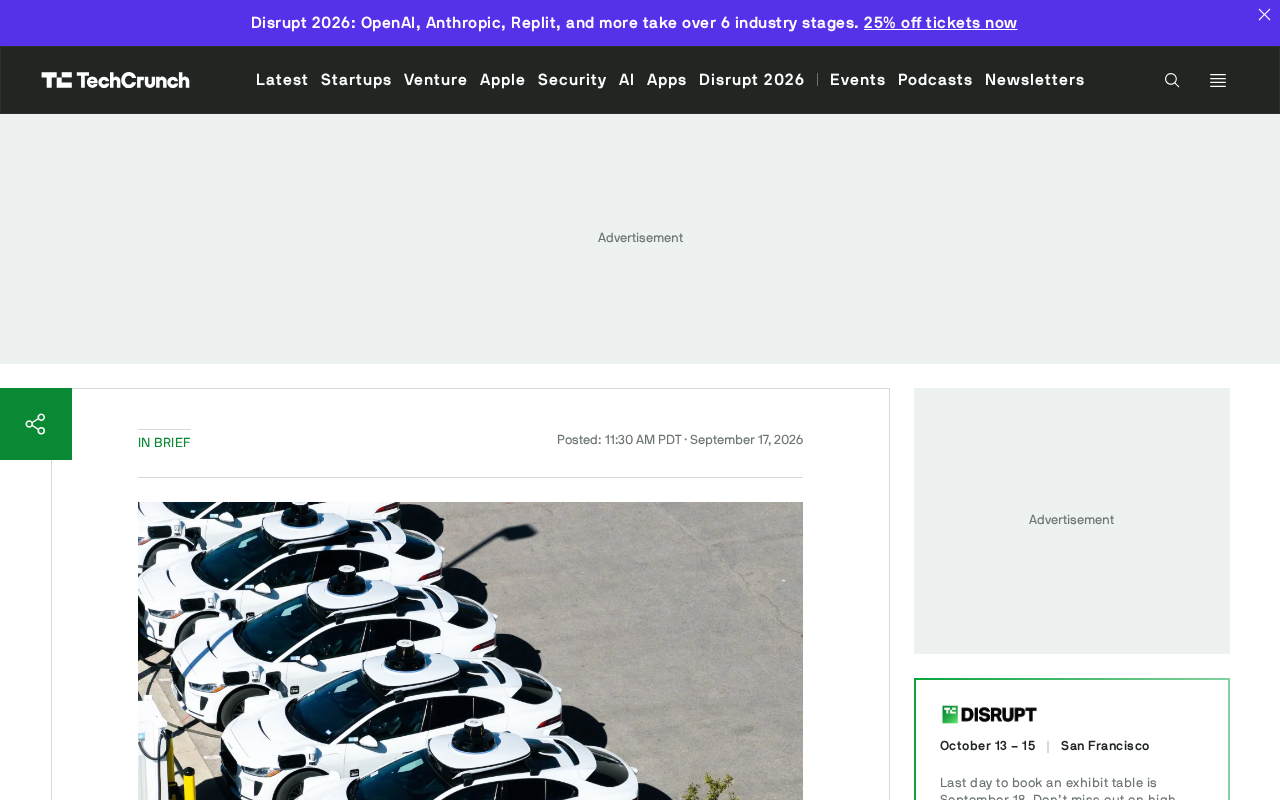
Waymo's San Antonio Robotaxi was swept away in a flood and service was suspended for five months before restarting.
In April, a Waymo Robotaxi operating in San Antonio was swept away during urban flooding, prompting the company to suspend all local service. About five months later, Waymo announced it was resuming operations. The incident highlights an unresolved challenge in autonomous driving: cameras, LiDAR, and other sensors degrade significantly in extreme weather like floods and heavy rain, while HD maps cannot reflect real-time road conditions when submerged — causing systems to potentially misclassify dangerous areas as drivable. The lengthy suspension suggests Waymo undertook deep systemic work, including redefining the city's Operational Design Domain (ODD) and tightening the link between weather alerts and vehicle dispatch. The broader lesson for the industry: mature Robotaxi systems must be able to anticipate and proactively avoid natural hazards before they occur, not just react after the fact.
Autonomous vehicle company Waymo has resumed service in San Antonio, Texas, approximately five months after a dramatic flooding incident forced a complete operational shutdown. The event not only exposed the vulnerability of self-driving vehicles in extreme weather conditions, but also prompted the broader industry to rethink the operational boundaries of Robotaxi services.
What Happened: A Robotaxi Swept Away by Floodwaters
According to original reports, Waymo suspended its San Antonio operations in April after one of its Robotaxi vehicles was swept away by floodwaters during a severe urban flooding event. For any autonomous driving company, this was a public relations nightmare — it raised an unavoidable question about technology and safety: how should an unmanned vehicle respond to a sudden natural disaster with no human supervision?
San Antonio is located in south-central Texas, historically one of the highest flood-risk areas in the United States. The region is commonly referred to as "Flash Flood Alley." Intense, sudden rainfall can transform calm roads into raging waterways within minutes — a severe challenge for autonomous driving systems that rely on cameras, LiDAR, and high-definition maps to perceive their environment.
The three core sensor types that autonomous driving systems depend on each have distinct limitations in flood scenarios: cameras lose clarity rapidly in heavy rain and water vapor; LiDAR laser beams scatter off large raindrops, creating so-called "rain fog noise" that severely degrades point cloud quality; and millimeter-wave radar, while relatively more penetrating, struggles to accurately gauge water depth. High-definition maps capture static road conditions in dry weather — when roads are submerged, a massive gap opens between the map and reality, and the system may still classify a flooded area as a drivable zone. This is precisely why flooding poses a far greater threat to autonomous vehicles than to human drivers. A human can rely on intuition and experience to judge that "this road is no longer passable," whereas current sensor fusion algorithms — faced with extreme edge cases severely underrepresented in training data — often lack a reliable basis for that decision.
What Five Months of Downtime Really Means
From the April suspension to the recent resumption, Waymo's service was offline for approximately five months. The duration itself is telling. Compared to software bugs or single-vehicle hardware failures, which typically require days to weeks to diagnose and fix, a months-long pause suggests Waymo was doing something much deeper.
That work likely included: re-evaluating the city's Operational Design Domain (ODD), improving the system's ability to detect standing water and flooding, refining vehicle dispatch and withdrawal strategies for extreme weather, and coordinating with local emergency management agencies. For a company that places safety at the center of its public narrative, rushing back to service would be far more damaging than a temporary absence.
Operational Design Domain (ODD) is a key concept for understanding the safety boundaries of autonomous driving. The ODD defines the specific set of conditions under which an autonomous system is designed and permitted to operate — including geographic area, road type, speed limits, weather conditions, time of day, and more. A Level 4 autonomous vehicle is only considered "safe" within its ODD; once operating conditions exceed those boundaries, the system should cease operation or request human intervention. At its core, the flood incident was an ODD boundary breach — the vehicle encountered an extreme weather scenario that its design parameters had not adequately covered. Waymo's five-month pause likely included recalibrating the San Antonio ODD: deeply integrating the region's flood-risk zones and flash flood alert levels into vehicle dispatch logic, so that when a weather warning triggers, the system can proactively shrink its service area rather than waiting passively for danger to arrive.
Extreme Weather: A Long-Standing Challenge for Autonomous Driving
The flooding incident reflects a pain point the autonomous driving industry has yet to fully resolve — reliability in adverse weather. Rain, snow, fog, and flooding all impair sensor performance to varying degrees and reduce perceptual accuracy. Flooded roads are especially tricky, because the system must assess water depth, flow speed, and whether the road surface is still passable — information that conventional sensors often cannot accurately obtain.
For the commercial expansion of Robotaxi services, the ability to operate reliably across diverse climate conditions directly determines service availability and coverage. In some ways, Waymo's decision to restart in a high flood-risk city like San Antonio is a very public test of its weather resilience.
The south-central Texas area where San Antonio is located is known to meteorologists as "Flash Flood Alley." Its geography — limestone bedrock with poor water absorption and undulating terrain that creates natural drainage channels — makes it one of the deadliest flash flood regions in the entire United States. What distinguishes a flash flood from ordinary flooding is speed: intense rainfall can turn a dry road into a several-feet-deep torrent within minutes to hours, leaving virtually no reaction time for any driver. For Robotaxi operations, this means risk avoidance cannot rely solely on real-time sensor perception. Weather data integration, flood warning system connectivity, and pre-emptive route replanning must all be built into the overall safety architecture. Some industry players are already exploring ways to connect National Weather Service (NWS) flood alert APIs with vehicle dispatch systems, but striking the right balance between accuracy and operational efficiency remains an open engineering problem.
Industry Takeaways
This incident carries lessons for the entire autonomous driving industry. It serves as a reminder that the safety boundaries of autonomous driving don't only exist within common traffic scenarios — they also lurk in low-probability, high-impact extreme events. A truly mature Robotaxi system needs the ability to anticipate and proactively avoid weather-related risks before an incident occurs, not scramble to patch things up after the fact.
Waymo's return to service is a positive signal, demonstrating the company's capacity to recover from setbacks and improve. But looking further ahead, the question the industry must keep answering is this: how do we make autonomous vehicles more cautious and more reliable than human drivers when facing natural disasters?
(Note: This article is based on a single RSS source with limited original material; some background analysis represents standard industry knowledge extended for context.)
Related articles
What Is AIOps? How AI Is Reshaping IT Operations
AIOps applies AI and machine learning to IT operations for anomaly detection, alert noise reduction, and root cause analysis — shifting teams from reactive to proactive.
CCC Sends Its Invitation: 40C3 Hacker Congress Themed "Model Citizens"
CCC announces its 40th Chaos Communication Congress (40C3) under the theme "Model Citizens," inviting hackers worldwide to examine surveillance and algorithmic governance.

Bicycles and Algorithms: Amber Case on Where AI Design Goes Wrong
Computational anthropologist Amber Case uses the bicycle metaphor to argue that AI design has it backwards — tools should amplify human ability, not replace human judgment.