Waymo Robotaxis Are About to Hit the Streets of Toronto

Waymo enters Toronto, its first market outside the U.S., testing autonomous driving robustness in extreme cold.
Waymo announced via Hacker News that it is expanding to Toronto, Canada—its first market outside the U.S. Toronto's harsh winter conditions make it an extreme-scenario validation ground for autonomous driving systems. Ontario's open regulations, proximity to University of Waterloo AI talent, and last-mile mobility gaps are key draws. The project is still in the announcement stage with no timeline, fleet size, or partners disclosed. Success in a cold-climate city could widen Waymo's Robotaxi operational lead and boost Canada's autonomous driving ecosystem.
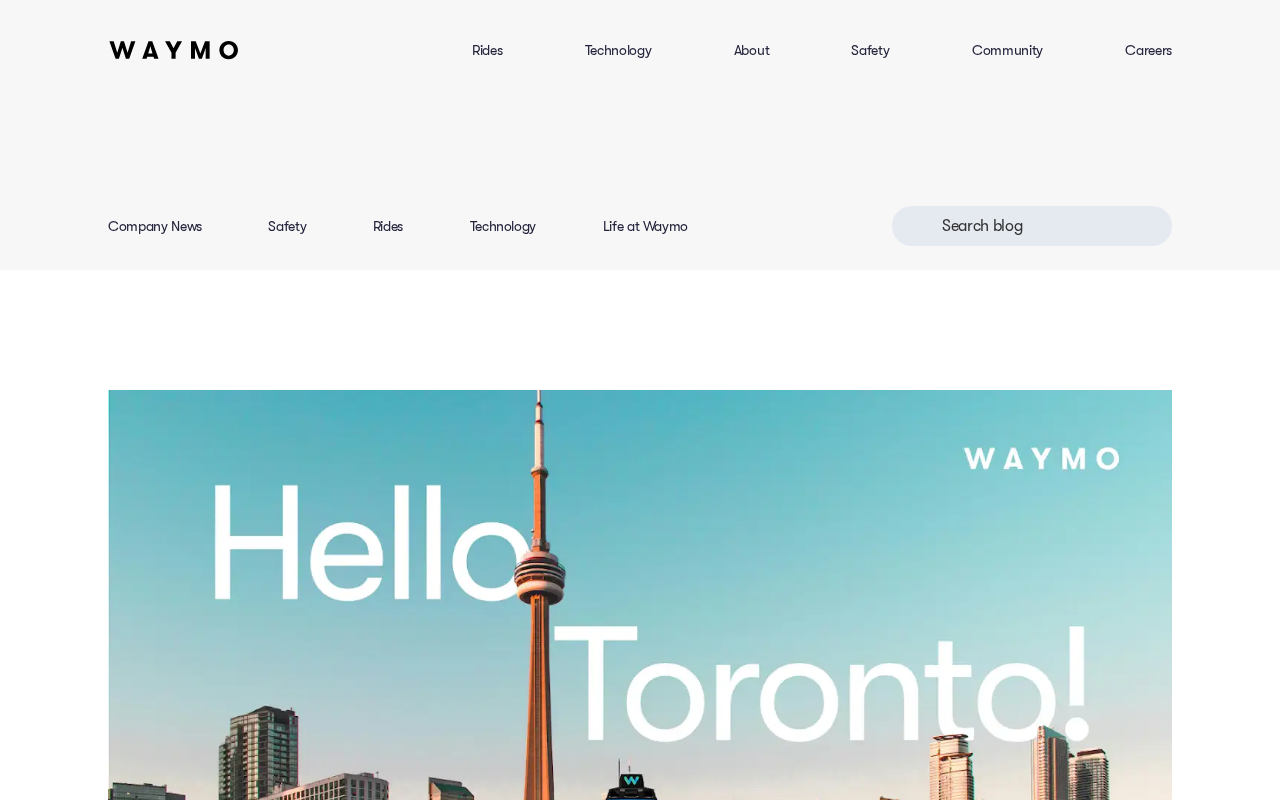
According to a post on Hacker News, Alphabet-owned autonomous driving company Waymo is expanding its operations to Toronto, Canada, announcing the move with the headline "Hello Toronto – Waymo Is En Route."
Waymo's Expansion Pace
As a global pioneer in commercial autonomous driving operations, Waymo has already launched driverless taxi services in multiple U.S. cities including Phoenix, San Francisco, and Los Angeles. Turning its attention to Toronto marks the first time it has stepped beyond American borders into the Canadian market.
As Canada's largest city, Toronto boasts a complex urban road environment and diverse climate conditions—particularly icy and snowy winter roads, which place higher demands on perception and decision-making for autonomous driving systems. Waymo's choice of Toronto as its first international destination may well reflect its value as a proving ground for extreme scenarios.
Robotaxi refers to a business model that provides on-demand mobility services using driverless technology, characterized by the absence of human safety operators and paid public operations. Since Waymo One first opened fully driverless service to the public in Phoenix in 2020, it has become the world's only Robotaxi provider to achieve scaled commercial operations across multiple cities. Unlike Tesla's FSD, which only offers driver-assistance features, Robotaxi requires L4-level autonomous driving capability—meaning no human intervention is needed within a specific operational design domain. Waymo's expansion path typically follows three stages: "new city testing—invitation-only experience—public operations," and each new city requires rebuilding HD maps and adapting to local traffic rules and climate conditions, making the marginal cost of cross-city replication relatively high.
Why Toronto
Toronto offers several conditions that attract autonomous driving companies. First, Canada is relatively open in terms of autonomous driving regulations, and Ontario has previously allowed autonomous vehicles to be tested on public roads. Second, Toronto has a vibrant tech talent ecosystem, adjacent to AI research hubs such as the University of Waterloo. Third, the local public transit system has a gap in last-mile mobility demand, providing potential market space for Robotaxis.
However, Waymo has not yet disclosed a specific operating timeline, fleet size, or partners in Toronto. Judging from the "Is En Route" phrasing, the project appears to be more in the preparation or announcement stage, and there may still be some distance before formal passenger operations begin.
Extreme scenario validation is a key concept in assessing the maturity of autonomous driving technology, referring to a system's ability to perform in low-probability but high-risk edge cases—such as blizzards obscuring lane markings, icy roads causing tire slippage, and salt stains covering cameras or LiDAR. These scenarios make up an extremely small proportion of conventional training data, yet they are the core bottleneck determining whether autonomous driving can operate safely in the real world. The industry widely uses the "long tail theory" to describe this challenge: the first 90% of common scenarios are easy to solve, but the remaining 10% of extreme scenarios require 90% of R&D resources. Toronto's winter happens to provide a natural library of long-tail scenarios—if Waymo can validate system robustness in such environments, its technical barrier will upgrade from "usable in the Sun Belt" to "usable in all climates," which holds strategic value for global market expansion.
Impact on the Industry
Waymo's move north to Canada has demonstrative significance for the North American autonomous driving competitive landscape. Tesla's FSD, GM's Cruise (despite its setbacks), and multiple Chinese autonomous driving companies are all competing in the Robotaxi race. If Waymo can successfully prove its business model in a cold-climate city, it will further widen its lead in operational experience.
On the other side, Toronto's local and Canadian autonomous driving ecosystem may also gain more attention and capital inflow as a result.
Ontario's autonomous driving regulatory framework provides the institutional foundation for Waymo's entry. Ontario launched its autonomous vehicle pilot program in 2016, allowing eligible companies to test L3-level and above autonomous vehicles on public roads, but requiring test vehicles to be equipped with safety operators and high-value insurance. In 2021, Ontario further amended the Highway Traffic Act, reserving legislative space for fully driverless commercial operations. However, at the federal level, Canada's Motor Vehicle Safety Act certification standards for autonomous vehicles are still being refined, and cross-provincial operations require coordination between federal and provincial regulators. Compared with the fragmented regulatory environment across U.S. states, Canada's relatively unified policy framework may reduce Waymo's compliance costs—but with a smaller market size and greater climate challenges, Toronto is more of a "lighthouseAd project" for technical validation and brand demonstration than a short-term revenue growth driver.
Questions That Remain
The currently available public information is merely a brief announcement, lacking technical details and commercial terms. How Waymo handles the practical challenges of Canadian winter—snow accumulation, salt-eroded roads, and ice-covered cameras—will be the key test of its system's robustness. For readers following the deployment of autonomous driving, this development is worth continued tracking.
One-line Summary
Waymo announces its entry into Toronto, stepping outside the U.S. market for the first time to test autonomous driving system robustness in extreme cold conditions.
Paragraph Summary
Waymo announced via Hacker News that it is expanding to Toronto, Canada—its first venture outside the U.S. market. As Canada's largest city, Toronto features complex winter ice and snow conditions, making it an extreme-scenario validation ground for autonomous driving systems. Factors attracting Waymo include Ontario's relatively open autonomous driving regulations, an AI talent ecosystem adjacent to the University of Waterloo, and a market gap in last-mile mobility. Currently, the development is only at the announcement stage, with no specific operating timeline, fleet size, or partners disclosed. If Waymo can successfully prove its business model in a cold-climate city, it will further widen its operational experience advantage in the Robotaxi race and may drive more attention and capital inflow to Canada's autonomous driving ecosystem.
Related articles

Understanding DeepSeek in 3 Minutes: The Rise from a Quant Hedge Fund to an Open-Source AI Leader
DeepSeek's history in 3 minutes: from High-Flyer Quant's compute build-up to V2's MLA inference cost cuts, V3's $5.576M training bill, R1's open-source global shock, and V4 with a $7B Series A.

Local Creative Writing Model Showdown: Fine-tuned Qwen3.8 27B Wins, DeepSeek v4.1 Underwhelms
Bilibili creator tests seven local creative writing models: Hemingway and HumanLike Chat based on Qwen3.8 27B perform best, DeepSeek v4.1 is plain, Dongfang Shuo ranks last with confused characters. Includes three test prompts, scores, and usage advice.

Liang Wenfeng's Three Big Bets: Why Did DeepSeek Open-Source Its 82% Gross Margin?
Why did DeepSeek open-source DeepInfer, its 82% gross margin inference framework, and then launch a hundred-billion funding round? An analysis of Liang Wenfeng's three big bets and the open-source strategy.