We Tested 5 AI Coding Assistants: Only Two Were Worth Keeping

Only Cursor and Claude Code passed a real-codebase test of five AI coding assistants, with cost predictability as the key selection factor.
A horizontal test based on a real codebase shows that among five AI coding assistants, only Cursor and Claude Code could deliver merge-ready, test-passing features. Cursor shines as an AI-native editor with multi-file editing and parallel cloud agents at $20/month; Claude Code reads the whole repo, runs tests, and self-repairs until they pass. Copilot, Devon Desktop, and Replit Agent lost points due to metered billing, undisclosed quotas, or effort pricing. The article notes that with converging features, pricing transparency and tool form factor (editor vs. terminal) are becoming key selection factors.
Testing Method: One Real Requirement, Five Tools
According to a hands-on video from the YouTube channel AI Leverage Lab, the author tested five AI coding assistants on the same task: deliver a real feature in a real codebase, with tests passing and code meeting merge-ready standards. This testing standard immediately filtered out tools that can only generate snippets and can't integrate into an engineering workflow. In the end, only two products passed the test—Cursor and Claude Code (referred to as Cloud Code in the original).

The design of this test is worth noting: it doesn't examine the generation quality of a single function, but rather how tools perform in a complete engineering environment, including multi-file collaboration, test feedback loops, and code maintainability. This is closer to developers' real day-to-day workflow.
Winner One: Cursor, the Daily Driver
Cursor was rated "the best daily driver." It's an AI-native editor with multi-file editing and parallel cloud agents, priced at $20 per month.

From an analytical perspective, Cursor's advantage lies in embedding AI capabilities at the editor level rather than as an external plugin. Multi-file editing means it understands project structure rather than isolated files; parallel cloud agents allow multiple tasks to be handled simultaneously, which has real value for developers who need to advance multiple modules in parallel. The $20 monthly fee is mid-to-upper range among comparable tools, but considering it serves as a daily workhorse, the acceptability of this price depends on usage frequency.
AI-native editor: Unlike installing an AI plugin on a traditional IDE (such as VS Code), an AI-native editor treats large model capabilities as the core interaction method from the ground up—for example, supporting natural language instructions to directly modify multiple files, predicting the next edit based on context, and built-in conversational refactoring. Cursor is built on a VS Code fork, so it's compatible with the existing plugin ecosystem while deeply integrating AI into editing, navigation, and version control workflows. This form factor reduces friction in using AI, allowing developers to complete the loop from asking questions to applying changes without switching windows.
Winner Two: Claude Code, the Strongest Terminal Agent
The other product worth keeping is Claude Code (written as Cloud Code in the original), rated "the strongest terminal agent here." It reads the entire repository, runs tests, and repeatedly fixes its own output until the tests pass.

This "self-repair until tests pass" loop is the core of what distinguishes it from other tools. Traditional AI assistants require manual verification and feedback after generating code, whereas the terminal agent incorporates the verification step into an automated workflow. For developers accustomed to command-line workflows, this form factor fits their habits better than a graphical editor. However, reading the entire repository also means there may be context management challenges for large projects—the original didn't elaborate on this point.
Terminal agent and self-repair loop: A terminal agent refers to an AI agent running in a command-line environment that accesses the file system, executes test commands, and reads output through the shell. Unlike editor-type tools, terminal agents don't depend on a graphical interface and are better suited to scripting, remote servers, and CI/CD pipelines. The so-called "self-repair until tests pass" means the agent automatically runs the test suite after generating code, parses failure messages, locates the problem, modifies the code, and then runs the tests again, forming a closed loop. This loop automates the "generate-verify-fix" process traditionally done manually by developers, significantly reducing human intervention, but it also places higher demands on the agent's context management and error diagnosis capabilities.
The Rejects: Uncertainty in Pricing and Quotas
The other three tools each have their shortcomings. Copilot is priced at $10, but its agent features now consume metered credits, so costs are no longer fixed. After being acquired, Windsurf was renamed Devon Desktop, with a quota policy that isn't public.

Replit Agent can quickly build prototypes in the browser, but its "effort pricing" is hard to estimate. The common problem with these three products is unpredictable cost—tolerable for individual developers, but a real obstacle for team budget management. The uncertainty of product roadmaps after acquisition is also a risk factor that needs to be considered when choosing tools.
Agent features and metered credits: In the context of AI coding assistants, "agent mode" means the AI can not only complete a single line of code but also autonomously plan multi-step operations, invoke tools, modify multiple files, and iteratively execute tasks. Copilot has shifted these advanced features from a fixed subscription to metered billing, meaning users are deducted corresponding credits each time they invoke an agent or consume a certain amount of computing resources. The benefit of this model is that light users may pay less, but the cost is that expenses grow linearly or even non-linearly with usage intensity, making it hard for teams to budget annually. In contrast, a fixed monthly fee may have a higher unit price but provides a cost ceiling for easier financial planning.
Lessons for Tool Selection: Predictability Matters More Than Feature Lists
This test sends a clear signal: as AI coding assistant features converge, the predictability of cost structure is becoming a key decision factor. Cursor and Claude Code won not only because of capability but also because of transparent pricing. Meanwhile, metered billing, hidden quotas, and effort pricing make it difficult for developers to judge long-term investment.
Another observation is the divergence in tool form factors: editor-type (Cursor) and terminal-type (Claude Code) each serve different work habits and are not mutually substitutable. Which one to choose depends on whether the developer relies more on a graphical interface or the command line. The original author recommends following AI Leverage Lab for weekly AI tool tests, suggesting that the value of such horizontal comparisons lies in continuous tracking rather than one-off conclusions.
Effort pricing: This is a model that charges based on the "effort level" the AI invests in completing a task, typically priced dynamically according to task complexity, number of tokens consumed, or computational steps. For users, the same type of task may incur vastly different costs at different times or in different codebases, leading to unpredictable budgets. In contrast, fixed subscriptions or per-seat pricing lack flexibility but provide a cost ceiling. For team tool selection, pricing transparency often carries more decision weight than feature differences, because unpredictable expenses hinder large-scale adoption and long-term planning.
One-line Summary
In a test of five AI coding assistants, only Cursor and Claude Code met the bar, with cost predictability emerging as the key selection factor.
Paragraph Summary
A horizontal test based on a real codebase shows that among five AI coding assistants, only Cursor and Claude Code could deliver merge-ready, test-passing features. Cursor, as an AI-native editor, excels at multi-file editing and parallel cloud agents at $20 per month; Claude Code, as a terminal agent, can read the entire repository, run tests, and self-repair until they pass. The three rejected tools—Copilot, Devon Desktop, and Replit Agent—all lost points due to metered billing, undisclosed quotas, or effort pricing that makes costs unpredictable. The article points out that as features converge, pricing transparency and tool form factor (editor-type vs. terminal-type) are becoming key factors in tool selection.
Related articles

Hands-On Review of an Open-Source Multi-Agent Business Simulation Project
Hands-on review of a Bilibili creator's open-source multi-agent sandbox business project: architecture, memory, HITL, evaluation, and LLM vs rule-engine results.
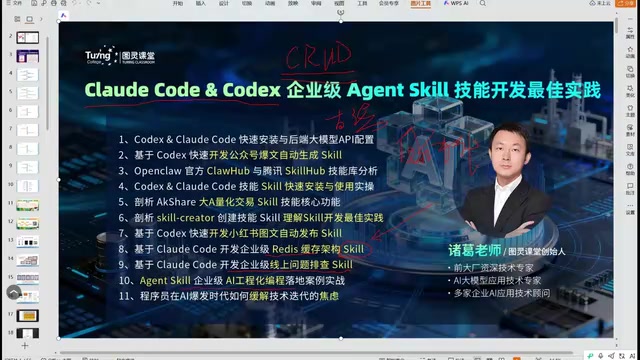
AI Engineering in Practice: The Complete Workflow of Claude Code and Agent Skill Development
A Bilibili hands-on course analyzes AI engineering: using Claude Code, Codex, and WorkBuddy to develop enterprise-grade Agent Skills, covering WeChat article drafts, quantitative analysis, and automated Xiaohongshu posting, while explaining the paradigm shift of Skill-driven development and tool selection.

LangChain for Beginners: A Practical Guide to Structured Output and Agents
Starting from zero with LangChain: clarify the difference between low-code platforms and large model application development, covering structured output, tool calling, Agent practice, and multi-tenant RAG enterprise deployment—ideal for engineers with development experience looking to transition into AI application development.