What Are Agent Skills? A Beginner's Guide from Understanding to Customization
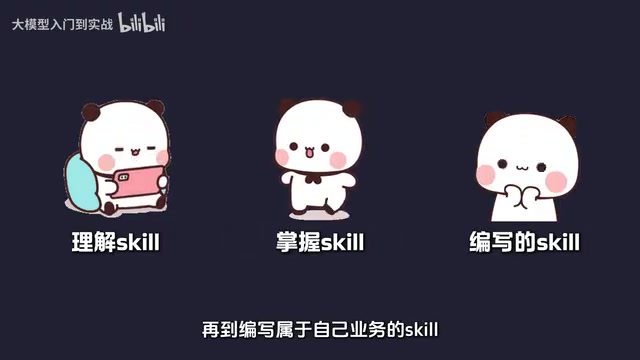
A beginner's guide to Agent Skills — covering concepts, customization, and ecosystem resources.
This article introduces a zero-prerequisites course on Agent Skills — modular components that give AI Agents domain-specific capabilities. As frameworks like Claude Code have surged in popularity, Skills have become central to agent architecture. The course follows a three-step path: understanding how Skills work, customizing them for your business needs, and discovering quality Skills already available in the ecosystem. The author notes that while the course titles carry marketing flair, real mastery requires pairing the material with official docs and hands-on project work.
Why Agent Skills Are Suddenly Everywhere
With the rise of Claude Code and various Agent frameworks, the concept of "Skills" has moved to center stage, becoming an essential part of intelligent agent development. A beginner-friendly Agent Skills tutorial series on Bilibili attempts to systematically answer one core question: what exactly is a Skill, and where does its value lie?
Simply put, a Skill is a modular component that gives an Agent specific capabilities. In the past, interacting with large language models mostly relied on crafting prompts one at a time to guide behavior. Skills change that equation — developers can now encapsulate the logic for handling a particular type of task into a reusable, callable unit, making Agents more specialized and reliable in real business scenarios.
The tutorial emphasizes that this is a zero-prerequisites course, aiming to "walk everyone through the process step by step — from understanding Skills, to mastering them, to writing Skills tailored to your own business needs." This gradual learning approach is relatively beginner-friendly for those just getting started with agent development.
Where Skills Fit in the Agent Ecosystem
The course notes that as Claude Code and various Agent frameworks have exploded in popularity, Skills have evolved from a niche concept into a central component of agent architecture.

Understanding this requires some broader context. When code-capable Agents like Claude Code can autonomously handle complex tasks — programming, debugging, file operations — they rely on a set of pre-packaged capability modules working behind the scenes. The Skills mechanism lets an Agent load domain-specific knowledge and workflows on demand, rather than cramming everything into the context window. This has real practical benefits for both efficiency and cost.
Here's another way to think about it: if a large language model is a general-purpose brain, then Skills are the specialized toolboxes that brain can reach for at any moment. Financial analysis? Call the finance Skill. Code review? Call the code review Skill. This plug-and-play design is exactly what makes Agents genuinely useful in production.
From a technical implementation standpoint, Skills typically exist as structured text files (such as Markdown or YAML) that define the execution steps for a specific task, how tools should be called, and the conventions for interacting with external APIs. In the Claude Code Skills system, for example, a Skill file might contain: a task description (telling the Agent what this capability is for), preconditions (the context or permissions needed to run the Skill), and a concrete sequence of operations. When the Agent receives a user instruction, it uses semantic matching to determine which Skills to activate, then follows the workflows defined in those Skills to complete the task.
The key advantage of this design is separation of concerns — business logic is independently encapsulated, and the main model only needs to handle intent understanding and Skill dispatch, rather than memorizing every operational detail. This reduces prompt length (which directly affects API costs) and allows different Skills to be maintained and iterated on independently by different teams.
The Course's Three-Step Learning Path
The tutorial breaks the learning journey into three clear phases:
Step 1: Understand Skills
Start by grasping the structure and runtime mechanics of Skills at a conceptual level. This step doesn't involve much coding — the focus is on building an accurate mental model of how Skills are recognized, loaded, and executed by an Agent. For beginners, jumping straight to hands-on work without understanding the fundamentals tends to create bottlenecks later, so leading with theory is a sensible choice.
The runtime mechanism of Skills typically relies on the "Tool Use / Function Calling" capability provided by the Agent framework. A large language model doesn't directly execute code or access external systems — instead, it outputs structured invocation instructions that the framework layer parses and forwards to the appropriate Skill executor. This means understanding Skills requires grasping two layers simultaneously: how the model decides when to call which Skill (which depends heavily on the quality of the Skill's description text), and how the framework passes Skill execution results back to the model for continued reasoning (i.e., the multi-turn tool-calling loop).
A common mistake beginners make is conflating Skills with ordinary Prompts. A Prompt is a one-time input that guides a single interaction, while a Skill is a functional unit with a well-defined input/output contract that can be triggered repeatedly. The difference in reusability and maintainability is fundamental.
Step 2: Customize Skills
Building on that understanding, learn how to write Skills tailored to your own business requirements. This is where the core value of the entire course lies. Generic Skills can't solve specific business problems — the capabilities that actually work in production almost always need to be customized for the context at hand.
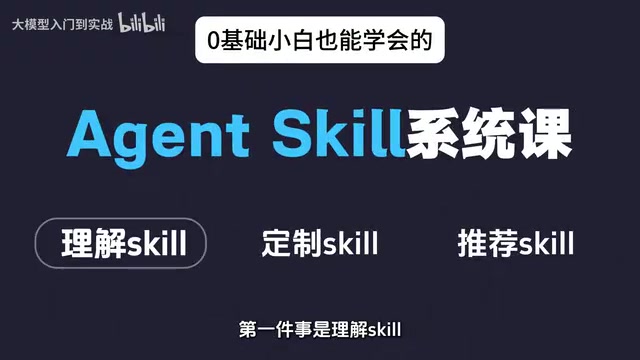
Step 3: Discover Recommended Skills
The course also includes a curated guide to high-quality Skills already available in the ecosystem, helping learners avoid reinventing the wheel.
Practical Advice for Learners
Based on what's publicly available, this course has a clear positioning: zero prerequisites, systematic, and practice-oriented. For anyone looking to break into Agent development, first internalizing the underlying logic of Skills before moving on to hands-on customization is a solid, reliable path.
One caveat worth noting: phrases in the course title like "go from beginner to expert in seven days" and "skip 99% of the wrong turns" carry obvious marketing spin. In practice, mastering any new technology still requires sustained effort and extensive practice. Skill development involves a combined understanding of Agent frameworks, prompt engineering, and specific business logic. Building a solid conceptual foundation in a short time is achievable — but genuine fluency takes time to develop.
For readers who want to go deeper into Agent development, the recommendation is to pair course content with official documentation (such as Claude's Skills documentation) and real projects. Applying the methodologies from the course to actual business scenarios is what ultimately transforms "understanding" into genuine capability.
Related articles
From Enterprise Practice to a Reusable Template: Lessons from Building an AI Agent
A developer shares an open-source AI Agent template built from an enterprise project, covering natural language data Q&A, analysis, auto-generated PPTs, and email distribution.

Nintendo's Open-World Design Evolution: Breaking Down Fire Emblem Fortune's Weave
Nintendo brings the open-world design philosophy of Breath of the Wild to Fire Emblem with the massive Switch 2 title Fortune's Weave. Here's what it means.
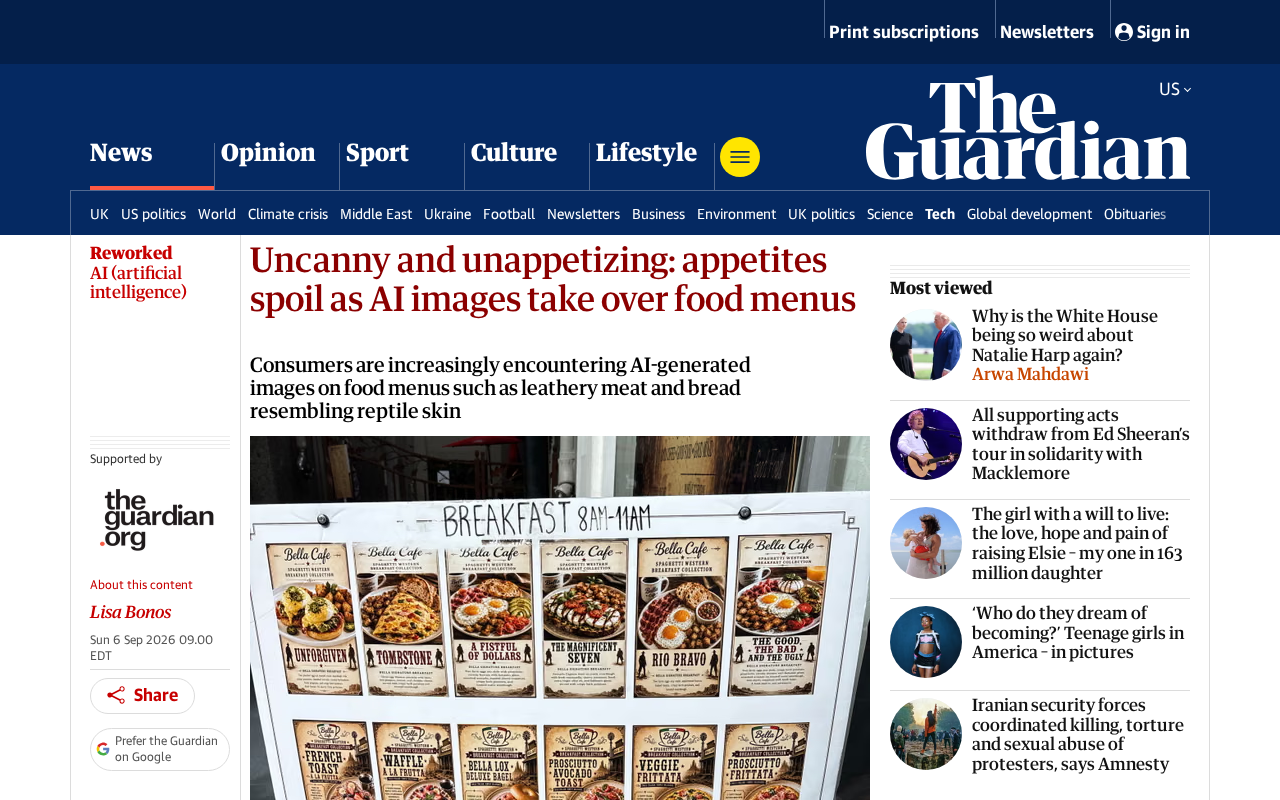
AI-Generated Food Photos Are Ruining Menus: How the Uncanny Valley Kills Appetite
AI-generated food images are flooding restaurant menus and delivery apps, but uncanny details kill appetite instead of sparking it. Here's why the uncanny valley effect hurts brands.