What Happens When the Universe Splits? The Many-Worlds Interpretation Explained

The Many-Worlds Interpretation holds that the wave function never collapses and all possible outcomes are realized in different branches.
The Many-Worlds Interpretation is an interpretation of quantum mechanics that asserts the wave function never collapses; instead, every possible outcome continues to exist in different branches of reality. Using the example of electron spin, the article explains that measurement does not cause wave function collapse but rather splits the universe into multiple branches, each corresponding to a definite outcome. This interpretation avoids the collapse assumption in the measurement problem but raises profound philosophical discussions about probability, identity, and the nature of reality. The article also clarifies the difference between the Many-Worlds Interpretation and the concept of extra dimensions: the former concerns branches of quantum states, while the latter concerns extensions of spatial dimensions. Although taken seriously by physicists, the Many-Worlds Interpretation remains controversial with varying degrees of acceptance.
Quantum mechanics allows a system to exist in a superposition of different possible outcomes. For example, before measuring an electron's spin, its quantum state can be a superposition of spin-up and spin-down. However, once a measurement is made, we can only observe one definite outcome—up or down. The Many-Worlds Interpretation offers a startling explanation: the wave function never collapses. Instead, every possible outcome continues to exist, just in different branches of reality. So when we observe the electron in the spin-up state, in another branch there exists an observer who observes spin-down.
The Core Idea of the Many-Worlds Interpretation
The Many-Worlds Interpretation is one of the most startling interpretations that physicists take seriously. It states that the wave function never collapses; instead, every possible outcome continues to exist, just in different branches of reality. This means that when we perform a quantum measurement, the universe "splits" into multiple branches, each corresponding to one possible outcome. In one branch, we measure the electron's spin as up; in another branch, another observer measures it as down.

This interpretation is different from the concept of "extra dimensions" that is often confused with it in popular culture. Extra dimensions are extensions of spatial dimensions, whereas the Many-Worlds Interpretation is about the multiplicity of branches of reality. Although both involve the concept of "multiple," they are fundamentally different.
The wave function is the mathematical object in quantum mechanics that describes the state of a system, usually denoted by Ψ, and it contains the probability amplitudes for all possible measurement outcomes of the system. In standard quantum mechanics, the wave function evolves deterministically according to the Schrödinger equation, but upon measurement it "collapses," randomly yielding a definite outcome. The core innovation of the Many-Worlds Interpretation is to deny the collapse process, holding that the wave function always evolves according to the Schrödinger equation, and that measurement merely causes the observer to become entangled with the system, thereby forming different branches. Understanding the concept of the wave function is key to grasping the Many-Worlds Interpretation.
Quantum Superposition and the Measurement Problem
Quantum mechanics allows a system to exist in a superposition of different possible outcomes. For example, before measuring an electron's spin, its quantum state can be a superposition of spin-up and spin-down. However, once a measurement is made, we can only observe one definite outcome—up or down.

The Many-Worlds Interpretation avoids the assumption of wave function collapse. In standard quantum mechanics, measurement causes the wave function to collapse to a definite state, but this process is not explicitly described in the theory. The Many-Worlds Interpretation claims that the wave function never collapses but continues to evolve, with all possible outcomes realized in different branches.
The measurement problem is one of the deepest unsolved puzzles in quantum mechanics: why does measurement cause the wave function to collapse to a definite state? Standard quantum mechanics treats measurement as a fundamental postulate but does not explain its physical mechanism. The Many-Worlds Interpretation sidesteps this problem by eliminating the collapse assumption, holding that measurement is merely a natural consequence of quantum entanglement. However, this also brings new problems: how do we derive the probabilistic outcomes we observe from deterministic wave function evolution? This is known as the "probability problem" and is one of the main points of controversy for the Many-Worlds Interpretation.
The Implications of Branching Reality
The Many-Worlds Interpretation provides a shocking explanation: the wave function never collapses. Instead, every possible outcome continues to exist, just in different branches of reality. So when we observe the electron in the spin-up state, in another branch there exists an observer who observes spin-down.
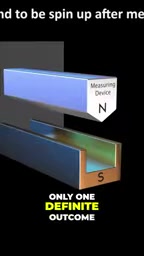
This view implies that the universe is constantly splitting, with every quantum event producing new branches. The branch we are in is just one among many. This raises profound questions about probability, identity, and the nature of reality. For example, how do we define probability if all outcomes occur? Supporters of the Many-Worlds Interpretation argue that probability can be understood through the weights of branches, but this remains controversial.
Quantum decoherence is the key physical mechanism for understanding branch formation in the Many-Worlds Interpretation. When a quantum system interacts with its environment, the different superposition components of the system become entangled with the environment state, causing the interference effects between them to rapidly disappear, thus manifesting as classical definite states. Decoherence explains why we do not perceive other branches: the branches have lost coherence and cannot interfere with each other. But decoherence itself does not select which branch becomes "our" branch; the Many-Worlds Interpretation holds that all branches are equally real.
Differences from Extra Dimensions
The Many-Worlds Interpretation is sometimes confused in popular culture with the concept of extra dimensions. Extra dimensions are extensions of spatial dimensions, such as those proposed in string theory. The Many-Worlds Interpretation, by contrast, is about branches of quantum states and does not involve an increase in spatial dimensions.
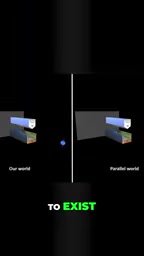
Although both involve the concept of "multiple," they are fundamentally different. Extra dimensions are extensions of physical space, whereas the Many-Worlds Interpretation is about branches of quantum states. Understanding this distinction is crucial for correctly grasping the Many-Worlds Interpretation.
String theory is a framework in theoretical physics that attempts to unify all fundamental forces and particles, and it requires the existence of extra spatial dimensions (usually 10 or 11 dimensions) for the mathematics to be self-consistent. These extra dimensions are compactified to extremely small scales, and we cannot directly perceive them. The "multiple" in the Many-Worlds Interpretation refers to branches of quantum states, not spatial dimensions. Confusing the two is a common popular science misunderstanding, but they are physically very different concepts: extra dimensions are extensions of spatial structure, whereas many-world branches are realizations of different quantum states in Hilbert space.
Controversy and Acceptance
The Many-Worlds Interpretation is one of the interpretations that physicists take seriously, but it is not without controversy. Some physicists consider it too radical because it introduces countless unobservable universes. Others consider it the most economical explanation because it avoids the assumption of wave function collapse. Regardless of stance, the Many-Worlds Interpretation continues to stimulate debate about the nature of reality.
By understanding the Many-Worlds Interpretation, we can think more deeply about the foundational questions of quantum mechanics and how reality may be more complex than we imagine.
Related articles

Chain of Thought Isn't Just for AI: How Humans Can Use CoT to Improve Thinking Quality
Chain of Thought isn't just a prompt trick for large models. Starting from a Hacker News discussion, this article analyzes why CoT works for human thinking too, breaks down actionable ways to transfer it, and highlights the key differences between human CoT and machine CoT.
Cloudflare Teams Up with OpenAI: Closi…
Cloudflare Teams Up with OpenAI: Closing the Loop from Vulnerability Discovery to Defense with AI
Cloudflare uses OpenAI Daybreak to investigate security vulnerabilities and generate reviewable remediation plans, while developers use Codex to boost coding efficiency and quality.

Orca Multi-Agent Orchestration in Practice: A Guide to Parallel Collaboration with Claude and Codex
Orca is Stable AI's free open-source agent workbench supporting 34 agents like Claude Code and Codex in parallel. Learn its Git worktree isolation, multi-model orchestration, and mobile management.