What If the Vikings Had Successfully Colonized the Americas? How World History Might Have Been Rewritten

If the Vikings had established a long-term presence in the Americas, their slow infiltration would have changed technology, disease, and information, overturning European conquest history.
Starting from the Vikings' failed colony in Newfoundland, the article proposes a counterfactual: if the Vikings had gained a lasting foothold, European iron, horses, and disease would have spread through "slow infiltration" rather than the "instant catastrophe" brought by the Spanish. It contrasts the efficient information-sharing network among European conquerors with the isolation of indigenous societies such as the Inca and Aztec, arguing that information asymmetry was key to Spanish victories over larger forces. If the Vikings had become an information hub linking the Americas to Eurasia, indigenous peoples 500 years later would have had partial immunity, ironworking, and horsemanship, making conquest exponentially harder. The article concludes that technological diffusion speed and information network density often determine civilizational fate more than military power.
A Neglected Historical Crossroads
We are used to thinking of Columbus as the "discoverer" of the Americas, but as early as around 1000 AD, Norse Vikings established a temporary settlement in Newfoundland. According to analysis by a YouTube history channel, this forgotten colonization attempt failed because there were too few people and indigenous resistance was fierce, forcing a final withdrawal. Yet it is precisely this failure to gain a foothold that conceals a historical hypothetical capable of overturning the global order: if the Vikings had been able to establish a long-term presence in the Americas, what would the American continent look like today?

Europe's "Information Network" and the Americas' "Island Predicament"
To understand the crucial significance of Viking colonization, we must first see a harsh reality clearly: in the process of European conquest of the Americas, the efficiency of information transmission played a decisive role. Historians point out that Europeans were good at learning from one another—Cortés drew on the experience of the conquest of Hispaniola, and Pizarro almost copied wholesale the tactics Cortés had used in Mexico ten years earlier, including how to use local allies and how to create internal divisions.
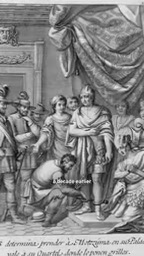
But indigenous American societies were exceptionally closed off from one another. According to the analysis, the Inca may not even have known of the Aztecs' existence. The two vast empires each went their own way, unable to form a united front against the Europeans or to pass on intelligence about the invaders. This information asymmetry allowed the Spanish conquistadors to defeat their enemies one by one with very small forces. If the Vikings had been able to put down roots in the Americas, they might have been precisely the ones to break this island state—they would have become a "slow channel" for the spread of technology, livestock, and disease, rather than the "instant catastrophe" later brought by the Spanish.
The Columbian Exchange is the background concept for understanding the key role of "disease transmission" in this article. The term was coined by historian Alfred Crosby in 1972 and refers to the broad two-way exchange of animals, plants, food, populations (including slaves), and pathogens between the Americas and Eurasia after 1492. The most devastating aspect was the one-way transmission of disease: Eurasian infectious diseases such as smallpox, measles, and influenza entered the Americas with the Europeans, and because indigenous Americans had been isolated from Eurasia for so long, they had almost no immunity to these pathogens. It is estimated that in the 16th century the indigenous population of the Americas plummeted by as much as 90% due to disease. The article imagines that if the Vikings had colonized for the long term, disease would have been introduced slowly over centuries rather than decades, giving indigenous societies the opportunity to gradually develop immunity and thus fundamentally changing the demographic basis for later conquest.
The "Slow Infiltration" Hypothesis of Viking Colonization
The analysis offers a fascinating speculation: if the Vikings had been able to occupy a corner of North America for the long term, their impact would not have been a conqueror's storm but slow, drip-irrigation-style technological diffusion. Knowledge of ironworking, livestock such as horses, and most critically—European diseases—might have been gradually introduced to the Americas.
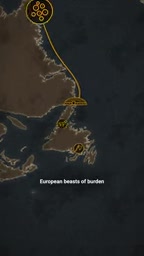
What would this "slow infiltration" mean? When the Spanish conquistadors finally arrived 500 years later, they would face an indigenous American society that already possessed partial immunity, had mastered ironworking, and had learned to fight on horseback. Diseases such as smallpox would no longer be an unstoppable weapon of genocide, iron weapons would no longer be a one-sided overwhelming advantage, and cavalry tactics would no longer be a European monopoly.

If this hypothesis holds, then what Cortés and Pizarro faced would not have been an Inca Empire or Aztec Empire of tens of thousands, but indigenous polities that might already have come into contact with the Eurasian technological system through the Vikings and established broader alliances. The difficulty of conquest would have risen exponentially, and the script of colonization might have needed to be completely rewritten.
L'Anse aux Meadows in Newfoundland is currently the only confirmed Viking settlement site on the North American mainland. Located at the northern tip of what is now Newfoundland, Canada, it was discovered in the 1960s by Norwegian explorer Ingrid Helga and archaeologist Anne Stine Ingstad, and was inscribed as a UNESCO World Heritage Site in 1978. The site includes eight turf buildings, proving that Vikings briefly stayed there around 1000 AD. Norse saga literature (such as the Saga of the Greenlanders) mentions the exploration of Vinland, but the settlement attempt lasted only a few years before being abandoned due to conflict with the indigenous people (called "Skrælings" in the sagas) and difficulties of supply. The existence of this site is the historical anchor for the counterfactual speculation in this article.
Another Possibility Beyond Geographic Determinism
The value of this speculation lies not only in curiosity about history but also in reminding us that the course of history often depends on small initial conditions. The Vikings' insufficient population, great distance, and supply difficulties—these seemingly accidental factors ultimately caused the indigenous peoples of the Americas to miss a 500-year window for technological catch-up.
More worthy of reflection is that the extreme closedness of indigenous American societies was itself a product of geography and ecology. The Andes Mountains and the Mesoamerican rainforests blocked the flow of information and people, making the Inca and Aztec civilizations, though both in the Americas, like two parallel worlds. If the Vikings had been able to establish a long-term stronghold in North America—even a small colony of just a few thousand people—it might have become an "information hub" connecting the Americas with Eurasia, changing the power structure of the entire continent.
Of course, history cannot be hypothetical. But this kind of counterfactual speculation provides us with a mirror: the speed of technological diffusion, the density of information networks, and the degree of connection between societies often determine the fate of civilizations more than military power alone. The Vikings' failed colonization may well be the most regrettable historical crossroads of the American continent.
Geographic determinism is the framework systematically expounded by Jared Diamond in Guns, Germs, and Steel (1997), which holds that Eurasia's east-west axis facilitated the spread of crops, livestock, and technology, while the Americas and Africa, with their north-south axes and ecological barriers, experienced slow diffusion, thus creating developmental differences between civilizations. The article's point that "the Andes Mountains and the Mesoamerican rainforests blocked the flow of information" is a typical example of this theory. However, geographic determinism has also been criticized for underestimating the role of contingency, institutions, and individual agency. The Viking counterfactual speculation in this article is precisely a supplement to geographic determinism: geographical conditions set the probability distribution, but small events (such as whether a settlement could survive) can still significantly change the trajectory of history.
One-line Summary
If the Vikings had established a long-term presence in the Americas, their slow infiltration would have changed the landscape of technology, disease, and information, overturning the history of European conquest.
Paragraph Summary
Starting from the Vikings' failed colonization in Newfoundland, the article proposes a counterfactual speculation: if the Vikings had been able to establish a long-term presence in the Americas, European iron tools, horses, and diseases would have been gradually introduced through "slow infiltration" rather than the "instant catastrophe" brought by the Spanish conquistadors. The author contrasts the efficient information-learning network among European conquerors with the closed isolation between indigenous American societies (such as the Inca and the Aztec), pointing out that information asymmetry was the key to the Spanish defeating larger forces with smaller ones. If the Vikings had become an "information hub" connecting the Americas and Eurasia, the indigenous peoples 500 years later would have possessed partial immunity, ironworking, and horsemanship, and the difficulty of conquest would have risen exponentially. The article ultimately emphasizes that the speed of technological diffusion and the density of information networks often determine the fate of civilizations more than military power alone.
Related articles

Kimi K3.1 Hands-On Test: Open-Source Model Nears Opus, Video Generation Steals the Show
Kimi K3.1 completed motion graphics, 3D rendering, mini-games, and video generation in a live test. Analysis of its 2.8T MoE architecture, gap vs Opus/GPT, and hidden video generation.

Sam Altman: Why Life's Biggest Advice Should Still Come from Humans
OpenAI CEO Sam Altman on the limits of AI advice: AI can talk you out of an impulsive email, but life's biggest advice should still come from humans.

"Black October": Did AI Uncover 3% of All Critical Vulnerabilities Ever?
A Reddit post claims 3% of all critical software vulnerabilities ever were found in the past month, dubbed 'Black October.' We break down the statistical issues, how AI-assisted code auditing accelerates discovery, and how developers should respond.