What Is an AI Agent? A Complete Breakdown of Its Core Differences from Traditional AI
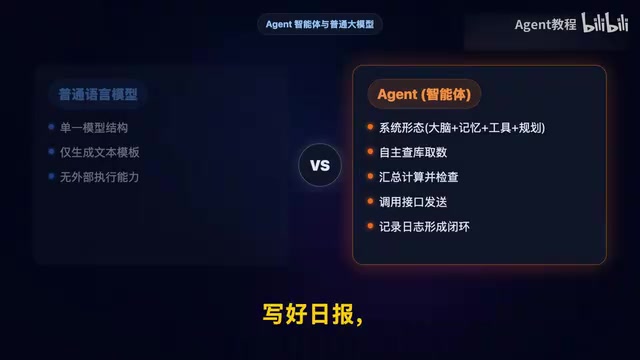
A complete breakdown of AI Agents: components, execution loop, and how they differ from traditional AI.
Starting from a "function vs. executor" comparison, this article clearly defines AI Agents as a system design pattern — not a new model architecture — where an LLM serves as the brain with memory and tools attached, completing end-to-end tasks through a goal→perception→reasoning→action→feedback loop. It breaks down the six core components, distinguishes Agents from traditional AI, Chatbots, and Workflows, and highlights dynamic decision-making as the key differentiator. It also covers Human in the loop requirements and common engineering risks like goal drift, infinite loops, and privacy leaks.
From Function to Executor: The Essential Difference Between Agents and Traditional Models
The most direct way to understand what an AI Agent is, is to compare it side by side with a conventional model. The models we use every day are, at their core, just functions: you give them an input, they return an output. A classifier spits out a label, a large language model generates a block of text — that's it. No state, no initiative, no memory.
An Agent is a different beast entirely. It operates around a clear objective, perceiving its environment, reasoning about what to do next, calling tools to take action, and then adjusting course based on the results. This loop continues until the task is done — or until the Agent determines it cannot proceed and actively asks for help. In short: goal + perception + reasoning + action + feedback loop — these five elements are what make an Agent.
There's a critical misconception worth clearing up here: an Agent is not a new kind of model architecture. It's a system design pattern. When the industry talks about Agents today, the default assumption is a large language model serving as the brain, with memory, tools, and planning modules bolted on externally.
Understanding the Agent Loop Through a Sales Report Example
Here's a more concrete illustration. Suppose you tell a system: "Pull together this week's sales report and send it to my manager."
A plain language model would, at best, generate a text template for writing the report. But an Agent would go query the company database, extract the data, aggregate the numbers, write the report, check for anomalies, call the email API to send it, and log its own execution record — all on its own.
The entire closed loop — from receiving the goal to completing all those steps — is the essence of an Agent. It doesn't just "generate content." It actually gets things done.
The Six Core Components of an Agent and Its Minimal Execution Loop
A complete Agent typically has six core components, none of which can be missing:
- Goal: Receives and maintains the task you've assigned
- Perception: Gathers external inputs, such as assembling context or fetching data from APIs
- Reasoning & Planning: The central "brain" — figures out how to proceed
- Memory: Tracks state across steps, including short-term context and long-term vector database memory
- Action & Tool Invocation: Actually influences the external world
- Feedback Loop: Evaluates results and determines the next objective
Strip these six components down to their essence and you get a classic minimal execution loop: the Agent takes its goal, perceives the context, makes a plan, selects an action, calls a tool, observes the result, then asks itself "is this done?" — if not, it loops back and continues.
The critical insight here is: "whether the task is complete" is determined by the Agent itself at runtime, not hardcoded by a developer in advance. This dynamic decision-making authority is precisely what distinguishes an Agent from a conventional workflow.
The memory module deserves a closer look. Short-term memory is typically the LLM's context window — the concatenation of all messages in a single conversation. It has limited capacity and gets truncated or compressed as the conversation grows longer. Long-term memory relies on a vector database, encoding historical information as high-dimensional vectors and retrieving relevant chunks via similarity search to inject into the prompt — a process commonly known as RAG (Retrieval-Augmented Generation). How these two memory types are designed to work together directly determines how long a task chain the Agent can handle and whether it can maintain state across sessions. It's one of the most common pitfalls in real-world engineering.
Core Differences Between Agents and Traditional AI
A common interview question: what's the difference between an Agent and traditional AI?
Here, "traditional AI" generally refers to rule engines and expert systems from the symbolic AI era, or classical machine learning applied to classification, regression, recommendation ranking, and risk scoring. What they all share is extremely well-defined task boundaries — fixed inputs and outputs, predetermined behavioral paths. They excel at narrow capabilities, like face recognition or conversion rate calculation, but ask them to decompose a complex goal and execute on it autonomously, and they simply can't.

The core distinction can be framed this way: traditional AI is a capability component; an Agent is a task executor.
- Traditional AI has a single, fixed objective — it outputs a label, score, or text; it passively receives input; when errors occur, human intervention is typically required
- An Agent has open-ended goals that can be decomposed and iterated; control flow is determined dynamically at runtime; it outputs not just text but actions that change the state of the environment; tool invocation is a core capability; when errors occur, it can retry, reflect, or switch strategies on its own
In one sentence: traditional AI solves localized cognitive problems, while an Agent handles end-to-end tasks — chaining cognition, decision-making, and execution together into a single pipeline.
Frequently Asked Follow-ups: Boundaries, Chatbots, and Workflows
What's the difference between an Agent and a Chatbot? Simply put, a chatbot is about "saying" — its core is generating natural language responses. An Agent is about "doing" — its core is completing tasks. That said, if a chatbot has tools, memory, and a task loop built in, it effectively becomes an Agent.

What's the difference between an Agent and a Workflow? There's only one criterion: is the execution path decided at runtime? A workflow's path is hardcoded in advance, with the LLM only doing work at certain fixed nodes. An Agent's next step is determined dynamically by the system based on its current observations. So even if you chain multiple LLMs together in a fixed sequence, if there's no dynamic decision-making authority, it doesn't qualify as an Agent.
Does an Agent have to be built on a large language model? In the broader sense, no — reinforcement learning policy networks and robotic controllers are also Agents. But in today's LLM context, the default assumption is an LLM-brained Agent. Being able to articulate this contextual distinction in an interview is a nice bonus point.
Human in the Loop: What Real-World Deployment Actually Looks Like
Many people assume that Agents are fully autonomous with no human oversight required — this is also a misconception. Any Agent that actually runs in a production environment will have mechanisms for human involvement, commonly known as Human in the loop.
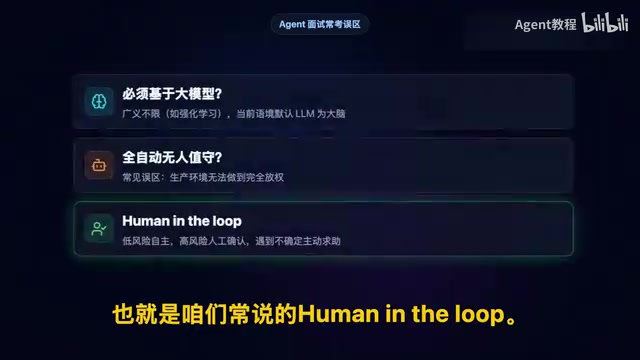
Concretely: low-risk actions run autonomously, high-risk actions require human confirmation, and uncertain situations trigger an active request for help. Autonomy within appropriate boundaries — that's what Agent deployment actually looks like in practice.
As for "will traditional AI be replaced by Agents?" — the answer is no. The more common scenario is that traditional AI gets "wrapped inside" an Agent: OCR, recommendation ranking, risk scoring, and other vertical capabilities become tools in the Agent's toolkit. The Agent handles how to orchestrate them to complete a task; traditional AI handles pushing each narrow capability to its limit. The two are complementary layers, not competitors.
Engineering in Practice: Safety Boundaries and Observability
Interviewers will often probe your engineering thinking: what are the biggest engineering risks with Agents? This is where you want to raise the keywords that matter most in production environments — safety boundaries and observability.
Several high-frequency risk areas are worth flagging: LLM reasoning errors causing goal drift; runaway tool usage leading to infinite loops that burn through resources; privilege escalation; or sensitive data leaking into prompts and causing privacy breaches. The more capable the system, the more firmly the guardrails need to hold.
Finally, here are three criteria for quickly determining whether a system is a true Agent:
- Are the goals open-ended?
- Is the execution path determined dynamically at runtime?
- Is there a feedback mechanism that handles failures autonomously?
If all three are satisfied, you have a genuine AI Agent.
Observability in Agent engineering means something different from traditional microservice monitoring. Because an Agent's execution path is generated dynamically at runtime, you can't instrument it the way you would a fixed pipeline. Instead, you need full end-to-end tracing of every reasoning step, tool call input/output, token consumption, latency, and errors. Common industry solutions include LangSmith and LangFuse — tracing platforms designed specifically for LLM applications — or injecting structured logging at the tool invocation layer yourself. Without observability, debugging Agent failures is nearly impossible, and you have no way to verify whether its behavior matches expectations. This is the most overlooked obstacle on the path from prototype to production.
Related articles
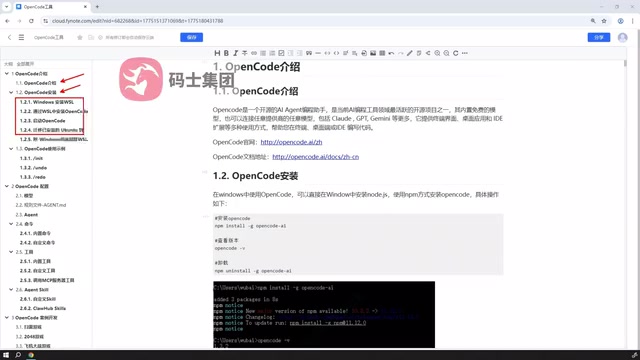
OpenCode Complete Guide: Installation, Configuration & Practical Usage
A complete guide to OpenCode, an open-source AI coding tool: desktop and WSL installation, model and rule configuration, agent types, custom commands, MCP integration, and Agent SQL reuse.
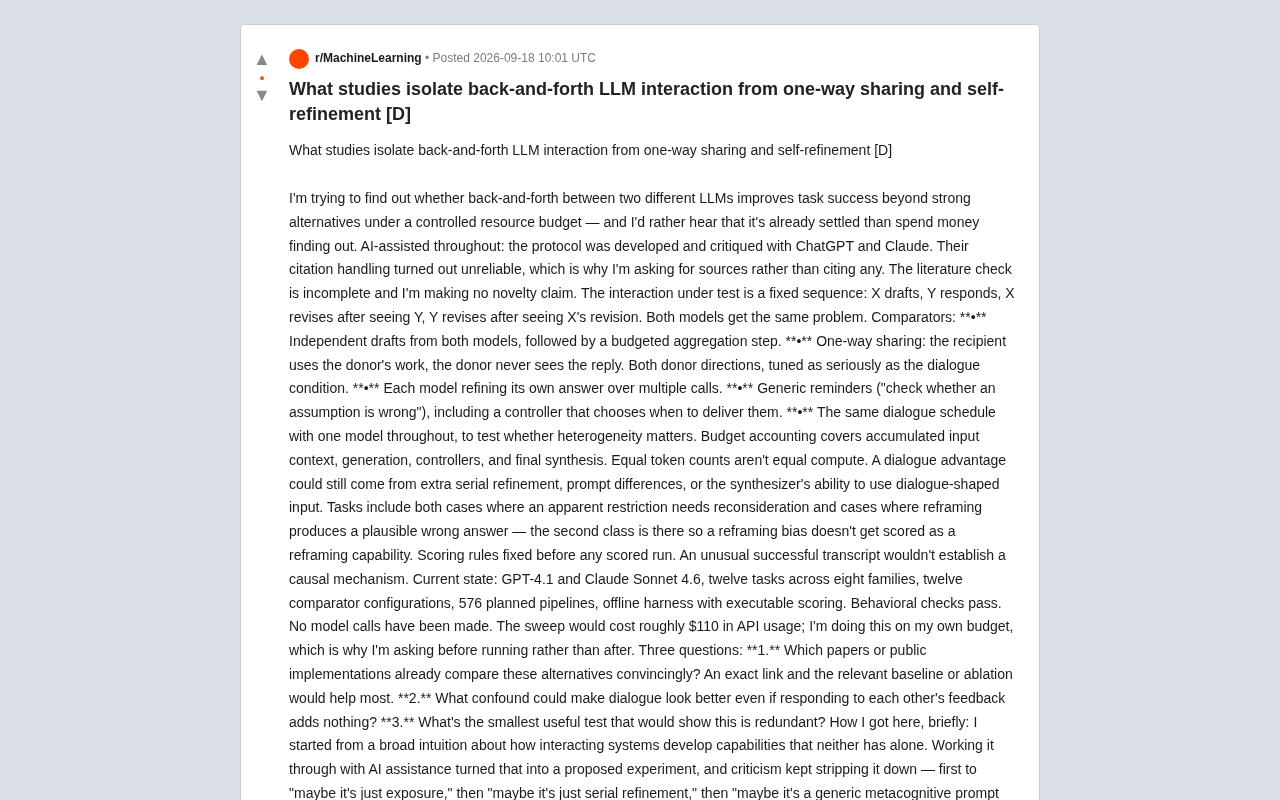
Can Multi-LLM Dialogue Really Improve Task Performance? Lessons from a Rigorous Experimental Design
A researcher designed rigorous controlled experiments to isolate whether multi-LLM back-and-forth dialogue genuinely outperforms simpler baselines like self-refinement and one-way sharing.

Which $10 AI Coding Plan Should You Choose? Go vs. Code Credit Breakdown
After DeepSeek's price hike, should you pick Go or Code for your $10 AI coding plan? We break down credit allocations for Mimo, Qwen, DeepSeek V4, Kimi, and more.