What Is an AI Software Factory? The Next Stop in Development Paradigms

AI software factories turn development into an assembly line, shifting the bottleneck from coding to requirements definition and engineering foundations
The article discusses the paradigm shift from chat-based programming tools to "AI software factories": developers no longer hand-write most code; agents handle planning, coding, testing, and review, while humans step back to a "human in the loop" role describing desired outcomes. Cognition and Factory are the main drivers—the former focuses on long-cycle autonomous tasks, the latter on organizational-level integration. Whether software factories succeed depends on testing system completeness—testing becomes a tool for defining agent capability boundaries. The systems also aim to integrate with GitHub, Jira, and Slack across the full development lifecycle. The core conclusion: bottlenecks don't disappear but shift from coding to requirements definition, architectural decisions, and quality standards; engineering foundations determine how fast the software factory can run.
From Coding Assistant to Software Factory: A Paradigm Shift in Development
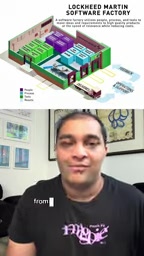
The hype around chat-based programming tools is fading, and a new concept has taken over as the focus of tech circles—the AI Software Factory. According to definitions from multiple sources on Bilibili and YouTube, its core idea is to treat software development as an assembly line: developers no longer hand-write most of the code; instead, AI agents handle the bulk of the work from planning and coding to testing and review.

The significance of this shift lies not in the change of tool form, but in the relocation of the center of collaboration. In the past, the relationship between developers and AI was "I write, you fill in the gaps"; now it has become "I describe the outcome, you deliver the process." What the software factory aims to solve is not point efficiency, but the bottlenecks across the entire pipeline.
Who Is Driving This "Assembly Line"
Based on cross-referenced information from multiple sources, Cognition and Factory are the most active proponents of this vision. Both are investing toward fully autonomous software factories, but with different emphases: Cognition focuses more on whether agents can independently complete long-cycle development tasks, while Factory positions itself as an organizational-level system connecting agents and code.
This difference in positioning reflects a shared judgment—the capability of a single agent is no longer the bottleneck; the real difficulty lies in embedding multiple agents into an organization's existing development processes. Factory's emphasis on the "organizational-level" attribute is essentially about solving coordination between agents and the integration of agents with existing engineering systems.
Cognition is the company behind Devin, an AI coding agent marketed as an autonomous agent capable of independently completing software engineering tasks end-to-end, emphasizing the ability to plan, write, debug, and commit code on its own over hours or even longer cycles—making it a representative of the "long-cycle autonomous tasks" approach. Factory, on the other hand, is a startup positioned as an enterprise-grade AI software development platform, whose product embeds agents called "Droids" into existing engineering and collaboration tools such as GitHub, Jira, and Slack, focusing on integrating agents into an organization's existing development workflows rather than replacing them. Understanding the difference between these two companies helps clarify what the article means by "single-agent capability is no longer the bottleneck; organizational-level integration is the real challenge."
Human in the Loop: Redefining the Human Role
NVIDIA's practice is cited by multiple sources as a representative case. In their working model, agents complete the vast majority of the work, while humans occupy the "human in the loop" position, with their primary responsibility being to describe the desired outcomes.

This division of labor places different demands on developers' skill sets. Proficiency in writing code still has value, but what matters more is the ability to express requirements clearly enough and define acceptance criteria accurately enough. Vague requirements would be filled in by human engineers' common sense in traditional development, but in a software factory, they may directly become defective products on the assembly line.
"Human in the loop" originates from the fields of automation and human-computer interaction, referring to systems that retain human checkpoints for inspection, confirmation, or intervention during execution, rather than running fully unmanned. In the context of AI software factories, its meaning has shifted: humans no longer approve each step of operation, but intervene at key points such as goal setting, result acceptance, and exception handling. The contrasting concept is "human on the loop" (supervising from outside the loop) or even full autonomy. This distinction is important because "in the loop" means responsibility and judgment remain with humans, while agents handle the execution process—this is precisely the theoretical basis for the division of labor described in the article as "I describe the outcome, you deliver the process."
Testing First: Quality Guardrails for Agents
Whether a software factory can succeed depends largely on the completeness of the testing system. Multiple sources emphasize the same point: before letting agents work autonomously, adequate testing must be in place.
The logic is not complicated. Agents can be authorized to modify code, but whether their output is trustworthy depends on whether it can be automatically verified. In a codebase without reliable tests, every change an agent makes is uncontrolled. Conversely, the more thorough the test coverage, the larger the scope of tasks agents can handle autonomously—testing here transforms from a quality assurance measure into a tool for defining the boundaries of agent capability.
Full Lifecycle Integration: From GitHub to Jira
The ambition of the software factory goes beyond writing code. According to multiple sources, these systems aim to integrate with the complete software development lifecycle: passing tests on GitHub, handling tickets on Jira, and autonomously advancing long-cycle tasks.

The appearance of agents in collaboration tools like Slack is another facet of this trend. When agents can proactively report progress and receive feedback, they shift from passively invoked tools to participants in the team. The "long-cycle task" capability described by Factory points precisely to this continuity: not solving one problem in a single conversation, but continuously driving a goal over days or even longer spans.
It should be noted that sources differ in their assessment of the software factory's maturity. Some views hold that this is already a reality being widely adopted by the tech industry; others are more cautious, believing that current practices are still early-stage, with organizational-level integration and long-cycle autonomy yet to be validated. Both views have their basis, but directional consistency—moving from coding assistants toward complete software factories—has been corroborated across multiple independent sources.
The software development lifecycle (SDLC) typically covers stages including requirements gathering, design, coding, testing, deployment, and operations, while GitHub, Jira, and Slack are representative tools for code hosting and review, ticketing and project management, and team communication and collaboration, respectively. "Full lifecycle integration" means agents do not merely generate code within an IDE or chat window, but read tickets, submit PRs, respond to comments, and report progress through these systems' APIs and event mechanisms, thereby leaving traceable operational records in an organization's real workflows. This integration approach also makes permission control, auditing, and rollback engineering issues that must be designed in advance.
Bottleneck Shifts Rather Than Disappears
The core promise of the software factory is to accelerate code production and reduce bottlenecks. But this does not mean bottlenecks disappear—rather, their location shifts. Once coding, testing, and review stages are automated, requirements definition, architectural decisions, and quality standard-setting become the new critical path.
For engineering teams, this means adjusting where they invest their efforts: rather than obsessing over getting agents to write a few more lines of code, it is better to first build a solid testing system and standardize requirements expression. These foundational efforts determine how fast the software factory can run, and also determine whether humans can still hold key positions in this new paradigm.
From chat-based programming to software factories, the industry is undergoing a cognitive upgrade from "using AI to assist with writing code" to "using AI to organize production." Whether this assembly line can truly operate as its proponents wish depends on the depth of engineering foundations, not on how smart the agents themselves are.
One-line Summary
AI software factories turn development into an assembly line, shifting the bottleneck from coding to requirements definition and engineering foundations
Paragraph Summary
The article discusses the paradigm shift from chat-based programming tools to "AI software factories": developers no longer hand-write most of the code; instead, agents handle planning, coding, testing, and review, while humans step back to a "human in the loop" role responsible for describing desired outcomes. Cognition and Factory are the main drivers—the former focuses on long-cycle autonomous tasks, the latter positions itself as an organizational-level system connecting agents and code. Whether a software factory can succeed depends on the completeness of the testing system—testing transforms from a quality assurance measure into a tool for defining the boundaries of agent capability. The system also aims to integrate with the full development lifecycle including GitHub, Jira, and Slack. The core conclusion is that the bottleneck does not disappear but shifts from coding to requirements definition, architectural decisions, and quality standard-setting; the depth of engineering foundations determines how fast the software factory can run.
Related articles

AI Tools Quietly Altering Settings: Postman Silently Installs Plugin, Codex Sharing Option Auto-Resets
AI Daily reports: Postman silently installs a Mac plugin and self-approves startup hooks, logged as auto-existing upgrade; Hacker News developers say Codex data-sharing opt-out flips back. Plus Simon Willison's raw float weight experiment with QEN 3.8-27B.

AI Learns to Rewrite AI: MIT's "Weightspace Programming" Redraws the Path to Recursive Self-Improvement
MIT team proposes weightspace programming: GPT-6 Astra reads and edits AI model weights directly. Math scores jump several-fold, hand-written networks beat trained models. Eight experiments analyzed, plus Anthropic's same-day warning and the real boundaries of recursive self-improvement.

Running Qwen 3.8 on a Laptop to Read Raw Weights: 46 Minutes Per Answer
Simon Willison reproduced weight space programming with Qwen 3.8 27B on a laptop: a 17GB model file, 46 minutes per answer, 43,506 reasoning tokens, Pong over an hour, Freeway failed. Suited for interpretability researchers.