What Is Artex? Decoding the AI-Powered Automated Penetration Testing Tool the FBI Warned About
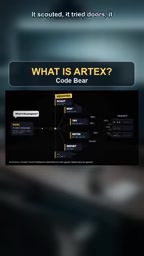
FBI warns that the AI penetration testing tool Artex compresses the attack tempo to within three hours, posing new automated attack challenges for defenders.
An AI penetration testing tool called Artex has triggered an FBI warning: attackers only need to enter a natural-language goal, and AI agents can autonomously complete the entire process from reconnaissance to obtaining administrator privileges, in as little as under three hours. The tool itself has no reasoning capability and relies on external large models such as Claude, GPT, and DeepSeek, with DeepSeek's flash series standing out in testing. Google's threat team analysis points out that Artex consists of six sub-agents orchestrated through a web console, with very little human interaction. The core of the FBI warning is the sharp compression of attack tempo, as defenders' traditional human response-speed advantage is disappearing. Enterprises need to re-examine exposure management, permission boundaries, and anomaly detection capabilities. Regarding the connection between Artex and the Schwab outage, no source has confirmed it; it remains reader speculation.
A tool called Artex is changing the tempo of cybersecurity offense and defense. An attacker only needs to type a single sentence describing the target into a web page, and nearly everything else is handed over to AI. According to cases disclosed by the FBI, the shortest time from first contact to obtaining administrator privileges was under three hours. This warning, after being shared by the FBI's Dallas field office, received over 7 million views, and some readers connected it with the Schwab service outage—though no source has confirmed any link between the two.
What Artex Actually Is: Handing the Penetration Testing Loop to AI
Traditional penetration testing is led by human experts: run one tool at a time, read the output, and decide what to try next. This process relies heavily on experience and naturally limits speed. Artex's core idea is to hand the entire loop to an AI agent.
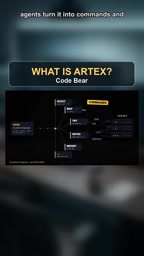
According to the FBI's description, users describe the target in natural language, a dedicated agent translates it into commands and executes them, and after that almost no human intervention is needed. Google's threat team analysis further points out that Artex's work is split into six sub-agents, all orchestrated through a web console. This means attackers no longer face a pile of tools that must be manually chained together, but an attack pipeline that can autonomously plan, execute, and log.
Researchers' logs show surprisingly little human-machine interaction. The message attackers typed most was simply a progress check—"How's it going?". Reconnaissance, attempting entry points, and recording results are all done by the machine.

Penetration testing is the authorized simulation of hacker attacks to assess system security, typically following stages such as reconnaissance, vulnerability scanning, exploitation, and post-exploitation. Traditional penetration testing relies heavily on manual operations—security experts must manually select tools, analyze output, and decide the next action, which is both time-consuming and requires extensive experience. Automated penetration testing tools were previously based mainly on predefined scripts and lacked dynamic decision-making capability. The introduction of AI agents has changed this model: agents can perceive the environment, plan tasks, invoke tools, and execute iteratively, advancing penetration testing from "scripted" to "agentic." Artex is a typical example of delegating the entire penetration testing loop to an AI agent; users only need to provide a natural-language goal, and the agent can autonomously complete the full chain from information gathering to privilege escalation, greatly lowering the attack threshold and the time required.
It Has No "Brain" of Its Own: The Model Is the Key Variable
Artex itself has no reasoning capability; it borrows external large models. The models the FBI listed as connected include Anthropic's Claude, OpenAI's GPT, DeepSeekAd, GLM, Grok, and Kimi.
In the attack configurations observed by researchers, DeepSeek's flash series models performed notably better and became the first choice in that scenario. This detail is worth noting: once the automation threshold for penetration testing is lowered, the effectiveness gap between tools depends largely on the instruction-following and planning capabilities of the underlying model, not on the tool itself. In other words, every improvement in model capability may translate directly into improved attack efficiency.

The instruction-following capability of large language models (LLMs) refers to how accurately a model understands and executes user instructions, while planning capability involves breaking complex tasks into executable steps and adjusting dynamically. In automated penetration testing scenarios, the model needs to translate natural-language goals into specific command sequences and adjust strategy in real time based on execution results—this requires strong reasoning and planning capabilities. Different models differ significantly along these dimensions; for example, DeepSeek's flash series models may have advantages in response speed and cost-effectiveness, making them perform better in attack scenarios that require rapid iteration. Improvements in model capability directly lower the barrier to using the tool, enabling attackers to achieve more efficient attacks with less expertise—which is also the new challenge for defenders emphasized in the FBI warning.
What the FBI Warned About, and What Enterprises Should Do
The FBI issued a warning about Artex and shared it again a few days later through its Dallas field office. The core of the warning is not complicated: when attack planning and execution are taken over by AI, the "human tempo" advantage that defenders rely on to buy time is disappearing.
From the cases disclosed so far, the compression of the attack chain is the most direct risk. Reconnaissance and lateral movement that previously took days or even weeks may now be completed within hours. Enterprises need to re-examine whether exposure management is timely enough, whether permission boundaries are tightened by default, and whether logging and anomaly detection can catch machine-speed probing behavior.
It should be noted that regarding the connection between Artex and the Schwab outage, no source has confirmed it so far; it is a connection readers made themselves in the information stream. When discussing such tools, distinguishing confirmed facts from speculation is itself part of security literacy.
Exposure management is the ongoing process by which enterprises identify, assess, and reduce potential vulnerabilities in externally accessible assets (such as IP addresses, domains, and cloud services). In the face of AI-driven attack tools, exposure management needs to shift from periodic scanning to real-time monitoring, because attackers may use automated tools to discover and exploit newly emerging vulnerabilities within hours. Tightening permission boundaries by default means following the principle of least privilege, ensuring that each user and system component has only the minimum permissions necessary to perform its function, thereby limiting the scope of attacker lateral movement. Logging and anomaly detection need to be able to identify machine-speed probing behavior, such as high-frequency port scans or unusual login attempts; traditional rule-based detection may struggle to cope with the stealthy probing of AI agents, so behavior analysis and machine learning models need to be introduced to improve detection capability. Together, these measures form the baseline defense strategy against automated attacks.
Editorial View
Artex represents a trend rather than an isolated incident: the automation of the attack surface is moving from "scripted" to "agentic." For defenders, the real question is not any single warning, but whether their own response loop is still stuck at human tempo when adversaries act at the speed of models.
One-line Summary
FBI warns that the AI penetration testing tool Artex compresses the attack tempo to within three hours, confronting defenders with new automated attack challenges.
Paragraph Summary
An AI penetration testing tool called Artex has triggered an FBI warning: attackers only need to enter a natural-language goal, and AI agents can autonomously complete the entire process from reconnaissance to obtaining administrator privileges, in as little as under three hours. The tool itself has no reasoning capability and relies on external large models such as Claude, GPT, and DeepSeek, with DeepSeek's flash series standing out in testing. Google's threat team analysis points out that Artex consists of six sub-agents orchestrated through a web console, with very little human interaction. The core of the FBI warning is the sharp compression of attack tempo, as defenders' traditional human response-speed advantage is disappearing. Enterprises need to re-examine exposure management, permission boundaries, and anomaly detection capabilities. Regarding the connection between Artex and the Schwab outage, no source has confirmed it; it remains reader speculation.
Related articles

AI Code Generation Is Getting Cheaper—Validation Is the Real Challenge
Code generation is getting cheaper, and the bottleneck is shifting to validation. Drawing on Satya Nadella's interview, this piece analyzes coding agents' specifications, multi-model review, separation of permissions, organizational changes, and how engineers can turn a single fix into reusable team capability.

Saparo: The Shopping AI Agent That Stacks Discounts Automatically, Topping Product Hunt
Saparo is an AI shopping agent that automatically stacks discounts, topping Product Hunt. It finds the same item, matches sizes, combines promo codes and cashback, ranks by total cost including shipping and taxes, and leaves final payment to the user.

Tripmojo: The AI Travel Agent That Checks You In
Tripmojo is the #2 AI travel agent on Product Hunt: it syncs booking emails into a shared itinerary and lets Mojo attempt check-in, save boarding passes, and flag delays.