What Is MCP? A Plain-English Guide to the Protocol Connecting LLMs with Traditional Software
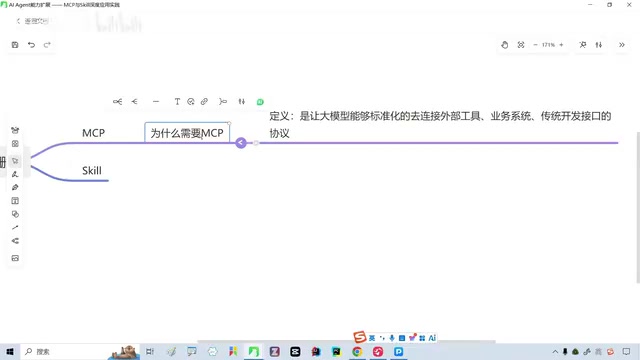
MCP is the protocol that lets large language models call traditional software interfaces in a standardized way.
MCP (Model Context Protocol) is a protocol that enables large language models to connect with external tools and legacy business systems in a standardized way. Its core value is resolving a fundamental mismatch: the vast library of traditional APIs built over the past decade is designed for programs, not LLMs. By wrapping existing interfaces as MCP tools with natural language descriptions, LLMs can understand and invoke external systems just like they process conversation. The pipeline is simple — user question → Agent understands intent → calls MCP tool → original business logic runs unchanged → results returned. Developers don't need to rewrite any business code, just add a thin wrapper to bring existing software assets into the AI ecosystem.
Why Do Large Language Models Need MCP?
Many developers learning about large language models (LLMs) run into the same question: what exactly is MCP (Model Context Protocol), how is it different from traditional interfaces, and how do you actually use it? This article is based on a beginner-level public lecture and aims to explain MCP as clearly and plainly as possible.
In one sentence: MCP is a protocol that allows large language models to connect with external tools, business systems, and traditional development interfaces in a standardized way.
The word "protocol" might already sound familiar. HTTP, for example, is a protocol that governs the rules of requests and responses on the web. At its core, a protocol is simply a set of rules and constraints. MCP works the same way — it defines a unified standard for how LLMs interact with the outside world.
What's Wrong with Traditional Interfaces?
To understand the value of MCP, we need to step back to the era before large language models. Over the past decade or two, huge numbers of software systems have been built by developers using traditional languages like Java, C++, Go, and PHP.
Take an e-commerce system as an example. It might expose hundreds of API endpoints — product queries, inventory checks, and so on. If a frontend application needs to access one of these backend endpoints, the backend typically exposes it in a form like a GET request at /product/query.
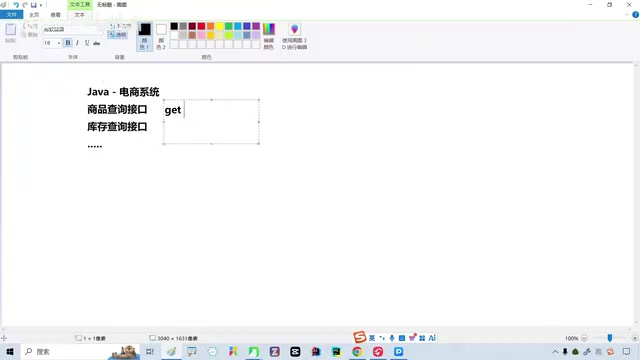
The key point is: these interfaces are fundamentally designed for programs to call. A frontend calls the backend, the backend calls an underlying service to search products or query a database, and a product list gets returned. The entire chain — which method to call, what parameters to pass, what values to expect back — only makes sense to other programs.
But a large language model can't make sense of this. If you hand a traditional API endpoint directly to ChatGPT, it has no idea what the endpoint does or what parameters to pass. That's because traditional interfaces are designed for machines, not for LLMs.
How Does MCP Solve This Problem?
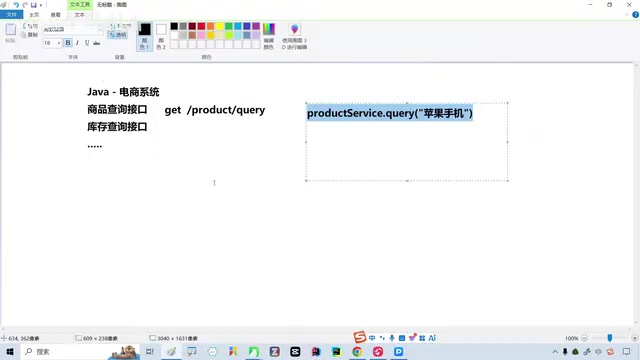
What a large language model needs is a tool description it can actually understand. In other words, it needs to know something like "this tool is used to check inventory" — described in natural language (Chinese, English, it doesn't matter) — rather than a raw endpoint path and parameter schema.
That's exactly what MCP does: it lets an LLM understand and call capabilities that already exist in your software. The approach is to take an existing interface (say, a product search endpoint in an e-commerce system) and wrap it as an MCP tool. No matter what language the underlying code is written in, once it's wrapped as an MCP tool, the LLM can call it directly.
This creates a complete end-to-end pipeline: user asks a question → the Agent uses the LLM to understand the intent → the LLM determines it needs to look up product information → it calls your MCP tool → the tool internally still runs the original database query logic → results are returned.
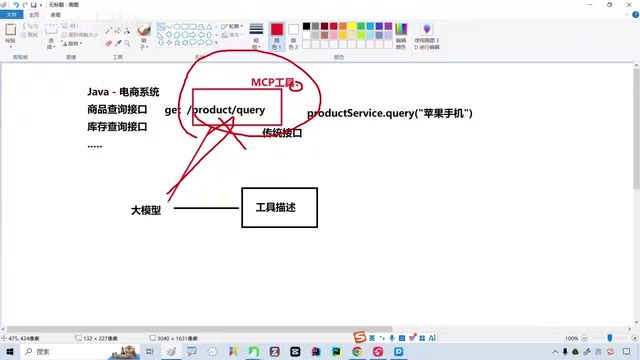
In other words, your existing business logic doesn't need to be rewritten at all. You simply wrap your legacy system as an MCP tool and make it available for the LLM to call.
From a technical standpoint, the core of an MCP tool is a structured Tool Description, which typically includes three elements: the tool's name, a functional description (a natural language explanation of what the tool does), and parameter definitions (including parameter names, types, and descriptions). When reasoning, the LLM reads this description to determine whether the user's intent requires calling that tool, and then automatically generates a call request in the correct parameter format. This mechanism fundamentally relies on the LLM's Function Calling capability. MCP builds on top of that by defining a cross-platform, cross-language standardized protocol, so that models from different vendors and tools written in different languages can all interoperate under a unified standard — without needing separate adapters for each model.
The Real Significance of MCP: Bridging LLMs and the Traditional Software World
With that context, we can summarize MCP's core value in one sentence: MCP bridges the gap between large language models and the traditional software world.
Before LLMs came along, Java systems, Python systems, and all kinds of business applications existed independently and had no direct connection to AI models. MCP changes that — it allows these existing legacy systems to be reused, with LLMs calling them through the MCP protocol.
This also explains why MCP has taken off so quickly. Before the LLM boom, enterprises and developers had spent years doing traditional software development, accumulating massive amounts of systems and interfaces. When LLMs arrived, nobody was going to tear all of that down and start from scratch — nor were software engineers going to disappear overnight. The more sensible path is: keep existing systems as they are, plug them into the LLM ecosystem via MCP, and reuse what's already been built.
For developers learning Agent development, MCP is a critical piece of the puzzle. Whether you're working with LangChain, LangGraph, or any other framework, MCP is a foundational concept you can't avoid. Once you grasp the core thread — protocol → tool description → reuse existing capabilities — you've understood the essence of MCP.
It's worth noting that MCP was formally proposed and open-sourced by Anthropic in late 2024, and quickly gained support from major AI players including OpenAI and Google, as well as ecosystem tools like LangChain. Before MCP, each LLM platform had its own tool-calling mechanism (such as OpenAI's Function Calling), but implementations were inconsistent and developers had to build separate adapters for different models. MCP's value lies precisely in standardization — think of it like what USB did for hardware: whether it's a mouse, a keyboard, or a flash drive, anything that follows the USB protocol is plug-and-play. MCP makes it possible to "write a tool once and have every MCP-compatible model call it," dramatically reducing the integration cost of AI application development.
Summary
At its core, MCP is a protocol that enables large language models to connect with external tools and systems in a standardized way. The fundamental problem it solves is this: traditional interfaces are designed for programs, not for LLMs — models can't make sense of raw endpoint paths and parameter schemas. By wrapping those interfaces as MCP tools with natural language descriptions, LLMs can call external systems as naturally as they use their own built-in capabilities. For developers, this means no rewriting of business logic is required — just a thin wrapper — to bring years of accumulated software assets into the AI era.
Related articles

OpenAI Partners with Shield: How the Astra Agent Revolutionizes IT Troubleshooting
OpenAI and Shield launch the Astra agent, which autonomously logs into computers and legacy systems to fix IT issues in real time, 35-40% faster than traditional models, with humans involved only when judgment is needed.

iPhone Duo Battery Life Tested: One Charge a Day Is Unavoidable, and the Large Screen Is the Culprit
iPhone Duo battery test: heavy use needs at least one charge a day, and about 30% remains after 6.5 hours of screen-on time. How often the large screen is unfolded is key; a MagSafe battery pack helps, and long-term degradation is also worth watching.

Kimi K3.1 Pro Open-Sourced: 2.8 Trillion Parameters Close In on Opus
Moonshot releases the open-source MoE model Kimi K3.1 Pro, with 2.8T total parameters and 104B activated, trailing Opus 5.5 by under 1 point on Terminal Bench 4.0.