What Is True Happiness? Arthur Brooks' Three Macronutrients of Happiness

Arthur Brooks breaks down happiness into three macronutrients — enjoyment, satisfaction, and meaning — with counterintuitive insights on each.
Harvard researcher Arthur Brooks argues that happiness is not a feeling but a combination of three "macronutrients" — enjoyment, satisfaction, and meaning — each containing unhappiness within it. He distinguishes pleasure from enjoyment, explains why satisfaction comes from struggle rather than reward, identifies four worldly "idols" that block fulfillment, and argues that meaning is the greatest modern crisis. He concludes that the path to happiness follows the order of practice, belief, then feeling — not the reverse.
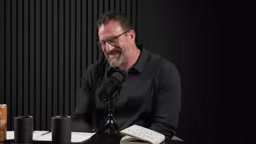
Harvard Business School senior fellow and Vanderbilt University professor Arthur Brooks appeared on the Huberman Lab podcast and laid out a rare, crystal-clear framework for dissecting "happiness" — something nearly everyone pursues yet few can define. He compared happiness to nutrition and proposed that it has three "macronutrients": enjoyment, satisfaction, and meaning. Even more counterintuitively, he argued that all three contain unhappiness within them, and that people who try to escape unhappiness will paradoxically miss out on their own happiness.
Happiness Is Not a Feeling — It's Three Macronutrients
Brooks spent 30 years in behavioral science research before dedicating himself to the science of happiness in 2019. He found an absurd reality: nearly everyone wants to be happy, yet no one can accurately define it. People typically mistake happiness for an emotion or a feeling — but he offered an analogy: "Felt happiness is like the smell of a Thanksgiving turkey. It's evidence that happiness exists, not happiness itself."
Drawing on nutrition science's model of breaking food into macro- and micronutrients, he conducted factor analysis on people with high life satisfaction and distilled happiness into three core components: enjoyment, satisfaction, and meaning. The happiest people actively pursue all three.
The key insight is that within each macronutrient lies dissatisfaction, frustration, and a great deal of pain. This leads to his second corrective on happiness: happiness and unhappiness are not mutually exclusive. "If you spend your whole life running from unhappiness and eliminating pain, you will paradoxically miss out on your own happiness."
Enjoyment ≠ Pleasure: From Animal Impulse to Moral Aspiration
Brooks draws a sharp distinction between enjoyment and pleasure. "Chasing pleasure is not the secret to happiness — it's the secret to checking into a rehab center." Pleasure is fundamentally a limbic system phenomenon — you can produce it by stimulating the ventral tegmental area or the ventral striatum, and there's no essential difference between the immediate rush from "I love you" and a hit of cocaine. This is the part we share with animals.
What truly sets humans apart from animals is the prefrontal cortex, which accounts for roughly 30% of brain mass. It allows us to make conscious, executive choices between "animal impulse" and "moral aspiration." When we transform pleasure into enjoyment, it's precisely because we've infused it with moral meaning — adding people and memory, making it a social, manageable experience.
Brooks offers a practical test: "If you're doing it alone, you're probably doing it wrong — it's more likely about pleasure than enjoyment." He acknowledges this isn't a perfect rule; walking alone in the woods in prayer is fine too. Genuine enjoyment, he says, is "when you're doing something you consider prudent, natural, and good — something you'd be comfortable being seen doing — and it's also pleasurable." He uses his 35-year marriage as an example: the best moments are simultaneously highly pleasurable and deeply enjoyable.
The ventral tegmental area (VTA) and ventral striatum are the core nodes of the brain's dopamine reward circuit, part of the limbic system. The VTA releases dopamine signals, while the ventral striatum (including the nucleus accumbens) receives them and generates the drive of "anticipated reward." This circuit is evolutionarily highly conserved — from nematodes to humans — and its primary function is to push individuals toward pursuing food, sex, social connection, and other survival necessities. Cocaine, gambling, and social media likes are addictive precisely because they hijack this same circuit, producing dopamine release peaks similar to real rewards but without any genuine accumulation of satisfaction. The prefrontal cortex's critical role is to apply the "brakes" to these limbic impulses, incorporating immediate physiological drives into longer-term value judgments — which is exactly the neurophysiological basis of what Brooks describes as transforming pleasure into enjoyment.
Satisfaction Comes from Earned Achievement, Not the Reward Itself
Brooks defines satisfaction as "the joy derived from achievement after struggle." The satisfaction from a PhD is proportional to the pain that went into earning it. He invokes the joke about billionaire David Koch — who supposedly "started by polishing apples" before his father left him $100 million — to illustrate the point: genuine satisfaction comes from struggle, not accolades. "Human beings are built to earn their own success."
This explains a paradox: why Olympic gold medalists so easily fall into clinical depression after winning, and why someone who earns a billion dollars immediately wants another one. Because "we are animals built for progress," reaching the finish line means progress has stopped. Mick Jagger sings "I can't get no satisfaction" — but Brooks says what he really should sing is "I can't keep no satisfaction."

He also cautions strivers not to swing to the opposite extreme — turning everything into a struggle, perpetually deferring satisfaction, forever waiting for a marshmallow without ever knowing what your marshmallow actually is. The real art is finding the golden mean between "earned" and "unearned": put in enough effort, struggle enough, then claim your reward, and start again. This is also why he criticizes the retirement trap — spending your working years as an ascetic and then fully switching off at 65 means the first half is all pain with no reward, and the second half is all reward with no pain. Neither end fits the neurophysiology.
The phenomenon of Olympic champions falling into depression after winning gold has been specifically studied in sports psychology and is often called "post-Olympic depression" or, more broadly, "post-achievement emptiness syndrome." Its neural mechanism relates to the dopamine system's "anticipation-reward gap": the brain's dopamine system is continuously activated during the pursuit of a goal; once the goal is achieved, that driving signal suddenly disappears, and a new framework of meaning has not yet been established, causing mood to plummet sharply. This corroborates Brooks' argument — the essence of satisfaction is the joy that comes from "ongoing struggle," not the terminal state itself. Psychologist Mihaly Csikszentmihalyi's "Flow" theory aligns closely with this: only when task difficulty slightly exceeds current ability does a person enter the deepest state of engagement; too little difficulty causes boredom, while difficulty suddenly dropping to zero (i.e., "it's done") equally produces a sense of hollowness.
Find Your "Idol": The Four Worldly Temptations That Block Satisfaction
Brooks draws on Aquinas's interpretation of Aristotle to point out that animal impulse tells us a fundamental lie: that if you just obtain the following four things, you will be happy forever. Those four things are: money (resources), power (influence over others), pleasure (including comfort and security), and honor (prestige, admiration, respect).
None of these is inherently evil; they can all serve tremendous good. The problem is that once you pursue any one of them as an ultimate end — investing it with mythical power — it will become the source of your future suffering and regret. Because chasing them comes at a cost, and that cost "is almost always love."
He designed a game: use successive elimination to identify which "idol" most easily seduces you. In his conversation with Huberman, Huberman eliminated honor, pleasure, and money in turn, ultimately landing on "power" (i.e., a sense of control); Brooks himself first eliminated power and pleasure, then money, ultimately landing on "honor" — "I want people to love me, and at 62, I still do." He admits that recognizing your own idol won't stop you from making mistakes, but it means you'll "sometimes be able to avoid the trap — and that's already enormously powerful."
Meaning: The Domain of the Right Brain and Today's Greatest Happiness Crisis
Meaning is the most philosophical of the three macronutrients and the one most adjacent to the "hard problem" of consciousness. Brooks draws on brain hemisphere lateralization theory to note: the left brain excels at quantification and handles "how" and "what" questions with definitive answers; the right brain handles "why" — complex questions with no quantifiable answers that can only be approached through understanding and intuition. "My car is left brain. My marriage is right brain. I will never solve my marriage."
He believes the greatest happiness crisis of the modern era is the absence of meaning. When people check their phones 205 times a day, are fed useless information by algorithms, and are stuck in left-brain mode, meaning becomes inaccessible — because meaning can only be perceived on the complex, right-brain side. The way to illuminate the right brain is to ask questions that "can't be Googled": Why am I alive? What would I die for? This is precisely the value of philosophy, spirituality, and religion.
Brooks also shares an insight about quantification (drawn from Stanford's Anna Lembke): addicts tend to repeatedly count what they have — how many pills, how much money, how many followers. This extreme quantifying behavior is fundamentally rooted in loss aversion: a constraining system fighting the fear of "falling." So when we notice ourselves increasingly fixating on numbers in a given domain, it's very likely that what was once a healthy behavior has slid into obsession or even addiction.
Brain hemisphere lateralization is a real but frequently oversimplified concept in neuroscience. Strictly speaking, the left and right hemispheres don't divide cleanly into "logic" versus "creativity" — both hemispheres work in close collaboration via the corpus callosum. The framework Brooks is drawing on here is the more nuanced one proposed by neurologist Iain McGilchrist in The Master and His Emissary: the left hemisphere tends to break the world into manipulable, known, decontextualized parts; the right hemisphere deals with wholeness, relationality, openness, and uncertain experience. McGilchrist worries that modern civilization is increasingly dominated by left-brain modes — hyper-quantification, efficiency-above-all, algorithm-driven — crowding out the right brain's processing of meaning, awe, and belonging. Brooks' critique of "checking your phone 205 times a day" is a direct application of this theoretical framework: fragmented information feeds force the brain into left-hemisphere classification and processing, systematically displacing the holistic attention required to perceive meaning.
From "Special" to "Happy": Practice Before Belief
Near the end of the conversation, Brooks tells the story of a female billionaire. Enormously successful, yet deeply unhappy — estranged from her husband like roommates, distant from her adult children, feared by her employees, drinking too much, not exercising, no longer going to church. When asked why she wasn't following the prescription she clearly understood, she was silent for a long moment before saying: "Because I have always chosen to be special rather than happy." Brooks says that line felt like a knife in his heart — because at the time, he was the same way, having missed so many of his children's games and birthdays in pursuit of admiration from people who didn't care about him.
He proposes three "why" questions everyone should periodically ask themselves: First, what do I believe about why things happen the way they do, and does my behavior align with that belief? Second, why am I doing what I'm doing, and does it match my values? Third, why does my life matter and to whom, and am I acting responsibly based on that answer?
On the subject of faith, Brooks offers a framework particularly useful for scientifically minded people: the order of faith is "practice, belief, feeling" — not the other way around. "It's like marriage. If you follow feelings, you won't last a month. You maintain a marriage because you practice being married. The relationship with God is the same — start with practice." He goes to the gym every morning at 4:45, attends Mass at 6:30, and recites the rosary before bed — not because he always feels it, but because he is "serving this intuition through practice."
This logic of "practice before results" echoes what strength training master Pavel says: you're not "working out," you're "practicing strength." When something becomes a practice, you're no longer focused on whether you can claim that reward — you're focused on the process itself. That almost guarantees you'll keep going, and it points your pursuit toward an "ascent" with no ceiling rather than a destination with a hard stop.
Related articles

Workbuddy for Absolute Beginners: How a Desktop AI Agent Fits Into Real Workflows
A beginner's guide to the Workbuddy desktop AI agent: installation, claiming credits, file management, and building automated workflows—compared with CodeX for fit and cost, helping professionals shift from AI question-askers to AI managers.

OpenAI's New Agent Stack: Computer Use, Decisions API, and Ultra-Fast Workflows
OpenAI Dev Day unveiled a new agent stack: Computer Use outperforms humans, Decisions API delivers ultra-low-latency classification via Luna, Agents API opens the same Computer Use capabilities, and GPT-6.1 Sol costs only one-seventh of Astra. Core updates, benchmark data, and developer insights.

Liang Wenfeng Open-Sources DeepInfo Inference Framework, Takes On U.S. Ban
DeepSeek open-sources its DeepInfo inference framework after its models, featuring GPU/CPU cross-pipelining, small-model prediction with large-model verification, and full Huawei Ascend and NVIDIA chip support—facing the U.S. federal ban head-on. This article analyzes its significance for AI deployment and open-source strategy.