What Is Vibe Coding? How AI Is Reshaping the Role and Future of Software Engineers

AI "Vibe Coding" is reshaping programming, empowering non-coders while transforming the engineer's role.
Bloomberg reports on the "Vibe Coding" phenomenon: natural language prompts let AI generate code, enabling non-technical people to rapidly build products while professional engineers evolve from coders into managers of AI agents. Large-scale MIT research confirms AI tools significantly change how developers allocate their time, but a nearly 20% decline in junior engineer employment raises concerns. Industry experts emphasize that a massive gap remains between AI-generated code and production-grade software, making code quality assurance engineers' core competitive advantage.
When AI excels most at creating the very thing it's made of — code — programming, once a highly skilled profession, is undergoing an unprecedented transformation. A recent Bloomberg report takes a deep dive into the "Vibe Coding" phenomenon, revealing how AI coding tools are simultaneously empowering everyday people and professional engineers, along with the opportunities and concerns behind this double-edged sword.
What Is Vibe Coding?
"Vibe Coding" is a term coined by OpenAI co-founder Andrej Karpathy, describing a programming process that resembles having a conversation with a robot. Users simply describe their requirements in natural language, and AI automatically generates the code.
The emergence of this concept was no accident. It builds on multiple generations of improvements in code generation capabilities of Large Language Models (LLMs) — models that learn programming language syntax rules, design patterns, and best practices by pre-training on massive codebases, including billions of lines of open-source code on GitHub. From GPT-3 to GPT-4, Claude 3, and more advanced models, code generation accuracy and contextual understanding have achieved a qualitative leap. When Karpathy officially introduced the term on social media in early 2025, the underlying technology had matured enough to turn the concept of "talking instead of typing" from an idea into everyday practice.
In practice, this means you can use generative AI tools like Claude, Codex, or Gemini to tell it what you want in plain English — such as creating a website that visualizes a dataset — and the AI will write the code for you.
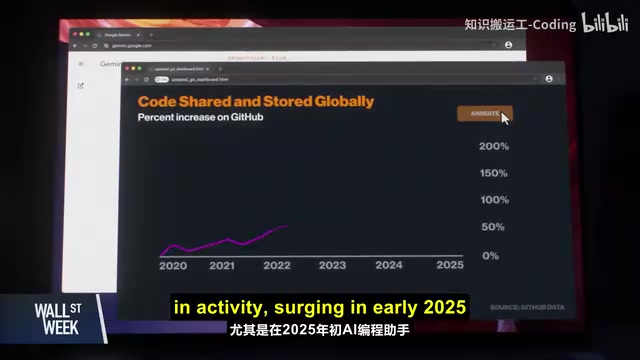
The impact of this approach is evident. Activity on GitHub surged dramatically, especially with the explosive growth following the widespread adoption of AI coding assistants in early 2025.
How Non-Technical People Are Building Products with AI Coding
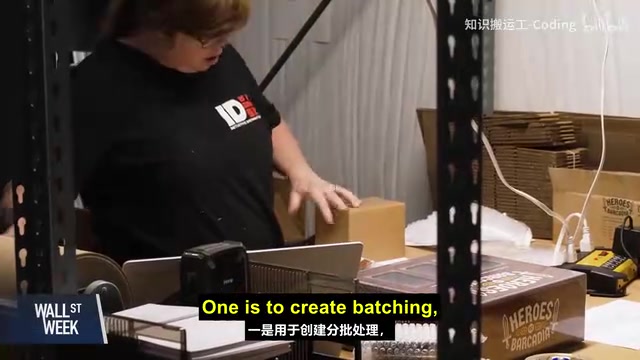
The report showcases two typical cases. Jamie Grove from West Virginia runs a boutique warehousing company and used AI to build automated shipping software in less than a day. "There's no way I could have done this without AI," Grove said. "Even if I hired five full-time programmers, they couldn't deliver as much."
He did the math: traditional warehousing software costs between $6,000 and $50,000 per year in licensing fees and lacks flexibility. Now, he spends only about $20 per month to build his own custom solution, including core features like batch processing and inventory tracking.
Cynthia Chen from Oakland, California, is another example. With a completely non-technical background, she independently built a full-stack application in about a month and successfully published it on the App Store. "Technically I can build it, but an engineer could probably do it in less time with higher reliability," she said candidly.
It's worth noting that full-stack application development traditionally requires mastery of frontend technologies (HTML/CSS/JavaScript and frameworks like React), backend (Node.js, Python, database design), API design, security authentication, cloud deployment, and multiple other tech stacks, with a learning curve that typically takes years. App Store publication additionally requires a developer account, code signing certificates, privacy policy compliance, and Apple's review process — all non-technical hurdles. AI tools encapsulate these complexities into natural language interactions, enabling non-technical individuals to cross a threshold that traditionally required professional training — Chen's case is a microcosm of this paradigm shift.
How the Role of Professional Software Engineers Is Changing
For professional software engineers, AI isn't a simple replacement but a fundamental role transformation. Adi Osmani, Director of AI at Google Cloud, offers a key distinction:
Vibe Coding vs. Engineering Practice: Vibe coding means following intuition without a clear, complete vision; true engineering requires rigor — defined requirements, systematic testing, and quality control.
"Whether you're a startup or a large enterprise, the role of the software engineer is evolving to be more like a manager," Osmani said. "You'll have a virtual team of AI agents, but you must be accountable for the output."
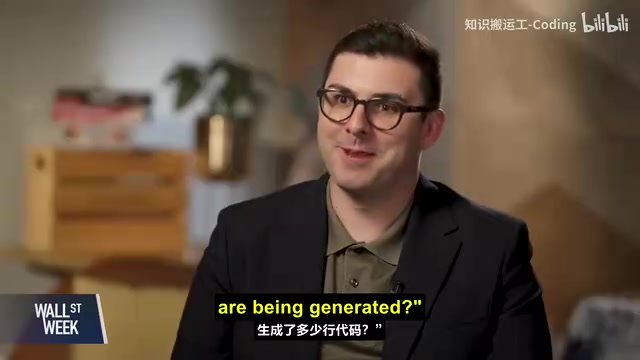
Regarding quantified productivity gains, Osmani provided clear data: early AI tools delivered a 10-15% improvement, while current tools achieve 30-50%, and the numbers continue to rise. He specifically noted that measuring productivity by lines of code is a terrible proxy metric — true evaluation requires a combination of qualitative and quantitative methods.
MIT Research: How AI Coding Tools Are Changing the Way Developers Work
Frank Nagel's team at MIT surveyed over 187,000 software developers using GitHub Copilot and discovered an important phenomenon: AI doesn't just make people faster — it changes how they allocate their time.
GitHub Copilot, released in 2021, was one of the first large-scale commercial AI coding assistants, built on the OpenAI Codex model and later upgraded to GPT-4 architecture. The MIT research team was able to access such large-scale developer behavior data thanks to GitHub Enterprise's anonymized usage log authorization agreements. This type of large-scale natural experiment research methodology, by comparing the behavioral changes of the same group of developers before and after Copilot activation, effectively controls for individual difference variables, giving the research conclusions a high degree of causal inference credibility rather than mere correlational observation.
The study found that when developers began using AI tools, they significantly increased the time allocated to actual coding while dramatically reducing project management tasks. The reason: in the past, when writing code A that depended on code B written by someone else, you had to wait and coordinate; now you can do it all yourself.
This productivity boost is especially significant for people writing entirely new code, particularly for those with no prior programming knowledge.
Challenges and Strategies for the Programmer Job Market
Since 2022, the employment rate for newly graduated software engineers has declined by nearly 20%. This is a concerning signal.

Nagel believes companies are making a serious mistake: "If you don't hire new people, who's going to run the company in 10 to 15 years? Our research shows that junior employees are precisely the ones most adaptable to change and who benefit most from AI tools. If we don't hire them at the pace we used to, we can't fully leverage this advantage."
He proposed the concept of "reverse mentoring" to address this challenge. Reverse Mentoring is not a new concept — it was first popularized by General Electric CEO Jack Welch during the internet wave of 1999 to help executives learn digital technology. In the AI era, this model takes on new meaning: Gen Z employees tend to be more intuitive with AI tools, while senior engineers possess system architecture design expertise, business domain knowledge, and engineering judgment — experience that AI struggles to replicate. Young people help senior employees learn to use AI tools; senior employees help young people understand how the industry works. This intergenerational knowledge complementarity is increasingly seen by tech companies as a key mechanism for organizational adaptation to technological change and an important strategy for mitigating the risk of "experience gaps."
Code Quality Remains Engineers' Core Competitive Advantage
In Silicon Valley, the ultimate test of AI progress is true autonomy — starting a project at night and waking up in the morning to see code written independently by AI agents. For senior engineers, this is a dream; for entry-level engineers, it could be a nightmare.
But Osmani emphasizes that what comes out of vibe coding is not the same as production-ready, battle-tested software. There are profound engineering reasons behind this: between production-ready software and rapid prototypes lies what the industry calls the "last mile" — an enormous chasm. Prototypes typically only need to handle the happy path, while production systems must cope with edge cases, concurrency conflicts, network timeouts, data consistency, security vulnerabilities (such as SQL injection and XSS attacks), observability (logging, monitoring, alerting), and disaster recovery, among other complex scenarios. Engineering practices at companies like Netflix and Google show that feature development usually accounts for only 20-30% of total engineering investment, with the majority of time devoted to reliability assurance. AI-generated code is increasingly mature in functional implementation, but still has significant shortcomings in handling these non-functional requirements.
What Google engineers do every day is precisely ensuring code meets these quality standards, enabling products to reliably serve hundreds of millions — even billions — of users.
Related articles
Meta Muse Hits 900K Downloads in Six D…
Meta Muse Hits 900K Downloads in Six Days: The AI Agent Era Has Officially Arrived
Meta's AI agent Muse hit 902K downloads in 6 days, topping US App Store and Google Play charts above ChatGPT and Claude. A deep dive into Muse's capabilities and the AI Agent race.
 Industry Insights
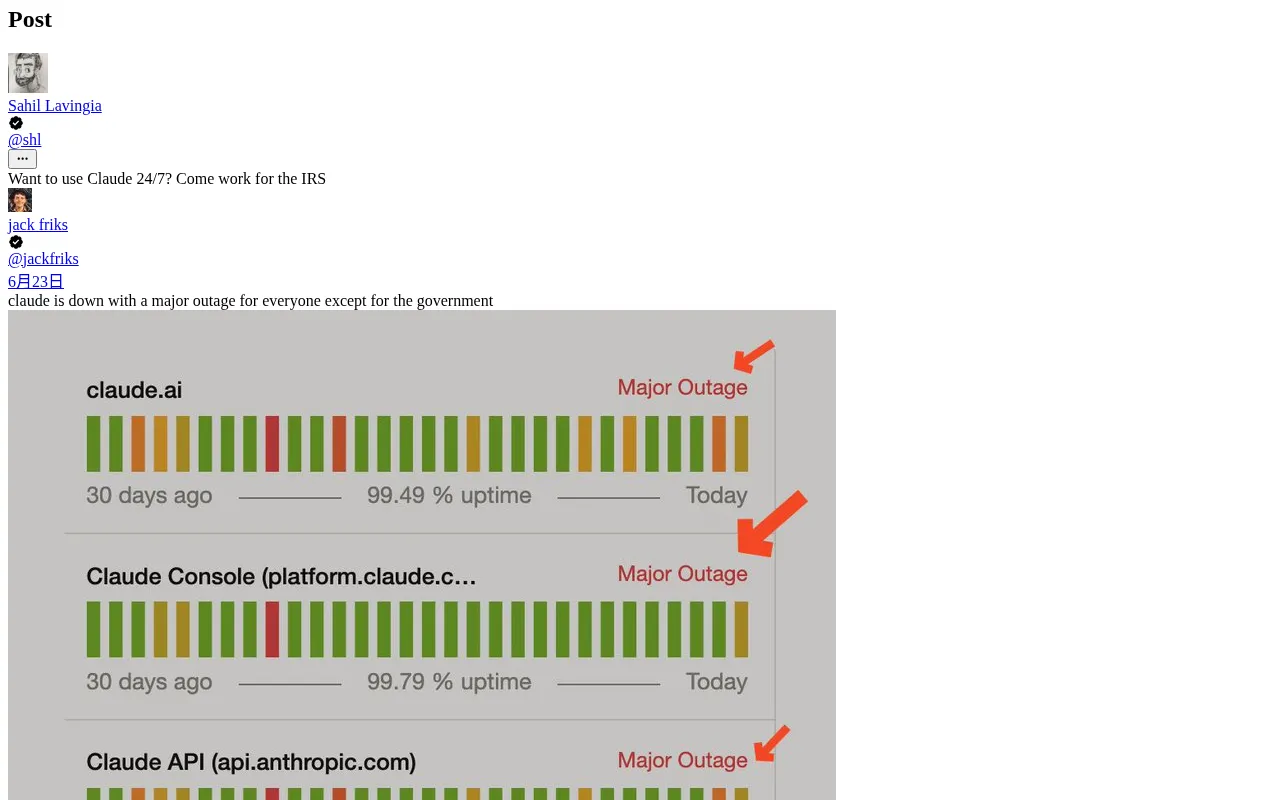
IRS Fully Embraces Claude AI, Accelerating Federal Government's AI Adoption
The IRS is recruiting staff with 24/7 Claude AI access, marking Anthropic's breakthrough into the federal government. Explore the strategic implications and tax use cases.
 Industry Insights
The IRS Mobile App Debate: A Trust Crisis in Government Digital Transformation
The IRS's proposed mobile app has sparked heated debate. This article analyzes the core arguments, exploring data security, privacy, and the trust crisis in government digital transformation.