What's It Like to Live with Robots? Tech Journalist Joanna Stern's Firsthand Account

Tech journalist Joanna Stern documents the reality of living alongside AI-powered home robots.
Former WSJ tech columnist Joanna Stern conducted an immersive experiment living with robots, documenting firsthand observations of AI robots integrating into daily home life. The article traces the evolution of home robots from vacuums to social companions, explores the psychological dimensions of human-robot cohabitation — including the uncanny valley effect and anthropomorphism — and analyzes the gap between technological maturity and consumer expectations in the embodied AI industry.
A Tech Reporter Living with Robots: A Real-World Human-Machine Cohabitation Experiment
Joanna Stern, former senior personal technology columnist at The Wall Street Journal, recently completed a bold experiment — living alongside robots for an extended period. Known for her immersive, experience-driven reporting, the veteran tech journalist brought her signature depth of perspective to documenting firsthand observations of AI robots integrating into everyday home life.
Who Is Joanna Stern? And Why Her Experience Matters
Joanna Stern is one of the most recognizable journalists in tech media. She served as a longtime senior personal technology columnist at The Wall Street Journal and is a co-founder of The Verge. Her reporting style is celebrated for its deep experiential approach and sharp humor, with a talent for breaking down complex technologies into stories ordinary people can understand.
Stern represents an important tradition in tech journalism — immersive tech journalism. This reporting approach has its roots in consumer electronics review culture, but has taken on new significance in the AI era. Unlike traditional spec-sheet comparisons, experiential reporting requires journalists to place products in real-life contexts, capturing the nuances of human-machine interaction that can't be replicated in a lab. During her time at The Wall Street Journal, Stern built a broad following with this approach — her reviews often featured selfie videos, home-setting documentation, and other first-person narrative elements, a rarity in serious financial media. It's worth noting that The Verge, the tech publication founded in 2011, is itself known for breaking the mold of traditional tech reporting by emphasizing the intersection of cultural perspective and technical analysis — a philosophy closely aligned with Stern's own reporting ethos.
In a recent podcast interview, she shared detailed accounts of her experience living with robots. This wasn't a cursory product review but an ongoing social experiment — what actually changes in your daily life when an AI-powered robot truly moves into your home?
Home Robots Become Reality: From Vacuuming to Companionship
The Product Evolution of Home Robots
The history of home robots can be divided into several distinct phases. Phase one was marked by iRobot's launch of the Roomba vacuum robot in 2002 — a single-function robot that achieved true mass adoption by solving a specific pain point, with cumulative global sales exceeding 40 million units. Phase two saw the rise of voice assistant devices like Amazon Echo and Google Home. While lacking physical form, these devices established the household habit of human-machine conversation. Phase three is the current wave of "social robots" — including Samsung's Ballie, Amazon's Astro, and multi-functional products with mobility and conversational capabilities from Chinese brands like Ecovacs and Dreame. The key technological breakthrough in this phase comes from the integration of large language models (LLMs) with robot control systems: the emergence of models like GPT-4 has enabled robots to understand natural language commands and generate reasonable action plans — a task that was nearly impossible before 2022.
Home robots are at a critical turning point. From the already ubiquitous robot vacuum to companion robots with voice conversation capabilities to service robots that can perform simple household tasks, the range of products available to consumers is expanding rapidly. Technological progress is gradually blurring the boundary between tool and partner.
Joanna's experience touches on a core question: when a robot transforms from a mere tool into something akin to a "roommate," how does our relationship with technology get redefined? This goes beyond technology alone — it involves human psychological adaptation and the reshaping of social norms.
The Psychological Dimensions of Human-Robot Cohabitation
When a robot is elevated from tool to "roommate," the psychological implications cannot be ignored. Japanese roboticist Masahiro Mori's "Uncanny Valley" theory, proposed in 1970, suggests that when a robot's appearance and behavior closely — but not perfectly — resemble a human's, it triggers a strong sense of unease. This effect is especially pronounced in the home setting, as the home is a person's most intimate psychological space. At the same time, another phenomenon worth noting is "anthropomorphism" — research shows that humans readily form emotional attachments to robots that have eyes, voices, or names, even when fully aware the other party is a machine. MIT Media Lab's Sherry Turkle raised a profound warning in her book Alone Together: emotional connections with robots may replace, rather than supplement, real human relationships. Joanna Stern's extended cohabitation experiment holds unique observational value against this psychological backdrop — her documentation can capture emotional adaptation processes that never surface in short-term reviews.
Why Long-Term Experience Is More Valuable Than Short-Term Reviews
In an era of rapidly iterating AI technology, journalists like Joanna who are willing to invest time and live with products long-term are exceptionally rare. Brief product demos can't reveal the issues that emerge in real-world use — the moments of delight, the sudden glitches, the interaction habits that gradually form — all require time to surface.
A robot that performs flawlessly at a launch event doesn't necessarily mean it can work reliably in your kitchen for three months. This is precisely where experiential reporting offers irreplaceable value.
The Current State and Challenges of the Embodied AI Industry
Embodied AI is a major research direction in artificial intelligence, built on the core premise that true intelligence must be achieved through continuous interaction with the physical world, not merely through processing abstract data. This concept can be traced back to the "embodied cognition" theory proposed by cognitive scientists Francisco Varela and Evan Thompson in the 1990s. At the engineering level, the challenges facing embodied AI far exceed those of purely software-based AI — robots must simultaneously solve problems across three dimensions: perception (computer vision, tactile sensing), planning (path planning, task decomposition), and execution (fine motor control). The coupling complexity of these three dimensions in real home environments is extremely high.
The deep integration of robotics and AI is giving rise to entirely new product categories. Boston Dynamics' Atlas robot showcases the limits of motion control, but its prohibitive cost (over $150,000 per unit) keeps it far from the consumer market. Emerging companies like Figure AI and 1X Technologies are trying to find a commercially viable balance between performance and cost, while Tesla Optimus — backed by Elon Musk's brand power and vertically integrated supply chain advantages — is seen as one of the most likely humanoid robot projects to achieve mass production at scale. The entire industry is betting on one direction: embodied AI will be the next major form factor for real-world AI deployment.
But the reality is that a significant gap remains between technological maturity and consumer expectations. Joanna's firsthand experience offers a sobering reminder: when evaluating these products, we can't rely solely on technical specifications and carefully edited demo videos. We must also pay attention to their long-term stability in real home environments, as well as their actual impact on users' emotions and daily rhythms.
How Far Are We from the Age of Human-Robot Cohabitation?
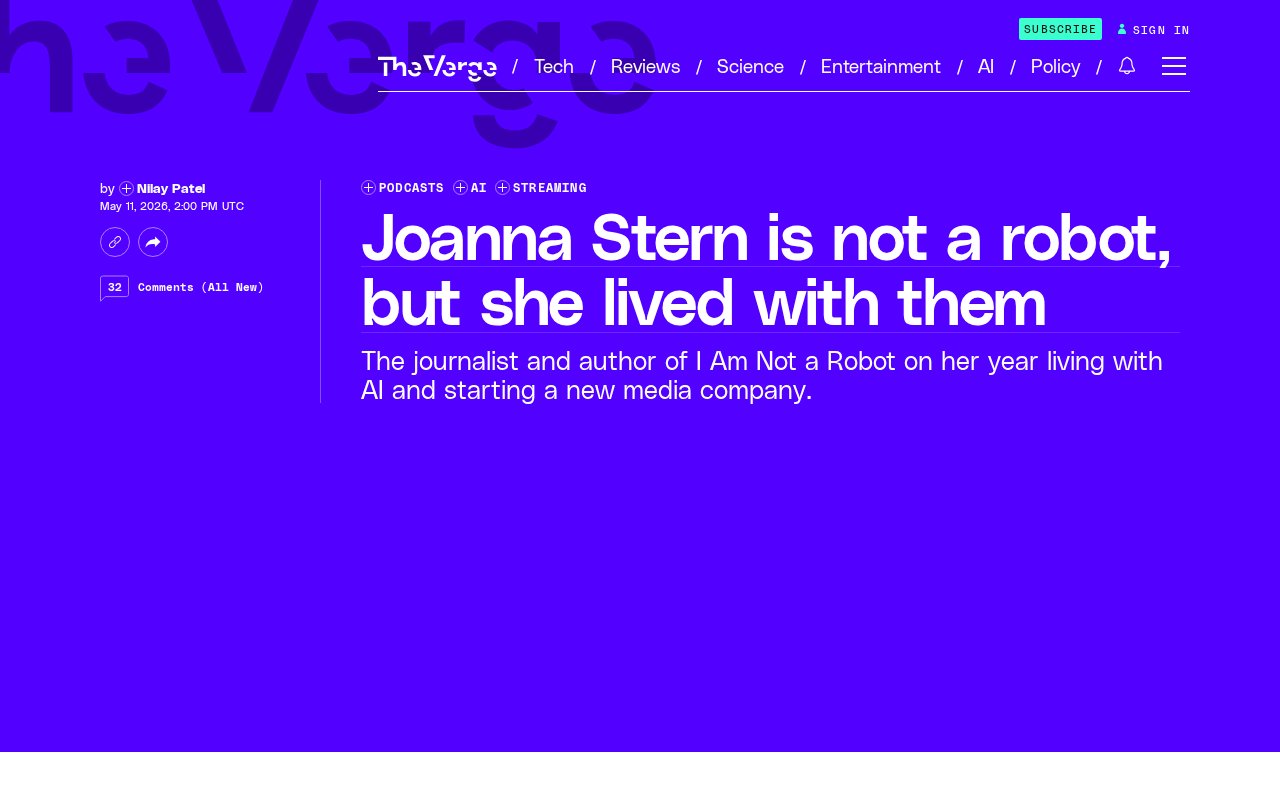
"She's not a robot, but she lived with them.
Related articles
 Product Reviews
The Programmer's Desk Setup Guide: Building a Workspace That Feels Like Home
Discover how programmers build productive, comfortable workspaces. From multi-monitor setups to ergonomic design, explore the desk philosophy that drives focus and flow.
 Product Reviews
Qoder vs Cursor Real-World Comparison: Which $20/Month AI IDE Is Better?
Hands-on comparison of Qoder vs Cursor AI IDEs: Agent autonomy, human interaction count, and architecture decisions. Qoder needed only 2 interactions vs Cursor's 8.
 Product Reviews
Cursor Cloud Agent Demo: Eliminating Bottlenecks Across the Entire Software Development Lifecycle
Deep analysis of Cursor's Cloud Agent demo showing how cloud VMs, automated test artifacts, and a full-chain control plane systematically eliminate human bottlenecks across the software development lifecycle.