What Should You Actually Learn About Agents? A Cognitive Map to Make Sense of It All

Build a cognitive map of AI Agents first — understand what each concept solves, not just what it's called.
This article tackles the common beginner struggle of feeling lost in a sea of AI jargon. Instead of memorizing terms like RAG, MCP, and multi-agent systems, the author argues you should first build a "cognitive map" — understanding which layer each concept operates on and what problem it solves. The real learning goal isn't to master technical details, but to make sound real-world judgments: whether a task suits an Agent, how to evaluate output quality, what it costs, and whether data is safe.
After coming across terms like "large language models" and "AI agents," many people hit the same wall right away: what exactly are you supposed to learn about Agents?
Every day, someone online is talking about LLMs, prompts, RAG, workflows, plugins, MCP, multi-agent systems, memory, and knowledge bases. Each term sounds familiar on its own — but when you try to put them together, it's like staring at a pile of loose parts scattered across a table. You recognize each piece individually, but you have no idea how the machine is supposed to work, let alone which screw to tighten first.
This article isn't about which LLM is the most powerful, or which platform is the most user-friendly. It addresses exactly one question: for someone who wants to build a solid understanding of Agents from scratch, what mental map should you build first?
Why You Need a "Cognitive Map," Not a Technical Architecture Diagram
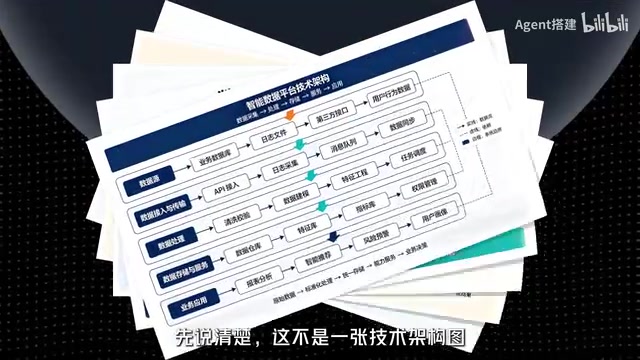
Let's be clear upfront: this is not a technical architecture diagram, and it's not an engineer's glossary. It's a cognitive map designed for everyday people.
The goal isn't to make you memorize definitions — it's to help you understand what problem each concept is actually solving, where its boundaries are, when it's useful, and when it's completely unnecessary.
One of the most common mistakes beginners make is diving straight into a sea of jargon, trying to memorize definitions for RAG, MCP, multi-agent systems, and so on. But definitions in isolation don't mean much. What matters is understanding which layer each concept lives on and what pain point it addresses. When you anchor concepts to problems rather than names, your entire knowledge structure starts to hold together.
The Real Goal of Learning Agents: Back to Real-World Work
This map isn't meant to send you off building an AI product the moment you finish reading. It's meant to bring you back to your day-to-day work — so you can make sense of the decisions you'll encounter constantly.
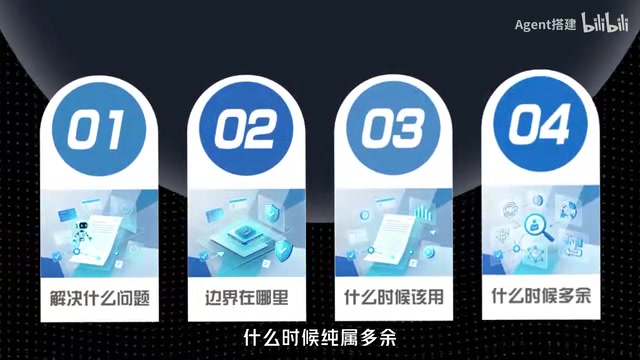
Specifically, it's designed to help you answer some very practical questions:
- Can this task actually be handed off to an Agent?
- If I do hand it off, how do I evaluate the quality of the output?
- What does it cost to run once?
- Is it safe to put company data into this system?
- When my boss says "let's build an intelligent agent," is that a real requirement — or just buzzword noise?
These questions may sound basic, but they represent the real sticking points for most businesses and individuals trying to deploy AI in practice. Getting the technology to work is just the first step. Whether the output can be properly evaluated, whether costs stay manageable, and whether data remains secure — those are the factors that determine whether an Agent project actually delivers value. Shifting your learning goal from "learn the vocabulary" to "understand the decisions" is the most important mindset shift behind this cognitive map.
Each of these questions maps to a common failure mode in AI deployment. "Can this be handed off to an Agent" comes down to how structured the task is — work that relies heavily on tacit judgment or involves frequent exceptions is often a poor fit for automation. "How do I evaluate quality" exists because LLM outputs are probabilistic: the same prompt can produce different results each time, and without an evaluation standard, all the risk gets pushed downstream. "What does it cost" points to token consumption: every model call is billed, complex workflows can involve many rounds of calls, and costs compound quickly at scale. "Is the data safe" determines whether an organization is willing to send core business data to a third-party model API. These four dimensions together define the feasibility of any Agent project — and they form the judgment framework that non-technical participants most need when working on AI initiatives.
How One Map Ties All the Scattered Concepts Together
Once this cognitive map is in place, the next time you hear about prompts, RAG, workflows, plugins, MCP, multi-agent systems, memory, or knowledge bases — you won't feel like you're staring at dozens of unrelated names anymore.
You'll clearly understand which layer each one sits on, what problem it solves, where the pitfalls come from, and how far a non-technical person actually needs to go.

In other words, learning about Agents doesn't mean mastering every technical detail. It means first building a layered understanding of "who is responsible for what." Prompts handle how you communicate with the model. RAG and knowledge bases handle letting the model use your own data. Workflows and multi-agent systems handle breaking down complex tasks and coordinating across them. Plugins and MCP handle giving the model access to external capabilities. Each layer has a clear responsibility boundary — and its own set of pitfalls.
A quick note on a few concepts that often get conflated. Prompts are the instructional language used to communicate with an LLM — they determine what the model outputs and in what style, serving as the most fundamental communication interface. RAG (Retrieval-Augmented Generation) is a technique that has the model retrieve relevant content from an external knowledge base before generating a response, solving the problem of the model not knowing your organization's internal information. MCP (Model Context Protocol) is an open protocol introduced by Anthropic that defines how models can call external tools and data sources in a standardized way — think of it as the "USB standard" for connecting peripherals to a model. Workflows chain multiple steps into an ordered process, well-suited for tasks with fixed, predictable logic. Multi-agent systems go further by allowing multiple Agents to divide work and call on each other, suited for tasks complex enough to require parallel processing or different specialized roles. Understanding what each of these concepts solves at its own layer is far more useful than memorizing their definitions in isolation.
What This Means for Beginners
For anyone just starting out, the greatest value of this approach is that it reduces cognitive load. You don't need to understand the entire technology stack all at once, and you don't need to become an engineer to judge whether an Agent requirement actually makes sense.
Build the cognitive map first, then fill in the technical details — and your learning path will go much more smoothly. When you can tell whether your boss's "intelligent agent" idea is a genuine need or just chasing a trend, and when you can estimate the evaluation criteria and cost of handing a task to an Agent, you've already developed the foundational judgment needed to navigate the AI era. That's far more practical than memorizing dozens of technical terms.
Note: This article is based on an introductory Agent tutorial from Bilibili, focused on the "cognitive map" as a learning methodology. It does not cover specific technical implementation steps.
Related articles
Automattic Executives Signed Reciprocal Severance Agreements During Mullenweg's Brief Ouster
Automattic's CFO and General Counsel signed reciprocal severance agreements during Matt Mullenweg's brief ouster, covering one year's salary and accelerated equity vesting, raising corporate governance concerns.
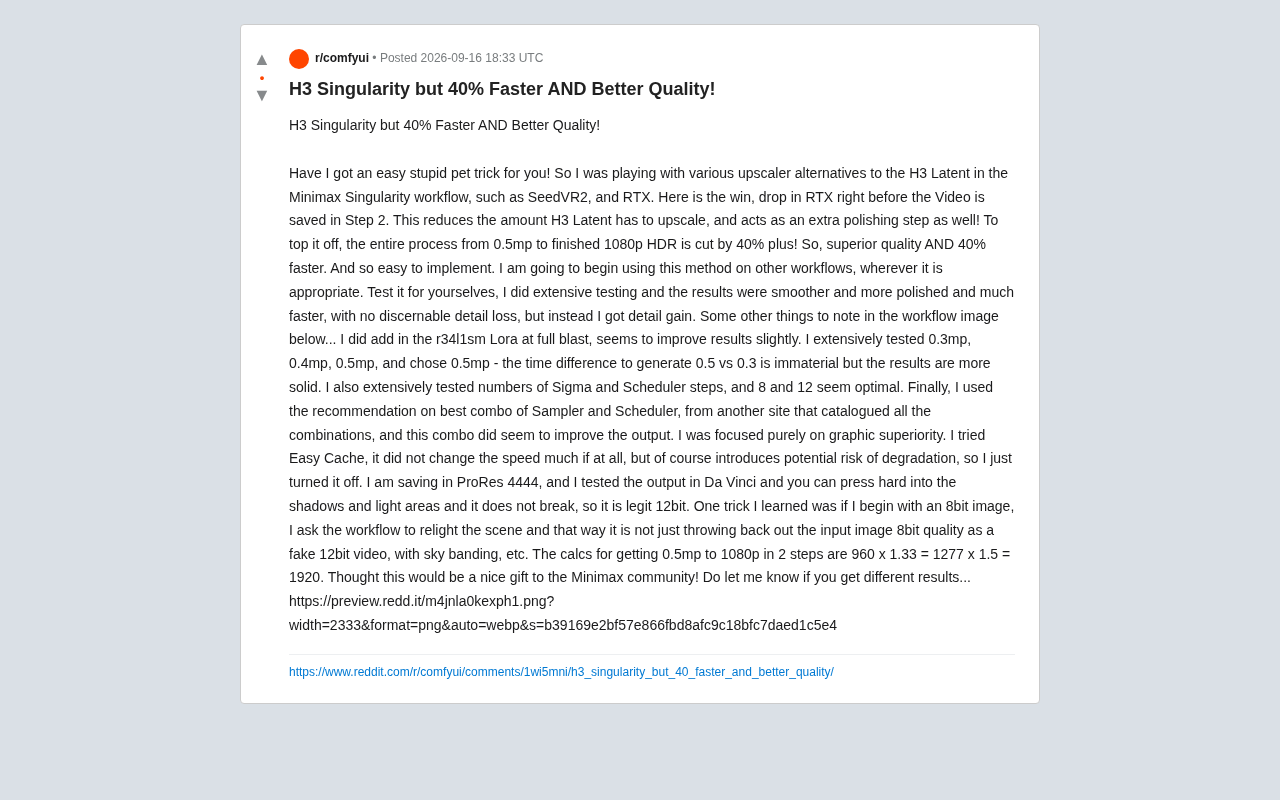
H3 Singularity Optimization: 40% Speed Boost With Better Image Quality
A Reddit user's Minimax Singularity workflow tip: insert an RTX upsampler before H3 Latent for 40%+ speed gains and better quality. Covers parameters, 12-bit output, and more.
Glyph: A Multi-Strategy Agent System for Automated Enterprise Data Catalog Annotation
Glyph is a multi-strategy LLM agent system for enterprise data catalogs that automates column description generation and sensitivity ontology tagging, grounding outputs in pipeline source code to improve accuracy.