What to Do If AI Steals Your Likeness for Ads: A Guide to Fighting Back and Protecting Yourself

AI-generated digital doubles appearing in ads are a growing threat — here's how to fight back and protect yourself.
Generative AI has made it trivially easy to clone someone's likeness or voice for commercial ads, raising legal issues around portrait rights, voice rights, and false endorsement. Using a real Hacker News post as a starting point, this article outlines four immediate steps — preserving evidence, reporting to platforms, contacting the advertiser, and issuing a public clarification — while also explaining why ordinary people are increasingly at risk and how to proactively reduce your exposure.
When You Become a "Digital Double" in an AI Ad
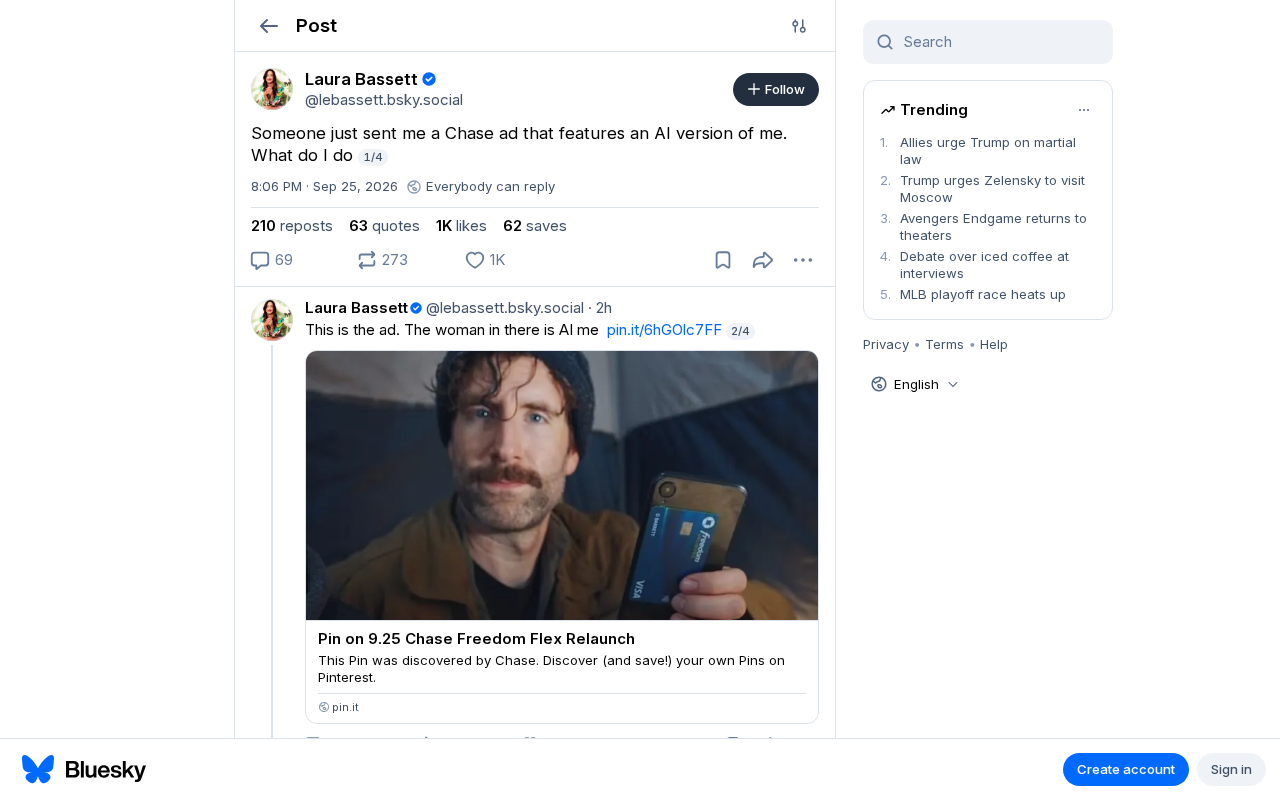
A user posted a plea on Hacker News: someone had sent them an ad featuring an "AI version of themselves" — using their likeness, and possibly their voice, to promote a product or service they had never authorized. The post was brief (15 upvotes, 3 comments), yet it struck at a pain point that's becoming increasingly common in the generative AI era: your face and your voice are being used to train models, synthesize content, and generate commercial profit — all without your knowledge.
This isn't alarmism. As the barriers to text-to-image generation, voice cloning, and digital avatar technology have plummeted, anyone with a handful of public photos or a few dozen seconds of audio can create a convincing "digital double." When that double appears in an advertisement, the issue shifts from technical curiosity to a serious matter of law and personal rights.
First: Understand What Rights Have Actually Been Violated
The first reaction to something like this is usually anger and helplessness — but taking a step back to clearly identify what rights were actually violated is essential before deciding on next steps. There are typically three categories of rights at stake:
Right of Publicity and Likeness Rights
Using your facial features or physical appearance in commercial advertising without permission constitutes a violation of portrait rights — or, in some U.S. states, the "right of publicity" — in virtually every jurisdiction. Because advertising is explicitly commercial in nature, this gives you stronger legal footing than, say, an unauthorized meme.
It's worth noting that "right of publicity" protections vary significantly across jurisdictions. In the United States, more than 30 states have enacted dedicated right of publicity statutes, with California and New York offering the most comprehensive protections — extending even for a number of years after death. China's Civil Code, Article 1019, explicitly prohibits any organization or individual from creating, using, or publicly displaying another person's portrait without consent, and specifically includes the act of "fabricating using information technology means" — meaning AI-synthesized likenesses are already addressed under Chinese law. The EU's GDPR classifies biometric data (including facial images used for identification) as a special category of data that cannot be processed without explicit consent. Understanding the specific rules in your jurisdiction determines how far you can take legal action.
Voice Rights
If the ad also clones your voice, that may constitute a separate violation of voice rights. Several recent voice-cloning disputes have established "voice" as a protectable personal identifier in its own right.
False Endorsement and Reputational Harm
More seriously, the ad creates a public impression that you are endorsing a product. If that product is a scam, low quality, or at odds with your values, it can damage your reputation and commercial credibility — constituting false endorsement.
Four Things to Do Immediately
1. Preserve the Evidence
Before doing anything else, secure your evidence. Take full screenshots and screen recordings of the ad content, and document the platform where it appeared, the link, the account that posted it, and when it was published. This is the foundation for any subsequent report or legal claim — once the other party deletes it, evidence becomes very difficult to recover.
2. Report to the Platform
Most major ad platforms (Meta, Google, TikTok, X, etc.) have reporting channels specifically for impersonation and unauthorized use of likeness. Submitting a report on the grounds of "unauthorized use of my likeness/voice for false endorsement" will typically receive more attention than a generic "false advertising" complaint.
3. Trace the Advertiser
Try to determine who actually placed the ad: is it a third party trying to leverage your influence, or a scammer who outright stole your content? If it's a registered company, you can send a formal cease and desist letter. If it's a purely fraudulent account, your focus should shift to getting it taken down by the platform and issuing a public clarification.
4. Issue a Public Clarification
Post a statement on your own social media channels informing your followers that "this is not me, and I have never endorsed this product." This both protects potential victims who might be misled, and creates a record showing you acted promptly to distance yourself from the content — important if reputational damage claims arise later.
Why This Will Only Become More Common
The value of this Hacker News post isn't in its popularity — it's in what it signals. In the past, faking a celebrity endorsement required a professional team. Today, an ordinary person can become the target of digital cloning — as long as they've left enough publicly visible imagery online.
The democratization of this technology has two implications: first, the threshold for being victimized has dropped to affect everyone; second, the difficulty of gathering evidence and seeking redress has actually increased. Synthetic content can be mass-produced and reposted from new accounts rapidly, making it exhausting for any individual to chase down and remove.
This explains why governments are accelerating legislation. Dedicated deepfake laws, mandatory labeling requirements for AI-generated content, and new protections for voice and likeness are all rolling out. But law always lags behind technology — personal awareness and self-protection remain the first line of defense.
From a technical standpoint, two categories of model capabilities are driving this phenomenon: face swapping and reenactment technology (such as diffusion-model-based image generation and video reenactment algorithms, which can transfer a target person's facial features to arbitrary video footage using only a small number of reference images), and zero-shot voice cloning, where some commercial-grade models can now synthesize a highly convincing voice from fewer than 10 seconds of audio. The API-ification and productization of both technologies means attackers need no deep learning expertise — they simply call a ready-made interface to complete the clone. This is why the threat described in this article is no longer limited to celebrities with large amounts of publicly available material. Anyone who has appeared clearly in video on streaming platforms, social media, or recorded conference calls is now within the potential attack surface.
How to Reduce Your Risk of Being "Cloned" Day-to-Day
Complete prevention is nearly impossible, but you can raise the cost for would-be attackers:
- Limit the public spread of high-resolution frontal images, especially multi-angle, high-clarity facial photos.
- Be mindful of public speeches, podcasts, and other long-form audio, as these provide high-quality training data for voice cloning.
- Perform regular reverse searches, using image search tools and keyword monitoring to check whether your name and likeness are being misused.
- Retain timestamped originals of your own content — in the event of a dispute, being able to prove "which one is really you" is critical.
Closing Thoughts
"Someone made an ad using an AI version of me" has evolved from a helpless question into a reality that anyone in the digital age may face. The technology itself is neutral — but when it's used to impersonate your identity for commercial gain, the most practical response right now is a combination of moves: quickly preserve evidence, report to the platform with precision, issue a public clarification, and pursue legal action when necessary. In the longer view, how society redefines the ownership of identity, likeness, and voice in a world where AI can easily replicate "you" is a question that both lawmakers and the public will need to answer together.
Further Context
Some platforms and tools are beginning to offer proactive defense options. For example, the Content Authenticity Initiative (CAI), championed by Adobe, Microsoft, and others, uses encrypted provenance metadata (the C2PA standard) to allow creators to cryptographically "sign" their original content, enabling them to prove authentic origin in the event of a dispute. On the academic side, adversarial perturbation tools targeting facial images — such as Fawkes and PhotoGuard — have emerged. These tools add imperceptible pixel-level noise to images that causes severe feature distortion when the image is fed into an AI model, thereby disrupting facial recognition and clone training. These tools are still in early stages and their effectiveness varies across different models, but they represent a promising technical direction for individual proactive defense.
Related articles

Cursor Can Now Control Your Computer: AI Agents Can Drive Desktop Apps for Testing
Cursor adds desktop control: AI agents can drive desktop apps like the iOS Simulator to test their own features. We analyze the impact on dev workflows, possible technical approaches, and reliability concerns.

Vibecoding a Custom Inference Engine: High Hopes, Harsh Reality
A Reddit developer shares the real experience of vibecoding a custom inference engine: running GGUF Q4 models in the browser with WebGL2 and GLSL, only to fall into tokenizer debugging hell. This article analyzes the engineering challenges of browser-side LLM inference and why cloning llama.cpp is the more rational choice.

How High Are Anthropic's Early Investor Paper Returns Ahead of IPO?
Anthropic's early investor paper returns draw attention ahead of IPO. This article analyzes sources of book gains, capital structure, pre-IPO games and risks, and implications for the AI startup ecosystem.