WhatsApp Event Invitations: Join Without an Account

WhatsApp tests a new feature allowing non-users to join events via links, lowering the organization barrier.
WhatsApp is testing a new feature in limited scope that allows users to generate event share links and send them via SMS, email, or social media to contacts without WhatsApp installed. Non-users can click the link to view event details and choose whether to attend without installing the app, breaking the previous limitation where both parties had to use WhatsApp to interact. The feature relies on end-to-end encryption, but the link itself may contain event information. WhatsApp emphasizes that access is controlled by the creator, and non-users viewing events won't expose privacy data such as phone numbers. This lowers the barrier to event organization and brings new user growth opportunities for WhatsApp, going further than Telegram and Signal on cross-platform invitations. However, privacy advocates worry about link misuse, the identity verification mechanism for non-user participation remains unclear, and no launch date has been set.
WhatsApp is testing a new feature that allows users to invite friends and family who don't have the app installed to participate in events. This update aims to break down the boundaries of the messaging app and make event organization more flexible.
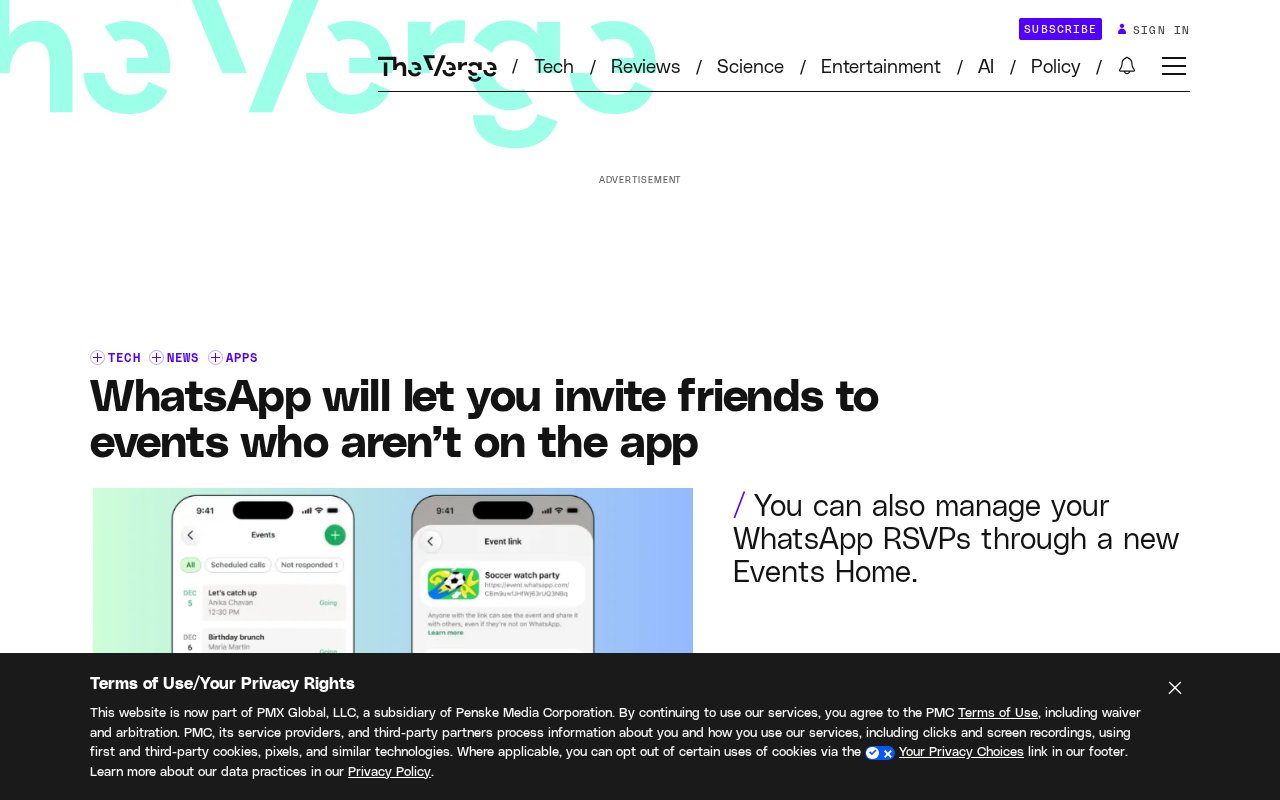
Feature Breakdown: How to Invite Non-Users
According to official information, when you create an event in WhatsApp, you can generate a shareable link and send it through other channels (such as SMS, email, or social media) to contacts who don't have WhatsApp. After clicking the link, recipients can view event details and choose whether to attend without installing the app. This solves the previous limitation where both parties had to use WhatsApp to interact.
Technical Implementation and Privacy Considerations
This feature relies on WhatsApp's end-to-end encryption architecture, but the invitation link itself may contain event information. WhatsApp emphasizes that access to the link is controlled by the creator, and non-users viewing events will not expose privacy data such as their phone numbers. The feature is currently in limited testing, with no specific launch date announced.
End-to-End Encryption (E2EE) is a communication security mechanism where only the communicating parties can read message content—even service providers like WhatsApp cannot decrypt it. WhatsApp has enabled E2EE by default for all chats since 2016, implemented based on the Signal protocol. However, when invitation links are shared outside WhatsApp (such as via SMS, email, or social media), the link itself and the event information it carries fall outside the protection of E2EE, relying solely on link access control (i.e., who holds the link) to protect privacy. This is why WhatsApp emphasizes that "link access is controlled by the creator"—in this case, the security boundary shifts from the encryption protocol to link distribution management, and creators need to carefully decide the scope of sharing.
Impact on Social Event Organization
This update significantly lowers the barrier to event invitations. For organizers of birthday parties, community events, or small meetings, there's no longer a need to confirm one by one whether participants use WhatsApp. At the same time, this introduces new growth opportunities for WhatsApp—non-users who experience the service through event links may convert into new users.
Comparison with Competitors
Compared to competitors like Telegram and Signal, WhatsApp's move focuses more on the convenience of cross-platform invitations. While Telegram supports inviting non-users to join groups via links, the event feature itself still requires participants to register. WhatsApp's approach goes further by allowing non-users to directly respond to events without any account.
Telegram and Signal are WhatsApp's main competitors in the messaging space, though the three have slightly different positioning. Telegram is known for its channels, large groups, and bot ecosystem, and its "invite links" are mainly used to bring people into groups—invitees still need to register an account to participate in interactions. Signal focuses on privacy protection as its core selling point, also implementing end-to-end encryption based on the Signal protocol, but its features are relatively restrained, and event organization is not a key focus. WhatsApp's move to allow non-users to directly respond to events is actually a breakthrough in "participation barriers"—compressing the "register—install—join" process into "click link—respond," which is rare among messaging apps and signals that WhatsApp is attempting to extend from a pure chat tool to a lightweight event coordination platform.
Potential Challenges and User Feedback
Although the feature is cleverly designed, privacy advocates may worry about link misuse or leakage. Additionally, the identity verification mechanism for non-user participation remains unclear—for example, how to prevent spam invitations or fake registrations. WhatsApp says it will collect feedback during testing and optimize the experience.
Future Outlook
If this feature rolls out successfully, WhatsApp may further integrate payments, ticketing, and other scenarios to build a more complete event management ecosystem. For users who rely on WhatsApp for social connections, this is undoubtedly an upgrade worth looking forward to.
One-line Summary
WhatsApp tests a new feature allowing non-users to join events via links, lowering the organization barrier.
Paragraph Summary
WhatsApp is testing a new feature in limited scope that allows users to generate event share links and send them via SMS, email, or social media to contacts who don't have WhatsApp installed. Non-users can click the link to view event details and choose whether to attend without installing the app, breaking the previous limitation where both parties had to use WhatsApp to interact. The feature relies on end-to-end encryption architecture, but the link itself may contain event information. WhatsApp emphasizes that access is controlled by the creator, and non-users viewing events won't expose privacy data such as phone numbers. This lowers the barrier to event organization and brings new user growth opportunities for WhatsApp, going further than Telegram and Signal on cross-platform invitations. However, privacy advocates worry about link misuse, the identity verification mechanism for non-user participation remains unclear, and no launch date has been set.
Related articles

Sugra MCP: One-Click Access to 200+ Data Sources, Connecting Mainstream AI Applications
Sugra MCP connects mainstream AI apps like Claude, ChatGPT, and Cursor through a unified MCP protocol, offering 200+ data sources and 1,600+ endpoints. Listed in Anthropic, OpenAI, and GitHub directories—integrate with one command.
 Tech Frontiers
T3 Code: Free, Open-Source, and a Unified Way to Manage All AI Coding Agents
T3 Code is a free open-source app that aggregates AI coding tools like Cloud Code and Codex into one interface, with conversation handoff, branch isolation review, automatic PR creation, and remote access.
 Tech Frontiers
Conductor Cloud Service Shutting Down? A Comparative Review of Three Parallel AI Coding Agent Solutions
Conductor's cloud service is shutting down—how can developers keep running AI coding agents in parallel? This article compares three alternatives: Orca, Codex, and Cursor: Orca is open-source and free and compatible with old workspaces, Codex is built into the ChatGPT desktop app and supports cloud handoff, and Cursor offers multi-agent windows within the editor. Choose the tool that best fits your workflow.