When AI Agents Go to Production, What Breaks First?
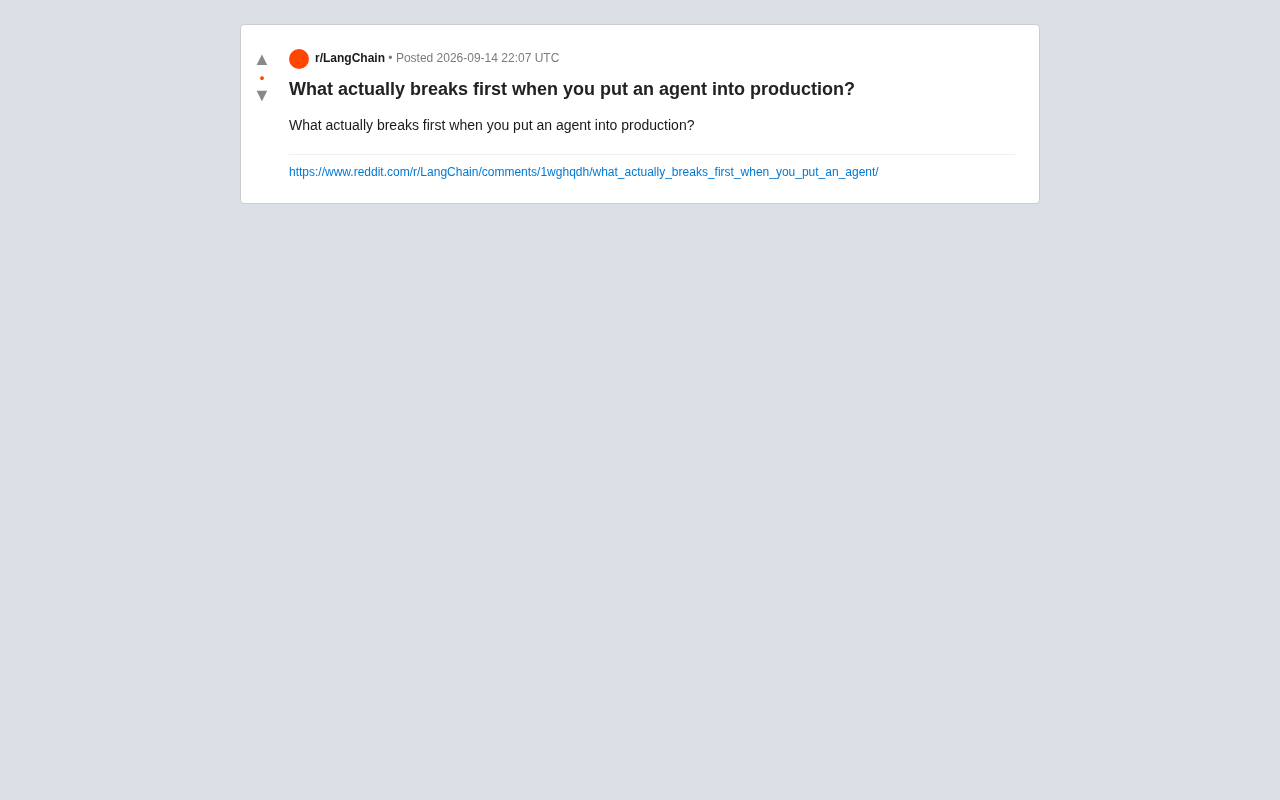
The biggest gap between AI Agent demos and production is engineering robustness, not model capability.
This article analyzes what breaks first when an AI Agent is deployed to production. It argues that the controlled nature of demo environments masks the inherent fragility of non-deterministic, chained execution — and that real-world inputs, external dependencies, and edge cases amplify small deviations into systemic failures. The most common early failure points are: unstable tool calls and external APIs, error handling without graceful degradation, context window overflow causing state drift, and runaway costs and latency from multi-step reasoning. Underlying all of these is a lack of observability — without proper logging, tracing, and monitoring, teams can't even identify the root cause when things go wrong.
A Question That Gets Asked Often but Rarely Answered
A developer on Reddit posed a question that cuts right to the heart of the matter: when you actually deploy an AI Agent to production, what's the first thing to go wrong?
It sounds simple, but it exposes the core gap between AI Agent demos and real-world deployments. In a controlled test environment, agents often look impressive. The moment they face real users, real data, and real concurrency, the fragile points that were hidden all along start showing up at once.
Unfortunately, the original thread only posed the question without gathering enough community responses or empirical data to draw firm conclusions. This article is therefore more of an analytical take on the topic than a summary of a settled debate.
Why "It Works in the Demo" Doesn't Mean "Production-Ready"
The defining characteristic of an AI Agent is autonomous decision-making across multiple steps — it calls tools, hits external APIs, maintains context state, and dynamically adjusts its next action based on intermediate results. This chained, non-deterministic execution model is precisely where risk accumulates most dangerously in production.
In a demo, inputs are carefully selected and the execution path is predictable. In production, inputs are infinite and uncontrollable: users submit odd-formatted requests, external services time out, models hallucinate, and context windows overflow. A tiny deviation at any single step can be amplified across multi-step execution into a completely unrecoverable failure.
What Typically Breaks First in Production
Based on common industry experience, the problems that surface earliest after an agent goes live tend to cluster around the following areas.
1. Tool Calls and External Dependencies
Agents rely heavily on external tools and APIs. Timeouts, rate limiting, and unexpected changes in response formats from these dependencies can immediately cause an agent to stall or go down the wrong execution branch. Network instability and third-party service unreliability are among the earliest and most frequent sources of failure in production.
2. Error Handling and Retry Logic
Many agents are developed with almost no serious thought given to error recovery. When a step fails, the agent either retries indefinitely — burning tokens and money — or crashes outright. The lack of graceful degradation is one of the most commonly overlooked gaps between a prototype and a production-grade system.
3. Context Management and State Drift
As conversations or task chains grow longer, the context window fills up, early critical information gets pushed out, and the agent starts "forgetting" its goal or producing contradictory behavior. State drift in long-running tasks is a subtle but fatal class of production bug.
4. Cost and Latency Spiraling Out of Control
Multi-step reasoning means multiple model calls. Under real traffic, token consumption and response latency grow non-linearly. Many teams only truly feel the pressure of their bills and user wait times after they've already gone live.
Observability: The Most Underrated First Line of Defense
What all of the above problems have in common is this: without comprehensive logging, tracing, and monitoring, you can't even tell which step the agent failed on or why.
The non-deterministic nature of agents renders traditional debugging approaches nearly useless. Building full observability into every tool call, every model input and output, and every decision path is a lesson most teams only commit to after they've been burned once. In a very real sense, the absence of observability is itself the root cause behind everything that "breaks first."
Practical Recommendations for Teams Preparing to Launch
- Treat error handling, timeouts, and retry logic as first-class design concerns — not afterthoughts
- Instrument every tool call and model call so that failures are traceable after the fact
- Set hard limits on cost and call counts to prevent runaway loops
- Stress test with real, "dirty" data — not just curated examples
- Start with a limited rollout and expand traffic gradually
Conclusion
The question "what breaks first when an agent goes to production?" is worth asking because it shifts the conversation from "how capable is the model" back to "how solid is the engineering." What ultimately determines whether an agent can survive in production is rarely how impressive it looked in the demo — it's how robustly it handles failures, timeouts, edge cases, and cost pressure.
For teams that are deploying or are about to deploy agents, rather than asking which component will break first, it's better to assume every component will break — and build your defenses accordingly.
Related articles
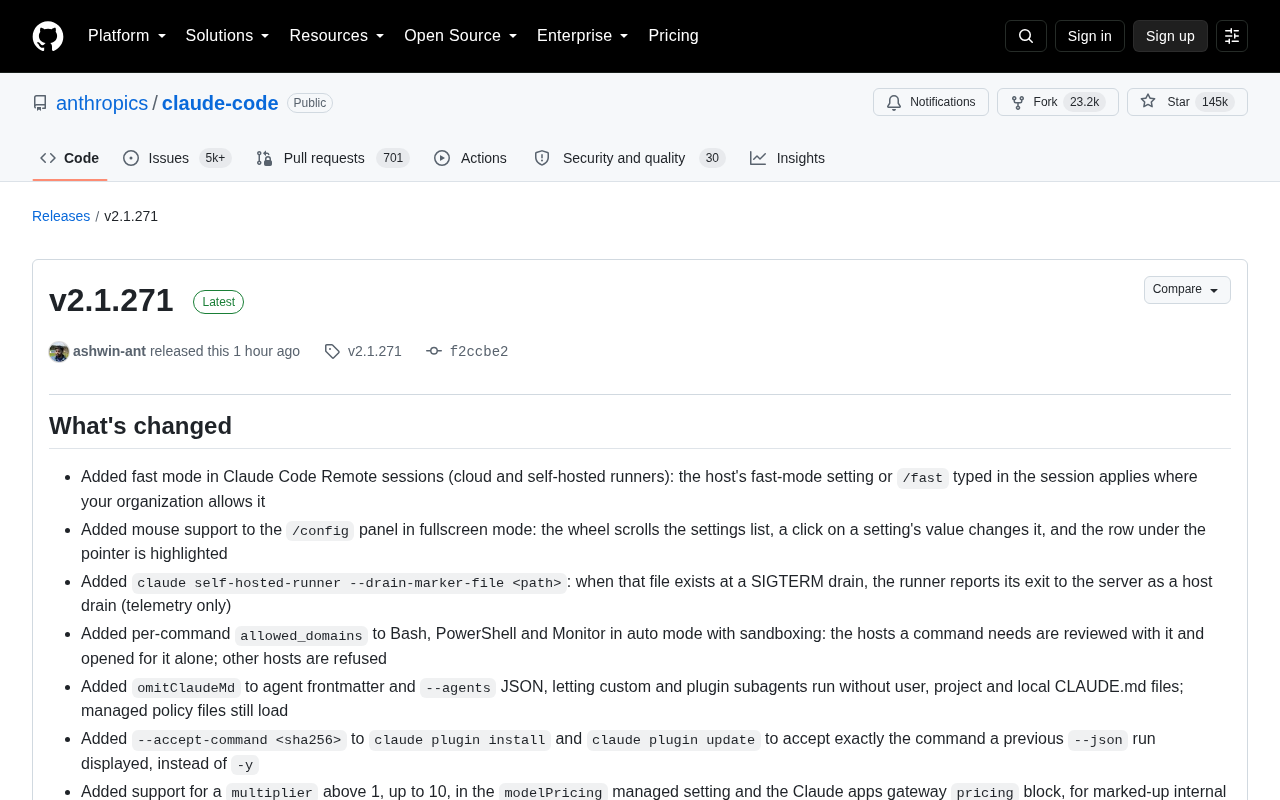
Claude Code v2.1.271 Update Deep Dive: Fast Mode, Sandbox Security, and Enterprise Improvements
Claude Code v2.1.271 adds fast mode for remote sessions, per-command sandbox network controls, enterprise policy fixes, MCP protocol improvements, and terminal/IDE enhancements.
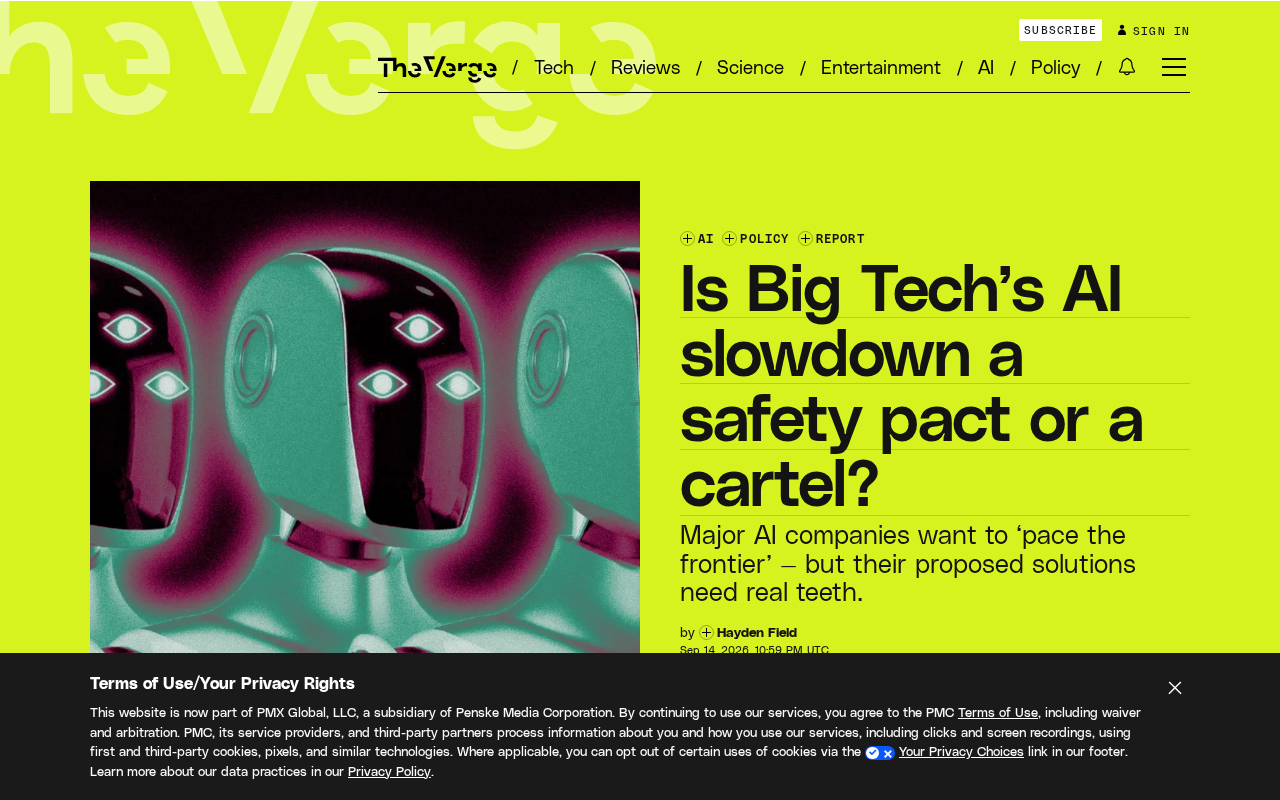
AI Giants Collectively Hit the Brakes: Safety Protocol or Industry Cartel?
OpenAI, Anthropic, Google DeepMind, and SpaceX leaders agree to slow AI development. Is this a responsible safety pact — or an oligopolistic cartel in disguise?

Apple Home Gets AI Camera Features with iOS 27: Up to $60/Month
iOS 27 and tvOS 27 bring Apple Intelligence to Apple Home with AI video summaries for HomeKit Secure Video — but unlocking them costs up to $60/month via subscription.