When AI Safety Becomes a 'Sex Cult': A Controversy Over Community Culture
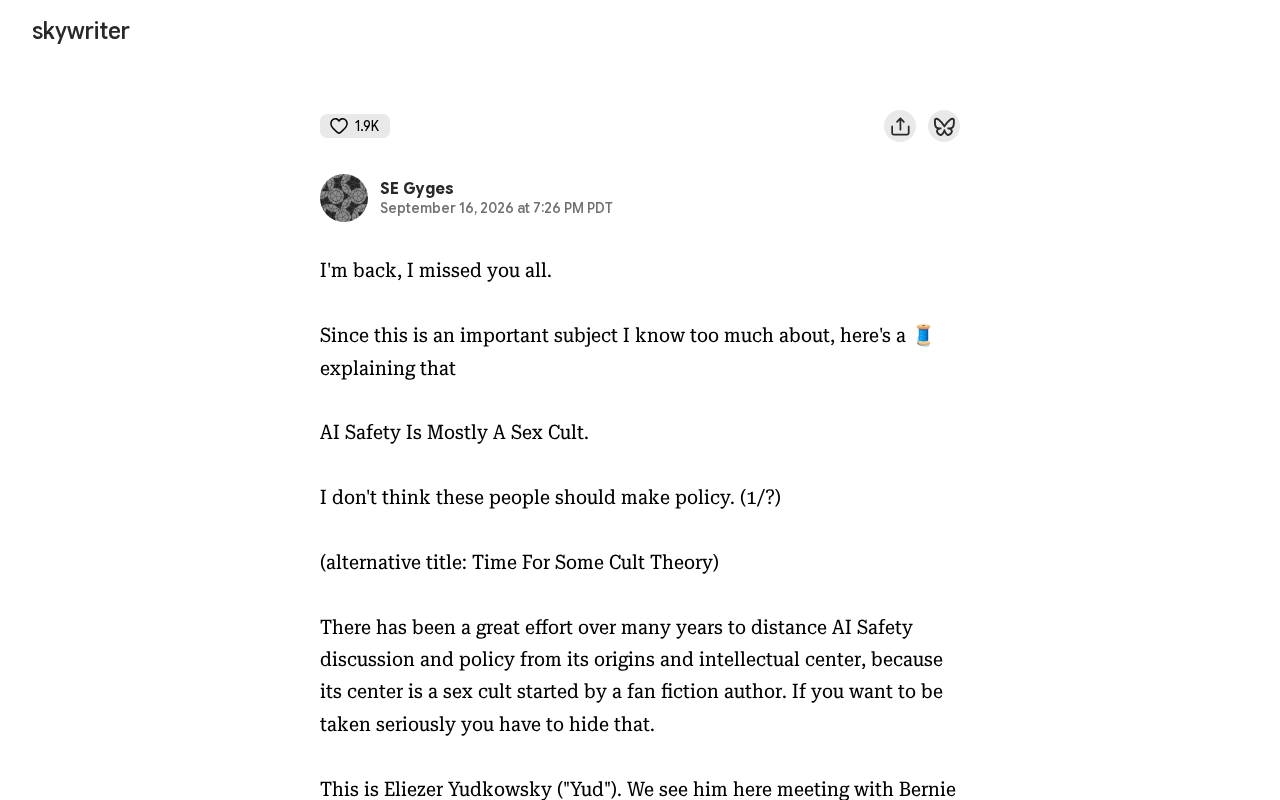
Does the AI safety community's insular culture undermine its technical credibility? A provocative headline prompts a closer look.
The headline 'AI Safety Is Mostly a Sex Cult' thrust cultural controversies within the AI safety community into the spotlight. The piece examines how AI safety, Effective Altruism, and Rationalism overlap into a tightly knit subculture — one that has faced media scrutiny over polyamory, power imbalances, and alleged misconduct. Critics argue the insular structure fosters groupthink and abuse; defenders say community culture shouldn't taint serious technical work on alignment and interpretability. The takeaway: evaluate research and community culture separately, and treat sensationalist headlines with skepticism.
The Debate Behind a Provocative Title
"AI Safety Is Mostly a Sex Cult" — this highly provocative headline recently sparked discussion on Hacker News. Despite its relatively modest engagement (18 points and 1 comment), the title touched on a topic that has long been semi-publicly debated in tech circles: what is the internal culture actually like within communities formed around AI Safety and the Effective Altruism (EA) movement?
It's worth noting upfront that the original source material here is extremely limited — just a title, with no full article body. So this analysis is more of a contextual overview of the topic than a recap of any specific argument.
What Is the "AI Safety Community"?
The AI safety community generally refers to a group of researchers, philanthropists, and activists concerned with the long-term risks of artificial intelligence — particularly existential risks posed by artificial general intelligence. This group overlaps heavily with the Effective Altruism and Rationalism movements, with representative institutions and online communities including LessWrong, MIRI, and the offline living arrangements that have formed around them.
Members of these communities often have deeply intertwined lives, work, and social networks — especially in the San Francisco Bay Area, where many members share "group houses." This tightly knit, insular way of living is precisely what leads outsiders to sometimes describe it using loaded terms like "cult."
LessWrong is a rationalist blogging platform founded by Eliezer Yudkowsky in 2009, focused on cognitive biases, Bayesian reasoning, and AI risk discussions — it's the community's most important intellectual hub. MIRI (the Machine Intelligence Research Institute) is a nonprofit research organization dedicated to mathematically studying how to ensure superintelligent systems behave in accordance with human values. Effective Altruism (EA) is a philosophical movement that uses data and reasoning to maximize positive impact, promoted by Oxford philosophers like Peter Singer and Toby Ord, with an emphasis on concentrating resources on "the most savable lives" or "the greatest existential risks." The Rationalist community focuses more on improving individual cognition and developing methodologies for updating beliefs. These movements are deeply intertwined in terms of personnel, funding, and agenda: many EA funders (such as Sam Bankman-Fried before the FTX collapse) were major backers of AI safety research, while the rationalist community has supplied much of the talent for these organizations. This three-way ecosystem is essential context for understanding the criticisms leveled at these communities.
Why Use the Term "Sex Cult"?
Calling the AI safety community a "sex cult" is clearly a deliberate rhetorical exaggeration. It points to controversies that have been reported in the media over the past few years — allegations that certain rationalist/EA circles practice non-traditional relationship structures (such as polyamory), involve unequal power dynamics, and include individual leaders accused of exploiting their community status for personal gain.
This type of reporting has linked "AI safety" — an otherwise serious technical and ethical field — to personal scandals and insular community culture. Using such an incendiary title is fundamentally a rhetorical strategy: by emphasizing the human side of the community, it seeks to undermine the credibility of the grand narrative around "AI risk."
Polyamory refers to the practice of maintaining intimate relationships with multiple people simultaneously, with the knowledge and consent of all parties involved. This relationship model has a fairly high acceptance rate within Bay Area rationalist/EA communities, with some members viewing it as an "anti-default setting" choice consistent with rationalist values. However, when this relationship model is combined with group houses, heavily overlapping social networks, and mentor-student power differentials, it raises criticism about genuine consent versus implicit pressure. Around 2022, several long-form investigative pieces — including reports from mainstream outlets like The New York Times and The Atlantic — documented sexual harassment allegations and power abuse cases within EA/rationalist circles, with some of the individuals involved holding significant community prominence. These reports created the media environment for the "sex cult" framing, even though the term itself carries strong rhetorical exaggeration.
Arguments and Counterarguments
Those who support this type of criticism argue that when a movement claiming to "save the future of humanity" has its decision-making concentrated among a small group of closely connected people whose lives and beliefs are deeply entangled, it becomes prone to groupthink, lacks external oversight, and may even foster abuses of power. This structural problem is worth taking seriously.
Opponents, however, point out that using private lives or isolated scandals to dismiss an entire field's academic and policy value is a logical fallacy — a case of overgeneralization. AI safety as a research direction involves concrete technical problems like alignment, interpretability, and risk assessment, and shouldn't be wholesale rejected because of community culture controversies. The remarkably low engagement on Hacker News also suggests that this kind of provocative headline is more clickbait than substantive argument.
The alignment problem is a core topic in AI safety research: how do we ensure that an AI system's goals and behavior remain consistent with human intentions? As model capabilities rapidly improve, researchers worry that a sufficiently powerful system might optimize its objective function in unexpected ways — producing outcomes harmful to humans, even if the original design intent was benign. Interpretability research examines how to understand the internal workings of neural networks, enabling humans to audit and predict model behavior. These are directions with substantial academic literature, and major organizations like DeepMind, Anthropic, and OpenAI have dedicated teams studying them. Conflating these technical topics with community culture scandals is indeed a categorical error in logic — just as the value of medical research doesn't disappear because of a management scandal at a particular hospital. But critics would respond that when the same people simultaneously control the research agenda, control the funding, and are deeply entangled in each other's lives, the community culture itself becomes a potential threat to research independence.
How Should We Think About This Kind of Controversy?
The cultural controversy surrounding the AI safety community reflects a more universal phenomenon: any movement that takes "changing the world" as its mission will generate tension between ideology, organization, and personal life. Evaluating such a group requires neither exempting it from scrutiny because of its self-proclaimed noble goals, nor dismissing its technical contributions because of isolated negative events.
For general readers, maintaining two things in mind when encountering these kinds of headlines is enough: first, distinguish between "research topics" and "community culture" — the two don't have to be evaluated together; second, be wary of extreme, single-source headlines that lack substantive argument — they typically deliver more emotional value than informational value.
Conclusion
The question of whether "AI safety is a sex cult" may matter far less than the phenomenon it reflects — namely, how public trust is built and eroded when a technical narrative becomes deeply intertwined with a particular community culture. As AI increasingly moves to the center of policy and public discourse, the transparency and governance structures of these communities may deserve just as much attention as the technology itself.
Related articles

What Is Cursor? Core Differences Between This AI Coding Tool and Traditional IDEs
What is Cursor? This guide explains the AI-native code editor built on VS Code, how it compares to traditional IDEs, and its integration with Claude, DeepSeek, and Gemini.

Coze 3.0 Beginner's Guide: A Complete Overview of Agents and AI Applications
A beginner's guide to Coze 3.0: covering agents, AI applications, workflows, and plugins on ByteDance's AI platform, plus a comparison with Dify.
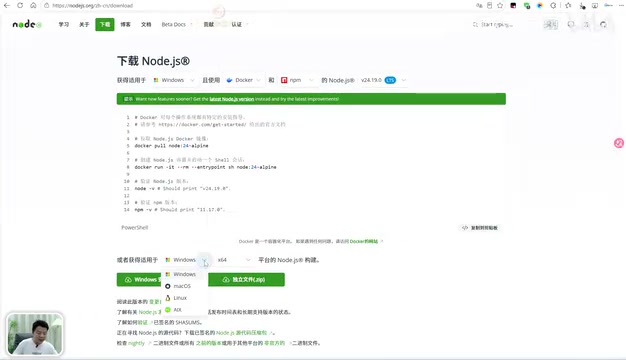
Setting Up the DeepSeek Harness Environment: A Complete Guide to Node.js Installation and Configuration
A beginner-friendly guide to setting up the DeepSeek Harness environment: Node.js installation, Add to PATH, redirecting npm global and cache directories, and configuring system environment variables.