When BPE Becomes a Mobile Game: The Absurdity and Fun of The Token Game

A web mini-game that gamifies the BPE tokenization algorithm, resonating with the AI community through its absurdity.
The Token Game is a personal project that turns the BPE tokenization algorithm commonly used in large language models into a web mini-game. The author jokes that it 'has no reason to exist' and that they 'play terribly.' The game likely has players manually perform or guess BPE's character-pair merge operations, giving them an intuitive feel for how tokenizers break text into subwords. The article uses this to discuss BPE's technical background from data compression to NLP subword tokenization, and analyzes why an 'useless geek meme' becomes a highlight—it offers an intuitive entry point for understanding the model black box. It also places the project within the AI community's subcultural trend of making technical concepts entertaining, noting that such low-cost, individually developed interactive projects can effectively bring the public closer to cutting-edge algorithms.
A Game Nobody Needed, Yet Nobody Can Put Down
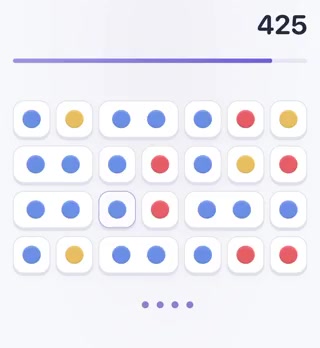
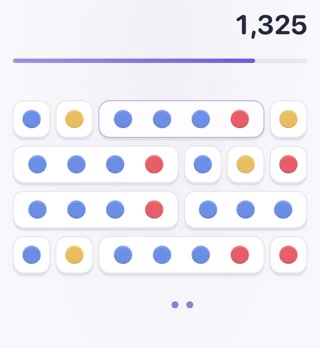
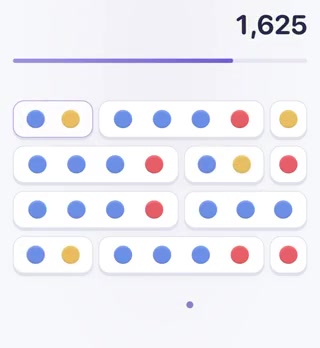
Recently, a web mini-game called The Token Game has been making the rounds on Twitter. The author self-deprecatingly remarks: "Is this the mobile game version of the BPE algorithm? It has absolutely no reason to exist. I'm terrible at it." The accompanying screenshot shows the game interface. Although the exact gameplay isn't directly visible, the keywords "BPE" and "Token" suggest that the game's core revolves around Byte Pair Encoding (BPE) in natural language processing. BPE is one of the most commonly used subword tokenization algorithms in today's large language models (such as the GPT series), building a vocabulary by iteratively merging high-frequency character pairs. Turning such an underlying algorithm into a game sounds both hardcore and inexplicable—but it is precisely this absurd sense of "having no reason to exist" that has sparked the community's curiosity.
What Is BPE? Why Does It Deserve a Game?
BPE was originally a data compression technique, later introduced into the NLP field to solve the out-of-vocabulary (OOV) problem. Its training process can be seen as a merge competition: starting from individual characters, repeatedly counting the frequency of adjacent character pairs, merging the most frequent pair into a new symbol, until a preset vocabulary size is reached. For algorithm engineers, this process is full of determinism and room for optimization; but for ordinary people, it is abstract and tedious. The Token Game attempts to gamify this process, likely having players manually perform merge operations through clicking or dragging, or guess the next character pair to be merged. The tweet author admits they "play terribly," hinting that the game has some difficulty or requires intuition—after all, humans are far less sensitive to frequency than statistical programs.
Subword Tokenization is the direct application scenario of BPE in NLP. Large language models cannot directly process raw text; they must first split it into units (tokens) within the vocabulary. If the vocabulary uses whole words, it faces vocabulary explosion and OOV problems; if it uses single characters, sequences become too long and semantic granularity too fine. Subword tokenization strikes a compromise: common words remain intact, rare words are split into meaningful fragments. BPE, WordPiece, and SentencePiece are the mainstream approaches, with the GPT series adopting a BPE variant. Understanding this reveals the deeper significance of The Token Game—every merge decision players make in the game is essentially simulating the tokenizer's vocabulary-building process, and the quality of the vocabulary directly affects the model's text compression efficiency and generalization capability.
Vocabulary Size is a key hyperparameter in BPE training. The larger the vocabulary, the more information each token carries and the shorter the sequence, but the embedding matrix and output layer parameters expand accordingly; the smaller the vocabulary, the longer the sequence and higher the computational cost, but rare words are more easily split into reusable subwords. Typical large models have vocabularies between 30,000 and 150,000. If the game sets a target of "how many symbols to merge until," it is essentially letting players experience this trade-off: merge too few, and text is fragmented; merge too many, and a large number of low-frequency long words are produced, wasting vocabulary capacity. This trade-off is precisely the most subtle engineering judgment in tokenizer design.
Why "No Reason to Exist" Becomes a Highlight
In today's world flooded with AI tools, a project that visualizes an algorithm purely for fun feels remarkably refreshing. It doesn't solve practical problems, doesn't boost productivity, and may even frustrate players (as the tweet says), but it provides an intuitive entry point for understanding the black box. By manually performing BPE merges, players can directly feel how the tokenizer breaks "unbelievable" into subwords like "un" "believ" "able," thereby understanding why large models sometimes make spelling errors or handle rare words poorly. This educational value is implicit; the game itself is more like a geek meme—only those who understand BPE will smile knowingly.
Black Box in the machine learning context refers to the phenomenon where a model's internal decision-making mechanism is difficult for humans to directly observe and explain. Large language models go from input text to output tokens through dozens of layers of attention and feed-forward networks, and their behavior is opaque to developers and users alike. The tokenizer, though a relatively simple and deterministic first step in the entire pipeline, is likewise often overlooked—most people only care about model output, not how text is split. The value of The Token Game lies in bringing a small segment at the very front of the black box into the open: by performing merges themselves, players can see how "unbelievable" step by step becomes several subwords. Although this local transparency cannot explain the model as a whole, it is enough to build an intuition for the tokenization step, and further understand why the model behaves abnormally on certain spellings or rare words.
The Vitality of Niche AI Culture as Seen Through Twitter Spread
The spread of The Token Game is typical: a tweet with self-deprecation and a link, paired with a game screenshot, quickly spreading among AI researchers and developers. No marketing, no backing from big companies, just the highly contrasting label "BPE mobile game." This reflects a subculture in the current AI community: making technical concepts entertaining, using low-cost interactive forms to bring the public closer to cutting-edge research. Similar projects include "Attention Game," "Gradient Descent Simulator," and others; they are often completed by individual developers over a weekend, yet can resonate within specific circles. For content creators and product managers, such projects also offer inspiration: how can tedious algorithms be packaged into playable, shareable experiences?
Conclusion: Gamification Is Not a Panacea, But Worth a Try
The Token Game may not become a hit, and may even be forgotten in a few days. But it reminds us that AI popularization requires not only tutorials and documentation, but also light, fun touchpoints like this. If you're curious about BPE, go find it and play—even if you play badly, you'll gain a bit more intuition about tokenizers.
(Note: Since the original material is only a single tweet, lacking details such as specific gameplay and developer background, this article makes reasonable inferences based on limited information. Readers are advised to refer to their actual experience.)
Related articles

Workbuddy for Absolute Beginners: How a Desktop AI Agent Fits Into Real Workflows
A beginner's guide to the Workbuddy desktop AI agent: installation, claiming credits, file management, and building automated workflows—compared with CodeX for fit and cost, helping professionals shift from AI question-askers to AI managers.

OpenAI's New Agent Stack: Computer Use, Decisions API, and Ultra-Fast Workflows
OpenAI Dev Day unveiled a new agent stack: Computer Use outperforms humans, Decisions API delivers ultra-low-latency classification via Luna, Agents API opens the same Computer Use capabilities, and GPT-6.1 Sol costs only one-seventh of Astra. Core updates, benchmark data, and developer insights.

Liang Wenfeng Open-Sources DeepInfo Inference Framework, Takes On U.S. Ban
DeepSeek open-sources its DeepInfo inference framework after its models, featuring GPU/CPU cross-pipelining, small-model prediction with large-model verification, and full Huawei Ascend and NVIDIA chip support—facing the U.S. federal ban head-on. This article analyzes its significance for AI deployment and open-source strategy.