When Insect Portraits Turn Out Surprisingly Cute: A Playful Look at Macro Imagery

The "surprising cuteness" of insect macro portraits comes from facial recognition misfiring and expectation contrast, reflecting the blurred line between real and AI-generated imagery.
Starting from a low-traction Hacker News post, the article explores why insect macro portraits feel "cute." The author identifies two core mechanisms: macro lenses magnify insect heads to human-face scale, triggering facial recognition misjudgments; and the strong contrast between the default "alien" impression of insects and their gentle, symmetrical expressions produces instant humor and closeness. The article also examines how such content spreads in tech communities—low barrier to entry and strong topic extensibility—though the post got only 7 points and 0 comments. The author notes that insect portraits can hardly be distinguished as real or AI-generated by the naked eye, and this ambiguity is itself the norm of visual content consumption. Finally, it distills the creative approach of "using a familiar framework for unfamiliar subjects" and the expectation-management technique of the word "Surprisingly" in the title.
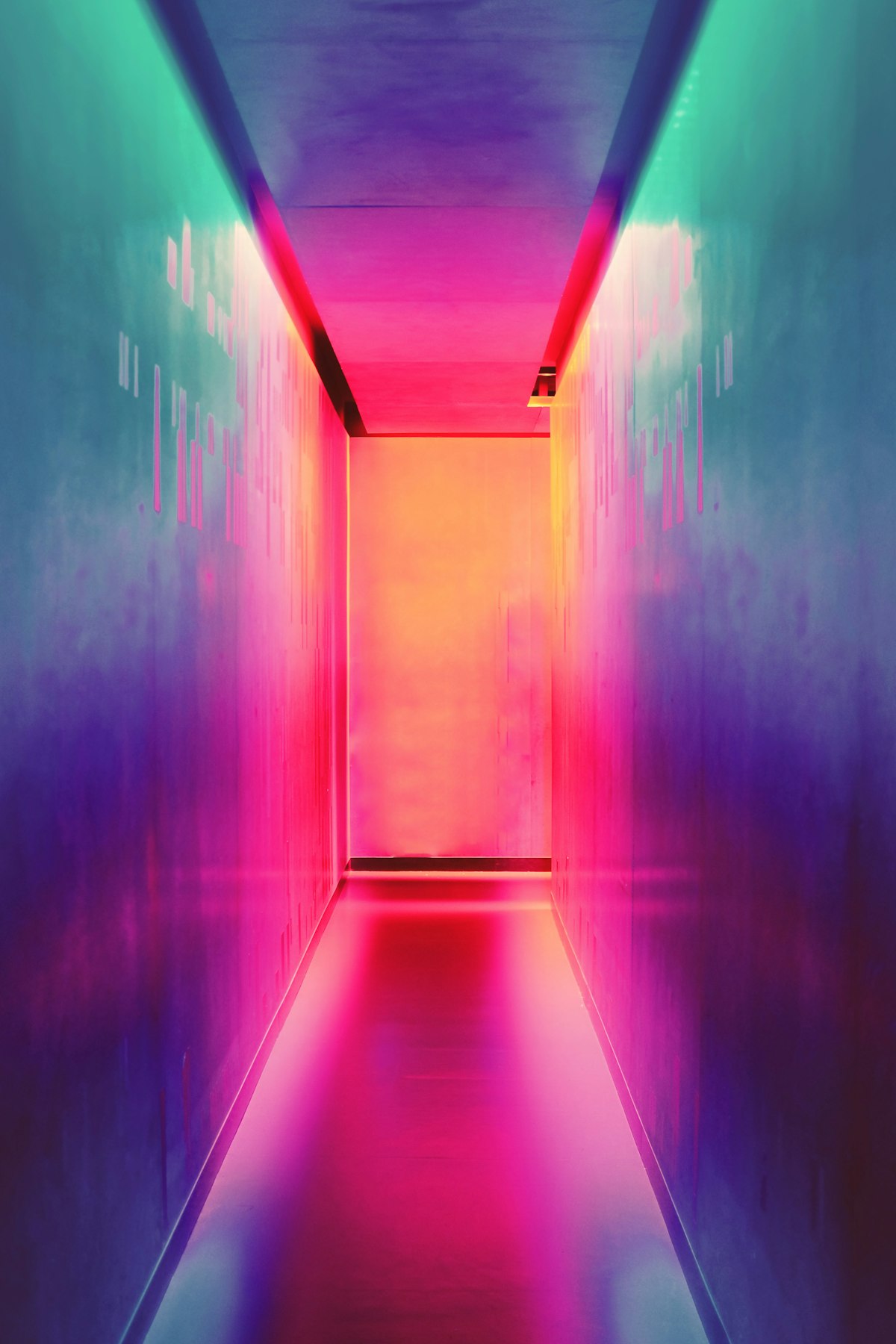
I came across a post on Hacker News with a rather blunt title that I couldn't resist clicking on: Surprisingly Adorable Insect Portraits. The accompanying images were a set of macro portraits of insects—not the menacing or slimy creatures we typically imagine, but something that almost verges on "cute." The post itself didn't carry much information and didn't generate much discussion, but it touched on an interesting visual communication phenomenon: why do we find insects "cute" when they're photographed in a particular way?
Why Insect Portraits Turn Out "Surprisingly Cute"
The Visual Trick of Anthropomorphic Perspective
Photographing insects as "portraits" inherently involves a shift in how we look at them. A macro lens magnifies an insect's head, compound eyes, and antennae to a scale similar to a human face, and our visual system automatically maps these structures onto familiar facial features. Round compound eyes look like pupils, antennae like eyebrows, mouthparts like expressions—this misfiring of facial recognition is the most direct source of the "cute" feeling.
The post didn't elaborate on shooting techniques, but judging from the images, this kind of work typically relies on shallow depth of field and a straight-on, eye-level perspective, placing the insect at the center of the frame with the background blurred into soft color blocks. This compositional language is commonplace in human portraiture; applying it to insects creates a striking contrast.

Facial recognition misfiring corresponds to the phenomenon of "pareidolia" in cognitive science—the human visual system has a hypersensitive detection tendency toward face-like stimuli. This tendency is thought to have evolutionary adaptive significance: in natural environments, quickly recognizing faces (especially potential predators or conspecifics) was more important than accurately judging whether a stimulus was actually a face, so the brain leans toward "better safe than sorry." An insect's compound eyes, antennae, and mouthparts happen to form a topological structure approximating "two eyes, a nose, and a mouth." When macro photography magnifies this structure to a scale similar to a human face and places it at the center of the frame, the viewer's fusiform face area (FFA) is activated, creating the illusion that "this is a face." This misfiring requires no conscious involvement—it's an almost pre-attentive automatic response, which explains why the "cute" feeling arrives so directly.
Contrast Is the Core Emotional Engine
Our default expectation of insects is "alien"—many legs, exoskeletons, unpredictable movement. When a photo simultaneously satisfies two conditions—"clearly an insect" and "displaying a gentle, symmetrical, innocent expression"—the gap between expectation and reality produces humor and a sense of closeness. This contrast doesn't require complex explanation; it's an almost instantaneous physiological response.
From a传播 perspective, this also explains why such content tends to attract attention on tech communities like Hacker News: it's light enough, and it carries a kind of self-deprecating "I can't believe I find this thing cute" quality.
Looking at the Spread of Niche Visual Content Through a Low-Traction Post
Aesthetic Preferences of Tech Communities
Hacker News's content ecosystem is dominated by engineering, startups, and technology discussion; visual posts are usually not mainstream. But content like "insect portraits" occasionally surfaces because it possesses two characteristics at once: low barrier to participation and topic extensibility. Anyone can click on the images and have an intuitive reaction, and the judgment of "cute" easily sparks extended discussion about anthropomorphism, AI-generated images, and macro photography techniques.
This post ultimately received only 7 points and 0 comments, indicating it never really gained traction. But the fact that it was submitted to HN at all is itself a signal: the tech crowd has a catching interest in cross-disciplinary visual content with a slight sense of absurdity.
The Boundary Between Macro Photography and Generative Imagery
It's worth noting that today, this kind of "insect portrait" is already difficult to judge by the naked eye as either a real photograph or AI-generated. Generative models have become quite sophisticated at handling symmetry, texture, and soft lighting, and insect faces happen to be a concentrated expression of these features. This raises a practical question: when we're moved by an insect portrait, are we moved by the real structures of the natural world, or by the "cute" patterns the model has learned?
The original post provided no photographer information or technical details, so its authenticity can't be confirmed. But this ambiguity is itself the norm of contemporary visual content consumption, and an unavoidable backdrop when discussing this kind of work.

Macro photography itself is a genre with relatively high equipment and technical demands. To get a sharp image of an insect's face, you typically need a dedicated macro lens (such as 100mm f/2.8), a ring or twin-head flash, and focus stacking technology—because macro depth of field is extremely shallow, a single photo often has only a few millimeters of sharp range, requiring dozens of shots at different focus points to be composited. This means that real insect macro portraits carry identifiable technical traces and cost thresholds. Insect portraits produced by generative models (such as Midjourney and Stable Diffusion) often exhibit "too perfect" symmetry in details, regularity deviations in the arrangement of compound eye ommatidia, and biologically implausible mouthpart structures. However, as models learn the visual characteristics of macro photography with increasing refinement, these tells are rapidly shrinking, and ordinary viewers can already hardly distinguish them by intuition alone.
What This Kind of Content Means for Creators
For people working in visual content or AI imagery, "surprisingly cute insect portraits" offers a reusable idea: use a familiar framework to photograph unfamiliar subjects. The composition, lighting, and emotional expression of portrait photography are a decoding system that viewers have already been well trained in; apply this system to insects, mechanical parts, or microorganisms, and contrast will naturally arise.
Another inspiration is the power of the title. The original post's title used just one adverb—"Surprisingly"—to accomplish its emotional setup: it tells viewers "your reaction is going to be different from what you expect." This low-cost expectation management often determines clicks in a feed more than the image itself.
Conclusion
The post itself carries limited information, but it works like a slice, showing how visual content can still spark discussion about anthropomorphism, authenticity, and communication mechanisms even with a tiny topic footprint. Whether insects are truly cute doesn't matter; what matters is why we see them that way.
One-line Summary
The "surprising cuteness" of insect macro portraits stems from facial recognition misfiring and expectation contrast, and also reflects the visual communication phenomenon of the blurred boundary between real photography and AI-generated imagery.
Paragraph Summary
Starting from a low-traction post on Hacker News, the article explores why insect macro portraits make people feel "cute." The author points out that the core mechanism of cuteness has two layers: first, macro lenses magnify insect heads to a scale similar to human faces, triggering viewers' facial recognition misjudgments; second, the strong contrast between the default "alien" impression of insects and the gentle, symmetrical expressions in the photos produces immediate humor and a sense of closeness. The article further analyzes the characteristics of this content's spread in tech communities—low barrier to participation and strong topic extensibility—though the post received only 7 points and 0 comments and never truly gained traction. The author also notes that today's insect portraits can hardly be distinguished by the naked eye as real photography or AI-generated, and this ambiguity is itself the norm of visual content consumption. Finally, the article summarizes the creative approach of "using a familiar framework to photograph unfamiliar subjects" and the communication technique of using the word "Surprisingly" in the title to manage expectations.
Related articles

GPT-6.2 and Astra Launch Together: OpenAI Has Finally Figured Out Its Release Cadence
OpenAI releases GPT-6.2 Sol and Astra together, with Plus users able to try them in ChatGPT Work and Codex. This article breaks down the positioning differences between the two models, Astra's practical use in long-document retrieval and rewriting, and how the simultaneous dual-model launch affects user workflows.
GPT-6.2 Dual-Model Hands-On: How Big Is the Gap Between Astra and Sol in Clock-Making and Game-Building?
GPT-6.2 Astra vs Sol hands-on: Blender clock, neon shooter, and Formula racing compared. Astra spends $419 with strong execution; Sol costs $197 but drops to 2 FPS. Both still trail Fable and Opus in games and aesthetics.

GPT-6.2 Astra and Sol Released: A Big Cost Drop, and How to Choose Between the Two Models
OpenAI releases GPT-6.2 Astra and GPT-6.2 Sol: Astra tackles professional tasks, Sol targets low-cost everyday use, with cost per task cut to under a third.