Where Does MAGA Go After Trump? Insiders Reveal MAGA 2.0 and Party Control

Interview reveals MAGA 2.0 is undefined, and the America First faction already controls the Republican Party's organizational machine.
This interview explores the evolution of the "America First" movement in the post-Trump era, introducing the concept of "MAGA 2.0" and noting that its specific shape is still unclear, with different organizations and figures competing to define it. The interviewee argues that the Republican establishment is accustomed to the comfort zone of opposition, but the America First faction has thoroughly taken over the Republican Party by controlling most chair positions, committee seats, a majority of the 168 RNC members, and grassroots networks, becoming the new establishment. Although fierce intra-party struggle over MAGA 2.0 will continue, the establishment's path back to the past has been blocked.
Introduction: The Uncertain Future of the MAGA Movement
Recently, a YouTube interview clip sparked widespread discussion. The interviewee delved into how the "America First" movement will evolve without Donald Trump, and introduced a key concept—"MAGA 2.0." The conversation not only reveals the power dynamics within the movement but also outlines the intense internal strife the Republican Party may face in the future.
What Is MAGA 2.0?
The interviewee stated bluntly that the specific shape of MAGA 2.0 is still unclear, but what is certain is that it will be defined by different people and organizations, and will therefore be "all over the map." This means the movement lacks a unified ideological blueprint, and its future direction will depend on the contest among various forces.
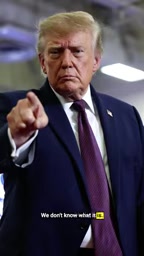
"We don't know what it is. People, certain organizations, certain individuals will define it, because it's going to be all over the map."
This uncertainty foreshadows a struggle within the Republican Party over who controls the movement. The interviewee predicts that the party establishment will try to return to their familiar "comfort zone."
MAGA is short for "Make America Great Again," the core slogan Donald Trump introduced during his 2016 presidential campaign, which later evolved into a movement label representing his political positions and voter coalition. The movement blends economic nationalism, immigration restrictions, trade protectionism, and criticism of traditional political elites, and has no strictly unified policy platform. MAGA 2.0 is not an official term but a phrase observers use to describe the possible shape of the movement in the "post-Trump era," emphasizing that its grassroots base, media ecosystem, and organizational networks may continue to evolve independently of Trump as an individual, while different factions within it compete to define it.
The Republican Establishment's "Comfort Zone" and the Reality of Power
The interviewee pointedly noted that ordinary Republicans are more accustomed to being in opposition—they can appear frequently on Fox News without bearing the responsibility of actual governance. This "comfort zone" made them feel safe, but the situation has now changed.

"But that era is over. They want to go back, but they can't, because the problem they face is: we have taken over the party, thoroughly and completely."
This statement directly challenges the influence of the traditional establishment, suggesting that the "America First" faction has already grasped actual control of the party.
The Republican establishment generally refers to the party's traditional elite network, including senior members of Congress, officials of national Republican institutions, state party leaders, and figures closely tied to traditional donors and think tanks. Historically they advocated fiscal conservatism, pro-business policies, internationalist foreign policy, and institutional compromise, and dominated party nominations and policy direction before Trump's rise. Being in opposition refers to the period when a party does not hold executive power, maintaining influence mainly through media commentary, opposition strategies in Congress, and electoral mobilization, without bearing the consequences of governing. The "comfort zone" mentioned in the interview refers to this political mode centered on media exposure and criticism while avoiding governing responsibility.
How America First Became the New Republican Establishment
When the host pressed, "It sounds like you're saying America First is now the Republican establishment," the interviewee answered affirmatively: "Bingo."
This conclusion is backed by concrete organizational control. The interviewee listed advantages at multiple levels:
- The most chair positions: Dominating committees at all levels.
- The most committee members: Holding majority seats in decision-making bodies.
- A majority of the 168 Republican National Committee members: Controlling the party's national leadership body.
- County chairs, city chairs, and precinct captains: Possessing a broad organizational network at the grassroots level.

"We have the most chair positions. We have the most committee members. We have a majority of the 168 people who run the Republican Party. But beyond that, we also have county chairs, city chairs, precinct captains."
This top-down control that reaches deep into the grassroots has transformed the "America First" movement from a fringe faction into the core force of the Republican Party.

The Republican National Committee (RNC) is the national governing body of the U.S. Republican Party, composed of 168 members, including state party chairs and national committeemen and committeewomen, responsible for drafting the party platform, fundraising, organizing the national convention, and coordinating election strategy. Precinct captains are volunteers or part-time roles in grassroots party organizations, responsible for contacting voters, canvassing, and relaying information within a specific precinct, and are key nodes in a party's ground game. Controlling these positions means controlling the candidate nomination process, resource allocation, and grassroots mobilization networks, thereby dominating the party's direction at the operational level.
Future Outlook: Internal Struggle and Movement Evolution
Although the "America First" faction currently holds the advantage, the interviewee acknowledged that there will still be a fierce intra-party struggle over the definition of MAGA 2.0. Different organizations and figures will try to impose their own visions on the movement, leading to divisions over direction.
For those following American politics, this means the Republican Party will face ideological consolidation and reorganization for some time to come. Trump's personal influence may wane, but the political energy and organizational architecture he activated are already deeply rooted in the party and difficult to reverse easily.
Conclusion
This interview offers an insider perspective, revealing how the "America First" movement transformed from challenger to controller. Whether or not Trump remains active on the political stage, the MAGA movement has already changed the Republican Party's power structure. The final shape of MAGA 2.0 will depend on the outcome of this internal contest, and the only certainty is that the establishment's path back to the past has been blocked.
Related articles

Altman Says Local Deployment Can't Beat Data Centers: The Open-Source AI Debate Reignites
Altman says local deployment of open-source models can't match centralized data-center computing. Bilibili creator Guashu Diluola breaks down the technical roadmap debate and China-US AI industry differences behind the remark, asking whether local deployment should really be abandoned.

MiniMax H3 Open-Source Workflow: Breathing-Skin Results Even on Low VRAM
This article introduces a MiniMax H3 dual-sampling workflow shared by a Bilibili creator, using fused models, a line-breaking LoRA, and low-VRAM nodes to fix greasy AI character faces and run on 12GB VRAM devices. Includes model pairing, dual-sampling logic, and parameter details.

On-Device LLM + ESP32: Build a DIY Calorie Reminder
A Bilibili creator open-sourced a calorie intake reminder: a phone app uses the open-source miniCPM model to locally recognize food photos and estimate calories, while an ESP32 mini screen syncs data and shows intake status with green/yellow/red rings — magnetically attachable to the fridge door for constant reminders.