Where Is Mbed TLS Maintenance Heading? Community Discussion Draws Attention
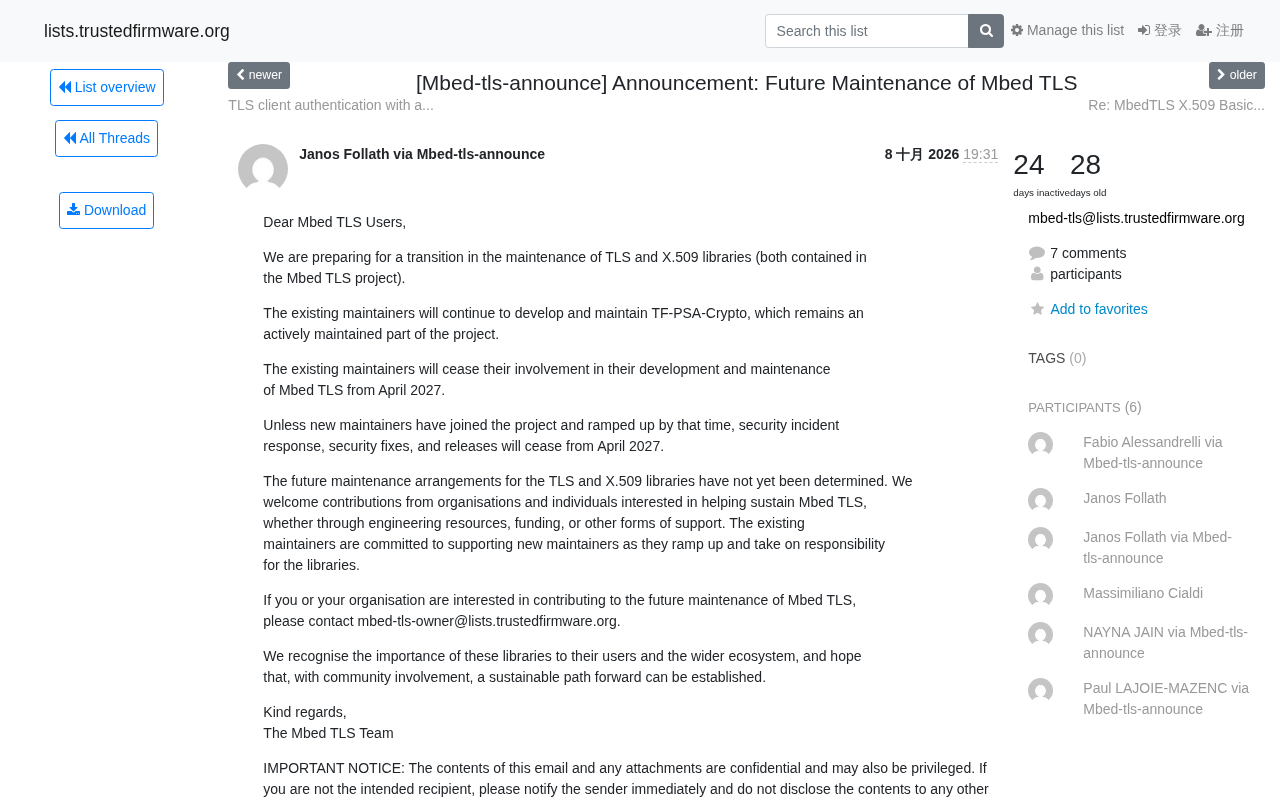
Mbed TLS's future maintenance arrangements have drawn attention, and embedded dependents need to assess security risks and migration costs in advance.
The article focuses on a Hacker News discussion post about the future maintenance of Mbed TLS. Mbed TLS is a lightweight TLS/DTLS library widely used in IoT, embedded systems, and RTOS environments, and changes in its maintaining entity or maintenance model will directly affect the security response capability of downstream products. The article points out that TLS libraries carry cryptographic handshakes and certificate verification, and that stopping active maintenance will leave long-lifecycle embedded products passive when facing new vulnerabilities; at the same time, due to constraints in memory, compute power, and toolchains, the cost of migrating TLS implementations in embedded projects is far higher than on the server side. The author recommends that dependents keep tracking upstream announcements, inventory version distribution, evaluate their own patching capabilities, and retain an abstraction layer in the architecture that allows the cryptographic backend to be replaced.
The Concern Behind a Brief Announcement
On Hacker News, a post titled "Future Maintenance of Mbed TLS" sparked a small but noteworthy discussion. Although the post itself has only 10 points and 1 comment, its title goes straight to a key question: for this lightweight TLS library that is widely embedded in IoT devices, embedded systems, and secure communication scenarios, who will continue its maintenance in the future, and in what form?
Mbed TLS has long been known for being "suitable for resource-constrained environments" and is the first choice for implementing TLS/DTLS in many MCU and RTOS projects. For this reason, any change in its maintenance status affects a large number of product lines and security teams that depend on it.
Why the Maintenance Issue Deserves Closer Attention
The Special Nature of Security Libraries
A TLS library is not an ordinary dependency. It directly handles cryptographic handshakes, certificate verification, and session key negotiation. Once upstream stops active maintenance, downstream users become passive when newly disclosed vulnerabilities appear. For embedded products with lifecycles often spanning five to ten years, this risk is further amplified over time.
The difference between TLS and DTLS: TLS (Transport Layer Security) runs over reliable TCP, while DTLS (Datagram Transport Layer Security) is its adaptation for unreliable datagram transport such as UDP, with additional handling for packet loss, out-of-order delivery, and replay attacks. Embedded and IoT devices often choose protocol stacks such as UDP/CoAP due to power consumption and real-time requirements, so DTLS support is one of Mbed TLS's irreplaceable capabilities in MCU scenarios. Understanding this helps determine whether a replacement solution is truly equivalent: many general-purpose TLS libraries do not fully support DTLS, and migrations can easily leave hidden gaps at the protocol layer.
The High Cost of Replacing a Lightweight Implementation
Unlike server-side systems, which can switch to OpenSSL or other implementations relatively easily, embedded projects are often constrained by memory, compute power, and toolchains. Mbed TLS's API and trimmed configurations are deeply integrated into code, and migration is not as simple as changing a dependency declaration. Changes in the maintaining entity are therefore not just community gossip, but an engineering decision variable.
The trimming configuration (config) mechanism: Mbed TLS uses macro switches in header files such as mbedtls_config.h to determine at compile time which cipher suites, curves, hash algorithms, and functional modules are enabled, thereby reducing ROM/RAM usage to extremely low levels. This design is key to its adaptation to resource-constrained devices, but it also means that each project's actual code path is customized: when upgrading to a new version, macro names, default values, and module boundaries may change and need to be checked item by item. The so-called "high migration cost" largely comes from the coupling between this deeply customized configuration and business code, rather than from the API surface itself.
Signals from the Community Discussion
Judging from the level of discussion on Hacker News, the post did not generate a large-scale debate and has only 1 comment. This itself can be interpreted in two ways: first, the news has not yet spread and observers are still waiting; second, some developers believe that this kind of maintenance announcement is a normal rhythm for open source projects and that there is no need to overreact.
Either way, the core fact is that the future maintenance arrangement of Mbed TLS has been formally put on the table. For projects that use it as a security foundation, the rational approach is to keep tracking upstream announcements, evaluate the support window for their own versions, and prepare upgrade or replacement plans in advance.
Practical Advice for Dependents
- Pay attention to official statements from the upstream repository and mailing lists, and distinguish between "maintenance mode adjustment" and "end of maintenance"
- Inventory the distribution of Mbed TLS versions and trimming configurations in the project, and evaluate upgrade costs
- Make it clear in the security response process whether your own patching capability is sufficient if upstream fixes lag
- For long-lifecycle products, consider retaining an abstraction layer in the architecture that allows the cryptographic backend to be replaced
Whether Mbed TLS will enter a new maintenance phase and who will lead it still requires clearer official information. But this discussion reminds us that the "future maintenance" of foundational security libraries is never a distant issue; it is a question every dependent party should answer in advance.
Background Notes
The spectrum of open source project maintenance models: To understand the weight of a "future maintenance" announcement, it is necessary to distinguish several common states—active development (continuous merging of new features and fixes), maintenance mode (accepting only security fixes and critical bug patches), looking for a successor (the original maintainer plans to step down), and formal archiving with maintenance stopped. These four have vastly different implications for downstream users: under maintenance mode, security response is usually still guaranteed, while archiving means that responsibility for vulnerability fixes is fully transferred to users. When reading upstream announcements, clarifying where they fall on this spectrum is more practically meaningful than focusing on discussion heat.
One-line Summary
Mbed TLS's future maintenance arrangements have drawn attention, and embedded dependents need to assess security risks and migration costs in advance.
Paragraph Summary
The article focuses on a Hacker News discussion post about the future maintenance of Mbed TLS. Mbed TLS is a lightweight TLS/DTLS library widely used in IoT, embedded systems, and RTOS environments, and changes in its maintaining entity or maintenance model will directly affect the security response capability of downstream products. The article points out that TLS libraries carry cryptographic handshakes and certificate verification, and that stopping active maintenance will leave long-lifecycle embedded products passive when facing new vulnerabilities; at the same time, due to constraints in memory, compute power, and toolchains, the cost of migrating TLS implementations in embedded projects is far higher than on the server side. The author recommends that dependents keep tracking upstream announcements, inventory version distribution, evaluate their own patching capabilities, and retain an abstraction layer in the architecture that allows the cryptographic backend to be replaced.
Related articles
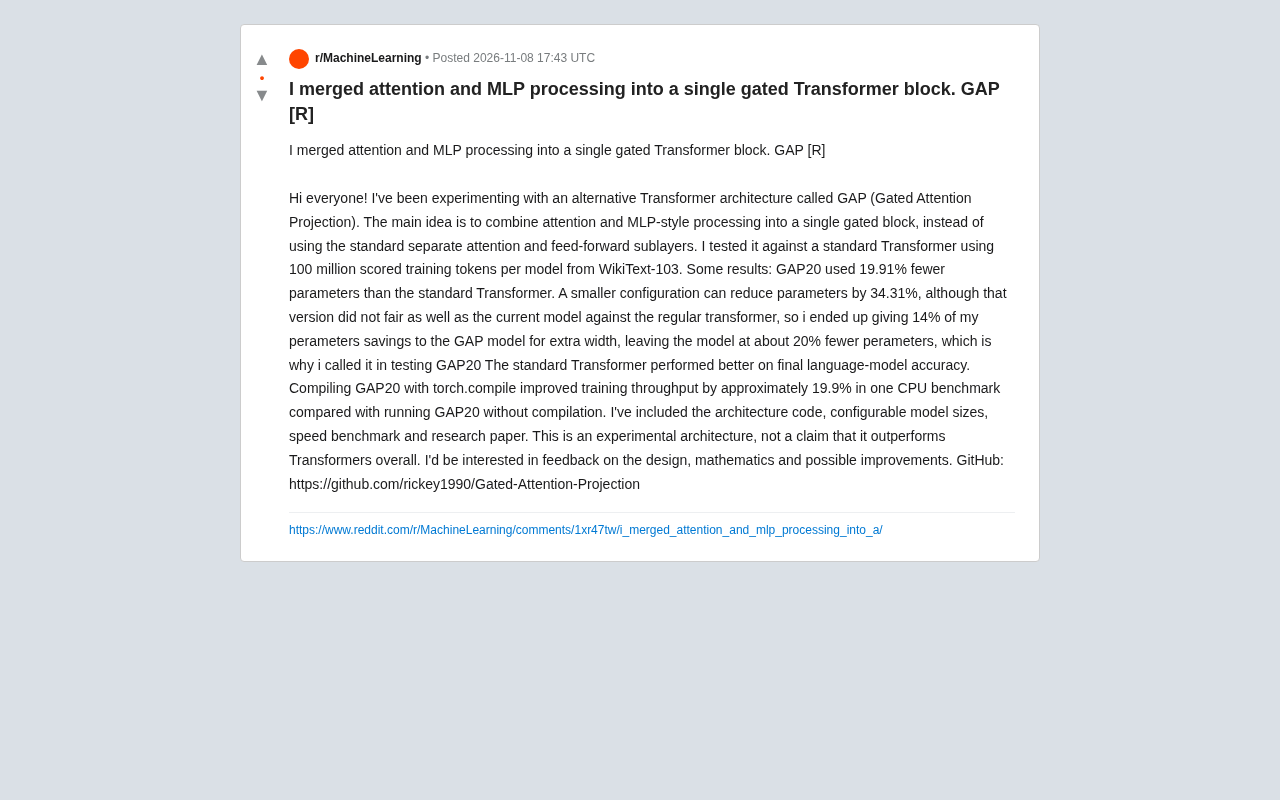
GAP Architecture: A Gated Transformer Block That Merges Attention and MLP
Reddit researcher proposes the GAP architecture, merging attention and MLP into a single gated Transformer block. On WikiText-103, GAP20 reduces parameters by 19.91%, but final accuracy falls short of the standard Transformer; torch.compile brings about a 19.9% throughput gain.
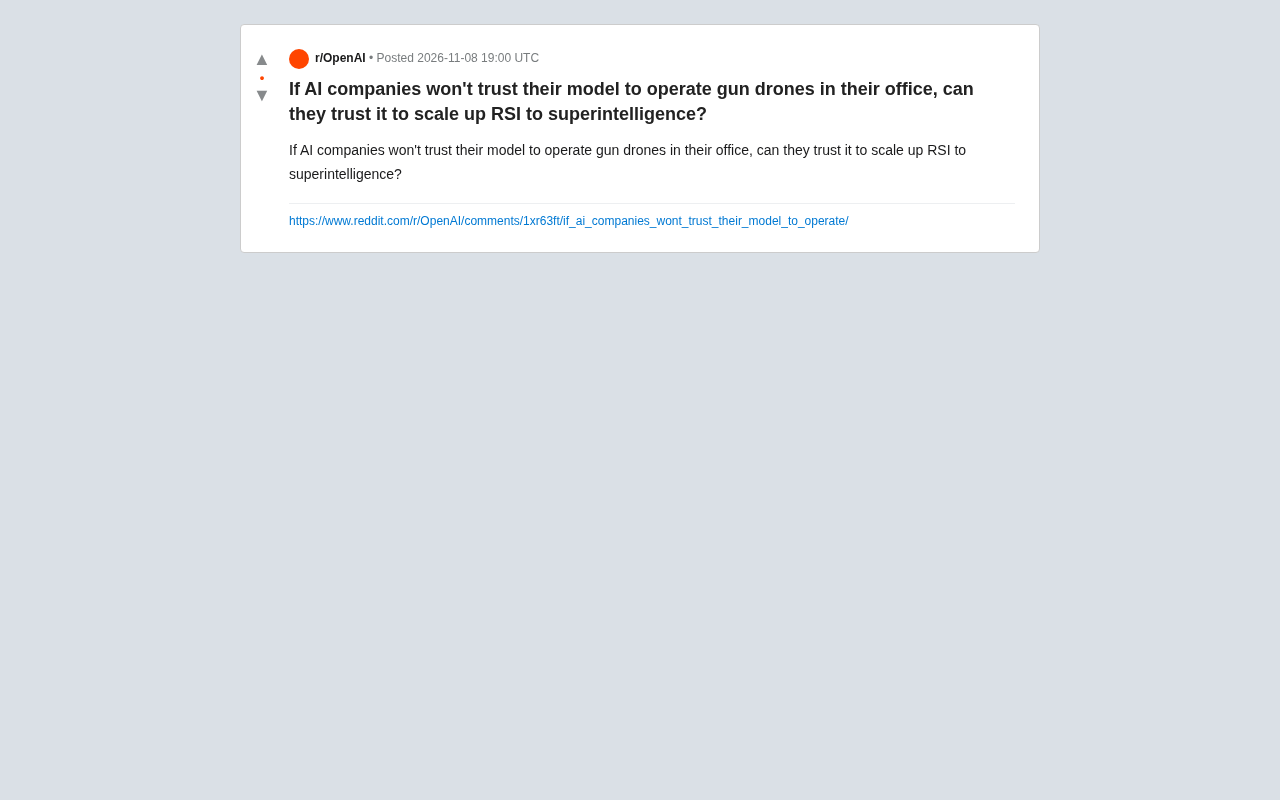
The AI Trust Paradox: Won't Let Models Operate Gun Drones, but Will Let Them Recursively Self-Improve?
Reddit debate on the AI trust paradox: companies won't let models operate office gun drones, yet discuss recursive self-improvement (RSI) toward superintelligence. The article breaks down the trust gap between lab safety constraints and grand narratives, analyzes why RSI is harder to supervise than physical tasks, and examines the semantic slippage of trust in AI safety discourse.
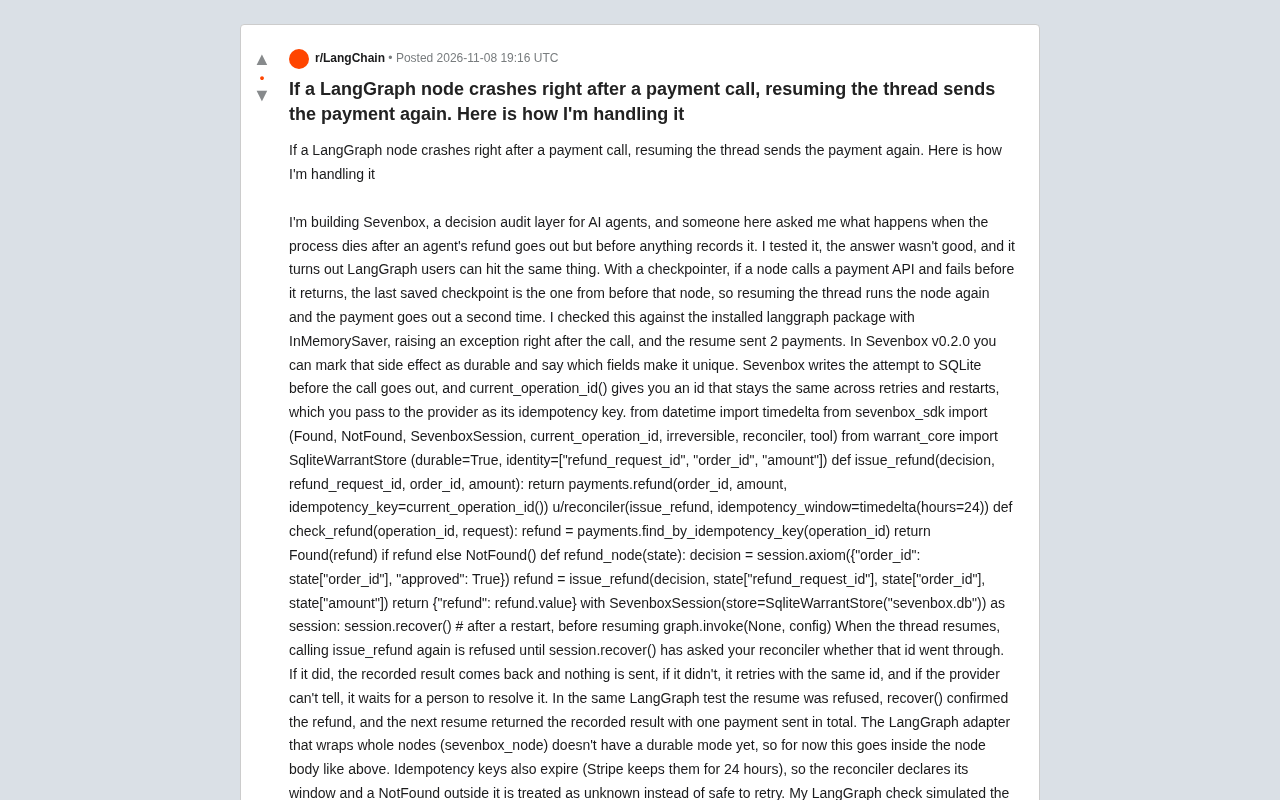
LangGraph Node Crashes Causing Duplicate Payments? Solve It with Durable Side Effects and Idempotency Keys
LangGraph nodes crash after payment calls, causing duplicate charges on thread recovery. Learn how durable side effects, idempotency keys, and reconcilers prevent duplicate calls, plus idempotency expiration and adapter limitations.