Which Skills Are Worth More in the AI Era? Knowing Python Is No Longer Enough

Basic coding loses its premium in the AI age, while system design, integration, and communication skills surge in value.
As AI effortlessly handles basic programming tasks like loops and scripting, simply "knowing Python" is rapidly losing its market premium. The flip side: capabilities AI still can't independently perform — designing real systems, handling messy real-world data, integrating heterogeneous systems, and communicating with stakeholders — are more valuable than ever. AI acts as an amplifier for those with high-order judgment skills, widening the gap between skill tiers and shifting career value from "what code can you write" to "what problems can you solve and what resources can you integrate."
Writing Code Itself Is Losing Its Premium
If you still believe that knowing Python syntax guarantees a stable return in the job market, it may be time to update that assumption. One YouTube creator put it bluntly: by 2026, simply "knowing Python" won't qualify as a skill that earns you a high salary.
The reason is straightforward — AI can already do that kind of work. Writing a for loop, parsing a file, automating a script — tasks you used to get paid for can now be handled by pointing an AI model at a prompt. In other words, when a task can be replicated at near-zero cost, its market premium evaporates quickly.

This isn't to say Python has become useless. Rather, the act of "writing basic code" has been downgraded from a scarce skill to a cheap, commodity tool — much like how the spread of calculators made mental arithmetic speed irrelevant as a core competency for accountants.

What AI Can't Do — That's Where Value Is Surging
The truly important insight in this creator's argument is the flip side: the capabilities that AI still cannot independently execute are becoming more valuable than ever before.
He outlined several categories of "high-value skills":
Structuring a Real Program from the Ground Up
Writing a few lines of code and designing a complete, maintainable, scalable real-world system are two entirely different things. The former is about syntax; the latter is about architectural judgment, trade-offs, and managing complexity. AI can generate code snippets, but organizing those snippets into a robust whole still depends heavily on human engineering judgment.
The core of software architecture lies in managing "complexity" — distinguishing accidental complexity (introduced by technology choices) from essential complexity (inherent to the problem itself). An experienced engineer, before writing a single line, thinks about module boundaries, data flow, where future changes will come from, and under what conditions the system will fail. These judgments are built on accumulated knowledge of countless historical failures and a deep understanding of current business constraints. AI can quickly produce functionally correct code, but it lacks the foresight to ask: "Will this design paralyze the entire team three months from now?" Common architectural skills include: choosing appropriate design patterns, evaluating the trade-offs between monoliths and microservices, designing sensible database schemas, and planning system observability (logging, monitoring, alerting). These judgment skills can't be acquired by memorizing syntax — they're forged through repeated iteration on real projects.
Handling Messy, Real-World Data
Data in textbooks is always clean and tidy. Real-world data is filled with missing values, noise, inconsistent formats, and edge cases. Understanding business context, judging which data is trustworthy, and knowing how to clean and model it — these are gray areas where AI struggles to operate independently.
Connecting Multiple Systems
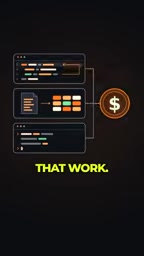
Real technical work is rarely about building something from scratch. More often, it means integrating multiple existing systems, APIs, databases, and services so they work together. This integration work involves vast amounts of tacit knowledge and real-environment debugging — far more complex than writing isolated code.
System integration is one of the most time-consuming and hardest-to-standardize aspects of enterprise tech work. Real-world systems each have their own authentication mechanisms, rate limits, data formats (REST, GraphQL, gRPC, message queues, etc.), and failure behaviors. The challenge isn't calling a single API — it's handling edge cases: how to retry after a network timeout without producing duplicate data, how to gracefully degrade when an upstream system returns a non-standard error code, how to reconcile subtle definitional differences between systems for the same business object (like "order"). This knowledge lives in system-specific documentation, community war stories, and team folklore — what's called "tacit knowledge." Without sufficient context, AI tends to produce integration solutions that look viable on the surface but fail in production. That's exactly why battle-tested integration engineers remain rare and valuable.
Communicating with Stakeholders
Perhaps the most underrated skill of all — communicating with shareholders, clients, and team members; understanding what they actually want; and translating vague requirements into clear technical solutions. This is a purely human collaboration skill, and there's no sign of it being displaced by AI anytime soon.

Why People with These Skills Are Becoming More Valuable
There's a logic here that's easy to overlook: AI doesn't just replace certain work — it also acts as an amplifier.
The creator points out that people who possess these higher-order skills are actually becoming more valuable — because with AI, they can accomplish far more than before. Someone who understands architecture, knows the business, and can communicate effectively can hand off repetitive coding tasks to AI and focus on judgment, design, and coordination. Overall output rises dramatically.
In other words, AI is widening the gap between skill tiers. It compresses the value of low-end execution work while amplifying the leverage of high-end judgment work. For those who only execute, this is a threat. For those who can direct and integrate, it's an opportunity.
This phenomenon can be explained in economic terms through "Skill-Biased Technological Change" (SBTC): when automation tools emerge, they tend to replace rule-based, standardizable tasks while increasing the marginal output of workers engaged in complex judgment work. When personal computers became widespread, demand for typists fell — but those who could use spreadsheets for financial analysis saw their wages rise. That's the same logic playing out again now. AI coding tools are commoditizing basic code generation, while those who can ask the right questions, evaluate the quality of AI output, and align technical solutions with business objectives are seeing their per-hour output multiply — and the market is pricing them accordingly.
What This Means for Practitioners
This argument is brief, but the signal it sends is clear: when planning your career capabilities in the AI era, shift your focus from "what can I write" to "what problems can I solve and what resources can I coordinate."
Concretely, the areas worth investing in include: system design and architecture, understanding real business contexts and dirty data, hands-on engineering experience with cross-system integration, and the soft skills of human communication and collaboration. What these capabilities share is that they depend on experience, judgment, and interpersonal understanding — precisely where current AI falls short.
Learning Python still makes sense, but don't treat it as the destination. Treat it as the entry point into higher-value work. Your real moat isn't whether you can write code — it's whether you can wield AI, integrate complex systems, and translate technical outcomes into something genuinely useful for others.
Related articles

JobRunner MCP Server: AI Agents Can Now Fix Failed Java Jobs
JobRunner launches an open-source MCP server enabling AI agents to view cluster status, diagnose failures, and recover Java jobs—incident response from any cloud coding environment or existing agent.

MLAI Digital Launches 9 Security Agents: MCP Server Safeguards the Full Lifecycle of Agentic AI
MLAI Digital launches Security MCP Server with nine built-in specialized security agents covering vulnerability discovery, attack simulation, prompt injection detection, API and infrastructure assessment, and accelerated remediation—embedding security validation across the full Agentic AI lifecycle from development to production.

Running Isaac Lab on H100 GPUs: Exploring Better Approaches
Exploring optimization methods for running Isaac Lab on NVIDIA H100 GPUs, including MIG configuration, mixed precision, TensorRT acceleration, and community experience to improve robotics simulation and reinforcement learning efficiency.