Whispered Eating Sounds and Companionship: Why ASMR Mukbangs Keep Thriving

ASMR mukbangs build a stable content structure through welcome lines, whispered eating sounds, and companionship—homogenization is their biggest challenge.
Starting from an ASMR mukbang clip, the article breaks down three layers of logic. In form, a welcome line draws viewers into a "dining together" scenario, chatter fills time, and eating sounds carry the core experience, with a weak scripted feel. On sound, whispers create intimacy while eating sounds provide rhythm, requiring careful volume balance, mic distance, and noise control. On value, companionship is the real selling point, common for bedtime relaxation and work background noise, so competition lies in natural companionship rather than production quality. The article notes the low barrier but poor retention, severe homogenization, and creators relying on voice traits and fixed opening lines to build an "auditory brand," with viewers' personal preferences hard for algorithms to replace.
ASMR mukbang content has long enjoyed a stable audience on platforms like Bilibili. What looks like a simple "let's eat together" actually involves three layers of logic: sound, companionship, and content creation.
1. The Content Structure Behind a Single Opening Line
The opening of these videos is often very plain. In the original material, the opening line "Welcome to the sandwich for you" is a typical ASMR mukbang welcome—first drawing viewers into the scenario of "dining together," then moving on to the main event of whispering and eating sounds.
The sentence that follows, "A much older streaming service, but all they do it if it's like every probably done your whole with," is semantically incomplete due to speech recognition or transcription issues, but one can make out that it mentions "streaming service," indicating that the creator brings up platforms and content formats as topics during the casual chat.
This structure isn't complicated, yet it forms a stable formula: the welcome line sets the tone, the chatter fills time, and the eating sounds deliver the core experience. ASMR mukbangs have a very weak "scripted" feel—and the audience isn't looking for plot to begin with.
2. Whispers and Eating Sounds: The Sonic Layers of ASMR
ASMR content demands far more from sound than ordinary videos. Whispers create a sense of intimacy, while eating sounds provide rhythm and trigger points. The two alternate, forming a gently undulating listening experience.
In the material, the casual line "So I am well being safe" sounds slice-of-life, even a bit scattered—which is exactly the norm for this kind of content. Creators aren't chasing information density; they're creating the atmosphere of "someone eating across from you."

From a sound design perspective, three key points matter in these videos: volume balance, microphone distance, and background noise control. If the whispers are too loud, intimacy is lost; if the eating sounds are too loud, they easily cause discomfort. Creators need to adjust repeatedly to find the range that most viewers find acceptable.
The Physiological and Psychological Mechanisms of ASMR
ASMR stands for Autonomous Sensory Meridian Response, referring to the mild tingling, relaxing sensation that some people experience on the scalp, back of the neck, or spine when hearing subtle sounds like whispers, chewing, page-turning, or tapping. Not everyone has it—research estimates that roughly 30% to 50% of people show a noticeable response—which is why the same audio can have very different effects on different listeners.
Mechanistically, ASMR is closer to a low-arousal relaxation response, often accompanied by decreased heart rate and changes in skin conductance, which is why it's frequently used for sleep aid and anxiety relief. Triggers can be broadly divided into human-voice types (whispers, mouth sounds) and object types (tapping, rubbing), with mukbangs relying mainly on the former.
It should be noted that ASMR still lacks unified, rigorous clinical evidence, and its effects are highly subjective across individuals—which precisely explains why viewers' judgments of whether a creator "hits the spot" are so personal and difficult for recommendation algorithms to precisely replicate.
3. Companionship: The Real Product Value of Mukbangs
If sound is the technical layer, companionship is the value layer of this content. Loneliness, bedtime relaxation, and work background noise are the main use scenarios for ASMR mukbangs. Viewers don't necessarily watch the screen when they open a video—often they just "need someone to be there with them."
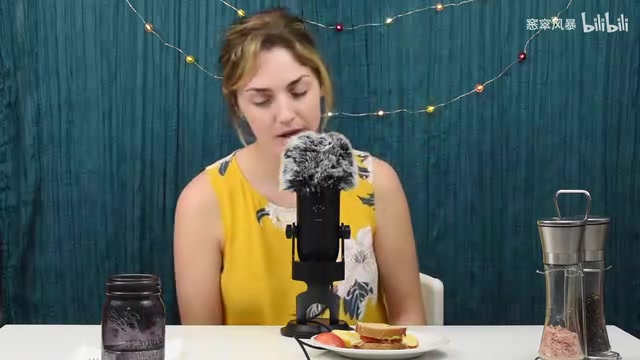
This also explains why video titles directly say "eat lunch with me"—it defines the act of watching as a shared meal rather than content consumption. From a product experience standpoint, the competitive edge of this content isn't image quality or editing, but whether the companionship feels natural. Forced chatter breaks the atmosphere, and overly deliberate chewing sounds are equally immersion-breaking.
Parasocial Interaction and Background Media
One theoretical basis for companionship is the concept of "parasocial interaction" in social psychology, referring to the one-sided yet genuine emotional connection audiences form with media figures they've never actually met. Viewers who listen to the same creator's whispers and chatter over time gradually develop the illusion that "a familiar person is right there beside me"—this is the source of ASMR mukbangs' stickiness.
Related to this is the "background media" usage pattern: this content is often treated as ambient sound rather than a focus of attention, with users in a half-listening, companion state. This determines that evaluation criteria differ from regular videos—clarity, information density, and narrative tension don't matter; instead, steady rhythm, no sudden sounds, and long loopability are key. Creators deliberately weaken scripting precisely to reduce the attention demand and make the content easier to "just leave on."
4. The Ceiling and Challenges of This Content
The creative barrier to ASMR mukbangs seems low, but retaining viewers is actually hard. Voice quality, microphone equipment, and the quietness of the recording environment all directly affect the final output. The English spoken lines in the material also show that some creators are trying multilingual or cross-platform approaches to expand their audience.
Another challenge is homogenization. When a large number of videos are all "whispers + eating sounds + chatter," creators need to build recognizability through personal voice traits, fixed opening lines, and a steady update rhythm. That fixed welcome line in the original material is essentially the creator building their own "auditory brand."
For viewers, which creator to choose often depends on whether the voice "hits the spot"—a very personal preference that algorithms can hardly fully replace.
One-line Summary
ASMR mukbangs rely on welcome lines to set the tone, whispers and eating sounds, and companionship to form a stable content structure—homogenization is their biggest challenge.
Paragraph Summary
Starting from a piece of ASMR mukbang material, the article breaks down the three layers of logic behind this content. In form, the welcome line first draws viewers into a "dining together" scenario, the subsequent chatter fills time, and eating sounds carry the core listening experience, with an overall weak scripted feel. On the sound level, whispers create intimacy while eating sounds provide rhythm and trigger points, and creators must repeatedly adjust volume balance, microphone distance, and background noise. On the value level, companionship is the real selling point, common in scenarios like bedtime relaxation and work background noise, so competition isn't in image quality or editing but in whether the companionship feels natural. The article concludes that this content has a low barrier but is hard to retain viewers with, and homogenization is severe—creators can only rely on voice traits and fixed opening lines to build an "auditory brand," while viewers' preference for whether something "hits the spot" is very personal and difficult for algorithms to fully replace.
Related articles

Satirical Viral Hit "Rich Girl's Christmas Haul": A Consumption Frenzy or an Isolated Case?
A Bilibili satirical rich-girl Christmas haul video sparks debate. This article breaks down the consumption symbols in its gift list, analyzes the blurred line between showing off and gratitude, and explores the narrative template of wealth-flaunting content on platforms and its impact on teenagers' wealth perception.

Before You Get Your Ears Pierced: A Professional Piercer Explains Placement, Pain, and Aftercare
A professional piercer explains the full ear piercing process: why a max of three per session, pain ratings and healing times by location, 18K gold vs. pure silver, hollow needles vs. piercing guns, and aftercare.

Follow the Light: How Light-Triggered ASMR Commands Your Attention
Analyzing Bilibili creator Veda's command-based ASMR video: how pen light and otoscope use visual tracking commands to command attention, upgrading sound relaxation into an interactive attention game, and what it means for immersive content creation.