Who Holds Power After Anthropic's IPO? Decoding a Complex Governance Structure

Anthropic's governance is complex; who truly steers the company after its IPO is the core concern.
Anthropic's governance structure is described as extremely complex, and its IPO has made "who is really at the helm" a focus for investors and regulators. The article notes that control is not equal to equity percentage—board composition, special veto rights, and mission clauses in governance documents can all drive actual decisions. After going public, public shareholders, regulatory disclosure requirements, and market expectations will impose new constraints on the existing governance arrangements, and major investors' influence may be redefined. What makes Anthropic special is that its governance structure itself is treated as part of its safety commitment, so the tension between the safety narrative and commercial pressure becomes the core test of its governance. Observers need to watch both prospectus provisions and actual post-IPO decisions to judge the company's future direction.
Anthropic's governance structure has been described as "extremely complex." As the company moves toward an IPO, one of investors' most pressing questions comes to the surface: after going public, who is really at the helm of this AI company that brands itself around "safety"?
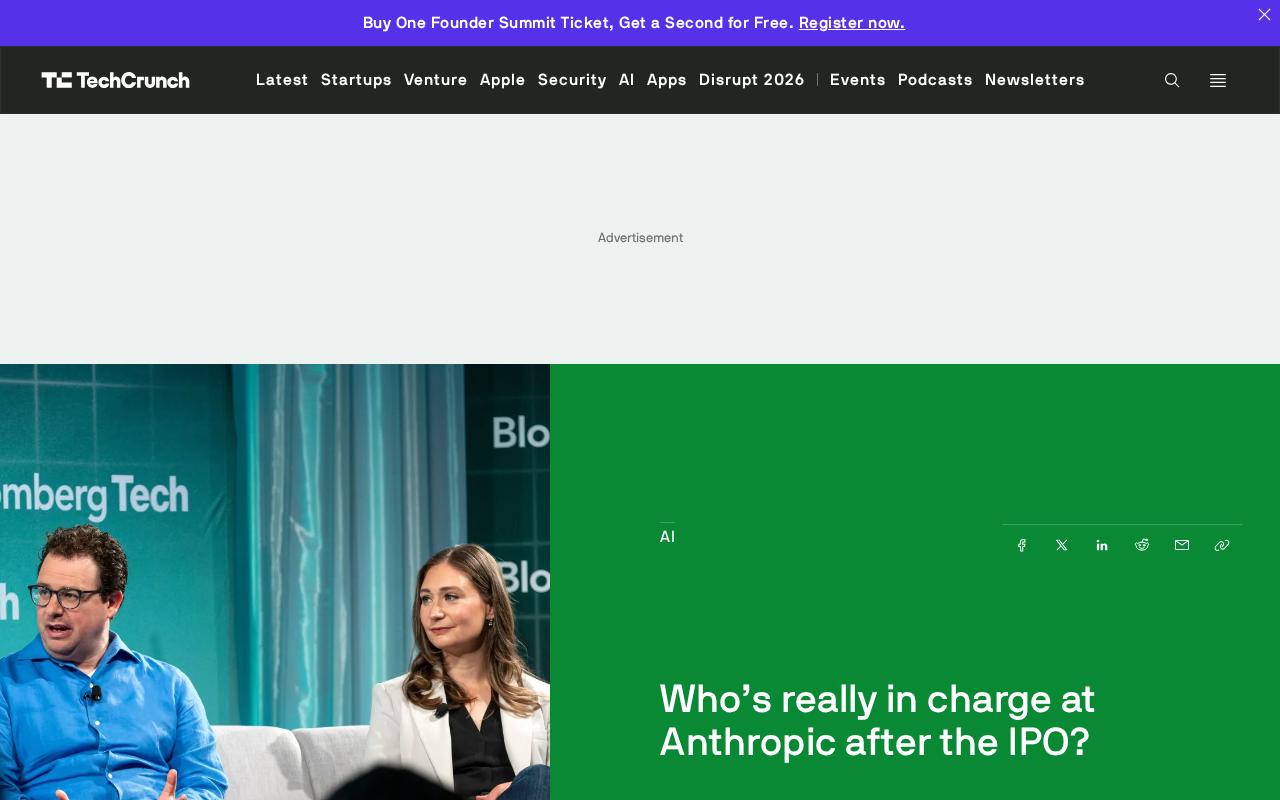
Why the IPO Makes Governance a Critical Issue
When a company goes public, ownership and decision-making power are laid bare before the public market. For Anthropic, this issue is especially sensitive: it has long made "developing AI responsibly" its core narrative, and whether that narrative can continue depends largely on who holds control.
An IPO exposes previously closed equity and decision-making arrangements to regulators and the public. Who nominates directors, who can veto major matters, how special voting rights are designed—these details, once internal affairs, now become key clues for judging the company's future direction.
IPO (Initial Public Offering) and Dual-Class Share Structures
An IPO refers to a private company issuing shares to the public for the first time and listing them on a stock exchange, becoming a public company subject to ongoing oversight by securities regulators (such as the U.S. SEC). Going public brings not only financing but also mandatory information disclosure, regular financial reports, shareholder voting mechanisms, and board independence requirements.
In tech companies, founders or core teams often retain control through "dual-class share structures" (different voting rights for different share classes): shares issued to the public carry one vote each, while internally held shares may carry ten votes or more per share. This design allows a specific group to dominate major decisions after going public, but it also sparks controversy among public shareholders about "diluted voice." Understanding Anthropic's control question requires looking at IPO regulatory constraints together with such special voting arrangements.
Prerequisites for Understanding Anthropic's Governance Structure
To grasp this control debate, one must first accept a fact: Anthropic's governance design was never a simple "founder knows best" model. It involves multiple forces at once, including the founding team, major investors, and governance arrangements established around its mission.
This multi-party architecture was intended to keep the company from straying from its safety commitments while pursuing commercial goals. But the cost is a longer decision-making chain and boundaries of authority that are harder for outsiders to see at a glance. This is why "who really holds power" becomes a recurring question after the IPO.
Control Is Not the Same as Equity Percentage
In a complex governance structure, holding more shares does not automatically mean having the final say. Board composition rules, veto rights over specific matters, and special provisions in governance documents can all cause actual control to diverge from equity distribution.
For Anthropic, this means that even if the IPO brings in new public shareholders, the company's strategic direction and key personnel decisions may still be driven by a preset mechanism. To judge who holds power, one must look at how these mechanisms combine, not at shareholding numbers along a single dimension.
Board Composition and Veto Provisions
The board of directors is the company's statutory decision-making body, responsible for nominating executives, approving major transactions, and overseeing strategy. Whoever can nominate or elect a majority of directors effectively controls the company's direction. Many governance documents also include "protective provisions" requiring that certain major matters (such as amending the charter, selling core assets, or changing mission clauses) be approved by specific shareholders or directors, creating a veto effect even without a large equity stake.
In addition, mission-lock provisions, trust-style governance arrangements, or independent oversight bodies can further pull control away from simple equity percentages. Therefore, when analyzing Anthropic, one must examine board seat allocation, special veto rights, and mission-bound provisions in governance documents together to determine where real power lies.
After the IPO, How Power Will Be Redistributed
Going public itself brings governance changes. Public shareholders, regulatory disclosure requirements, and market expectations will all impose new constraints on the existing structure. Whether the special designs serving the "mission" in the original governance arrangements can continue to hold under a public-company framework is a real question.
Another line of observation is investor influence. As the company's valuation and capital structure change, major investors' roles on the board and in major decisions may be amplified or redefined. How the founding team and investors divide decision-making power will directly affect Anthropic's long-term trajectory.
The Tension Between Safety Commitments and Commercial Pressure
What makes Anthropic special is that its governance structure itself is treated as part of its "safety commitment." After going public, pressure from quarterly results and shareholder returns will create friction with this commitment. Who balances the two is the core test of the governance structure.
If control is concentrated in mechanisms bound to the mission, the safety narrative has strong continuity; if control tilts toward short-term financial goals, the company's positioning may shift. This is the fundamental reason outsiders keep pressing for governance details.
What It Means for Observers
For those watching the AI industry, Anthropic's case offers a sample to observe: when a company that sells itself on values enters the public market, can its governance design withstand the impact of capital logic? The answer depends not only on the provisions in the prospectus but also on the decisions actually made after the IPO.
Who holds power will ultimately show in what the company chooses to do, what it gives up, and which side it takes at critical moments of controversy. For Anthropic, this is the real test its governance structure must face.
Related articles
One Year of Dioxus Fullstack in Production: Gains and Pain Points
A developer shares a year of real-world experience running the Dioxus fullstack framework in production, covering type-safety gains in fullstack Rust, plus pain points like compile times and ecosystem maturity, as a reference for technology selection.
The Hidden Faith of AGI Leaders: Humans Are Nothing Special?
Vergecast podcast reveals the hidden belief within AGI leadership circles: humans are nothing special, consciousness is just computation. Exploring how computational functionalism shapes the worldview of tech elites and the future of AI.
GM Shifts Toward Hybrids: From an All-Electric Bet to a Pragmatic Parallel Strategy
GM once skipped hybrids to bet on pure EVs; now it plans hybrid SUV versions. This article analyzes the strategic shift, its significance for SUVs, and consumer impact.