Who Pays for U.S. Medicaid Cuts? Hospital Closures and the Chain Reaction of Millions Losing Coverage

Republican Medicaid cuts haven't taken effect yet, but hospitals are already reducing services, and the chain reaction is hitting communities.
Although most of the nearly $1 trillion in Medicaid cuts pushed by U.S. Republicans won't take effect until 2027, hospitals have already begun adjusting ahead of time, and an Iowa hospital ended obstetric services due to reduced funding. The CBO estimates the related bill will add over 7 million uninsured people by 2034; hospital revenue gaps will translate into layoffs, clinic closures, and crowded emergency rooms, and push up everyone's premiums. Arkansas's 2018 work requirement pilot caused 18,000 people to lose coverage within months, and Nebraska already has over 1,000 people who have lost coverage, showing that administrative burdens screen out compliant people rather than abusers. The $50 billion rural healthcare fund is hard to offset against $137 billion in permanent cuts over ten years. 13 Republicans and Senator Hawley publicly opposed the bill but voted for it, highlighting the gap between intra-party concerns and voting behavior. Healthcare is becoming a focus of the midterm elections.
U.S. Republican-driven Medicaid cuts are moving from legislative text to real-world bills, and the first to pay are not politicians but hospitals, communities, and ordinary patients. According to a Vox report on YouTube, although most of the cuts won't officially take effect until 2027, the healthcare system has already begun adjusting ahead of time—an Iowa hospital cited reduced Medicaid funding as the reason for directly ending its obstetric services.
Scale of the Cuts and the Timing Gap: A Delayed Vote Can't Stop the Chain Reaction
Republicans had tried to delay nearly $1 trillion in Medicaid cuts until after the midterm elections, but policy expectations alone are already changing healthcare institutions' decisions. The Congressional Budget Office (CBO) estimates that the previously passed large-scale tax and spending bill will result in more than 7 million additional uninsured Americans by 2034.
The key to this number isn't the timing but the transmission mechanism: when patients lose insurance, hospitals stop receiving the payments that were originally used to treat them. Revenue gaps trickle down in the form of layoffs, reduced services, and clinic closures, ultimately affecting everyone who depends on these institutions—including patients who still have insurance.
The report notes that hospitals may cut services, emergency rooms may become more crowded, and as hospitals absorb the cost of treating more uninsured patients, everyone's insurance premiums may rise. This is precisely why healthcare has become a rising issue in the midterm elections.
Medicaid is the U.S. public health insurance program for low-income people and people with disabilities, jointly funded by the federal and state governments and covering about 70 million Americans, making it one of the largest sources of health insurance in the United States. Unlike Medicare (for people over 65), Medicaid eligibility standards vary by state, but generally it serves people with incomes below a certain percentage of the federal poverty line. Hospitals and community clinics rely heavily on Medicaid reimbursement to stay operating, especially rural and safety-net hospitals. Therefore, when the federal government cuts Medicaid funding, state governments are often forced to narrow coverage or lower reimbursement rates, and hospitals feel the revenue pressure directly. This is why healthcare institutions have already begun adjusting services before the cuts take effect—they need to prepare in advance for the anticipated funding gap.
The Congressional Budget Office (CBO) is a nonpartisan federal agency under the U.S. Congress responsible for providing budget and economic impact assessments for legislative proposals. CBO estimates are often used as a neutral basis for policy debates, and its projected "increase in the number of uninsured" is a key indicator for measuring the impact of healthcare legislation. CBO estimates are based on models of population, income, insurance market responses, and other factors; while they carry some uncertainty, they are widely cited because of their independence.
Real-World Lessons from Work Requirements: Precedents in Arkansas and Nebraska
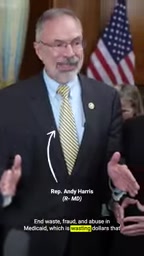
The core argument on the Republican side is "eliminating waste, fraud, and abuse," believing that Medicaid funds that should have gone to the truly vulnerable are being wasted. But historical data offers another perspective.
After Arkansas tried similar Medicaid work requirements in 2018, more than 18,000 people lost coverage within a few months, and the report attributes the main cause to procedural confusion and paperwork burdens rather than these people being ineligible. Nebraska is one of the first states to begin enforcing work requirements, and more than 1,000 residents have already lost coverage.
These two sets of numbers point to the same structural problem: raising the threshold for eligibility verification often screens out not "abusers" but compliant enrollees who are unable to complete complex application processes.
Medicaid work requirements refer to requiring enrollees to prove they work a certain number of hours per month in employment, volunteer work, education, or training in order to remain eligible for Medicaid coverage. Supporters argue this promotes employment and reduces dependency; opponents point out that most Medicaid enrollees are already working or meet exemption criteria, and that complex reporting and verification processes cause "administrative churn"—that is, eligible people losing coverage due to paperwork burdens. Arkansas's 2018 pilot was the first such requirement in the nation, and its experience has become an important reference for subsequent policy debates.
"Administrative burden" in eligibility verification is an often underestimated policy variable. Research shows that when enrollees need to frequently report online, upload documentation, or face system failures, a large number of compliant people lose coverage because they cannot complete the process. This type of churn tends to concentrate among low-income people with irregular work hours and limited digital access, and does not overlap with the "fraud and abuse" the policy claims to target.
The Funding Arithmetic of Rural Healthcare: $5 Billion vs. $13.7 Billion
Republicans point to the $50 billion Rural Health Care Fund included in the One Big Beautiful Bill Act as an offsetting measure. But analysts' calculations are of a different order of magnitude: rural areas will face $137 billion in permanent Medicaid cuts over the next decade.

The gap between the two means that short-term injected funds are hard to offset long-term structural shortfalls. For already fragile rural hospitals, this funding structure uncertainty may be more lethal than the absolute cut amount—they cannot do long-term staffing and service planning based on a one-time fund.
Rural hospitals play a special role in the U.S. healthcare system: they are often the only local providers of emergency and obstetric services, serving dispersed populations with high fixed costs and thin profit margins. Medicaid and Medicare reimbursements account for a significantly higher share of their revenue than for urban hospitals, making them extremely sensitive to changes in federal funding. Since 2010, more than 100 rural hospitals have closed, and hundreds more have been classified as financially high-risk. Analysts point out that one-time funds cannot replace stable operating funding, because hospitals need predictable reimbursement rates to recruit doctors and maintain obstetric and emergency on-call staffing, and uncertainty in the funding structure itself accelerates service reductions.
The Gap Between Political Promises and Voting Records
One intriguing detail in the report is the gap between public opposition within the party and the final vote. Senator Josh Hawley once said that Medicaid cuts are morally wrong and politically suicidal; 13 House Republicans signed a joint letter vowing to oppose any reduction in Medicaid coverage.
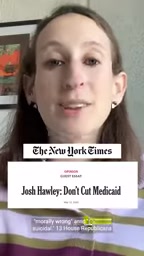
In the end, these 13 people and Senator Hawley all voted in favor of the bill. This contrast shows that concerns about the consequences of the cuts do exist within the party, but under the pressure of party-line voting they did not translate into actual resistance.
Why This Is Not Just a "Vulnerable Groups" Issue
Understanding Medicaid cuts as affecting only low-income people underestimates their spillover scope. Hospitals are community infrastructure, and the survival of obstetrics and emergency care does not distinguish between patients' ability to pay. When a hospital closes its obstetrics department because of a rising proportion of uninsured patients, all pregnant women in the area have fewer choices.
From this perspective, it is no surprise that healthcare has become a focus of the midterm elections: voters' concerns come not only from whether they themselves have coverage but also from whether nearby hospitals can stay open. The question mentioned in the report—"who is losing"—is shifting its answer from statistics to a concrete list of community services.
Related articles

Private Key Set to 4? CA's Elementary Mistake Leaves TLS Exposed
CA eMudra set private keys to tiny values like 4, making TLS certificates brute-forceable. A Computerphile video demonstrates the full process from extracting public keys to forging certificates, and explores the fragility of the PKI trust chain.

How Gen Turns Data into Decisions with ChatGPT Work
In an OpenAI user case, business leader Gen shares how ChatGPT Work turns data into decisions: within hours of launch, teams can judge whether integrations and onboarding flows work, shifting decision iteration from hundreds of trial-and-error attempts to a fast feedback loop.

ChatGPT vs. Claude In-Depth Comparison: Strong at Coding but Weak at Research — How to Bridge the Gap?
A user considers switching from ChatGPT to Claude, finding Claude stronger at coding but shallower at research. We analyze the differences and share tips to make Claude's research deeper.