Who's Less Popular: Democrats or Republicans?
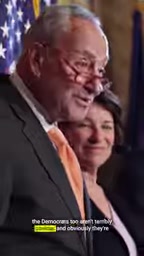
Both Democrats and Republicans suffer low approval ratings, neither benefits from the other's困境, and 2028 becomes the key window.
The video analysis points out that the president and Democrats are both under approval pressure, creating a "race to the bottom" political reality. Democrats face a dilemma between cooperation and confrontation: cooperation is seen as weakness by the base, while confrontation risks being labeled "obstructionist." Some voices urge using government shutdown as a weapon to force the president to concede on key issues, but the risks are enormous. Neither party can clearly benefit from the other's unpopularity, and the deeper problem is declining voter satisfaction with both parties overall. For Democrats, the real challenge is reigniting supporters' enthusiasm and building a credible image among swing voters, with the 2028 election cycle as the key test.
In a recent YouTube video that sparked widespread discussion, analysts raised a pointed question: in the current political landscape, who is less popular—the Democrats or the Republicans? The conversation didn't stop at a simple comparison of poll numbers, but delved into the dilemmas facing both parties, their strategic choices, and the room for future maneuvering.
Both Parties Under Pressure: Who's More "Unlikeable"?
The video opens by establishing a key premise: the president's own approval rating is at a low point. But the interlocutors quickly remind viewers that the Democrats are far from widely popular either. This "race to the bottom" political reality means neither party can gain clear advantage from the other's unpopularity.
The analysis suggests that everything the Democrats do politically serves one essential goal—making themselves more popular in the election cycle leading up to 2028. Yet the current political structure dictates that they face an almost unsolvable dilemma: without the president's cooperation, the Democrats can hardly push through any substantive legislative achievements.
This creates an awkward paradox—the harder they push their agenda, the more they may highlight their own powerlessness in the power structure; and if some policies do manage to pass, the credit may be seized by the president, actually boosting his image instead.
The Democrats' Dilemma: Cooperation or Confrontation?
The middle section of the video raises a core contradiction: should the Democrats choose to cooperate with the president, or adopt a tough confrontational stance?
If they choose cooperation, Democrats may be seen by their own base as weak, losing their political mobilization power. But if they choose confrontation, they face another risk—appearing "too obstructionist."
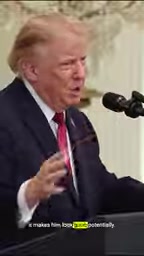
The interlocutors explicitly point out that once this "obstructionist" image takes hold, it could backfire on the Democrats' own public image, making voters believe they are not doing constructive work but indiscriminately blocking everything. This dilemma is a typical predicament in the current context of American political polarization.
Government Shutdown as a Political Weapon: The Temptation of Radical Strategy
The most striking part of the video mentions a growing chorus of voices: some are urging Democratic leaders to adopt an extreme strategy—holding government funding "hostage," and if the president doesn't concede on issues Democrats consider "existentially important," letting the government shutdown continue indefinitely.
The logic behind this strategy is that since normal legislative channels are blocked, they should use the constitutional crisis tool of government shutdown to force the other side back to the negotiating table. But the risks of this strategy are equally enormous: a government shutdown's impact on ordinary people's lives is direct and widespread, and voters are likely to blame the side taking the extreme position.
A government shutdown is a unique constitutional crisis mechanism in American politics. When Congress fails to pass the next fiscal year's appropriations bill or a temporary spending bill on time, non-essential federal government departments are forced to close due to lack of funding, and hundreds of thousands of federal employees face furloughs or delayed paychecks. Historically, shutdowns have been used multiple times as political bargaining tools, most famously the 35-day shutdown from 2018-2019 over border wall funding disputes, which set the record for the longest in history. The impact of a shutdown extends to national park closures, passport processing delays, reduced food safety inspections, and more, so the public often blames the party that refuses to budge. Precisely for this reason, holding funding "hostage" is a high-risk, high-reward edge strategy that tests not only political will but also voters' real tolerance for pain.
The True Public Opinion Behind the Polling Fog
Returning to the original question: who is less popular, the Democrats or the Republicans? The video's answer is not either/or.
Both parties face the dilemma of low approval ratings, but for different reasons and in different ways. Republicans bear direct pressure due to the president's personal style and policy agenda; Democrats are stuck in a passive position due to the lack of a clear alternative and effective political strategy.
The deeper problem is that American voters' overall satisfaction with both parties is declining. This "double low" situation means that any relative advantage for either side may be short-lived and fragile. For the Democrats, the real challenge is not how to be "more popular" than the Republicans, but how to reignite enthusiasm among their own supporters while building a trustworthy image among swing voters.
The video concludes by suggesting that the 2028 election cycle will be the key moment to test the success or failure of these strategies. Until then, both parties will struggle to find their political way forward under the shadow of unpopularity.
Modern American polling typically relies on landline, cellphone, and online samples, weighted to simulate the national voter structure. However, in recent years polling errors have been frequent, especially in the 2016 and 2020 elections, where errors in some key states exceeded confidence intervals. This has led to declining public trust in polling data, making comparative questions like "who is less popular" even harder to settle with simple numbers. Polls reflect a snapshot of sentiment at a specific point in time, not stable election outcomes; the slight gaps in party support often fluctuate within the margin of error, and what truly deserves attention is long-term trends and changes in intensity.
Related articles

Gmod TTT: Boba's Winning Streak and Game Design Insights
An in-depth analysis of Gmod TTT's role system, creative items, and social gameplay mechanics, exploring the relationship between randomness design and game balance through Boba's winning streak phenomenon.

FlexBudget: Fair Comparison of KV Cache Eviction Strategies Under a Unified Compute Budget
AMD engineer proposes FlexBudget at PyTorch Conference: a training-free fair comparison method for KV cache eviction rules using fixed kernels and memory budgets, all in core PyTorch.
