Whoop Launches Social Network, Health Data Sharing Becomes a New Trend

Whoop launches a social network for sharing health data, transforming into a personal health brand and hinting at acquisitions.
Whoop recently launched a social networking feature that allows members to share sleep, recovery, and workout data, marking its transformation from a wearable device company to a personal health brand. CEO Will Ahmed hinted at possible future acquisitions to accelerate this strategy. The article analyzes the logic behind data sharing: social comparison and encouragement can enhance user engagement and generate user-generated content to attract new users, similar to Strava but more focused on comprehensive health metrics. Transforming into a personal health brand means Whoop may launch value-added services such as insurance and nutrition based on user behavior data. At the same time, health data sharing faces challenges of privacy security and user engagement. Overall, this reflects the health tech industry's trend from pure tracking to social interaction and personalized services.
From Wearable Device to Health Social Platform
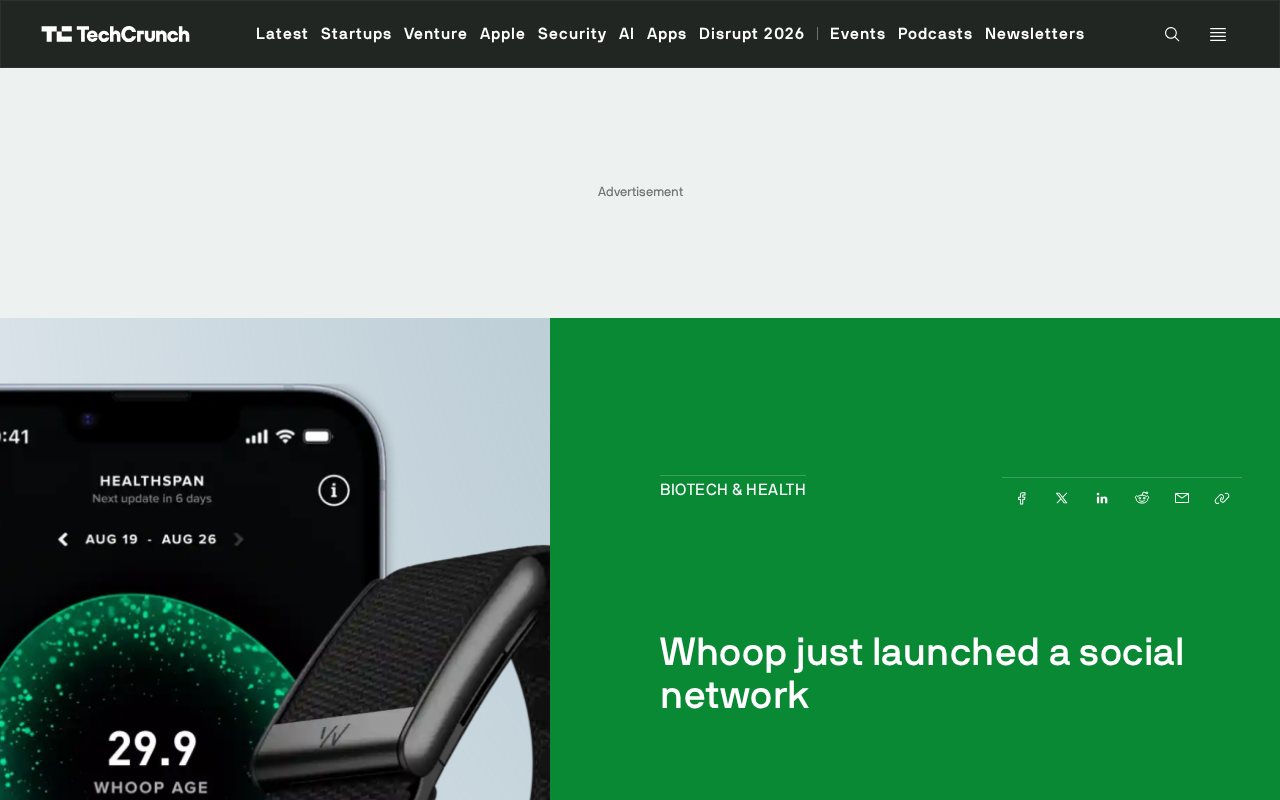
Whoop recently launched a social networking feature that allows members to share their sleep, recovery, and workout data. This is not just adding a social layer—it's a significant step in Whoop's transformation into a personal health brand. CEO Will Ahmed hinted at possible future acquisitions to accelerate this strategy.
The Logic Behind Data Sharing
Whoop's core product is a wearable device that tracks sleep, recovery, and athletic performance. Through the social network, users can share this data with friends or followers, creating a form of social interaction based on health data. This model is similar to Strava's success in the fitness space, but Whoop focuses more on comprehensive health metrics.
Sharing data can enhance user engagement, as social comparison and encouragement often motivate users to maintain healthy habits. At the same time, this provides Whoop with more user-generated content, potentially attracting new users.
Strava is a sports social platform centered on cycling and running. Its core mechanism lets users upload workout records, participate in segment ranking (Segments) challenges, and like and comment on each other's activities. Strava's success proves that "workout data + social comparison" can significantly boost user activity and retention. Whoop is often seen as a "health-focused Strava," but the difference lies in: Strava focuses on single-workout performance and route competition, while Whoop tracks 24/7 physiological data (sleep, heart rate variability, recovery), so its social interaction leans more toward sharing and encouragement of long-term health trends rather than competitive ranking of individual workouts. This difference also means Whoop's social network may face more complex privacy considerations—all-day health data is more sensitive than a single workout route.
The Ambition of a Personal Health Brand
Ahmed's comments suggest that Whoop is not content with being just a hardware company. Through the social network, Whoop can collect more user behavior data, further personalize health recommendations, and potentially even launch value-added services such as insurance and nutrition. Acquisitions could be a means to quickly expand product lines or enter new markets.
Personal health brand in this context refers to companies shifting from simply selling hardware devices to providing ongoing services and content around users' long-term health data. Hardware is one-time revenue, while a health brand can generate recurring revenue through subscriptions, personalized recommendations, and value-added services (such as nutrition guidance and insurance partnerships). Whoop itself already uses a subscription model (members pay monthly for the device and data analysis), and transforming into a personal health brand means further turning "data" into "services." Acquisitions in this strategy are typically used to quickly fill capability gaps—for example, acquiring sleep science teams, nutrition consulting platforms, or mental health apps to expand the service matrix without building teams in-house. This "hardware + data + services" model is also a direction being explored by health tech companies like Oura and Apple.
Challenges and Opportunities
Privacy is the primary issue in health data sharing. Whoop needs to ensure the security and transparent use of user data. Additionally, the success of a social network depends on user engagement—how to avoid becoming another "zombie social" feature is key.
Nevertheless, Whoop's move reflects a trend in the health tech industry: from pure tracking to social interaction and personalized services. If executed well, Whoop could become a leader in health social networking.
One-line Summary
Whoop launches a social network for sharing health data, transforming into a personal health brand and hinting at acquisitions.
Paragraph Summary
Whoop recently launched a social networking feature that allows members to share sleep, recovery, and workout data, marking its transformation from a wearable device company to a personal health brand. CEO Will Ahmed hinted at possible future acquisitions to accelerate this strategy. The article analyzes the logic behind data sharing: social comparison and encouragement can enhance user engagement and generate user-generated content to attract new users, similar to Strava but more focused on comprehensive health metrics. Transforming into a personal health brand means Whoop may launch value-added services such as insurance and nutrition based on user behavior data. At the same time, health data sharing faces challenges of privacy security and user engagement. Overall, this reflects the health tech industry's trend from pure tracking to social interaction and personalized services.
Related articles

Michael Nielsen Takes Down His Classic Neural Network Textbook, Sparking Community Discussion
Michael Nielsen's classic free textbook Neural Networks and Deep Learning has been taken offline, sparking discussion on Hacker News about the reasons and impact.

Inside the AI Training Data Market: The Trade-off Between Exclusivity and Discounts
G2i founder Gabe Greenberg reveals the dual-track pricing of the AI training data market: labs pay a premium for exclusive data or accept discounts that allow others to buy it.

SessionGraph: Unifying All Coding Agent Sessions in One Interactive Graph
SessionGraph aggregates coding agent sessions into an interactive graph, helping developers review, debug, and manage AI coding workflows across sessions. This article examines its positioning, value, and open questions.