Why AI Agents Need Skills: A Modular Approach to Eliminating Context Bloat

Agent Skills load knowledge on demand to cut AI Agent context bloat, token costs, and hallucinations.
This article introduces Agent Skills as a practical solution to AI Agent context window bloat. When Agents connect to many tools and business knowledge sources, loading everything each round spikes token costs and triggers hallucinations. Skills break knowledge into modular packages — each a folder with a skill.md file using a two-layer structure: a lightweight Front Matter (name + description, ~25 tokens) for indexing, and a detailed Body for execution. Each loop, only Front Matter is loaded; the model picks the relevant skill and loads its Body on demand, keeping context lean and portable across teams.
AI Agents have an unavoidable pain point in real-world applications: context window bloat. When you connect an agent to dozens of tools and stuff it with organizational rules and business knowledge, every conversation round must load all of that content — burning money and triggering hallucinations. This article, based on a YouTube tech creator's explanation, breaks down a solution gaining traction across the industry: Agent Skills.
Context Bloat: The Cost Trap Every Agent Faces
Imagine a typical scenario: your Agent connects to an MCP (Model Context Protocol) server with 80 tools. In every Agent loop, the descriptions, definitions, and schemas for all 80 tools get fully loaded into the context window. Add in user messages, conversation history, and a massive system prompt stuffed with Jira instructions, GitHub guidelines, and a Salesforce operations manual — and the context explodes.
The core problem is this: not every question requires all that knowledge. When a user simply asks "What Jira tickets do I have?", the system still loads the Salesforce playbook, Wiki docs, onboarding guides, and other completely irrelevant information. This redundancy produces three direct consequences: token consumption spikes, API costs climb, and the model hallucinates due to information overload.
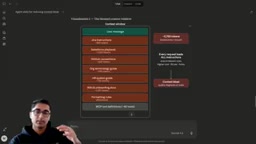
The creator previously mentioned "Progressive Tool Disclosure" as a way to ease tool bloat. The Skills approach discussed here is a complementary solution targeting bloat at the knowledge and instruction level.
MCP (Model Context Protocol) is an open protocol released by Anthropic in late 2024, designed to provide a standardized connection interface between AI models and external tools and data sources. Think of it as the "USB-C" of the AI world — any server that implements the MCP protocol can be called directly by a compatible Agent, with no need to write custom integration code for each tool. MCP servers typically expose a set of "Tools," each carrying a name, description, and parameter schema (which tells the model how to invoke it). When an MCP server mounts 80 tools, the complete description for every tool gets injected into the context before each inference — which is one of the main sources of context bloat.
What Are Skills: On-Demand Modular Knowledge Packages
At their core, Agent Skills break knowledge into modular, on-demand packages. Instead of carrying all knowledge at all times, the Agent retrieves only the relevant skill just-in-time — exactly when it's actually needed.
The structure is straightforward. You have a /skills directory containing subfolders — for example, Jira, Salesforce, GitHub — each representing an independent skill. The key rule: any subfolder containing a skill.md file is recognized as an available skill.
Skills aren't limited to a single Markdown file. Each skill folder can also include concrete execution resources — Python scripts for data analysis, Bash scripts for automation, templates, sample documents, and more. For instance, if a skill needs to generate an analytical report using pandas, you can drop a custom script right into the corresponding folder for the Agent to call during execution. This design makes Skills both a knowledge carrier and a capability carrier.
Anatomy of skill.md: The Two-Layer Structure of Front Matter and Body
A skill's Markdown file consists of two parts: Front Matter and Body.

The Front Matter contains exactly two things — and only two: name and description. The name is the skill's identifier; the description explains what the skill does and when it should be used. This section is deliberately minimal.
The Body carries the real detail. For a GitHub skill, the Body would specify PR (Pull Request) conventions, branch naming standards, and other concrete operational instructions — the detailed rules the Agent actually needs when executing a task.

This two-layer design is what makes the whole mechanism efficient: the lightweight Front Matter handles indexing, while the substantial Body handles execution. The two are separated, each with a distinct role.
Front Matter is a metadata format originating from static site generators (like Jekyll and Hugo). It's wrapped in two
---lines, with key-value pairs written in YAML syntax inside. In the Markdown ecosystem, it's widely used to store structured information like document titles, tags, and dates. The Skills mechanism borrows this convention to layer a skill's lightweight index information (name and description) alongside its main content within the same file — maintaining file unity while enabling a physical separation of "index" and "detail" during parsing. The system only needs to read the handful of fields inside the---block to discover a skill, without parsing the entire file.
How It Works: The Model's Smart Skill Selection Process
With the structure clear, the runtime flow makes complete sense.
In each Agent loop, the system loads only the Front Matter of all available skills into the context window — just each skill's name and description. Since this content is tiny, the creator estimates a single Front Matter takes roughly 25 tokens. Even with 10 skills, the total overhead is negligible.
The critical step comes next: the model uses these descriptions to determine which skill the user's question requires. For example, if the user asks "How many GitHub repositories exist?", the model infers from the GitHub skill's description that this is the relevant skill. Once that's determined, the system loads the full Body of that skill into the context.

The result: the context window contains only the detailed instructions for the GitHub skill. Jira rules, HR system guides, formatting conventions — all excluded. While loading the Body does add tokens, this just-in-time approach dramatically reduces token usage and API costs compared to stuffing every piece of knowledge into the system prompt upfront.
Portability: The Other Key Advantage of Skills
Beyond solving context bloat, Skills have another benefit the creator specifically highlighted: portability.
If someone publishes a well-designed skill online (say, on GitHub), you can drop it directly into your own skills directory and use it immediately. This means skills can be shared, reused, and accumulated like components — rather than every team writing an entirely new, sprawling system prompt from scratch.
Final Thoughts
Skills offer a more elegant philosophy for organizing knowledge: instead of dumping everything you might possibly need into a single monolithic system prompt, break it into modular, on-demand, cross-project-portable skill packages. For developers building production-grade Agent systems, this approach directly improves three core metrics — lower token costs, fewer hallucinations, and better maintainability. As Agents connect to more and more tools and knowledge sources, this kind of modular architecture will likely become standard practice.
This thinking closely mirrors the "Lazy Loading" principle in software engineering: system resources are only loaded when truly needed, rather than fully initialized at startup. In LLM inference, every token means not just API cost but also direct impact on the model's attention allocation — overly long contexts dilute the weight of critical information, which is one of the mechanisms behind hallucination. Agent Skills decouple "knowledge index" from "knowledge content," essentially applying software architecture methodology to manage LLM cognitive load. This signals that the engineering practices for future Agent systems will increasingly converge with traditional software design patterns.
Related articles

Chain of Thought Isn't Just for AI: How Humans Can Use CoT to Improve Thinking Quality
Chain of Thought isn't just a prompt trick for large models. Starting from a Hacker News discussion, this article analyzes why CoT works for human thinking too, breaks down actionable ways to transfer it, and highlights the key differences between human CoT and machine CoT.
Cloudflare Teams Up with OpenAI: Closi…
Cloudflare Teams Up with OpenAI: Closing the Loop from Vulnerability Discovery to Defense with AI
Cloudflare uses OpenAI Daybreak to investigate security vulnerabilities and generate reviewable remediation plans, while developers use Codex to boost coding efficiency and quality.

Orca Multi-Agent Orchestration in Practice: A Guide to Parallel Collaboration with Claude and Codex
Orca is Stable AI's free open-source agent workbench supporting 34 agents like Claude Code and Codex in parallel. Learn its Git worktree isolation, multi-model orchestration, and mobile management.