Why AI Companies Resist Open Source: The Strategic Dilemma and Game Theory of Market Leaders

Leading AI companies won't open-source core models because burning your competitive lead defies business rationality.
This article examines why leading AI companies resist open-sourcing their core models, analyzing the strategic logic through the lens of moat protection, data flywheels, and game theory. It argues that open source is typically a challenger's weapon (as with Meta's Llama), while leaders maximize returns through closed-source APIs. The piece explores how timing matters — as technology commoditizes, open-source dynamics may shift — and how sophisticated companies employ hybrid "open core" strategies to balance ecosystem goodwill with competitive advantage.
A Single Tweet Sparks Industry-Wide Reflection
Recently, a tech observer posed a seemingly simple yet industry-defining question on Twitter: "Why would anyone willingly burn their lead? I just don't see it happening right now."
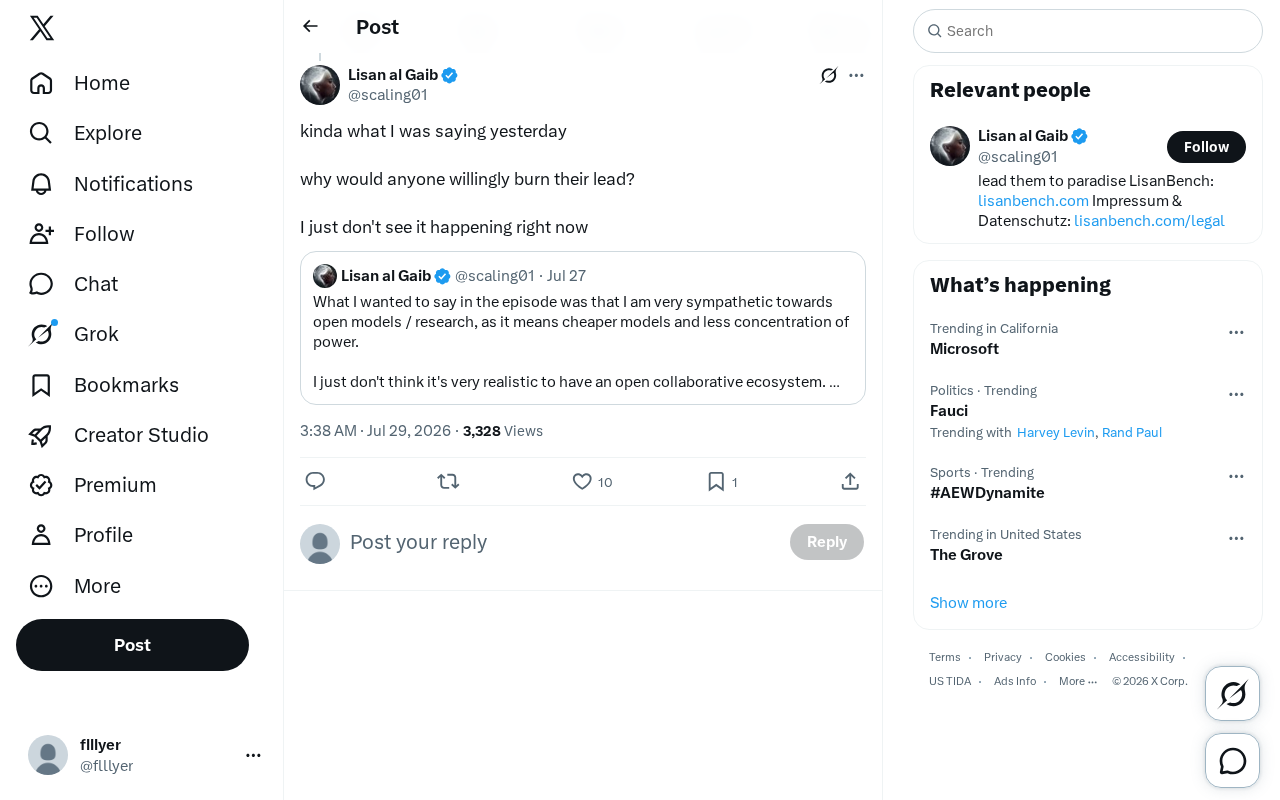
This brief comment cuts to the heart of the most fundamental strategic game in today's AI industry: Do leading AI companies have any incentive to open up their core technology? The answer is almost certainly no — and the logic behind it deserves a deep dive.
The "Moat" Mentality: Why AI Giants Choose Closed Source
In any technology race, the frontrunner faces a classic strategic dilemma: protect existing advantages, or expand ecosystem influence through openness. In economics, this is a variant of the "innovator's dilemma" — when you have the best technology, opening it up could create your most formidable competitors.
Technological Leadership Is the Ultimate Business Asset
When an AI company establishes a clear lead in model capabilities, inference speed, or cost efficiency, that lead itself becomes the most valuable moat. It translates into:
- Pricing power: Leaders can dictate terms in API pricing and enterprise partnerships
- Talent magnetism: Top researchers gravitate toward teams with access to cutting-edge technology
- Data flywheel: More users generate more data, further strengthening model capabilities
The Data Flywheel is a key concept for understanding AI companies' competitive advantages. The core logic works as follows: better products attract more users, more users generate more interaction data, more data is used to train and optimize models, and optimized models deliver better product experiences. Once this cycle starts spinning, latecomers find it nearly impossible to catch up, because data accumulation has an irreversible temporal dimension. Take OpenAI as an example — the massive volume of user conversation data and human preference feedback (RLHF data) accumulated through ChatGPT represents a core asset that competitors simply cannot replicate in the short term.
As the tweet states, voluntarily "burning your lead" is almost unthinkable under pure business rationality. Fully open-sourcing a top-tier model that cost hundreds of millions or even billions of dollars to train is tantamount to handing over your competitive barriers on a silver platter.
The Severe Imbalance Between Costs and Benefits of AI Open Source
Looking back through tech history, open source has typically been a challenger's weapon, not the leader's preferred strategy. When a company is playing catch-up, open source can rapidly aggregate developer ecosystems, establish de facto standards, and erode the leader's market share. Meta's Llama series is a textbook case — using open-source large models to reshape the competitive landscape rather than maintain existing advantages.
Meta's release of the Llama series of open-source models is a landmark event in AI industry open-source strategy. After Llama first leaked in February 2023, triggering an explosion of open-source community innovation, Meta officially released Llama 2 and the Llama 3 series. Meta's strategic logic is crystal clear: as a latecomer in large language model commercialization, it cannot directly compete with OpenAI and Google in the API services market. Through open source, Meta achieved multiple objectives — reducing the entire industry's dependence on competitors' closed-source models, attracting developers to build applications on Meta's infrastructure, and gaining free model improvements through community contributions. In essence, Meta traded "model-layer profits" for "ecosystem control at the infrastructure and application layers."
By contrast, companies in a position of absolute leadership have extremely weak motivation to open-source their core models. They prefer to maximize commercial returns through closed-source APIs while maintaining technical barriers.
The Industry Judgment Behind "I Just Don't See It Happening Right Now"
The phrase "I just don't see it happening right now" in the tweet implies a precise assessment of the current AI industry's competitive landscape.
Game Theory Characteristics During Peak AI Competition
The AI race is currently in its most intense phase. Major labs are leapfrogging each other in model capabilities, and none dare easily surrender their chips. In this "arms race" environment:
- Leaders fear open source will let competitors "free-ride," rapidly closing the gap
- Massive R&D investments need closed-source commercialization to recoup costs
- Safety compliance and regulatory pressure provide additional rationalization for staying closed
The intensity of this race becomes tangible when you look at the scale of investment: training a GPT-4-class model is estimated to require over $100 million in compute resources, and next-generation models may cost several hundred million or even exceed $1 billion. Microsoft has cumulatively invested over $13 billion in OpenAI, Google's annual capital expenditure on AI infrastructure exceeds $30 billion, and Amazon has invested $4 billion in Anthropic. At this scale of capital deployment, every percentage point improvement in model capability corresponds to enormous sunk costs. Key technical breakthroughs in RLHF (Reinforcement Learning from Human Feedback), synthetic data generation, and long-context window processing all require extensive proprietary data and engineering accumulation. Releasing these investments for free through open source means billions of dollars in R&D instantly becomes a public good.
The Importance of Timing
You might not have noticed, but the commentator specifically emphasized the temporal qualifier "right now." This implies that the AI industry landscape is not static — when technology matures and marginal advantages gradually shrink, the cost-benefit calculus of open-source strategies may reverse.
The evolution from cutting-edge technology to commodity has a clear historical trajectory in the IT industry. Databases went from Oracle's closed-source monopoly to the open-source proliferation of MySQL/PostgreSQL. Cloud computing went from AWS's first-mover advantage to the emergence of open-source alternatives like OpenStack. All followed similar arcs. In AI, this pattern is replaying at an accelerated pace: when ChatGPT launched in 2022, large language models with instruction-following capabilities were still scarce resources; by 2024, the open-source community had produced hundreds of models with respectable performance. Research on Scaling Laws suggests that when the marginal returns of increasing model scale diminish, competition will shift from "who can train a bigger model" to "who can deploy and fine-tune models more efficiently." At that point, the collaborative advantages of the open-source ecosystem may overwhelm the technical barrier advantages of closed source.
Once a particular AI capability transitions from "scarce frontier" to "general commodity," the value of keeping it closed diminishes dramatically. At that point, leaders may actually choose to open-source outdated model versions — harvesting ecosystem goodwill without truly damaging core competitiveness.
The Long-Term Dialectic Between Open and Closed Source in AI
No Strategy Is Eternally Correct
The open-versus-closed debate in AI is fundamentally a dynamic function of technological maturity and competitive position. Companies' choices continuously adjust as their position and market environment evolve:
- Leading with frontier technology: Lean closed-source, fully protect core advantages
- Catching up and needing ecosystem: Lean open-source, rapidly expand influence
- After technology commoditization: Potentially open-source older versions, harvest long-tail ecosystem value
This dynamic choice can be understood through the lens of "signaling games" in game theory: whether a company chooses open or closed source sends signals to the market about its technological confidence and strategic intent. Choosing closed source implies "our technology is unique enough to be worth protecting"; choosing open source may signal "we're confident we can maintain our lead in open competition" or "we need ecosystem strength to compensate for our own shortcomings."
Balancing Open-Source Ecosystems with Commercial Interests
Truly sophisticated AI companies often employ a "hybrid strategy" — open-sourcing portions of their toolchain and foundational components to build developer goodwill, while keeping their most critical flagship models firmly in hand. This approach captures the community dividends of open source without "burning the lead."
This "open periphery, closed core" approach is known in the software industry as the "Open Core" business model, with numerous mature implementations. Google open-sourced deep learning frameworks like TensorFlow and JAX but keeps its Gemini flagship models strictly closed-source; OpenAI open-sourced Whisper (speech recognition) and CLIP (vision model) while keeping the core GPT series completely closed; Anthropic publishes extensive safety research papers but doesn't open-source Claude. The essence is that what gets open-sourced is typically capability layers where competitors have already caught up, or tool layers that lock in developer habits, while the model capabilities representing generational differences are preserved as the core selling point of paid services. The elegance of this strategy is that it makes companies appear "open-source friendly" while incurring zero substantive competitive loss financially.
Conclusion: Strategic Restraint Under Commercial Rationality
This brief Twitter comment expresses the most realistic aspect of the AI industry in the plainest possible language: under commercial rationality, leaders will not easily surrender their moats.
"Why would anyone willingly burn their lead?" — The answer to this question may only truly change when the industry enters its next development phase and the current technological chasm gradually narrows. Until then, what we'll continue to see is an ongoing game between leaders' strategic restraint and challengers' open-source insurgency.
For practitioners and observers following the AI industry landscape, understanding this underlying logic holds far more long-term value than chasing the hype around every model release. Whether to open source or not has never been a debate about ideals — it's naked strategic calculation. In this calculation, time, capital, technological gaps, and market structure form a complex multivariate equation, and each company's answer depends on its specific position within it.
Related articles
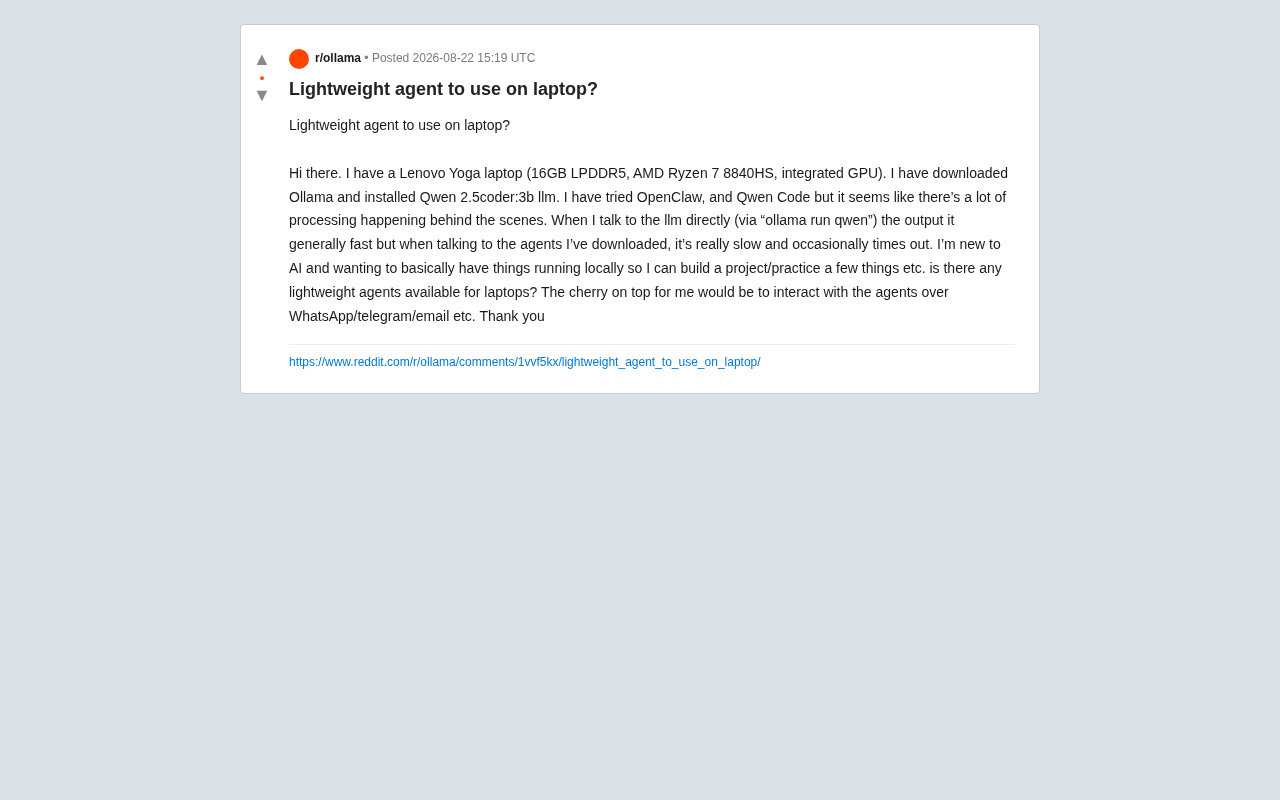
Local AI Agent Deployment Too Slow? A Lightweight Optimization Practical Guide
Local AI Agent deployment slow and timing out? This guide covers Agent framework overhead, hardware bottlenecks, and practical optimizations including context trimming, quantization, and Telegram Bot integration.

Choosing a Laptop for AI Studies: MacBook vs NVIDIA Laptop — An In-Depth Comparison Guide
In-depth analysis for AI students choosing laptops: MacBook Air M5 with remote GPU vs NVIDIA laptop, comparing CUDA support, portability, battery life, and value.

Self-Hosted LLM Tech Stack: A Complete Guide to Managing Your Local AI Cluster from the Terminal
A deep dive into self-hosting LLM tech stacks: inference engines, model management, vector databases, and how to manage your local AI cluster from the terminal.