Why Are AI Companies Cracking Down on 'Reverse Engineering Everything'?
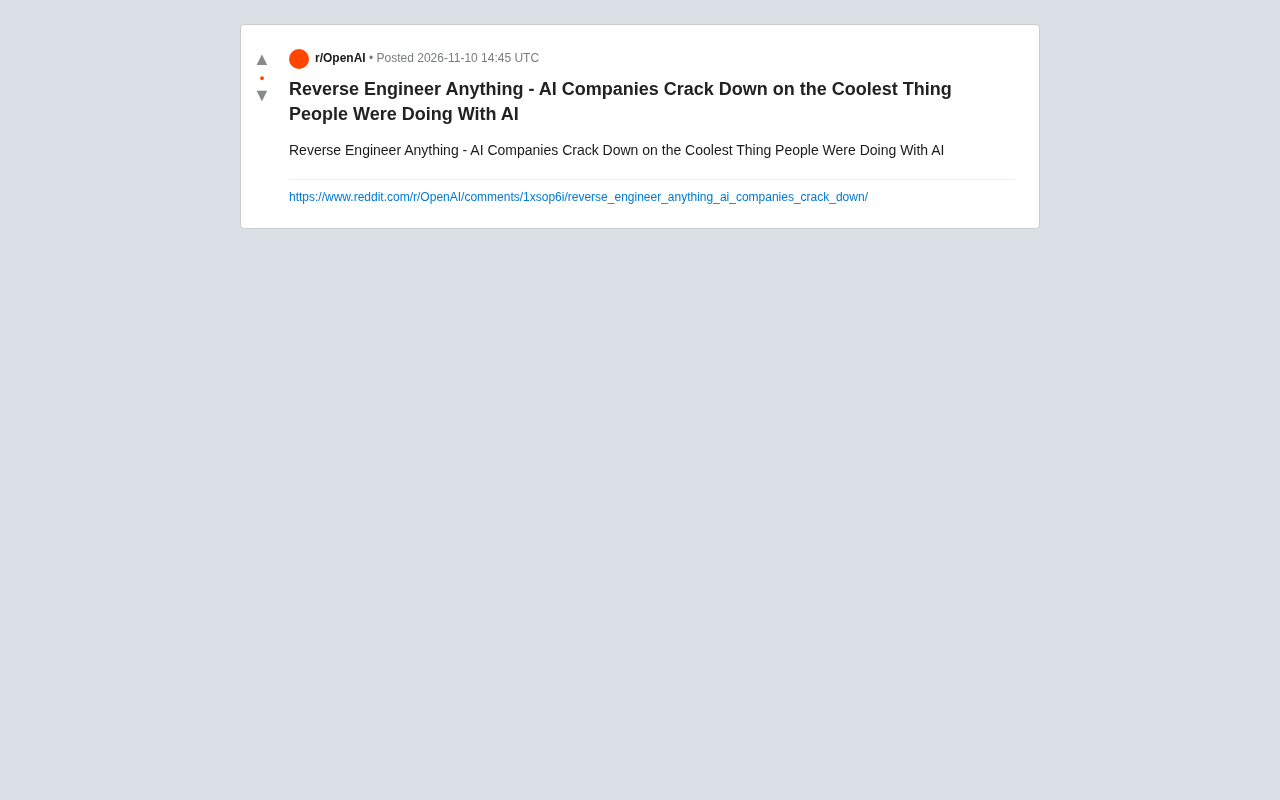
AI companies are tightening reverse engineering use due to copyright, security, and moat pressures, raising community concerns about narrowing innovation space.
Starting from a Reddit discussion, the article analyzes why AI companies are restricting users from using large models for reverse engineering. AI lowers the barrier, letting ordinary developers perform code structure analysis and functional reproduction via natural language prompts, spreading the skill beyond experts. Platform tightening is driven by copyright and licensing compliance risks, blurry security abuse boundaries, and commercial moats protecting model architecture and alignment strategies. The community fears platforms are sliding from open tools to controlled services, with legitimate research caught in blanket restrictions. The article advises developers to assess compliance, consider localized or auditable models, and calls for clearer boundaries between research-oriented reverse engineering and abuse.
From 'Cool Trick' to 'Crackdown': Why Reverse Engineering Has Become a Target for AI Companies
A recent discussion thread on Reddit has attracted widespread attention, with a title that points directly at a curious phenomenon: AI companies are cracking down on one of the coolest things people do with AI—reverse engineering. The post doesn't offer a lengthy argument, but it precisely captures a turning point that is now underway: reverse engineering, once seen by the community as an 'AI superpower,' is now facing increasingly obvious restrictions from platforms.
Reverse engineering itself is nothing new, but when combined with large models, the barrier to entry drops dramatically. Users no longer need to master assembly or decompilation tools; they can simply hand a piece of code, a binary file, or even a product description to AI and get structural analysis, logical inferences, or even functional reproduction plans. This 'conversational reverse engineering' has spread a skill that once belonged to a select few experts to ordinary developers—and has put AI companies in a legal and ethical gray zone.
Three Pressures Behind the Crackdown: Copyright, Security, and Commercial Moats
The tightening of restrictions on reverse engineering use cases by AI companies is not driven by a single factor. Judging from public discussions and industry trends, at least three forces are at work simultaneously.
Copyright and Licensing Risks
Reverse engineering is strictly restricted in many jurisdictions, especially when it involves commercial software, encryption protocols, or copyrighted binaries. When users leverage AI to circumvent technical protection measures, platforms may be deemed a 'channel' for assisting infringement. Even if the AI company itself is not directly involved, the fact that its services are used to circumvent license agreements is enough to raise legal concerns.
Technical Protection Measures (TPMs) and anti-circumvention clauses are key background for understanding this risk. Many jurisdictions (such as Section 1201 of the U.S. Digital Millennium Copyright Act (DMCA) and the EU Information Society Copyright Directive) not only prohibit direct copying of copyrighted works but also prohibit circumventing technical protection measures used to control access or copying. If reverse engineering involves cracking encryption, removing license checks, or bypassing obfuscation, it may trigger anti-circumvention liability. Although AI platforms are not direct implementers, if their services are systematically used to generate circumvention solutions, they may be accused of assisting or inducing infringement. This is also why platforms tend to preemptively prohibit such uses in their terms of service—shifting and compartmentalizing risk through contractual clauses rather than responding after individual cases arise.
Security and Abuse Boundaries
The line between reverse engineering, vulnerability discovery, and malware analysis is inherently blurry. The same prompt can be used to analyze compatibility issues in legacy software or to find system weaknesses. It is difficult for AI companies to precisely distinguish 'research-oriented reverse engineering' from 'offensive reverse engineering' at the model level, so they tend to adopt blanket restriction strategies to reduce abuse risk.
The dual-use dilemma of vulnerability discovery and malicious exploitation is especially prominent here. Reverse analysis in security research usually follows responsible disclosure processes, with the goal of discovering and fixing flaws; offensive reverse engineering, by contrast, aims to exploit vulnerabilities. The two are highly overlapping in technical steps—disassembly, control flow analysis, protocol reverse engineering, and other methods are identical, with the difference mainly lying in intent and subsequent handling. Large models cannot reliably infer user intent, nor can they easily distinguish 'analysis' from 'exploitation' at the execution level. Therefore, platforms often filter based on sensitive characteristics of output content (such as directly exploitable vulnerability details or bypass steps). This judgment based on content rather than intent is the technical root of the 'blanket' strategy and the direct cause of collateral damage to legitimate research.
Self-Protection of Commercial Moats
A more subtle layer is that AI companies' own products often become targets of reverse engineering. Model architecture, inference logic, and safety alignment strategies are all goals that competitors and researchers try to probe through conversation. If a platform allows users to systematically reverse engineer its own models, it is effectively helping outsiders dismantle its own technical barriers.
Model extraction and alignment probing are two types of reverse engineering behavior that AI companies are particularly wary of. Model extraction refers to inferring a model's parameters, architecture, or decision boundaries through a large number of carefully constructed queries, thereby copying its capabilities or training a substitute model; alignment probing attempts to find blind spots and trigger conditions in safety strategies through conversation. These two types of behavior differ from traditional software reverse engineering: they do not require obtaining binary files and can be carried out solely through API interactions, with extremely low barriers and difficulty in distinguishing them from normal use. For platforms, allowing such probing is equivalent to continuously leaking competitive intelligence and security weaknesses, so they explicitly prohibit it in usage policies and impose rate limits or behavioral detection on high-frequency, patterned probing queries.
Community Backlash: Is the Space for Innovation Being Compressed?
The Reddit post resonated because it touched on a core anxiety in the developer community: AI platforms are sliding from 'open tools' to 'controlled services.' In the early days, users could use AI for all kinds of imaginative experiments, and reverse engineering was just one example. As platforms gradually tighten usage policies, add output filters, and restrict specific prompt patterns, what the community feels is a narrowing of exploratory space.
This backlash is not without reason. Reverse engineering has legitimate uses in education, compatibility development, security research, and other fields. Blanket restrictions may harm legitimate research behavior and push some users toward more closed local models or unregulated alternative services. But from the platform perspective, the balance point between openness and risk is constantly shifting, and every shift creates new friction.
Practical Implications for Developers
For engineers who routinely use AI to assist development, this trend means several adjustments. First, scenarios involving reverse analysis require more careful compliance assessment, especially content related to commercial software and encryption. Second, the risk of relying on cloud-based large models for sensitive analysis tasks is rising, making localized or auditable model solutions more attractive. Third, the community needs to define the boundary between 'research-oriented reverse engineering' and 'abuse' more clearly; otherwise, platform conservatism will only become stricter.
The game between AI companies and the reverse engineering community is essentially a renegotiation of the boundaries of AI capabilities. There is still no consensus on who has the right to decide which uses are 'cool' and which are 'dangerous.' What is certain is that as AI capabilities continue to strengthen, this kind of friction will only appear more frequently.
Localized and auditable model solutions deserve further explanation of their practical meaning. Locally deployed open-source models (such as small-parameter models that can run on consumer-grade hardware) put the analysis process entirely under user control, without passing through third-party servers, thereby avoiding cloud platform usage policy reviews and log retention issues. Auditability means users can inspect the source of model weights, the scope of training data, and the inference process, thereby providing a traceable evidence chain in compliance reviews. For teams involved in commercial software compatibility analysis or security research, such solutions not only reduce policy risk but also make it easier to establish clear internal responsibility boundaries. Of course, local models are usually weaker in capability than cloud flagship models, requiring a trade-off between capability and compliance.
Frequently Asked Questions
Why do AI companies restrict reverse engineering use cases?
Mainly for three reasons: copyright compliance, security abuse risk, and protection of their own technical barriers. Reverse engineering easily touches license agreements and legal red lines, may be used to find system weaknesses, and platforms do not want their own models to be systematically dismantled.
What has changed in reverse engineering with AI assistance?
Large models have lowered the technical barrier to reverse engineering. Users no longer need to master professional tools; through natural language prompts, they can obtain code structure analysis, logical inferences, and functional reproduction suggestions, spreading this skill from expert domains to ordinary developers.
How should ordinary developers respond?
When reverse analysis is involved, prioritize compliance assessment, consider localized or auditable model solutions for sensitive tasks, and pay attention to updates in platform usage policies to avoid relying on a single cloud service for high-risk analysis.
One-line Summary
AI companies are tightening restrictions on reverse engineering due to copyright, security, and moat pressures, raising community concerns about narrowing space for innovation.
Paragraph Summary
Starting from a Reddit discussion thread, the article analyzes why AI companies have begun restricting users from using large models for reverse engineering. With the combination of reverse engineering and AI, the barrier to entry has dropped sharply, and ordinary developers can complete code structure analysis and functional reproduction through natural language prompts, spreading this skill from expert domains. Platform tightening is mainly driven by three pressures: copyright and licensing compliance risks, blurry boundaries of security abuse, and commercial moats protecting their own model architecture and alignment strategies. The community worries that platforms are sliding from open tools to controlled services, and legitimate research may be harmed by blanket restrictions. The article advises developers to assess compliance, consider localized or auditable model solutions, and calls for a clear definition of the boundary between research-oriented reverse engineering and abuse.
Related articles
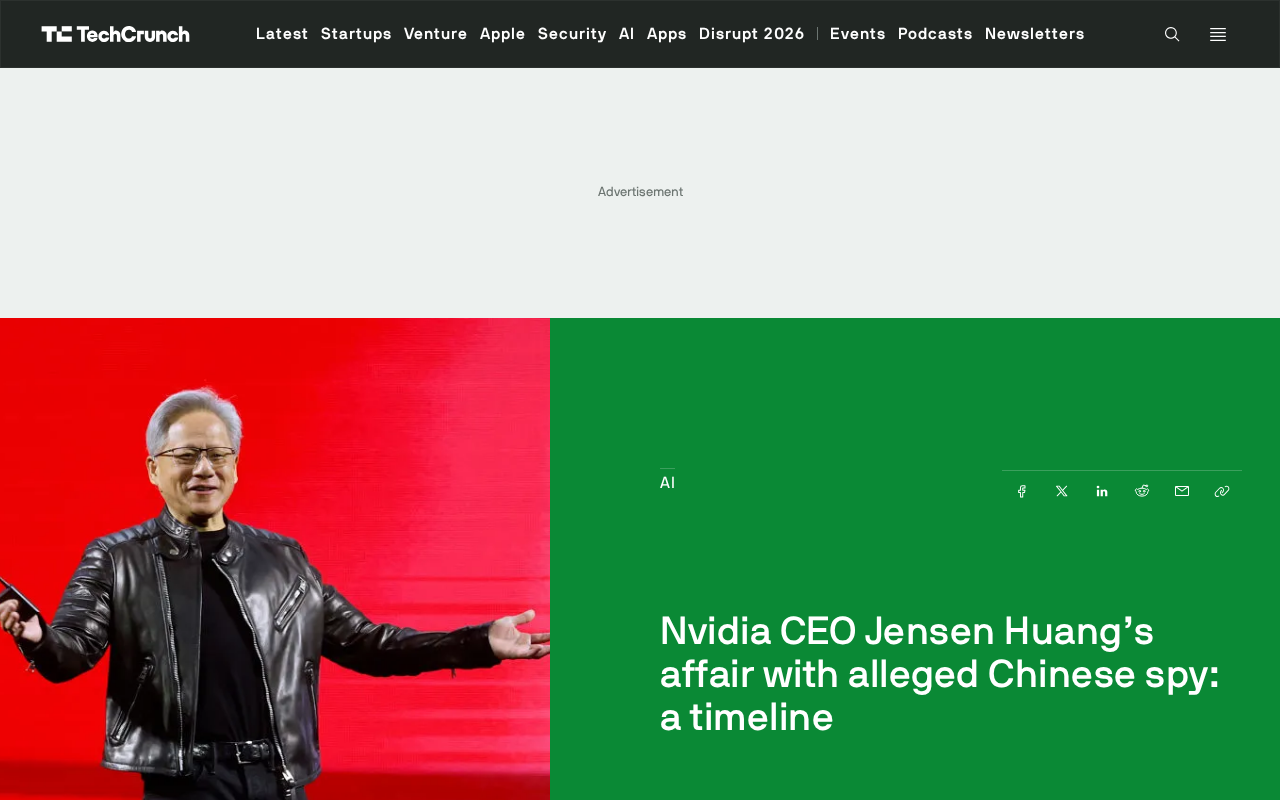
Timeline of Nvidia CEO Jensen Huang's Alleged Affair with a Purported Chinese Spy
Reports claim Nvidia CEO Jensen Huang had an affair with an alleged Chinese spy; a timeline notes possible national security concerns amid the U.S.-China AI race, though details remain unverified.
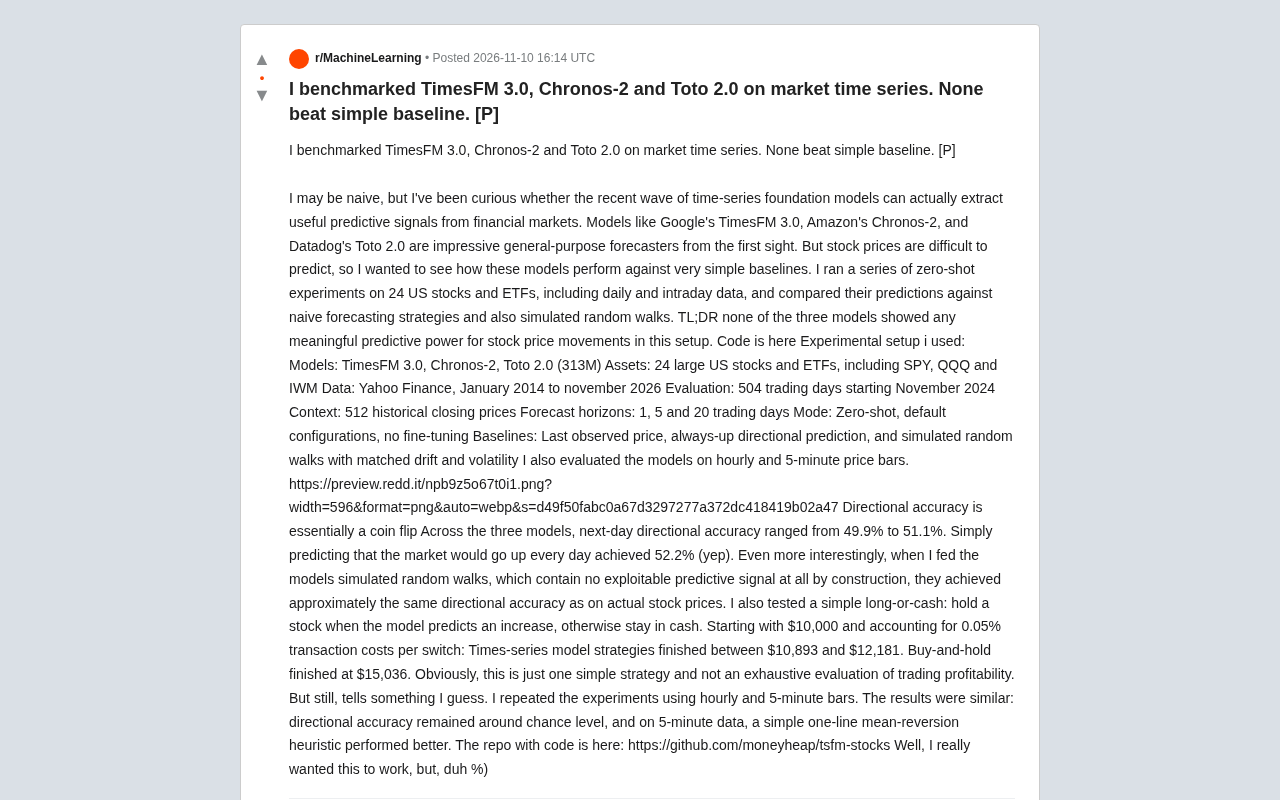
Putting TimesFM 3.0, Chronos-2, and Toto 2.0 to the Test: Time-Series LLMs Can't Beat Simple Baselines
A developer's zero-shot benchmark of TimesFM 3.0, Chronos-2 and Toto 2.0 on 24 U.S. stocks and ETFs: directional accuracy of just 49.9%-51.1%, and simulated trading underperformed buy-and-hold. Time-series foundation models show no edge over simple baselines on financial data.
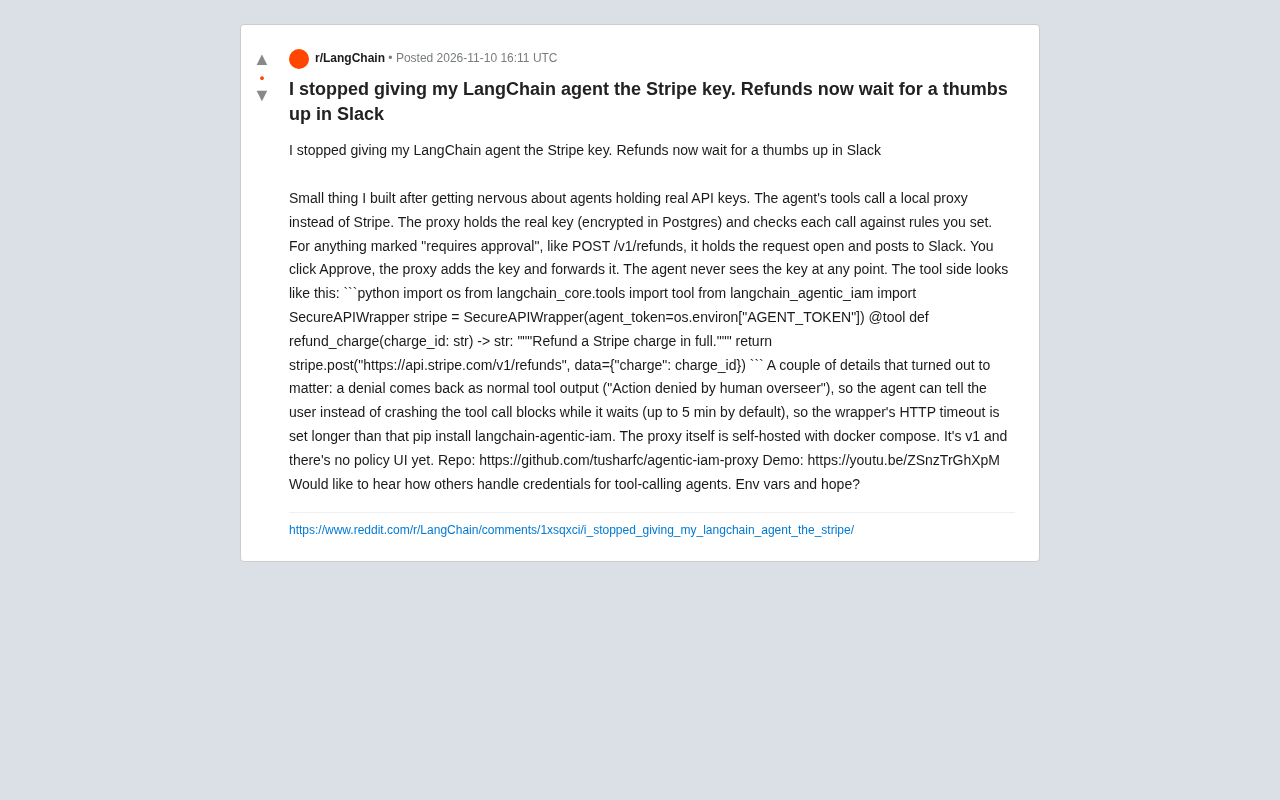
LangChain Agents No Longer Hold Stripe Keys: Refunds Require Slack Approval
A developer shares a credential management approach for LangChain agents: agents don't hold Stripe keys, and sensitive operations like refunds are forwarded through a local proxy and only executed after human approval in Slack, with code examples and engineering details.