Timeline of Nvidia CEO Jensen Huang's Alleged Affair with a Purported Chinese Spy
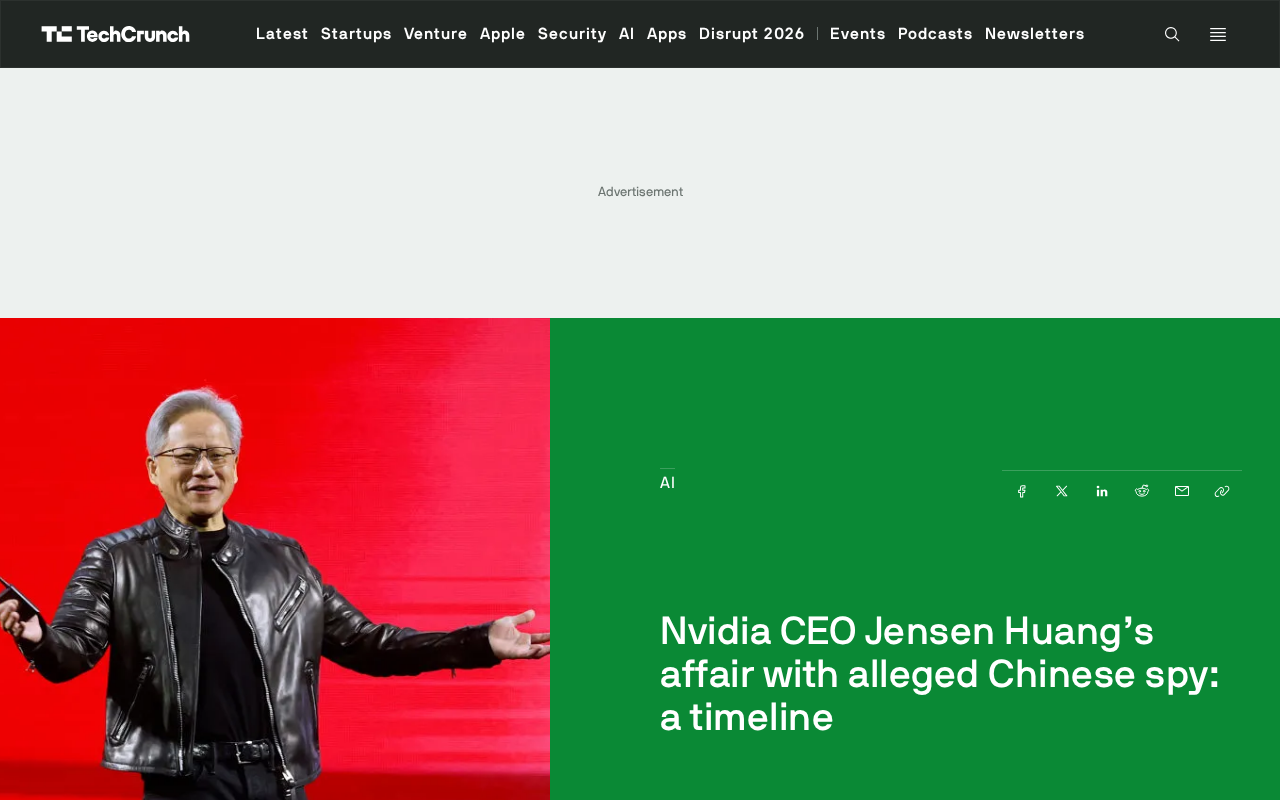
Nvidia CEO Jensen Huang reportedly had an affair with an alleged Chinese spy; report cites national security concerns but offers limited evidence.
According to an RSS source, Nvidia CEO Jensen Huang has been reported to be having an extramarital affair with a person alleged to be a Chinese spy. The report presents the events as a timeline and says the matter could affect national security, set against the U.S.-China race to build the most advanced AI infrastructure. Nvidia GPUs are core hardware for training large models, and their supply chain and technology flows are under strict U.S. export control scrutiny, so foreign connections involving executives are easily amplified. However, the original material is extremely limited, providing no specific dates, identities, or official investigation conclusions; the person's spy status is described only as "alleged," with no evidence or official determination. The article reminds readers to avoid treating rumor as fact and suggests watching for official investigations, Nvidia's response, and regulators' stance.
Background: A Rumor That Shook the Tech and National Security Worlds
According to an RSS source, Nvidia CEO Jensen Huang has been reported to be having an extramarital affair with a person alleged to be a Chinese spy. The report presents the events in timeline form and notes that the matter could have national security implications, especially as the U.S. and China race to develop the most advanced AI infrastructure.
The news has drawn intense attention not only because Huang leads the world's dominant AI chip company, but also because of Nvidia's critical position in the U.S.-China tech rivalry. The original report provides only a minimal overview, disclosing no specific details, dates, or identities of the parties involved, but it explicitly links the personal affair to national security issues, suggesting its potential impact extends far beyond gossip.
Why It Matters for National Security: The Sensitivity of the AI Infrastructure Race
The report's core argument is that this affair could have ramifications for national security, because the U.S. and China are engaged in a fierce competition over AI infrastructure. Nvidia's GPUs are the core hardware for training large models, and their supply chain and technology flows have long been subject to strict scrutiny under U.S. export control policies. Any potential security risk involving Nvidia's senior leadership could be magnified and interpreted as a hidden risk of intelligence leaks or conflicts of interest.
It must be emphasized that the original material provides no evidence or official investigation conclusions, describing the person's spy status only with the word "alleged." This wording indicates that the report itself is cautious, and readers should avoid treating rumor as established fact.
Limitations of the Timeline Report and Information Gaps
Although the title promises a "timeline," the original content provided amounts to only a few words, containing no specific dates, sequence of events, or responses from any party. This means the verifiable information is extremely limited: we do not know when the affair was exposed, who the person involved is, whether any judicial or regulatory authorities have intervened, or whether Nvidia has officially responded.
At this stage of fragmented information, there is a risk in over-interpreting or spreading unverified content. Security vetting for tech industry executives is already strict, and rumors like this, if lacking substantiation, could cause unnecessary disruption to personal reputations and corporate operations.
Potential Ripples for the AI Industry and Geopolitics
Even setting the affair aside, this report reflects the sensitive ecosystem of the current AI chip industry. Nvidia sits at the flashpoint of the U.S.-China tech rivalry, and any foreign connection involving its executives could be placed under a magnifying glass. The fact that the report discusses the matter in the context of the U.S.-China AI race itself shows that geopolitical factors have permeated corporate governance and personal life.
For readers following the AI industry, what is more worth tracking is whether there will be official investigations, Nvidia's response, and the stance of U.S. regulators. In the absence of substantive evidence, maintaining a cautious, wait-and-see approach is the more rational choice.
Background Notes
Nvidia GPUs and Export Controls
Nvidia's GPUs (graphics processing units) have become a geopolitical focal point because of their irreplaceability in AI training. Modern large language models rely on thousands of GPUs computing in parallel, and Nvidia's data center chips such as the A100 and H100 have long held market dominance. Since 2022, the U.S. Department of Commerce has imposed export controls on advanced-node GPUs, restricting their flow to China and repeatedly tightening performance thresholds. This means Nvidia's supply chain, customer lists, and technology flows are all under regulatory scrutiny. Any foreign connection at the executive level could be viewed as a potential conflict of interest or intelligence risk point, because people with access to this information are inherently valuable to foreign intelligence agencies.
The Legal and Journalistic Meaning of "Alleged"
In English-language news reporting, "alleged" is a qualifier with specific legal meaning, used to describe accusations not yet confirmed by judicial or official processes. It both protects media outlets from defamation lawsuits and reminds readers that the information is at the stage of unverified rumor. When a report describes the person involved as an "alleged Chinese spy," it means this identification does not come from a court ruling or official investigation conclusion, but from anonymous sources or one-sided claims. Readers should strictly distinguish such wording from "convicted" or "officially confirmed," and avoid spreading rumor as fact.
Related articles

Seven Years of Evolution: How Far Has the Foldable Come From the First Generation?
From the first foldable to today's latest models, what has seven years changed? Shallower creases, higher brightness, thinner bodies, and smoother software migration—has the foldable crossed the chasm from enthusiasts to ordinary users? This article discusses the question based on a video comparison.

When Did Humans Start Eating Salt? A 10,000-Year History of Salt
When did humans start eating salt? From salt use at the dawn of agriculture 11,000 years ago to ancient seawater evaporation and rock salt mining, and on to the salt trade, salt taxes, and Gandhi's Salt March, this article traces salt's key role in human civilization.
Microsoft Paza Research: How African Language Speech Recognition Breaks Through Architecture and Data Bottlenecks
Microsoft's Paza research evaluates 53 speech models across 39 African languages, revealing architecture choice matters more than pre-training coverage, 200-300 hours is the practical data threshold, and language typology deeply influences recognition performance.